Table of Contents >> Show >> Hide
- Who’s on the micand why it matters
- SaaS sales hiring: from first reps to your VP of Sales
- Retention is the compounding core
- AI is already a GTM force multiplier
- Your metric cheat-sheet (and why investors care)
- Sample 30-60-90 for a first sales hire
- From PLG to sales-assist to true enterprise
- Conclusion: A practical, modern playbook
- 500-Word Operator Notes: Field-Tested Experiences
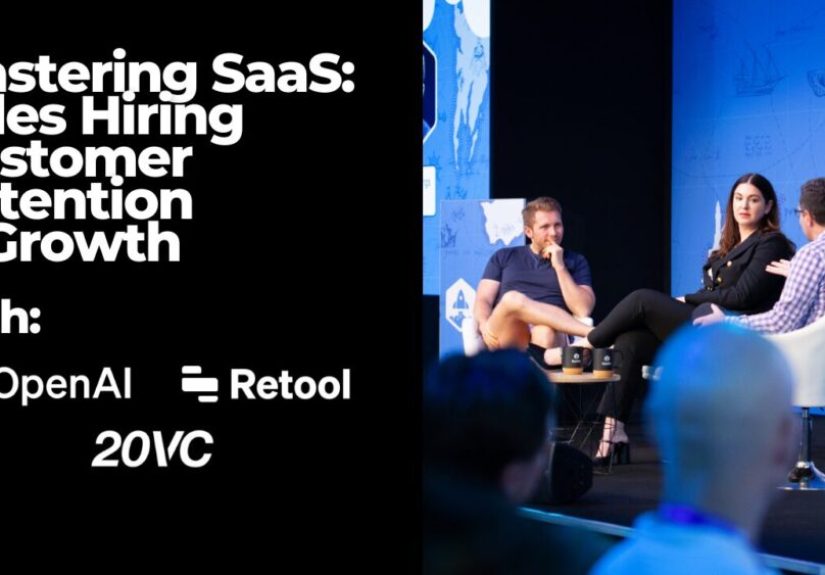
If you sell software for a living, you already know: the playbook is changing faster than a comp plan in Q4. This guide distills hard-won lessons from a SaaStr conversation featuring OpenAI’s Head of Technical Success, Retool’s Head of Sales, and 20VC’s Harry Stebbingsplus the latest benchmarks on hiring, retention, and AI-powered growth from reputable U.S. sources. Expect clear definitions, specific examples, and a few jokes to keep your CAC from skyrocketing (emotionally, at least).
Who’s on the micand why it matters
OpenAI’s “Technical Success” lens
OpenAI runs a global “Technical Success” org (solutions engineers, architects, deployment managers) to make complex AI deployments succeed in practicepre- and post-sales. Roles like Solutions Engineer explicitly sit within “Technical Success,” reporting up to that function. Dominic Grillo has led the team since 2023. Translation: deep technical credibility is now a frontline growth driver.
Retool’s enterprise sales reality
Retool sells developer tooling into complex, multi-stakeholder orgs, requiring multi-threaded deals and tight alignment with product and success. Eleanor Dorfman led Retool’s sales through important scaling phases and has shared detailed tactics on account planning and navigating long sales cyclesgold for any founder moving up-market.
Harry Stebbings (20VC) as the instigator
As host of the 20VC and the Official SaaStr Podcast, Harry has extracted thousands of operator playbooks. In the referenced SaaStr session, he pressed on sales hiring, retention, and AI’s impact across the funnel. Consider him the chief cross-examiner making the panelists get specific.
SaaS sales hiring: from first reps to your VP of Sales
Rule #1: Hire for your ACV and buyer, not your dreams
Early reps must have sold at your average contract value to your buyer personaperiod. “Excellent at $5k self-serve” doesn’t equal “excellent at $150k enterprise.” This is a top SaaStr refrain for a reason.
Common early mistakes (and the fixes)
- The resume mirage: Hiring someone who’s never sold true SaaS or at your ACV. Fix: hire people who have already closed deals like yours.
- VP of Sales too soon: A “logoed” exec without a repeatable motion won’t save you. Fix: founders should prove a consistent path to revenue first; hire a VP when leads, ICP, and win-paths are clear.
- Singleton reps: Hiring one rep makes it hard to diagnose if the problem is the person, process, or product. Fix: onboard reps in small cohorts (two or three) to compare ramp, pipeline mix, and win drivers.
What your very first sales hire is really for
Yes, revenuebut the bigger prize is accelerated learning: sharper ICP, messaging, and objections handled with data, not vibes. Treat the first hire as your learning engine, not your savior.
The quick rubric: interviewing early reps
- Deal deconstruction: Ask for a recent closed-won at your ACV. Look for multi-threading, discovery depth, and actual business impact tied to price.
- Founders as weapon: When do they bring the founder or SE inand why? (Great reps time executive air cover precisely.)
- Pipeline hygiene: Evidence of disciplined, repeatable outbound that isn’t “spray and pray.”
Retention is the compounding core
Retention is where SaaS becomes magical (or miserable). The largest private B2B SaaS retention survey (1,500+ companies) pegs median NRR at ~102% and median GRR at ~91%. Higher ACVs tend to correlate with higher NRR and GRR, and multi-year contracts can help (with caveats).
GRR vs. NRRclean definitions you can use
- GRR (Gross Revenue Retention): Percent of recurring revenue retained, excluding expansion. Must be ≤100% by definition.
- NRR (Net Revenue Retention): GRR plus expansion (upsell, cross-sell, price), so it can exceed 100%.
Benchmarks to sanity-check: Public SaaS NDR hovered ~110% for much of 2024; OpenView noted expansion-stage NRR falling from 119% to ~107%a reminder that macro matters and expansion gets harder in tighter markets.
Why retention dominates your P&L
Retaining customers is far cheaper than acquiring new ones, and even a 5% lift in retention can increase profit by 25%–95%. That math never goes out of style.
Five retention plays your CS and Sales can run together
- Onboarding friction (the productive kind): Add just enough steps to ensure activation sticksimplementation checklists, role-based training, and value confirmations in the first 30 days. Sales sets expectations; CS delivers proof.
- Executive alignment: Run 2–3 executive touchpoints per year with joint value reviews and “next-impact plans.” (For enterprise, multi-thread or risk a single-champion churn.)
- Contract strategy: Use multi-year with clear success milestones. Data suggests better median NRR/GRR with multi-yearthough the effect varies by cycle.
- Health scoring that predicts, not reports: Blend product usage, time-to-value, support risk, and executive engagement into a score CS trustsand refresh it as the macro changes.
- Own expansion with intent: Treat expansion as a program (plays, triggers, timing) rather than “when someone asks.” Top performers run cataloged plays tied to measurable moments of value.
AI is already a GTM force multiplier
Sales teams using AI are more likely to grow revenue, and they cite productivity, better data hygiene, and faster personalization as the payoff. Meanwhile, OpenAI has publicly described internal GTM assistants for prep, demos, and follow-upspointing to a future where “Technical Success” arms the field with institutional knowledge at scale.
What this means for your org design
- Technical Success ≈ growth enabler: Pair AEs with technical counterparts earlier (even in discovery) to de-risk integrations and shorten time-to-value.
- Retrain for AI assist: Enablement should teach reps to co-pilot with AI (call prep, talk-track generation, follow-ups, mutual action plans). Sales orgs report higher growth when AI is embedded into daily workflows.
- Expect the “AI productivity paradox”: Many enterprises see individual AI wins that don’t yet scale. Leaders must invest in process change, data plumbing, and repeatable playbooks to unlock org-level gains.
Your metric cheat-sheet (and why investors care)
- GRR / NRR: NRR ≥ 110% is a healthy target for many, with ACV context. GRR sets the floor; NRR proves expansion muscle.
- CAC Payback & Magic Number: Payback under ~18 months is attractive in today’s market; the Magic Number (ARR growth vs. prior-quarter sales & marketing spend) shows GTM efficiency at a glance.
- Rule of 40: In a world of normalized growth, efficiency and durable NRR matter more than top-line fireworks.
Sample 30-60-90 for a first sales hire
Days 1–30: Learn and build
- Deep product immersion with Technical Success; shadow 6+ calls; write two battlecards (primary ICPs).
- Source 30 accounts; run 10 discovery calls; open 5 qualified ops with multi-threading from day 1.
Days 31–60: Prove motion
- Land the first logo or stage-3 enterprise opportunity; publish a repeatable outbound sequence that hits >10% reply rate.
- Co-present a technical evaluation plan with SE/solutions architect and a mutual action plan to close.
Days 61–90: Scale what works
- Hand off playbooks to two incoming reps; begin cohort coaching (demo talk-track, discovery flow, objection library).
- Partner with CS on an expansion play (usage milestone → executive value review → pricing/seat expansion).
From PLG to sales-assist to true enterprise
PLG can fill the top of funnel, but larger ACVs need human helpespecially SEs who make deployment feel safe. Retool’s up-market motion and OpenAI’s “Technical Success” setup both underscore this: the fastest path to durable NRR is technical credibility married to commercial rigor.
Conclusion: A practical, modern playbook
If you’re hiring sellers, align to ACV and cohort hires; if you’re fighting churn, instrument activation and executive value; if you’re chasing growth, put Technical Success on the field early and give reps AI co-pilots. None of this is theorythese are the patterns emerging across today’s highest-learning teams.
SEO wrap-up
sapo: Want a modern SaaS GTM that actually compounds? This in-depth guide blends insights from OpenAI’s Technical Success team, Retool’s enterprise sales, and 20VC’s Harry Stebbings with fresh benchmarks and concrete plays. You’ll get the hiring rubric for your first reps and VP of Sales, the retention system that drives NRR, and the AI workflows that boost win rates and productivityno fluff, just repeatable moves you can run next quarter.
500-Word Operator Notes: Field-Tested Experiences
These snapshots combine real patterns from operators and public conversations into concrete, anonymized experiences founders can mirror.
Experience #1: The “two-rep truth serum”
A seed-stage infra startup hired one AE with an impressive logo list. Three months in, pipeline looked healthy but slipped each month. The founders added a second repsame territory, same ICP, same pricing. Within six weeks, rep #2 hit stage-3 with two multi-threaded deals, while rep #1 clung to single-threaded champions. The fix wasn’t changing price; it was changing reps and strengthening multi-threading enablement with help from a solutions architect. The lesson: hire in pairs, measure leading indicators (multi-threading and verified pain), not just late-stage theatrics.
Experience #2: Onboarding “friction” that saves Q4
A data-security platform saw 90-day churn spike after a PLG push. Instead of removing steps, the team added two: (1) a 45-minute guided setup with a solutions engineer to map data flows, and (2) a “value confirmation” email summarizing risks found and time saved. GRR stabilized, and expansion reappeared because admins could show executives proof of value early. The lesson: thoughtful friction creates commitment and gives your buyer collateral for internal decisions.
Experience #3: The VP of Sales “too soon” detour
With $1.2M ARR and founder-led sales, a startup hired a pedigreed VP who promptly added five reqs and a six-stage forecast. Two quarters later, leads were flat and enablement was busy beautifying slides. When they replaced the VP with a “player-coach” who spent 60% of time in customer callsand paired her with an internal “Technical Success” leadwin rates rose 11 points. The lesson: hire a VP when you have a working motion; before that, hire a closer who builds process while closing.
Experience #4: AI co-pilot that actually sticks
A horizontal SaaS vendor trialed generative AI for discovery call prep. The first attempt spammed reps with templated notes. Iteration two pulled CRM, product telemetry, and prior tickets to produce a one-page brief with three hypotheses, two discovery questions per persona, and a suggested mutual action plan. AEs reported better first meetings and faster next steps. The kicker: the enablement team codified “AI briefs” into stage-exit criteria so adoption didn’t decay. The lesson: AI works when connected to your data and your processnot as a separate toy.
Experience #5: Expansion as a program, not a wish
A mid-market collaboration tool kept missing NRR targets. Post-mortem showed the team had “good relationships” but no structured triggers for expansion. They built three plays: (i) usage-threshold play (feature adoption > 60% → training → price/seat ask); (ii) compliance-risk play (new audit requirement → premium tier); (iii) seasonal-coverage play (add seats for peak season with a right-size clause). In two quarters, NRR moved from 103% to 111%. The lesson: name the plays, define the triggers, rehearse the asks.
Across these experiences, the constant is clarity. Clarity about the buyer (and ACV). Clarity about what “good” looks like for early reps. Clarity about the first value moment and the executive story that cements it. And clarity about how AI and Technical Success plug into daily selling. Do that, and your retention starts compounding while hiring becomes less of a gamble and more of an accelerant.