Table of Contents >> Show >> Hide
- The $3.50 Envelope That Opened a Time Capsule
- Why These Barcelona Photos Felt Different
- The Long Search for the Photographer
- Who Was Milagros Caturla?
- What the Lost Photos Reveal About Barcelona
- Why Found Negatives Matter So Much
- A Small Purchase, a Big Lesson
- Related Experience: What It Feels Like When an Ordinary Object Turns Into History
- SEO Tags
Every once in a while, the universe decides to reward curiosity with something a lot better than loose change. In this case, the prize was not an antique lamp, a vintage postcard, or a suspiciously heavy ceramic cat. It was an envelope of old photo negatives bought for just $3.50 at a Barcelona flea market. Inside sat a forgotten visual record of a city, a time period, and a photographer whose eye was so sharp that the discovery felt less like bargain shopping and more like accidentally kicking open a side door to art history.
The story has everything people love about found photography: luck, mystery, obsession, and the slow, thrilling realization that anonymous images can carry enormous cultural value. It also has a powerful second act. What began as a flea market curiosity turned into a years-long effort to identify the artist behind the images, and that search eventually led back to Milagros Caturla, a talented woman photographer whose work captured everyday life in Barcelona during the late 1950s and early 1960s.
That is what makes the lost photos of Barcelona story so irresistible. It is not only about a cheap purchase turning into a treasure. It is about how cities survive in fragments, how photography preserves ordinary life, and how overlooked artists can return to public view decades after they were nearly erased. The whole thing feels like a movie, except it really happened, which is frankly rude to screenwriters everywhere.
The $3.50 Envelope That Opened a Time Capsule
Back in 2001, American traveler Tom Sponheim was in Barcelona when he came across a small stack of negatives at Els Encants, the city’s famous flea market. He bought them for the equivalent of $3.50, thinking they looked promising. That might sound like a niche hobby decision, but anyone who has ever dug through a flea market knows the feeling: one item suddenly radiates possibility, and your inner voice says, “This could be junk… but it could also be amazing.”
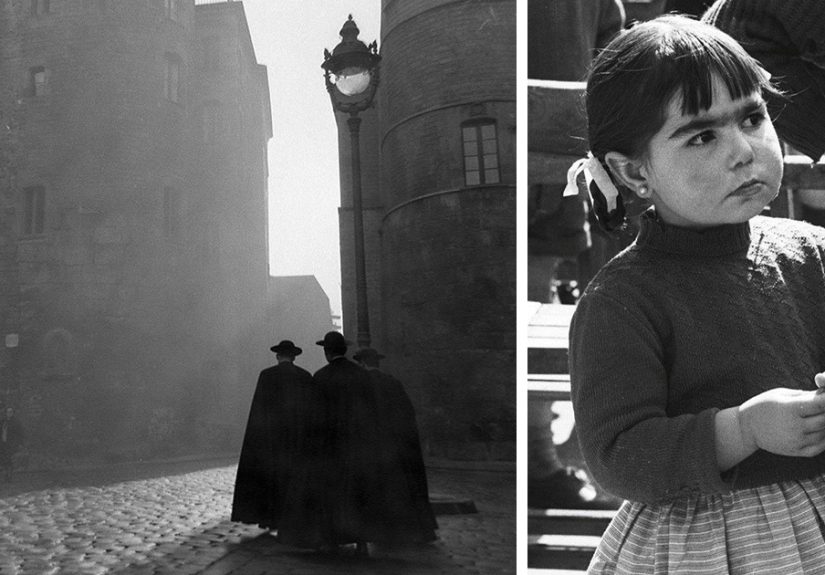
When Sponheim returned home and began scanning the negatives, he discovered images that were far better than “interesting old photos.” They were striking pieces of street photography and documentary observation. Children clustered in classrooms. Priests moved through city streets. Women paused in conversation. Crowds, gestures, architecture, and fleeting expressions appeared with the kind of timing and visual intelligence usually associated with photographers who knew exactly what they were doing.
That is the moment the story changes shape. The envelope stops being a thrift-store oddity and becomes evidence. It suggests that an unknown photographer once moved through Barcelona with exceptional sensitivity, paying attention to the life that unfolded in public spaces. In other words, this was not random snapping. This was the work of someone with patience, instinct, and an artist’s talent for seeing a city as both theater and testimony.
Why These Barcelona Photos Felt Different
Anyone can find old negatives. Not everyone finds photographs that make total strangers stop scrolling and stare. The reason these Barcelona flea market photos resonated so strongly is that they do what the best street photography always does: they make the everyday look alive, layered, and slightly miraculous.
In great candid photography, the subject is not just a person. It is a relationship. A child leaning in. Two women talking. A passerby half-aware of the camera’s presence. A block of stone, shadow, and sunlight working together like stage design. These pictures carried that energy. They did not feel staged or precious. They felt observed, which is much harder to fake.
The images also offered a visual portrait of historic Barcelona before mass tourism flattened its rough edges into souvenir magnet territory. You can sense religious ritual, neighborhood identity, school life, and the texture of public space. The photographs do not scream for attention. They reward attention. And that is often the difference between a good old picture and a genuinely meaningful archive.
There is another reason the images hit so hard: they made viewers wonder who had made them and why that person was unknown. Once you see photographs this strong, anonymity becomes a mystery. And mystery, as the internet has repeatedly proven, is catnip for humanity.
The Long Search for the Photographer
Instead of shrugging and framing a few prints, Sponheim decided to find the artist behind the negatives. In 2010, he launched a Facebook page dedicated to the collection and promoted it to photography lovers in Barcelona. That move mattered. It turned a private discovery into a public search, allowing people to recognize locations, identify subjects, and contribute pieces of local knowledge.
For a while, the hunt looked like it might remain unsolved. People responded to the images. Some recognized places. Others recognized faces. But the photographer’s identity remained stubbornly out of reach. The photos had survived. The name had not.
Then came the breakthrough. In 2017, photographer and researcher Begoña Fernández came across the page and started digging. This is the point in the story where casual curiosity put on sensible shoes and became archival detective work. Fernández studied background details, connected some of the pictures to an elementary school, traced related clues to a 1962 photography contest, and then searched the records of the Agrupació Fotogràfica de Catalunya.
There, in an old publication, she found one of the same images. It had a title: Fervor. And beneath it was the name of the photographer: Milagros Caturla.
That discovery transformed the whole narrative. The “unknown master photographer” was no longer unknown. She was a real artist with a history, a body of work, and a place in Barcelona’s visual culture. The flea market envelope had not merely preserved beautiful images. It had preserved a missing credit line to a woman whose contribution had slipped out of public memory.
Who Was Milagros Caturla?
Milagros Caturla was not some invented legend created by the romance machine of the internet. She was a real Barcelona photographer, active in the city’s photographic circles and later identified through competition records and association archives. She trained as a teacher, worked in administration, and pursued photography seriously enough to win awards and maintain a darkroom in her apartment. That detail alone is worth pausing over, because darkrooms are not exactly decorative furniture. You do not keep one around unless photography matters to you.
Her rediscovery also matters for a larger reason. Women were often marginalized in photography communities during the mid-20th century, especially in scenes dominated by men and by institutional gatekeeping. Caturla’s case reminds us that artistic history is not only shaped by who made the work. It is also shaped by who got archived, credited, exhibited, and remembered. Plenty of talented photographers made powerful images without receiving the recognition they deserved during their lifetimes.
That is why Caturla has sometimes been compared to Vivian Maier. The comparison is imperfect, as all comparisons are, but the emotional logic is clear: a gifted photographer leaves behind extraordinary work, much of it unseen or uncelebrated, and later generations rush to correct the oversight. The difference is that in Barcelona’s case, the rescue mission began with one tiny envelope at a flea market table.
What the Lost Photos Reveal About Barcelona
The photos are compelling not just because they are beautiful, but because they preserve a version of Barcelona that feels lived-in rather than packaged. They show the social choreography of a city: classrooms, festivals, streets, religious life, children at play, and neighbors moving through shared space. This is Barcelona street photography at its most human. The city is not posed. It is inhabited.
That matters historically. Images from the late 1950s and early 1960s offer a glimpse into everyday life in Spain during the Franco era, when public life, civic ritual, and social expectations carried the pressure of dictatorship even when a photograph appears calm on the surface. In Caturla’s pictures, daily life continues, but it is framed by a particular moment in political and cultural history. That gives the collection depth beyond aesthetic pleasure.
There is also a quiet tenderness in the way Caturla looked at people. She did not reduce them to props in a picturesque city. Children, workers, clergy, and women in conversation all register as individuals. The photographs are elegant, but not cold. Observant, but not detached. They suggest that Caturla was not just documenting Barcelona. She was in conversation with it.
Why Found Negatives Matter So Much
The story also says something bigger about archives, memory, and the survival of photography. Negatives are fragile objects. They can be damaged by heat, humidity, dust, bad storage, and rough handling. Left in the wrong envelope, box, or attic, they can slowly decay until the images are unusable. That means every rediscovered set of negatives is a race between memory and chemistry.
And yet negatives remain powerful because they are the source material of photographic history. Museums and archives treat them seriously for a reason. A negative is not just a technical intermediate on the way to a print. It is a primary record. It often holds detail, sequencing, and evidence that later reproductions do not. When found photography surfaces from flea markets, family estates, or neglected storage, it can restore missing chapters of cultural history.
That is exactly what happened here. The found photos in flea market story is satisfying because it feels improbable, but it is also important because it demonstrates how easily creative legacies can be misplaced. One move, one house clearance, one resale table, and a photographer’s life work can drift out of context. If nobody looks closely, it disappears twice: first from the studio, then from history.
A Small Purchase, a Big Lesson
There is a reason stories like this travel so well online. They flatter our hope that treasure still exists in ordinary places. But the deeper lesson is not that you should sprint to the nearest flea market and start buying every envelope in sight like a caffeine-fueled archivist. It is that attention has value. Sponheim noticed quality. He cared enough to investigate. Fernández cared enough to research. Together, they helped return a photographer’s name to her photographs.
That is a rare kind of happy ending in cultural history. No dramatic vault. No billionaire collector. No dusty professor shouting “This changes everything!” in a stone library. Just a few people taking images seriously and refusing to let them stay anonymous.
In the end, the lost photos of Barcelona are more than a viral curiosity. They are proof that art can survive neglect, that cities leave fingerprints in their streets, and that photography can outlive obscurity if somebody is willing to look long enough. For $3.50, that is not a bad return. Financial advisors may disagree, but emotionally, it is a market-beating performance.
Related Experience: What It Feels Like When an Ordinary Object Turns Into History
Anyone who has spent time in flea markets, estate sales, thrift stores, or secondhand bookshops knows the strange electricity of handling objects that used to belong to other lives. Most of the time, the feeling is mild and pleasant. You pick up a postcard, a camera, a recipe tin, a box of slides, and think, “Huh, neat.” But every once in a while, the experience changes. The object stops being “old stuff” and starts behaving like a portal.
That is part of why the Barcelona envelope story feels so familiar, even to people who have never developed a negative in their lives. The emotional pattern is universal. First there is curiosity. Then there is the tiny thrill of discovery. Then, if the item turns out to matter, there is something almost solemn about realizing you are now responsible for a fragment of someone else’s memory.
Found photographs create a particularly powerful version of that experience because they contain human presence without full explanation. You can see the faces, the clothing, the weather, the posture, the architecture, the humor in a glance, the seriousness in a crowd. But you do not automatically know the names, the dates, or the circumstances. The images give you enough to care and not enough to be comfortable. That gap is what pulls people in.
There is also a very specific sensation that comes from recognizing quality in an anonymous image. It is a little like hearing an incredible song from a passing car and not knowing the artist. You are excited, impressed, and slightly annoyed at the universe for making you work this hard. With found photography, that feeling can be even stronger because the images are often literally vulnerable. They can fade, curl, scratch, crack, or vanish. You are not just enjoying them; you are racing their disappearance.
For collectors, photographers, and history lovers, these moments can become deeply personal. The object may not belong to your family, your city, or your own past, but once you care for it, you form a relationship with it. You start imagining who touched it, who stored it, why it was kept, why it was lost, and how it made its way to a folding table under fluorescent lights next to a chipped teapot and a box of costume jewelry. That is the comedy and melancholy of secondhand culture: priceless meaning can sit beside absolute nonsense, all tagged at yard-sale prices.
The best discoveries do not just tell you something about the past. They sharpen the present. After a story like this, people look differently at old albums, loose negatives, inherited boxes, and forgotten drawers. They become more careful. More curious. More willing to ask whether an unlabeled image might still have a name waiting for it. And maybe that is the real gift inside the envelope. Not only the photographs themselves, but the reminder that history is often still out there, unsorted, unframed, and one curious hand away from being seen again.