Table of Contents >> Show >> Hide
- What Made Hackaday Supercon Feel Bigger Than Three Days?
- The Hacker Village: Where Weird Is Welcome
- The 2018 Supercon Badge: A Retro Computer Around Your Neck
- Workshops That Refused to Stay in Their Lane
- Talks, Keynotes, and the Problem of Too Many Good Options
- The Alley, the Parties, and the Beautiful Chaos
- Why Supercon Works So Well for Hardware Hackers
- Lessons From a Three-Day Conference That Felt Like Six
- Extra Experiences: What It Feels Like to Live Six Days in a Three-Day Con
- Conclusion: Why Supercon Still Matters
Some events politely fit into a weekend. Hackaday Superconference does not. It arrives with a soldering iron in one hand, a half-finished badge hack in the other, and a schedule so full it seems to have discovered a secret fourth dimension. “It Happened At Supercon: Six Days Of Fun In A Three Day Con” is not just a catchy title; it is a fairly accurate warning label.
Held in Pasadena, California, the 2018 Hackaday Superconference brought together hardware hackers, engineers, makers, builders, artists, educators, coders, retrocomputing fans, badge-life obsessives, and the kind of people who look at a circuit board and think, “Nice, but what if it also played music and launched something?” Across three official days, Supercon packed in workshops, talks, badge hacking, hardware demos, late-night experiments, community meetups, and enough caffeine to make a breadboard vibrate.
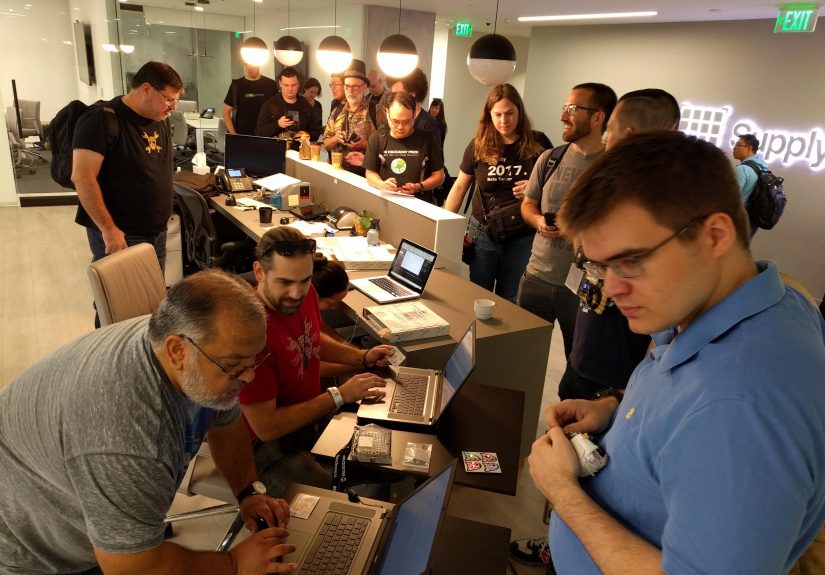
At its heart, Supercon is a hardware conference. In practice, it feels more like a temporary city built by people who speak fluent oscilloscope. The charm is not only in the scheduled sessions, though those are a major draw. The real magic happens between the talks: in the alley, at the coffee bar, around crowded tables, beside someone’s half-assembled robot, or while a stranger explains why their wearable synthesizer is technically formal attire.
What Made Hackaday Supercon Feel Bigger Than Three Days?
The official 2018 Superconference ran from November 2 to November 4 in Pasadena. On paper, that is a long weekend. In memory, it behaves like a week-long maker festival compressed with industrial machinery. The opening day began with workshops and badge hacking, followed by a kickoff celebration. Saturday and Sunday brought talks, hacking contests, meals, parties, demonstrations, conversations, and more spontaneous inventions than any reasonable event planner would dare schedule.
That is why the “six days in three” feeling matters. Attendees were not simply watching presentations. They were building, debugging, teaching, learning, competing, soldering, networking, laughing, and occasionally trying to remember where they put that one tiny component that absolutely did not want to be found.
A Conference Built Around Doing, Not Just Listening
Many tech events are built around stages. Supercon is built around participation. Yes, the talks matter. Yes, the speakers bring serious knowledge. But the attendees are not passive spectators quietly collecting branded tote bags. They are contributors. They bring projects from home. They bring tools. They bring questions, answers, spare parts, and the heroic belief that any problem can be solved with enough flux and stubbornness.
The 2018 event included more than 50 talks and workshops, which is already a dense program. But the unofficial program was equally important. A person could spend an hour learning about embedded hardware, then wander into a badge hacking area and end up helping someone revive a BASIC program, design a 3D-printed enclosure, or troubleshoot a serial connection. Supercon rewards curiosity the way a vending machine rewards quartersdrop some in and something interesting falls out.
The Hacker Village: Where Weird Is Welcome
One of the most memorable parts of Supercon is the culture known as the Hacker Village. This is less a single room and more a shared attitude: if you built it, modified it, bent it, blinked it, printed it, soldered it, or accidentally made it smoke before making it work, you belong here.
At Supercon, unusual projects do not need a long explanation before they are accepted. A Raspberry Pi-based badge mounted on a wooden board? Fine. A custom LED handbag? Excellent. A musical gadget worn like an accessory? Of course. A microscopic soldering station that appears as if summoned by the patron saint of tiny components? Pull up a chair.
This kind of environment matters for hardware hackers and maker communities because invention is vulnerable. Sharing a project before it is polished requires trust. Supercon creates that trust by treating experiments as conversation starters rather than performance tests. Nobody has to pretend their prototype is perfect. In fact, a gloriously imperfect project often attracts more attention because it invites participation. Someone will suggest a better connector. Someone else will offer a tool. A third person will say, “I tried that once,” and suddenly a five-minute chat becomes a full debugging session.
The 2018 Supercon Badge: A Retro Computer Around Your Neck
No discussion of Hackaday Supercon is complete without the badge. At many conferences, a badge is a rectangle that proves you paid to enter. At Supercon, the badge is a hardware platform, a puzzle, a social object, and sometimes a personal identity crisis. The 2018 Hackaday Superconference badge was especially beloved because it leaned into retrocomputing with style.
The badge functioned as a small computer. It ran a BASIC interpreter and emulated a Z80 computer capable of running CP/M. That meant attendees could program it, modify it, connect it, expand it, and use it as the foundation for badge hacks throughout the weekend. For people who love vintage computing, embedded systems, and creative constraints, this was not just a name tag. It was a toy box with a processor.
The badge also turned strangers into teammates. Need help with a command? Ask the person across the table. Trying to load a program? Someone nearby has probably done it, failed twice, fixed it, and developed three opinions about the process. That is the quiet genius of badge hacking: it gives the community a shared problem, and shared problems are wonderful social glue.
Workshops That Refused to Stay in Their Lane
The workshop lineup at Supercon 2018 helped create the sense that multiple conferences were happening at once. Attendees could explore subjects ranging from LoRaWAN to wearable electronics, animatronic tentacles, Logic Noise, badge programming, soldering, and hardware troubleshooting. That mix gave the event a lively rhythm. One room might be deep in wireless communication, while another was assembling something delightfully tentacled. This is how Supercon makes “technical education” feel like a playground designed by engineers with excellent senses of humor.
Hands-on workshops are especially valuable because hardware is physical. You cannot fully understand a connector, sensor, motor, or circuit by looking at slides alone. You need to touch parts, break assumptions, inspect traces, and occasionally admit that the component was upside down the whole time. Supercon embraces that process. It understands that making is messy, and the mess is often where the learning lives.
The SMD Soldering Challenge and the Joy of Tiny Drama
One highlight was the SMD soldering challenge, which turned surface-mount soldering into a spectator sport. That sentence should not work, and yet at Supercon it absolutely does. Watching someone solder tiny components under pressure has the suspense of a cooking show, the precision of a watchmaker, and the emotional stakes of a person trying not to sneeze at the worst possible moment.
For beginners, the challenge made small-component work feel approachable. For experienced builders, it was a friendly test of skill. For everyone else, it was proof that the maker community can turn almost anything into a cheering event if enough people gather around a table.
Talks, Keynotes, and the Problem of Too Many Good Options
Supercon’s schedule created a classic maker dilemma: attend a talk and miss something amazing in the alley, or stay in the alley and miss something amazing on stage. This is a good problem, but it is still a problem. With more than 50 talks and workshops, attendees had to make choices. The upside is that recorded talks allowed people to relive sessions later and catch up on presentations they missed while knee-deep in hardware.
The 2018 program featured a wide range of speakers and topics. The event included appearances and talks from figures such as Bill Gross, Kitty Yeung, Sam Zeloof, Sprite_TM, Erika Earl, and Ben Krasnow. That variety reflects the strength of the Hackaday community: it is not limited to one narrow corner of engineering. It stretches from startups and fabrication to wearables, silicon, retrocomputing, embedded design, physics, art, and clever technical storytelling.
For SEO readers searching for “Hackaday Superconference recap,” “Supercon badge hacking,” or “hardware hacker conference,” this is the key takeaway: Supercon is not valuable because it has one famous keynote or one flashy exhibit. It is valuable because it creates collisions between disciplines. A person interested in firmware might meet someone building kinetic sculpture. A robotics enthusiast might learn from a retrocomputing fan. A beginner might sit beside a professional engineer and discover that experts also spend a surprising amount of time asking, “Why is this not working?”
The Alley, the Parties, and the Beautiful Chaos
The Pasadena venue helped define the Supercon experience. The combination of Supplyframe DesignLab and the adjoining Los Angeles College of Music gave the event indoor presentation space, workshop areas, and a private outdoor alley that became its own unofficial kingdom. The alley hosted badge hacking, meals, conversations, meetups, solder fumes, demos, and that essential conference survival resource: coffee.
Friday’s kickoff atmosphere rolled into a weekend of community energy. Attendees showed off projects, joined poster sessions, played with handmade games, and watched music, visuals, electronics, and engineering overlap in unexpected ways. There were references to high-voltage experiments, hardware games, CNC creations, wearable builds, and even a robot hanging around like it had bought a ticket and was waiting politely for the next session.
Saturday night brought the Hackaday Prize celebration, where the trainable robotic arm Dexter earned grand prize recognition. The prize party was not just an awards ceremony; it was a reminder that open hardware can be practical, ambitious, and deeply community-driven. Supercon treats clever ideas as things to celebrate publicly, not hide in a lab until they become marketable. That gives the event a generous, open-source spirit.
Why Supercon Works So Well for Hardware Hackers
Supercon succeeds because it understands its audience. Hardware hackers do not want only polished demos. They want schematics, constraints, problems, parts, mistakes, and the story behind the build. They want to know what failed. They want to see the underside of the board. They want to hear why a designer chose one chip instead of another. They want to ask questions that begin with, “Could you theoretically…” and end with everyone leaning closer.
The event also benefits from its scale. It is large enough to attract serious talent and varied sessions, but intimate enough that attendees can actually meet one another. That balance is difficult to achieve. Too small, and the event may lack momentum. Too large, and the community feeling gets swallowed by lines, booths, and generic convention noise. Supercon’s best moments happen because it feels human-sized, even when the schedule feels superhuman.
The Secret Ingredient: Shared Enthusiasm
The most important part of Supercon is not the badge, the talks, the workshops, or even the alley. It is the shared enthusiasm. People show up ready to be impressed, but also ready to contribute. That attitude changes everything. Instead of competing for attention, attendees trade knowledge. Instead of hiding mistakes, they laugh about them. Instead of treating beginners like obstacles, the community often treats them like future collaborators.
This makes Supercon especially powerful for people new to hardware hacking. A newcomer can see advanced projects without feeling locked out. They can ask questions, watch builds in progress, and understand that every impressive gadget began as a confusing pile of decisions. The event makes engineering feel alive, social, and occasionally ridiculous in the best possible way.
Lessons From a Three-Day Conference That Felt Like Six
The first lesson is simple: leave room for the unscheduled. Supercon’s official program was impressive, but the spontaneous interactions made the weekend memorable. The hallway conversation, the borrowed part, the last-minute fix, the badge hack finished just before the deadlinethose are the stories people carry home.
The second lesson is that physical community still matters. Online forums, project logs, and video tutorials are essential, but they cannot fully replace the moment when someone sits next to you, points to a trace, and says, “There’s your problem.” Hardware is tactile, and hardware communities thrive when people can share benches, tools, and discoveries in real time.
The third lesson is that play is not the opposite of serious engineering. Play is often how serious engineering gets better. A badge that runs BASIC, a high-voltage game, a retrocomputing challenge, or a musical hardware demo may look playful, but each one teaches design, debugging, systems thinking, and communication. Supercon makes learning feel like fun because it refuses to separate curiosity from craft.
Extra Experiences: What It Feels Like to Live Six Days in a Three-Day Con
Imagine arriving on Friday with a neat plan. You have circled the sessions you want to attend. You have packed a laptop, a cable pouch, maybe a small soldering kit, and the dangerous confidence of someone who thinks they will sleep. By Friday afternoon, the plan is already in negotiation. Someone nearby is testing a badge program. Another attendee is unpacking a project that looks like it escaped from a friendly science-fiction garage. A workshop is starting in ten minutes. Your coffee is getting cold. Your curiosity is winning.
That is the Supercon experience. It pulls you sideways in the best way. You walk toward a talk and stop because a crowd has gathered around a table. You only mean to look for a second. Then someone explains the project. Then someone else offers a better battery solution. Then you realize you have missed the first half of the session you were heading to, but you have learned three things you did not know and met two people you want to keep talking to. This is not failure. This is Supercon scheduling itself.
The badge becomes your passport. At first, it is an object. Then it becomes a project. Then it becomes a reason to talk. You compare screens, code snippets, add-ons, enclosures, and wild ideas. Some people chase elegant solutions. Others chase glorious absurdity. Both approaches are respected. A beautiful badge hack might have polished acrylic, clean wiring, and clever firmware. Another might look like it was assembled during a minor earthquake and still earn applause because it does something hilarious.
Meals feel different too. At many conferences, lunch is a break from the event. At Supercon, lunch is another session with sandwiches. The person across from you might be an engineer, artist, student, founder, repair expert, or lifelong tinkerer. Conversations drift from microcontrollers to music, from manufacturing to education, from failed prototypes to favorite tools. Someone will mention a part number. Someone will write it down. Someone else will say, “I have one in my bag,” because of course they do.
By Saturday evening, time starts acting strangely. You are tired, but the event keeps producing reasons to stay awake. The prize party, the demos, the music, the badge hacking, the conversations in the alleyall of it creates a second wind. Then a third. Then a suspicious fourth that may be powered entirely by coffee and peer encouragement. You begin to understand why people talk about Supercon with such affection. It is not only a conference; it is a temporary home for people whose hobbies require toolboxes.
Sunday brings the familiar convention emotion: panic mixed with gratitude. There are still talks to catch, projects to see, badges to finish, people to thank, and ideas to capture before they dissolve into Monday. The final hours carry a bittersweet energy. Everyone is packing up, but nobody is quite ready to leave. The event has done its job. It has filled notebooks, camera rolls, project lists, and brains. It has also created the most dangerous souvenir of all: motivation.
That is why “six days of fun in a three day con” feels true. Supercon compresses learning, friendship, invention, competition, comedy, and technical obsession into one weekend. You leave tired, but not empty. You leave with parts in your bag, tabs open in your browser, and a new list of things to build. Monday may arrive on schedule, but some part of your brain is still in Pasadena, sitting at a table, holding a badge, and thinking, “What if I added one more feature?”
Conclusion: Why Supercon Still Matters
“It Happened At Supercon: Six Days Of Fun In A Three Day Con” captures what makes Hackaday Superconference special. It is a hardware hacker conference, yes, but it is also a living workshop, a social network with soldering irons, a retrocomputing playground, a badge hacking marathon, and a celebration of people who build because they cannot help themselves.
The 2018 Pasadena event showed how powerful a well-designed maker gathering can be. With talks, workshops, the Hackaday Prize, a memorable hardware badge, spontaneous demos, and a deeply welcoming Hacker Village, Supercon gave attendees more than a schedule. It gave them momentum. For builders, engineers, and curious beginners, that momentum is priceless.
Note: This article is based on real Hackaday Superconference information, community recaps, official event details, and documented 2018 Supercon highlights, rewritten in original language for web publication.