Table of Contents >> Show >> Hide
- The Short Answer: Yes to Nuclear Signaling, No Clear Sign of Imminent Use
- Why This Question Keeps Coming Back
- What Changed in Russia’s Nuclear Doctrine?
- Nuclear Theater Is Still TheaterBut Theater Matters
- What “Preparing” Really Means
- Why Some Analysts Still Worry
- Why the Case for Imminent Nuclear Use Is Still Weak
- So What Is Putin Likely Trying to Accomplish?
- What Could Raise the Risk Going Forward?
- The Human Experience of Living Under the Nuclear Shadow
- Final Verdict
As of April 2026, the most honest answer is this: Vladimir Putin appears to be preparing the world psychologically and politically for the possibility of nuclear escalation far more than he appears to be preparing for an imminent nuclear strike in Ukraine. That may sound like a lawyer’s answer, but in a nuclear crisis, the difference matters more than just about anything else on Earth.
Russia has changed its nuclear doctrine, staged highly publicized drills, issued repeated warnings to the West, and wrapped its war messaging in radioactive ambiguity. In plain English: the Kremlin wants NATO, Ukraine, financial markets, and probably your stress level to keep one eyebrow permanently raised. But public assessments from U.S. officials and several leading analysts still point in the same direction: scary signaling, yes; clear evidence of immediate nuclear use, no.
That does not make the danger fake. It just means the danger is better understood as coercive brinkmanship than as a flashing red “launch tonight” scenario. Putin has been using nuclear rhetoric the way a stage magician uses smoke: not because smoke wins the fight by itself, but because it changes what the audience thinks is about to happen.
The Short Answer: Yes to Nuclear Signaling, No Clear Sign of Imminent Use
If the question is whether Putin wants people to believe he could use nuclear weapons, the answer is obviously yes. He has spent years reminding the world that Russia has the largest nuclear arsenal on the planet, and since the full-scale invasion of Ukraine in 2022, that message has returned again and again whenever Moscow wants to discourage Western support for Kyiv.
If the question is whether Putin is currently preparing to actually use nuclear weapons in Ukraine in the immediate future, the public record is much thinner. U.S. officials have repeatedly said they have not seen the kind of posture changes that would suggest imminent nuclear use. That distinction is critical. Nuclear blackmail and nuclear employment are cousins, not twins.
So the best working conclusion is this: Putin is preparing the option, the narrative, and the intimidation value of nuclear weapons far more clearly than he is preparing a near-term nuclear detonation on the battlefield. That still leaves room for danger, but it changes how the danger should be understood.
Why This Question Keeps Coming Back
The reason this issue never stays buried is simple: Russia’s war in Ukraine has repeatedly crossed old assumptions. Before February 2022, many people believed a full-scale invasion was too costly, too reckless, too absurd. Then it happened. Since then, every major escalation debate has carried the same nervous refrain: “What if this is the step that finally pushes Putin too far?”
That fear is not irrational. In late 2022, U.S. officials were reportedly alarmed enough by internal intelligence and battlefield developments to privately warn Moscow against any nuclear use. That moment mattered because it showed the risk was not merely theoretical. It was serious enough to trigger top-level American diplomacy and deterrent messaging.
Still, serious past danger does not automatically equal present inevitability. In fact, one of the lessons from the war so far is that Russia’s nuclear threats often grow louder precisely when Moscow wants to shape Western behavior without paying the astronomical political and military costs of actually crossing the nuclear threshold.
What Changed in Russia’s Nuclear Doctrine?
One reason concern spiked again is that Russia formally revised its nuclear doctrine in late 2024. The change mattered because it widened the conditions under which Moscow says it could consider nuclear use. The revised language made Russia’s threshold look lower and, just as importantly, more ambiguous.
That wordambiguousis doing a lot of work here. Ambiguity is useful to the Kremlin. A precise doctrine tells adversaries where the line is. A vague doctrine makes everyone waste time wondering whether they already stepped over it. Russia’s updated approach suggested that even a conventional attack supported by a nuclear power could count as a joint attack on Russia. In practical terms, that looked very much like a message aimed at Ukraine’s Western backers.
The doctrine also drew Belarus more explicitly under Russia’s nuclear umbrella and broadened the language around what kind of attack could justify nuclear use. That does not prove a strike is coming. It does show that the Kremlin wants more room to threaten one.
Think of it this way: the old sign on the fence said, “Do not enter under extreme circumstances.” The new sign says, “Do not even think about touching the fence, and also the fence might be bigger than you thought.” That is not a launch order. But it is definitely not a Hallmark card.
Nuclear Theater Is Still TheaterBut Theater Matters
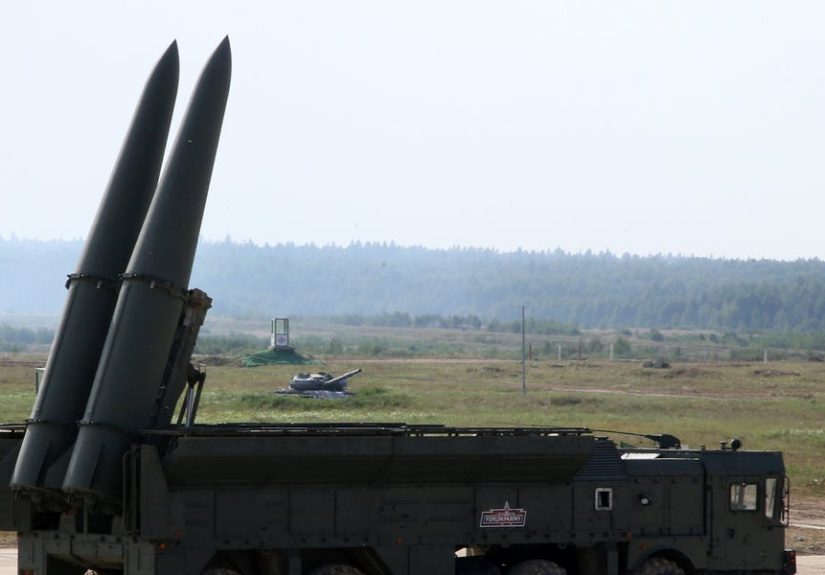
Putin has not relied on doctrine alone. Russia has paired policy changes with visible drills, missile tests, and repeated public warnings. In 2024 and 2025, Moscow showcased nuclear-related exercises and strategic systems in ways clearly designed to attract attention. This was not subtle statecraft. This was a geopolitical leaf blower.
Such displays serve multiple purposes. They reassure Russian hard-liners that the Kremlin is not backing down. They pressure Western governments that worry about escalation. They create headlines that can muddy public debate in democratic countries. And they remind Ukraine that it is fighting a nuclear-armed power willing to weaponize fear even when it is not weaponizing a warhead.
That is why dismissing every nuclear signal as “just bluffing” can be too casual. Even when a threat is not followed by a strike, it can still shape policy, delay aid, split alliances, and create hesitation. In other words, the threat can work without being cashed in.
What “Preparing” Really Means
Political Preparation
Politically, Putin has been preparing the ground for years. He has normalized nuclear references in speeches, linked Russia’s sovereignty to nuclear deterrence, and framed Western support for Ukraine as something close to direct participation in the war. That rhetorical groundwork matters because leaders rarely jump from zero to nuclear use without first building a story about necessity, retaliation, or existential threat.
Psychological Preparation
Psychologically, the Kremlin has tried to condition foreign audiences to live under a constant nuclear shadow. The idea is not necessarily to make everyone believe a strike is imminent every day. It is to make everyone believe it is possible enough that they self-deter. That is coercion with a mushroom-cloud silhouette.
Operational Preparation
Operational preparation is the hardest category and the most important one. Here the public evidence is far weaker. U.S. officials have repeatedly said they are not seeing the changes that would justify altering America’s own nuclear posture. Reuters also reported in late 2024 that U.S. intelligence assessments continued to judge a nuclear attack unlikely, even after Washington loosened some restrictions on Ukrainian strikes into Russia.
That does not mean intelligence agencies are relaxed. It means they are distinguishing between escalatory messaging and imminent nuclear employment. Those are not the same thing, and confusing them can lead to terrible analysis.
Why Some Analysts Still Worry
Even without public evidence of imminent use, serious analysts still worry for several reasons.
First, Russia’s revised doctrine lowers the threshold and muddies the triggers. Ambiguity can be useful for deterrence, but it also raises the risk of misreading. If both sides are guessing what the other side considers “critical,” that is not strategy at its finest. That is geopolitics with a blindfold and a gas can.
Second, Russia may see growing value in nuclear threats precisely because its conventional war has been costly and grinding. When a military campaign underperforms, leaders sometimes lean harder on asymmetrical toolscyberattacks, sabotage, energy pressure, and nuclear intimidationto compensate.
Third, the broader arms-control environment has worsened. With the expiration of New START in February 2026, the last major remaining cap on U.S. and Russian strategic arsenals disappeared. That does not mean a tactical weapon is about to be used in Ukraine. But it does make the overall nuclear environment less stable, less transparent, and less forgiving.
Fourth, war is not a laboratory. Accidents, misperceptions, and panic do not send calendar invites. The most dangerous path may not be a carefully scripted Kremlin plan titled “nuclear use in Ukraine, definitely Tuesday.” It may be a fast-moving escalation spiral in which leaders convince themselves that the other side is changing the rules first.
Why the Case for Imminent Nuclear Use Is Still Weak
Now for the other side of the ledgerthe side that argues against the idea that Putin is on the verge of using nuclear weapons in Ukraine.
The biggest point is straightforward: public U.S. assessments have not shown evidence of imminent operational preparation. That alone does not settle the matter, but it matters enormously. Governments do not casually say “we see no change in posture” during a live war involving the world’s largest nuclear arsenal.
There is also the question of utility. What would a nuclear strike actually achieve for Russia that conventional attacks, terror bombing, sabotage, and attritional warfare have not? A nuclear detonation in Ukraine would carry colossal diplomatic, military, and economic costs. It could shatter whatever support Russia still receives from countries that dislike the West but also dislike nuclear chaos. It could provoke a fierce conventional response from the United States and NATO. And it might not even solve Russia’s battlefield problems.
That last part is often overlooked. Nuclear weapons are not magic cheat codes. A limited strike would horrify the world, but it would not automatically produce strategic success for Moscow. Instead, it could hand Russia the title of international pariah-in-chief while leaving the war unresolved.
Analysts at Brookings, CFR, CSIS, Atlantic Council, and Carnegie all point in slightly different directions, but they converge on one broad idea: Russia’s threats are dangerous and consequential, yet still best understood mainly as coercive tools rather than proof of a near-term decision to go nuclear.
So What Is Putin Likely Trying to Accomplish?
The most plausible answer is that Putin wants to keep the West trapped in a permanent escalation debate. If every new weapons package, drone strike, or policy shift triggers a week of nuclear panic, Moscow gains time and leverage.
That leverage works on several levels. It can slow allied decisions. It can divide hawks from cautious officials. It can make ordinary voters in NATO countries nervous about helping Ukraine. And it can reinforce Putin’s preferred image of Russia as a power that must be feared even when its conventional military performance looks less than glorious.
In that sense, the nuclear message is not just about bombs. It is about bargaining power. The Kremlin wants the perception that support for Ukraine always carries one more rung of danger than Western capitals are comfortable climbing.
What Could Raise the Risk Going Forward?
Even though imminent nuclear use does not look like the most likely outcome right now, the risk could rise if the war takes a dramatic turn. A major Russian battlefield collapse, a perceived threat to core regime interests, deeper strikes that Moscow interprets as endangering strategic assets, or a breakdown in command confidence could all change the calculation.
Another danger is cumulative escalation. Leaders do not always wake up and announce, “Today seems ideal for nuclear disaster.” Sometimes they take one step, then another, then another, until everyone is standing closer to the cliff than they intended. The U.S. intelligence community has warned that the most dangerous threat from Russia is an escalatory spiral in a conflict like Ukraine. That phrase should keep every policymaker awake, preferably with strong coffee and no illusions.
The Human Experience of Living Under the Nuclear Shadow
Talk about nuclear risk can sound abstract, like something that lives in think tank reports, briefing binders, and the haunted corners of diplomatic cable traffic. But one of the most important experiences connected to this question is what it feels like for ordinary people, soldiers, and policymakers to live under a threat that may never materialize and still changes everything.
For Ukrainians, the experience is not merely fear of a hypothetical mushroom cloud. It is the exhausting reality of living in a country where every major escalation triggers a fresh round of global speculation about whether Russia might go further. That kind of uncertainty seeps into daily life. Families learn to read headlines like weather forecasts. Every new Kremlin warning becomes another reason to check the news before breakfast. Every Russian doctrine change becomes part of the emotional architecture of war.
For soldiers and officers, the experience is different but no less intense. They are asked to fight a conventional war while knowing the adversary keeps a nuclear threat in the background like a loaded argument no one wants to finish. This does not mean every unit expects a nuclear strike tomorrow. It means military planning takes place in a psychological climate where escalation is never fully offstage. Imagine trying to focus on tactics while a giant, invisible siren keeps humming in the next room.
For diplomats and intelligence officials, the experience is one of constant calibration. Their job is to avoid overreacting to rhetoric while also avoiding the catastrophic mistake of dismissing a real signal. In practical terms, that means endless rounds of analysis, back-channel warnings, alliance management, and careful public language. Too soft, and deterrence weakens. Too loud, and panic spreads. It is like performing surgery while the patient, the media, and half the world are all leaning over your shoulder asking if that sound was normal.
For the broader public in Europe and the United States, the experience is often a strange mix of numbness and intermittent panic. One week the risk feels apocalyptic. The next week people are back to arguing about interest rates, sports, or whether their phone battery lasts long enough to survive modern life. But the nuclear backdrop never entirely disappears. It lingers in markets, defense budgets, election messaging, and the basic sense that the old guardrails of the post-Cold War era have cracked.
That is why this question matters even when the answer is “probably not right now.” Living under nuclear coercion is itself an experience of war. It distorts decision-making, magnifies fear, and forces societies to adapt to the possibility of catastrophe without letting that possibility govern every move. In that sense, the nuclear shadow is already doing work for the Kremlin. The challenge for Ukraine and its partners is to take the danger seriously without becoming so frightened that they start making Moscow’s strategic choices for it.
Final Verdict
So, is Putin preparing to use nuclear weapons in the Ukraine war?
Not in any publicly proven, imminent operational sense. There is no strong public evidence, as of April 2026, that Russia is actively moving toward a near-term nuclear strike in Ukraine. U.S. officials have said they are not seeing the posture changes that would signal that kind of step, and multiple analysts continue to judge direct nuclear use as unlikely.
But yes, in another sense, he is preparing. He is preparing the idea, the fear, the legal framing, the coercive narrative, and the diplomatic pressure surrounding nuclear weapons. He is trying to keep the option politically useful and strategically intimidating. That matters because in modern war, shaping what your enemy thinks can be almost as valuable as shaping the battlefield itself.
The smartest conclusion is neither complacency nor panic. It is disciplined seriousness. The world should not treat Putin’s nuclear signaling like empty theater. But it also should not confuse every blast of Kremlin rhetoric with proof that a launch is around the corner. Preparing the world to worry is not the same thing as preparing to fire. Right now, that distinction remains the heart of the story.