Table of Contents >> Show >> Hide
- Why This Chair PC Went Viral
- How the Invisible PC Actually Works
- Why the Heated-Seat Joke Is More Than a Joke
- The Real Beauty of the Idea: It Solves a Design Problem
- Would This Ever Make Sense for Normal People?
- Lessons Brands Could Learn From a Chair PC
- So, Is It Genius or Nonsense?
- Extended Experience Section: What Living With an Invisible Chair PC Might Actually Feel Like
- Conclusion
Minimalism has officially gone too far, and honestly, I kind of love it.
For years, PC enthusiasts have chased the dream of the clean desk setup: one monitor, one keyboard, one mouse, and absolutely no giant black box lurking under the desk like a needy space heater. The problem, of course, is that powerful desktop hardware insists on being large, loud, and visible. Then along comes one of the strangest solutions in recent memory: an invisible PC hidden inside an office chair, turning the seat itself into a stealth gaming rig and, whether anyone asked for it or not, a heated cushion.
That is the hook behind the idea of the “invisible PC doubles as heated seat.” It sounds like a joke invented by someone who had equal parts engineering talent and poor impulse control. But it also taps into something very real in modern tech culture: the obsession with cleaner workspaces, hidden cables, smaller hardware, and setups that feel more like design statements than piles of electronics.
This concept is funny on the surface, but it is also revealing. It says a lot about where PC building is heading, why people care so much about cable management, and how far some creators will go to make a setup look effortless. It also raises the more practical question nobody can ignore: should your computer really be living directly under your backside?
Why This Chair PC Went Viral
The invisible chair PC caught attention because it takes a familiar frustration and solves it in the least ordinary way possible. Most people who want a cleaner desk go in one of three directions. They buy a mini PC. They tuck a tower out of sight. Or they build around hidden connectors and better cable routing. This project ignored all three and basically asked, “What if the chair is the case?”
That is a ridiculous sentence. It is also brilliant branding.
The appeal is obvious. A hidden PC feels futuristic. It makes a workspace look intentional, uncluttered, and a little bit magical. You get the performance of a desktop build without the visual footprint of a desktop tower. There is also a theatrical quality to it. A normal PC sits there and announces itself. A chair PC makes people do a double take. It turns a workstation into a conversation piece, which is exactly the kind of thing the internet rewards with clicks, shares, and comments like, “This is genius,” followed immediately by, “This is the worst idea I’ve ever seen.”
In other words, perfect online material.
How the Invisible PC Actually Works
The Build Concept in Plain English
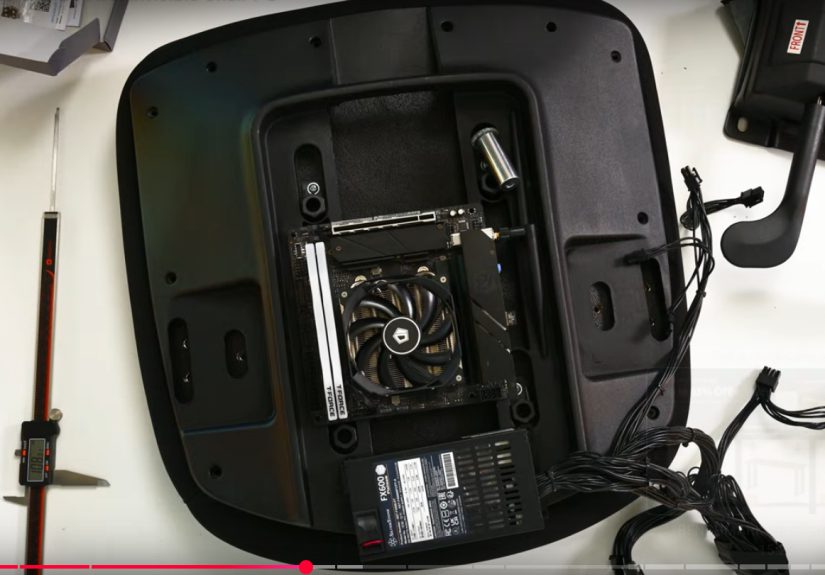
The core idea is simple: create enough room beneath the seat pan of a chair to hold compact desktop components, then hide them inside a custom shell so the chair still looks mostly normal. The components must be slim, carefully positioned, and cooled well enough to avoid turning the whole thing into a padded toaster.
That sounds simple until you remember that desktop parts are not exactly famous for cooperating with furniture. A CPU, GPU, motherboard, power supply, storage, and cooling solution all need space, airflow, stability, and safe cable routing. In a standard case, engineers solve those problems with fan mounts, vents, clearances, and lots of boring but important metal. In a chair, you solve them with creative compromises, custom parts, and the kind of confidence that usually precedes either innovation or regret.
The most clever part of the idea is not hiding the parts. It is arranging them in a way that preserves the chair’s function. You still need to sit, lean back, roll around, and adjust position without crushing anything or creating a dangling cable disaster. That alone makes the project less like a novelty prop and more like a serious packaging exercise.
Why the “Invisible” Part Matters
PC builders have been moving toward hidden hardware aesthetics for years. Back-connect motherboards, rear cable routing, cleaner cases, and minimalist battlestations all point to the same desire: less visual noise. People do not just want a powerful machine anymore. They want a setup that feels curated.
The chair PC is an extreme version of that trend. It does not merely hide cables. It hides the whole computer. That is why the idea resonates beyond pure gimmick territory. It takes the same instinct behind sleek monitor arms, under-desk docks, and invisible cable channels and pushes it into absurd-but-functional territory.
Why the Heated-Seat Joke Is More Than a Joke
Every funny idea has a technical truth hiding inside it. In this case, the truth is heat.
Desktop PCs generate heat because that is what powerful components do. A modern gaming CPU and midrange GPU may be relatively efficient compared with older monsters, but they still dump significant thermal energy into their surroundings. In a normal case, that heat is managed with planned airflow: intake, exhaust, cooler design, case pressure, and fan placement. Put the same hardware inside a chair and suddenly the airflow path becomes a lot less forgiving.
This is where the “heated seat” line stops being a punchline and starts being a design problem. The closer the components are to foam, fabric, plastic shells, and the human body, the less margin you have for sloppy thermal decisions. A build like this has to control hot spots, keep airflow moving, and prevent the seat from becoming unpleasant during longer sessions.
To be fair, plenty of users would not mind a little warmth in winter. But “pleasantly warm” and “why does my office chair feel like it is brooding” are not the same thing.
Comfort Is Not Just About Soft Padding
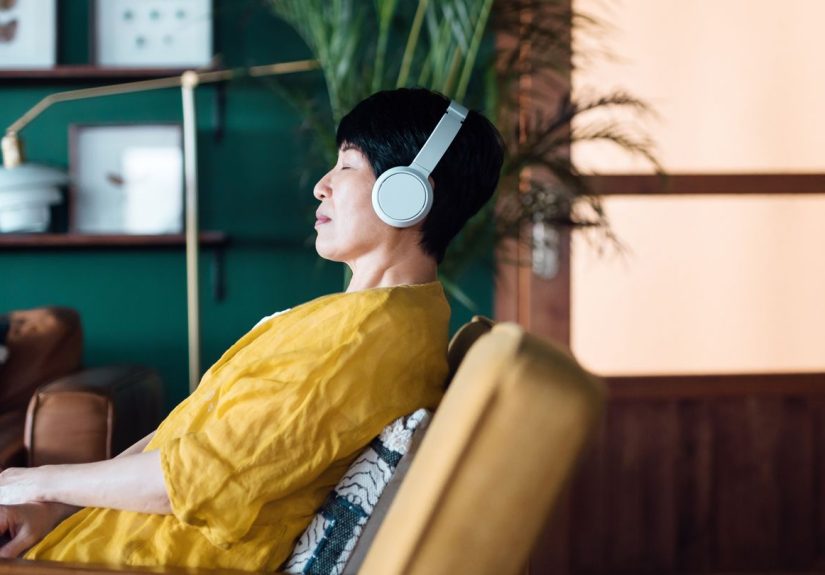
Modern ergonomic seating is increasingly built around breathability. Mesh backs, ventilated cushions, cooler-touch materials, and heat-dissipating foams all exist for a reason: sitting for long periods gets uncomfortable when heat builds up. That is why the chair-PC idea feels so delightfully backward. The wider furniture industry is trying to make seats cooler, while this build is literally stuffing a computer under one.
That tension is part of what makes the concept so memorable. It is not just a hidden PC. It is a hidden PC in the exact product category currently marketed around airflow, support, and all-day comfort. The engineering flex is real. The irony is even stronger.
The Real Beauty of the Idea: It Solves a Design Problem
Under all the humor, this build answers a genuine question: where should a desktop PC live when your workspace is small, your aesthetic is strict, and you do not want to downgrade to weaker hardware?
That matters because many people now work and game in the same room. Desk real estate is limited. Towers take floor space. Mini PCs are wonderfully compact, but they are not always ideal for people who want desktop-grade graphics or easier upgrade paths. Traditional gaming cases can be beautiful, but they are still large objects demanding visual attention.
The invisible chair PC says there may be value in thinking beyond the case entirely. Not every answer has to be a box on or under a desk. Some could be built into furniture, architecture, or modular workspace elements. We have already seen hints of that with desk PCs and hidden-connector ecosystems. The chair version is simply the wildest proof of concept so far.
Would This Ever Make Sense for Normal People?
For most people, no. Let’s not pretend otherwise.
If your goal is practicality, there are easier ways to build a clean setup. A small-form-factor desktop, a hidden tower shelf, or a compact under-desk mount will get you most of the aesthetic benefit with far less complexity. They are easier to cool, easier to repair, and far less likely to make guests ask whether your chair is humming.
But that does not mean the idea is pointless. Experimental builds are often valuable because they reveal what people want before mainstream products catch up. Very few people need a PC in a chair. Many people want a cleaner desk, fewer visible cables, less visual clutter, and hardware that integrates more gracefully into living spaces.
That is the real signal here. The chair PC is not the future in literal form. It is the exaggerated prototype of a future where computing hardware disappears more elegantly into everyday objects.
Lessons Brands Could Learn From a Chair PC
1. People Crave Invisible Tech
The best technology often feels like it is barely there. Consumers love setups that look calm, neat, and intentional. When hardware disappears, the room feels less like a workshop and more like a place people actually want to spend time in.
2. Cable Management Is Now Part of the Product
Clean builds are no longer a niche obsession. Hidden connectors, cleaner motherboard layouts, and rear-routed cabling all exist because users care deeply about visual order. A chair PC simply takes that desire to its illogical but fascinating endpoint.
3. Thermal Design Still Rules Everything
You can hide hardware almost anywhere, but physics remains gloriously unbothered by aesthetics. The tighter the enclosure, the more important cooling becomes. Any future “invisible computing” idea will live or die by airflow, heat dissipation, and serviceability.
4. Comfort Cannot Be an Afterthought
A chair with a computer inside is still a chair first. If the seat loses ergonomic support, breathability, or long-session comfort, the concept collapses. Tech that integrates into furniture has to respect furniture rules, not just hardware rules.
So, Is It Genius or Nonsense?
The honest answer is both.
It is nonsense because almost nobody needs this, and sensible people generally try to keep high-performance electronics out of the same object that supports their body weight. It is genius because it solves a real aesthetic challenge in a way that is unexpectedly functional, technically impressive, and impossible to ignore.
That combination is exactly why the idea works as content and as commentary. The invisible PC doubles as heated seat because modern tech culture rewards creations that are part engineering, part design statement, and part joke with a straight face. It is a weird machine for weird times.
And yet, buried inside the absurdity is a surprisingly clear message: users are tired of ugly tech footprints. They want power without clutter, performance without visual chaos, and hardware that feels integrated instead of imposed. The chair PC may not become a product category, but the desire behind it absolutely will shape future PCs.
Extended Experience Section: What Living With an Invisible Chair PC Might Actually Feel Like
Imagine walking into your office every morning and seeing what appears to be the cleanest setup of your life. No tower under the desk. No bulky chassis stealing legroom. No blinking cube on the floor collecting dust bunnies like a part-time vacuum. Just a monitor, a keyboard, a mouse, and one suspiciously important chair. At first, the experience would feel almost luxurious. The room would look calmer. The desk would photograph better. You would probably become the kind of person who suddenly says things like “I’m really into negative space now,” which is dangerous but understandable.
Then the daily reality would begin to kick in. Sitting down would no longer be a mindless action. You would know, at least on some level, that you were lowering yourself onto a custom-built cluster of expensive components. Every shift in posture would come with a tiny inner monologue. Was that normal flex? Did I just hear the fan curve change? Is my chair doing chair noises or computer noises? The line between office furniture and machine would blur in a way that is either thrilling or mildly stressful, depending on your personality and how much money you spent on the GPU.
There would also be a strange satisfaction in the invisibility of it all. Friends or coworkers on video calls would see a neat background and assume you had finally matured into a responsible adult with tasteful restraint. They would not know you were literally sitting on a gaming PC. That secret would be part of the fun. The setup would feel like an inside joke between you and the furniture. Minimalism on the outside, complete hardware goblin behavior underneath.
Comfort would probably become the deciding factor. On a cool day, the extra warmth might feel cozy, almost premium, like a seat with accidental luxury features. On a long session, though, you would start noticing whether the chair breathes well, whether heat lingers in the cushion, and whether the novelty remains charming after hour three. This is where the fantasy either stays delightful or turns into a very expensive reminder that computers and upholstery have different life goals.
Maintenance would be another emotional adventure. Dusting a normal PC is routine. Maintaining a chair PC sounds like the beginning of a sentence that ends with tools on the floor and regret in the air. Even something small, like checking a cable or swapping storage, would feel less like “opening a case” and more like “performing elective surgery on office equipment.” That does not make it impossible. It just means the owner would need more patience, more planning, and a stronger relationship with screwdrivers than the average user.
Still, the experience would be unforgettable. That is the thing experimental builds often get right. They may not be universally practical, but they make computing feel playful again. An invisible chair PC would turn routine desktop use into a story. It would remind you that PC culture is still full of people willing to ask ridiculous questions and then answer them with actual hardware. Even if you never build one yourself, it is hard not to admire the audacity. There are cleaner setups, cheaper setups, cooler setups, and far more sensible setups. But very few can claim, with a straight face, that the best seat in the house is also the fastest machine in it.
Conclusion
The invisible PC that doubles as a heated seat is not just internet bait for gadget lovers. It is a snapshot of where enthusiast tech is going: toward cleaner spaces, stealthier hardware, and setups that blend into everyday life instead of dominating it. Yes, the concept is eccentric. Yes, it sounds like something invented after too much caffeine and too many cable-management videos. But it also captures a very modern desire for computing power that feels elegant, compact, and nearly invisible.
In that sense, the chair PC matters even if nobody mass-produces it. It proves that people are willing to rethink the physical shape of the desktop itself. The tower is not sacred. The desk is not the limit. And if the future occasionally ends up a little warmer than expected, well, that is the price of innovation with a sense of humor.