Table of Contents >> Show >> Hide
Note: Web-publishing version only. All source-link artifacts and reference markup have been intentionally removed.
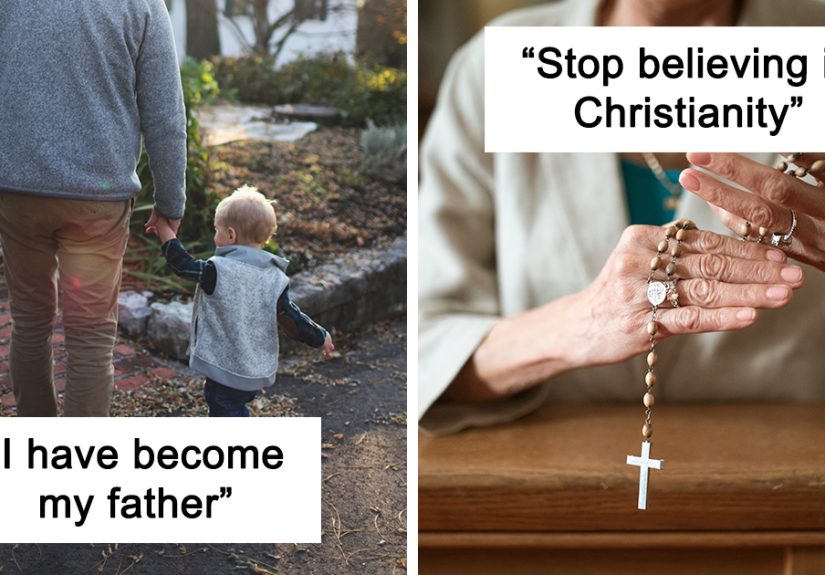
Every kid has a private little oath tucked somewhere between elementary school and the first eye roll of middle school: I will never be like my dad. I will not lecture people about the thermostat. I will not take road construction personally. I will not stand in the kitchen with my hands on my hips like I’m inspecting a national emergency involving Tupperware lids.
And then adulthood arrives wearing cargo shorts and a look of betrayal.
One day you hear yourself say, “We’re not made of money,” while comparing paper towel prices like a Wall Street analyst. Another day, you realize you’ve spent 15 full minutes searching for the “good screwdriver,” as if the fate of civilization depends on it. The great twist of growing up is that the habits we mocked as children often come back wearing a name tag that says responsibility.
That does not mean every family pattern is healthy, and it definitely does not mean we’re doomed to repeat every irritating thing our parents ever did. But it does explain why so many adults eventually catch themselves sounding, moving, budgeting, tidying, muttering, and sighing exactly like the man they swore they’d never become.
This is the funny side of that realization: the household quirks, money habits, protective instincts, tiny speeches, and deeply committed opinions about leftovers that somehow survive the trip from childhood annoyance to adult identity. Below are 30 painfully relatable confessions inspired by the kinds of experiences people share every day when they realize, with equal parts horror and affection, that yes, they have absolutely become their father.
Why “I’ll Never Be Like My Dad” Usually Loses to Real Life
Childhood has a sneaky way of sticking. We learn what “normal” looks like by watching the adults who raise us: how they handle stress, how they spend money, how they react when the gas tank hits empty, and whether they treat a plastic grocery bag like trash or like a family heirloom. As kids, we notice all of it. As adults, we repeat more of it than we expect.
Part of the reason is simple: routines become invisible when they are practiced for years. Another part is that adulthood makes our parents’ logic look annoyingly reasonable. Suddenly, dad’s obsession with turning off lights is not “dramatic,” it is “a utility bill.” His refusal to pay a delivery fee is not “cheap,” it is “financial discipline.” His deep emotional bond with a coffee can full of random screws is not “weird,” it is “preparedness.”
And then there’s the emotional stuff. Even when people work hard to break unhealthy cycles, they still find themselves borrowing familiar phrases, tones, and habits under stress. The difference is awareness. The best version of growing up is not becoming a carbon copy of your father. It is recognizing what you inherited, keeping what works, laughing at what’s ridiculous, and editing the rest like a grown-up with better snacks.
30 People Share the Exact Moment They Realized They Had Become Their Father
- “I turned off three lights in a room I wasn’t even using.” I used to think my father had a personal feud with lamps. Now I leave a room and hit every switch like I’m protecting the family fortune.
- “I said, ‘We have food at home,’ and meant it.” As a child, that sentence felt oppressive. As an adult who just bought groceries, it feels like poetry and fiscal responsibility wrapped into one.
- “I became emotionally invested in the thermostat.” I don’t merely adjust it. I guard it. I monitor it. I resent anyone who touches it without filing the proper paperwork.
- “I inspected fruit by squeezing it like I’d trained for this moment.” My father never grabbed the first avocado. He evaluated it like a jewel appraiser. I mocked him for years. Yesterday, I rejected six avocados in silence.
- “I save rubber bands, twist ties, and decent-sized boxes.” I once believed this was hoarding. Now I call it a ‘system,’ which is exactly the kind of thing my father would say with a straight face.
- “I made a noise when I sat down, and a different noise when I stood up.” No one prepares you for the day your body develops its own sound effects. My father used to groan like an old screen door. I now have a similar playlist.
- “I left 20 minutes early for something 8 minutes away.” He called it being responsible. I called it paranoia. Now I arrive absurdly early and sit in the car like a seasoned suburban tactician.
- “I refused to pay for bottled water at the airport.” Dad always acted like convenience pricing was a moral insult. I just refilled my old bottle in a terminal and felt spiritually aligned with him.
- “I gave an unsolicited lecture about tire pressure.” Nobody asked. Nobody needed it. Yet there I was, talking about road safety with the energy of a man who has finally become inevitable.
- “I got excited about a flashlight.” Not just any flashlight. A good flashlight. Bright beam, solid grip, respectable battery life. I used to laugh at this. I now have opinions.
- “I checked the door twice before bed.” My father’s nightly lock-check felt theatrical when I was a kid. Now I do a full security lap like I’m protecting crown jewels and half a sandwich.
- “I started rinsing out jars because they looked useful.” Pasta sauce jars, pickle jars, suspiciously sturdy containers I look at all of them and think, storage. This is how it starts.
- “I muttered about gas prices to nobody in particular.” It was not a conversation. It was a public service announcement delivered in a parking lot, exactly the way my father used to do it.
- “I became a leftovers evangelist.” I used to crave takeout. Now I stare into the refrigerator and see potential, value, and a lunch that absolutely should not be wasted.
- “I developed strong feelings about lawn care without owning much lawn.” Somehow I now notice grass height, edging quality, and whether a neighbor is cutting diagonally. This is not a hobby I asked for.
- “I stood in Home Depot and felt calm.” As a child, hardware stores were punishment. As an adult, they feel like a cathedral for people who believe a shelf can fix their life.
- “I started keeping ‘the good batteries’ in a specific drawer.” My father treated batteries like emergency gold. I now guard mine with the same suspicious energy and absolute refusal to waste the fresh ones.
- “I gave someone directions instead of just sending the link.” Not only directions landmarks. “Turn left at the old bank, then go past that place that used to be a diner.” Dad would be proud.
- “I became weirdly proud of fixing something small.” It was a loose cabinet hinge, not open-heart surgery. But after tightening two screws, I walked around the house with the confidence of a frontier legend.
- “I complained that nobody closes cabinets.” This sentence came out of my mouth with such authority that I had to stop and stare into the middle distance for a second.
- “I said, ‘Don’t touch that, it still works,’ about an appliance from another century.” My father believed in repairing things until they were mostly memory and one screw. I now understand the emotional value of a functioning old toaster.
- “I started sorting errands by route efficiency.” We are not just going to the store. We are optimizing. Dry cleaning first, pharmacy second, groceries last. Fuel economy meets suburban chess.
- “I wore comfort sneakers on purpose.” No irony. No costume. Just excellent arch support and the sudden realization that my father had been right about feet all along.
- “I got annoyed when the front door was open too long.” Whether it was heat, cold, bugs, or neighborhood entropy entering the house, I heard myself say, “Were you born in a barn?”
- “I read every ingredient label in the grocery store.” Dad used to compare cereal like he was auditing the company. Now I stand in aisle seven making deeply serious decisions about sodium.
- “I fell asleep in a chair in the middle of the afternoon.” Television on. Arms folded. Air of complete denial when awakened. I used to mock this move. I now perform it professionally.
- “I started saving gift bags.” At some point, every father becomes suspicious of buying new wrapping materials. I’m there now, flattening tissue paper like a person with priorities.
- “I repeated the same joke at every family gathering.” I once thought dad jokes were accidental. They are not. They are a tactical commitment to consistency, and I have apparently joined the tradition.
- “I cared more about the parking spot than the destination.” Close exit, easy pull-out, minimal door-ding risk these things matter now. The child version of me would be devastated.
- “I realized the worst part is… some of it is actually useful.” The preparedness, the practicality, the quiet fixing of things, the loyalty to routines I didn’t become my father all at once. I became the parts of him adulthood finally made me understand.
More Experiences: What It Actually Feels Like to Become Your Father
The strangest part of becoming your father is that it rarely happens in one dramatic movie scene. There is no thunderclap. No narrator says, “And on this ordinary Tuesday, he crossed over.” It happens in tiny, embarrassingly specific moments. You stand in your kitchen at 9:14 p.m., wrapping half an onion in foil like it is a priceless artifact, and suddenly your childhood flashes before your eyes. Or you hear yourself giving a weather update with unnecessary seriousness: “That wind is coming from the north.” Since when did you become a man who gives atmospheric briefings?
It also happens in the way adulthood rearranges your sympathies. When you are a kid, your father’s rules seem random, annoying, and personally designed to ruin your fun. As an adult, you learn that many of those rules were actually just exhaustion wearing sensible shoes. He did not want the door left open because he hated joy. He wanted the door closed because the air conditioning cost money, mosquitoes were free, and somebody had to notice both facts. That is the brutal comedy of growing up: the same logic you rejected at 12 can sound downright elegant at 32.
Then come the phrases. Not the big speeches the little ones. The muttered one-liners. “That’s not going anywhere.” “Use the good scissors, not the kitchen ones.” “Why is every light in the house on?” These sayings lie dormant for years and then leap out when you least expect them, usually while carrying groceries or paying a bill. The real shock is not just that you say them. It is that you say them with conviction. You do not borrow the line as a joke. You deploy it as policy.
There is also a softer side to this realization, and that is where the story gets unexpectedly human. Sometimes becoming your father means inheriting his carefulness, his consistency, his annoying but reliable habit of planning ahead. It can mean learning why he saved extra nails in the garage, why he preferred repairing over replacing, why he worried about tires, locks, receipts, and leftovers. Children often see these things as fussy. Adults eventually see them as a quiet kind of care. He was not always trying to control the world. Sometimes he was just trying to hold it together.
Of course, not every inheritance deserves applause. Some people catch themselves repeating harsher patterns impatience, emotional distance, stubborn silence, a tendency to confuse love with criticism. That recognition matters too. The healthiest version of “I have become my father” is not blind imitation. It is honest inventory. Keep the preparedness. Lose the yelling. Keep the loyalty. Lose the refusal to apologize. Keep the humor, the practical wisdom, the ability to fix a shelf with three tools and unreasonable confidence. Leave behind whatever made childhood smaller than it needed to be.
In the end, growing up is less about becoming your father exactly and more about understanding which pieces of him made their way into you. Some of those pieces will make you laugh. Some will make you cringe. A few may even make you grateful. And if you ever catch yourself standing in the driveway, hands on hips, evaluating nothing in particular with deep concern, just know this: the transformation is complete. Welcome to the club. New balances are optional, but highly recommended.
Conclusion
Maybe the real joke is not that we become our fathers. It is that we spend years resisting the parts of adulthood that later become our survival kit. The thriftiness, the routines, the warnings, the lock checks, the practical shoes, the reverence for leftovers they all look ridiculous until life hands you a mortgage, a grocery bill, and a junk drawer full of mystery chargers.
So yes, plenty of us become our fathers in the end. But ideally, we do it with edits. We keep the useful habits, upgrade the emotional software, and laugh hard whenever we hear one of his lines come flying out of our own mouth. That moment of realization may be humbling, but it is also weirdly comforting. Because sometimes growing up means discovering that the person you rolled your eyes at was doing the best he could and now, so are you.