Table of Contents >> Show >> Hide
- Why the Resume Skills Section Matters
- What a Resume Skills Section Is (and What It Isn’t)
- Hard Skills vs. Soft Skills: What Belongs in the Skills Section?
- Step-by-Step: How to Write a Resume Skills Section
- 1) Start with the job description (seriously)
- 2) Make a master skills list, then cut ruthlessly
- 3) Prioritize skills that are measurable or verifiable
- 4) Group related skills for readability (optional but smart)
- 5) Put the skills section in the right place
- 6) Keep it honest
- 7) Support your skills with proof in the experience section
- How Many Skills Should You List on a Resume?
- Resume Skills Section Examples (By Scenario)
- Common Mistakes to Avoid
- ATS-Friendly Tips for a Resume Skills Section
- Quick Formula You Can Use Today
- Final Thoughts
- Experiences and Real-World Scenarios: What Actually Happens When You Fix a Resume Skills Section (500+ Words)
Let’s be honest: the resume skills section looks tiny, but it can do a lot of heavy lifting. It’s the part recruiters scan when they’re moving fast, the section applicant tracking systems (ATS) use to match keywords, and the place where many job seekers accidentally list “hardworking” like it’s a rare superpower.
A strong resume skills section is not a random list of buzzwords. It’s a targeted, job-relevant snapshot of what you can actually do. Done right, it makes your resume easier to scan, easier to trust, and easier to move into the “interview” pile.
In this guide, you’ll learn exactly how to write a resume skills section that works for real hiring situations: how many skills to include, where to place the section, which skills belong there, which ones do not, and how to make the whole thing ATS-friendly without sounding like a robot wrote it during a coffee shortage.
Why the Resume Skills Section Matters
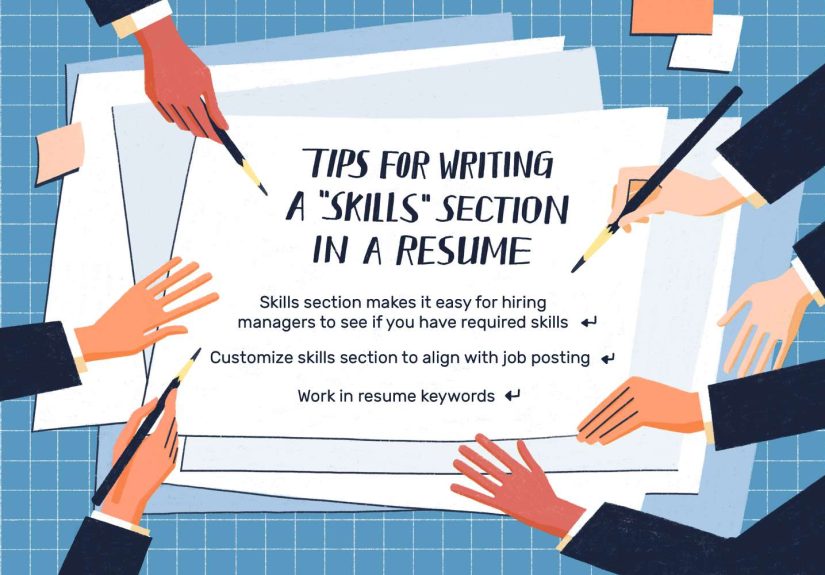
Hiring managers and recruiters often review resumes quickly, especially on the first pass. That means your skills section helps them spot job-fit fast. If a role requires Excel, SQL, Salesforce, Adobe Creative Suite, or bilingual communication, this section can confirm those qualifications in seconds.
It also supports ATS keyword matching. Many employers use software to scan resumes for relevant terms, including skills, certifications, tools, and job-specific language. If the job description says “project management,” “data analysis,” or “customer relationship management,” and you genuinely have those skills, your resume should reflect that wording naturally.
In other words, your skills section is part quick reference, part keyword strategy, part credibility check.
What a Resume Skills Section Is (and What It Isn’t)
A resume skills section is a concise list of relevant abilities, tools, technologies, and competencies that support your fit for a specific job. It is usually formatted as a short list or grouped categories for easy scanning.
What it is:
- A clean list of job-relevant skills
- A place for hard skills, technical skills, tools, software, languages, and measurable competencies
- A quick-match section for recruiters and ATS
What it is not:
- A personality test (“fun,” “nice,” “good vibes”)
- A dumping ground for every skill you’ve ever seen on LinkedIn
- A replacement for achievement-based bullet points in your experience section
The best resumes use the skills section to summarize capabilities, then prove those capabilities with results in the experience section.
Hard Skills vs. Soft Skills: What Belongs in the Skills Section?
Here’s the rule that clears up a lot of confusion: most resume skills sections should focus primarily on hard skills and technical skills, while soft skills are usually better demonstrated in your work experience bullets.
Hard skills (usually belong in the skills section)
- Excel (pivot tables, VLOOKUP/XLOOKUP)
- SQL
- Python
- Salesforce
- Google Analytics 4
- Adobe Photoshop
- QuickBooks
- CRM systems
- Machine operation
- Bilingual proficiency (e.g., Spanish Professional Working Proficiency)
Soft skills (better shown in experience bullets)
- Communication
- Leadership
- Teamwork
- Problem-solving
- Time management
- Adaptability
Why? Because anyone can type “leadership” on a resume. It becomes believable when paired with evidence, like:
Led a 6-person onboarding project that reduced new-hire ramp time by 18%.
That line shows leadership, project management, communication, and process improvement without shouting any of them in all caps.
Step-by-Step: How to Write a Resume Skills Section
1) Start with the job description (seriously)
Before writing anything, read the job posting closely. Highlight repeated words and required qualifications. Look for:
- Tools and software
- Certifications and licenses
- Technical abilities
- Industry terms
- Transferable skills that appear repeatedly
If the posting mentions “data visualization,” “Tableau,” and “stakeholder reporting” multiple times, those are strong signals. Your resume skills section should mirror the employer’s language when it accurately reflects your experience.
2) Make a master skills list, then cut ruthlessly
Create a larger list of skills you genuinely have. Then trim it down to the ones most relevant to the specific role. Relevance beats volume.
If you’re applying for a marketing analyst job, “SQL,” “GA4,” “A/B testing,” and “dashboard reporting” matter more than “Microsoft Word.” Yes, Word is useful. No, it is not the star of the show in 2026.
3) Prioritize skills that are measurable or verifiable
The strongest resume skills are concrete. Recruiters can understand them quickly, and interviewers can ask about them easily.
Better:
- Python (Pandas, NumPy)
- Excel (Power Query, PivotTables)
- Customer support ticketing (Zendesk, Intercom)
Weaker:
- Computer skills
- People person
- Hard worker
4) Group related skills for readability (optional but smart)
If you have more than a short list, group skills into categories. This improves scan-ability and prevents your section from looking like a grocery receipt.
Example grouped format:
Grouping is especially helpful for technical roles, product roles, analysts, designers, and anyone with a mix of tools and domain skills.
5) Put the skills section in the right place
In many resumes, the skills section appears after work experience (often near the bottom). That works well when your experience is your strongest selling point.
But placement can change depending on your situation:
- Career changer: Put skills higher to highlight transferable strengths
- Recent graduate: Place skills near education if you have limited experience
- Technical role: Put technical skills near the top for fast scanning
- Hybrid resume format: Skills may appear earlier with a summary
The goal is simple: make the most important information easy to find fast.
6) Keep it honest
Don’t list skills you can’t discuss in an interview. If you put “Python” on your resume and your entire Python experience is watching a 12-minute tutorial while eating cereal, that may become a stressful interview moment.
You do not need to inflate. You need to be accurate. Strong resumes are specific, not dramatic.
7) Support your skills with proof in the experience section
Your skills section gets attention. Your work experience earns trust.
If you list “Project Management” in your skills section, support it with a bullet like:
Managed a cross-functional website migration project across design, engineering, and content teams; launched on schedule with a 12% increase in page speed.
This approach is far more persuasive than listing soft skills alone.
How Many Skills Should You List on a Resume?
There is no magic number, but most job seekers do best with a focused list rather than an exhaustive one. A practical range is often 8 to 15 relevant skills, depending on your industry and experience level.
Here’s a simple guide:
- Entry-level: 8–12 highly relevant skills
- Mid-level professional: 10–15 skills, grouped if needed
- Technical specialist: 12–20 skills if organized by categories
If your skills list is long, make sure every item earns its spot. If a skill is obvious, outdated, or unrelated, cut it.
Resume Skills Section Examples (By Scenario)
Example 1: Customer Support Resume Skills Section
Example 2: Digital Marketing Resume Skills Section
Example 3: Data Analyst Resume Skills Section
Example 4: Recent Graduate (General Business) Resume Skills Section
Notice what these examples have in common: they are role-specific, readable, and mostly measurable.
Common Mistakes to Avoid
1) Listing only soft skills
A skills section that says “communication, teamwork, leadership, problem-solving” tells employers very little by itself. These are important qualities, but they need context and evidence.
2) Copy-pasting the job description word-for-word
Tailoring is smart. Cloning is not. Your skills should match the role, but they must still reflect your real experience and natural language.
3) Using vague labels
Replace “computer skills” with specific tools. Replace “marketing” with “email marketing,” “SEO,” or “paid social reporting,” if accurate.
4) Over-designing the section
Fancy icons, graphics, and tables can look nice but may reduce ATS readability. Keep formatting simple and clean: standard headings, consistent spacing, and plain text where possible.
5) Including beginner-level skills for experienced roles
If you’re applying for senior positions, listing basics can weaken your profile. Focus on higher-value skills, platforms, methods, certifications, and tools relevant to the job level.
6) Forgetting transferable skills in a career pivot
If you’re changing industries, you may not have the exact title matchbut you probably have overlapping skills. Prioritize skills like project coordination, stakeholder communication, process improvement, analytics, or client management when they fit the target role.
ATS-Friendly Tips for a Resume Skills Section
- Use a clear heading like Skills or Technical Skills
- Match job-description keywords naturally (only if accurate)
- Use standard spelling and common acronyms (e.g., “Search Engine Optimization (SEO)” if relevant)
- Avoid placing skills in text boxes, graphics, or complex columns
- Keep formatting simple and readable
- Save in the file type requested by the employer
Think of ATS optimization as translation, not trickery. You are helping software and humans recognize what you already know how to do.
Quick Formula You Can Use Today
If you want a practical method, use this formula:
Then go back and make sure your experience bullets prove the most important skills with real outcomes.
Final Thoughts
Writing a resume skills section is less about making a long list and more about making a smart one. A great skills section is targeted, honest, easy to scan, and aligned with the job description. It highlights hard skills clearly, treats soft skills with proof instead of buzzwords, and supports ATS readability without sacrificing human readability.
If you remember only one thing, make it this: relevance beats quantity every time. A short list of the right skills will outperform a giant list of random ones. Recruiters are not grading you on how many tools you’ve heard of. They are trying to answer one question: “Can this person do this job?”
Help them say “yes” faster.
Experiences and Real-World Scenarios: What Actually Happens When You Fix a Resume Skills Section (500+ Words)
One of the most common resume problems I’ve seen is the “everything bagel” skills section. A candidate applies for a project coordinator role, but their skills section includes Photoshop, event planning, Java, social media, public speaking, QuickBooks, negotiation, and “multitasking.” Are they talented? Probably. Is the resume helping them? Not really. The issue isn’t lack of ability; it’s lack of focus.
In one typical scenario, a career changer moved from hospitality into customer success. Their original resume skills section leaned heavily on soft skills: communication, teamwork, leadership, problem-solving, positive attitude. All good things. Also all invisible without proof. We rewrote the section to focus on transferable and measurable skills: CRM data entry, conflict resolution, upselling, customer retention support, scheduling systems, POS systems, and bilingual service. Then we updated the experience bullets to show results, such as handling high customer volume and resolving escalations. The resume immediately became more credible because the skills matched the target job and the bullet points backed them up.
Another common experience happens with recent graduates. Many students think they “don’t have enough skills,” so they either leave the section weak or pad it with generic terms. In reality, they often have more relevant skills than they realize: Excel, lab techniques, Python for coursework, Canva, research methods, presentation tools, survey design, or project collaboration from class teams. The breakthrough usually happens when they stop asking, “What jobs have I had?” and start asking, “What tools and methods have I used successfully?” Once they list those clearly, their resume looks much strongereven before they have years of full-time experience.
I’ve also seen the opposite problem with technical candidates: they include too many skills. A software applicant may list 25 languages, frameworks, and tools, but the work history only supports five of them. That creates doubt. Hiring managers may wonder whether the candidate is broad and shallow rather than focused and effective. A better approach is to keep the skills section relevant to the job posting and use categories. For example: Languages, Frameworks, Cloud/DevOps, Databases, and Testing Tools. Then list only the technologies the candidate can actually discuss and demonstrate in an interview. The result feels more senior and more trustworthy.
Another real-world pattern shows up in ATS-heavy application processes. Candidates sometimes build visually impressive resumes with icons, rating bars, and two-column layouts, then wonder why response rates drop. When the skills section is hidden in design-heavy formatting, ATS parsing can become less reliable, and recruiters scanning quickly may miss key qualifications. Simplifying the layoutusing a standard “Skills” heading and clean text formattingoften improves clarity immediately. It may look less flashy, but it performs better.
The biggest lesson from these experiences is simple: a resume skills section works best when it is treated like strategy, not decoration. When candidates tailor skills to the role, use specific terms, and support those skills with evidence in the experience section, their resume becomes easier to understand and easier to trust. And in a competitive job market, clarity is not boringit is a competitive advantage.