Table of Contents >> Show >> Hide
- The Short Answer: When Is Cheesecake Done?
- Why Cheesecake Is Tricky to Judge
- The 3 Best Ways to Tell if Cheesecake Is Done
- The Gentle Touch Test
- Visual Signs Your Cheesecake Is Ready to Come Out
- How Long Should Cheesecake Bake?
- Signs Your Cheesecake Is Not Done Yet
- Signs Your Cheesecake May Be Overbaked
- Why Cooling Matters Almost as Much as Baking
- Does a Water Bath Change the Doneness Test?
- Different Cheesecakes Behave Differently
- Common Cheesecake Mistakes That Mess with Doneness
- Three Real-World Cheesecake Examples
- Test Kitchen Experiences: What We Learned the Hard Way
- Final Slice
Note: This is body-only HTML, ready to paste into your editor.
Cheesecake is the dessert equivalent of a poker face. It can look calm, cool, and collected on top while secretly being soup in the middle. Or it can look like it needs “just five more minutes,” then come out overbaked, cracked, and a little too eager to resemble drywall. That is exactly why knowing how to tell if your cheesecake is done matters so much.
The good news is that you do not need psychic powers, a culinary degree, or an emotional support spatula. You just need to know what signs to look for. In our test kitchen, the best cheesecakes all hit the same sweet spot: the edges are set, the center still has a slight jiggle, and the cake finishes setting gradually as it cools. That is the moment you are chasing.
If you have ever pulled a cheesecake from the oven and whispered, “You good?” this guide is for you. Below, we break down the classic jiggle test, the best visual cues, when to use a thermometer, and the common mistakes that turn a creamy dream into a dry disappointment.
The Short Answer: When Is Cheesecake Done?
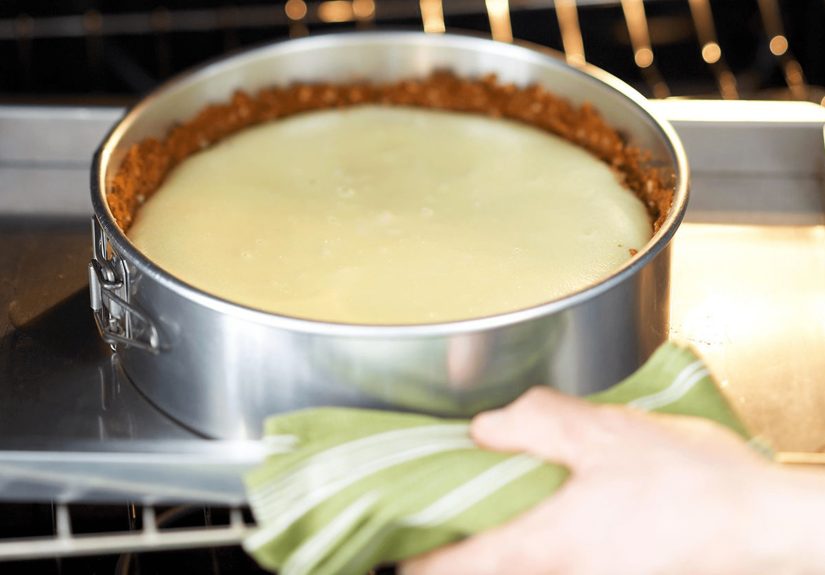
A baked cheesecake is usually done when the outer edge looks set and slightly puffed, the center still wobbles a little when you gently nudge the pan, and the top looks mostly matte rather than wet or glossy. The filling should no longer move like liquid. In other words, your cheesecake should jiggle gently in the center, not slosh around like it is preparing for open water training.
This matters because cheesecake is a custard-based dessert. It continues to cook from residual heat after you take it out of the oven, and it firms up even more as it cools and chills. If you wait until the center is completely firm before removing it, you are usually headed toward an overbaked cheesecake with a dry, crumbly texture.
Why Cheesecake Is Tricky to Judge
Unlike a standard cake, cheesecake does not give you the usual doneness clues. You are not looking for a clean toothpick or a springy crumb. A cheesecake is made mostly from cream cheese, eggs, sugar, and dairy, so it behaves more like a rich baked custard than a fluffy layer cake.
That is why the old toothpick test is not very helpful here. It can leave a visible crack in the center, and it does not tell you much about whether the filling has properly set. A cheesecake can still be perfect even when the middle looks slightly underdone at first glance. In fact, that soft center is often the secret to a silky slice after chilling.
The 3 Best Ways to Tell if Cheesecake Is Done
1. Use the Jiggle Test First
If there is one method every home baker should know, it is the jiggle test. This is the easiest and most reliable way to check cheesecake doneness without making a mess. Open the oven and gently tap the side of the springform pan with a wooden spoon, or carefully nudge the rack.
What you want to see is a cheesecake with set edges and a small, soft wobble in the center. The outer 2 to 3 inches should look stable. The middle should move slightly, like gelatin or softly set pudding. What you do not want is a surface that ripples all the way across, a wet-looking center, or batter that still behaves like a dairy puddle with ambition.
A good rule of thumb is this: jiggle like Jell-O, not wiggle like a wave. If the whole cheesecake moves like one giant liquid sheet, it needs more time. If the edges are firm and only the center trembles, you are in very good shape.
2. Look for the Right Visual Cues
A cheesecake has body language. Yes, dessert now has body language, and honestly, it is pretty expressive. A properly baked cheesecake usually has edges that are slightly puffed and set. The top should look smooth and mostly dry instead of shiny and raw. The center may still appear softer than the edges, but it should not look loose or wet.
On a classic cheesecake, you may notice a small circle in the middle that still moves when the pan is nudged. That is normal. It often leads to the creamiest final texture once the cheesecake cools completely and spends enough time in the refrigerator.
3. Use a Thermometer for Backup
If you prefer a more precise approach, an instant-read thermometer can help confirm doneness. For many baked cheesecakes, the center is in the right zone at about 150°F, though exact target temperatures can vary a little depending on the recipe and where you insert the probe. Some bakers also check slightly in from the edge, where the reading will naturally be higher than the very center.
This method is especially useful if you are new to baking cheesecake, if your oven tends to run hot or cold, or if you simply sleep better at night with a number attached to your dessert decisions. Just do not poke the top ten times like you are searching for treasure. One quick reading is enough.
The Gentle Touch Test
Some bakers like to lightly touch the center with a clean fingertip. If the top feels mostly set with a slight give, the cheesecake is likely done. If filling sticks to your finger or the surface still feels obviously loose, give it more time.
This method can work, but it is not always the first one we recommend. A cheesecake top is delicate, and poking it too early can mark the surface. Think of this as a backup plan when the jiggle test and visual cues already suggest you are very close.
Visual Signs Your Cheesecake Is Ready to Come Out
When a cheesecake is done, the edges should be visibly more set than the middle. The top often loses that wet shine and turns more matte. You may see a small wobbling circle in the center, especially with a New York-style cheesecake, but it should not look raw.
Another helpful clue is how the cheesecake responds to movement. A done cheesecake should move in a controlled, gentle way. If it reacts like a bowl of freshly poured pancake batter, it is not done. If it trembles modestly and keeps its shape, that is the sweet spot.
How Long Should Cheesecake Bake?
This is where plenty of bakers get tricked. There is no single magic number because baking time depends on pan size, oven accuracy, recipe ingredients, filling depth, and whether you used a water bath. A tall cheesecake in a deep springform pan can need far more time than mini cheesecakes baked in a muffin tin.
The smartest move is to start checking at the early end of the recipe’s suggested baking range. Your oven has a personality. Sometimes that personality is “helpful and reliable.” Sometimes it is “wildly overconfident.” Trust the cheesecake more than the timer.
Signs Your Cheesecake Is Not Done Yet
If you are still unsure, these are the clearest signs your cheesecake needs more baking time:
- The center looks shiny and wet.
- The whole surface ripples when you gently move the pan.
- The filling sloshes instead of lightly wobbling.
- The middle looks loose under the surface.
- The cheesecake seems to sink dramatically while it is still in the oven.
If you notice any of those signs, keep baking in short intervals, about 3 to 5 minutes at a time. Cheesecake can shift from “almost there” to “beautifully done” fairly quickly near the end.
Signs Your Cheesecake May Be Overbaked
A cracked cheesecake is not automatically ruined, but it often points to overbaking, cooling too quickly, or both. Common signs include a very firm center before cooling, large cracks across the top, dry edges, excessive puffing in the oven, or a grainy texture after chilling.
The biggest mistake is waiting until the center looks completely set before taking the cheesecake out. That usually means you have already gone too far. A slightly underdone cheesecake often becomes silky and perfect after chilling. An overbaked cheesecake rarely gets a second chance.
Why Cooling Matters Almost as Much as Baking
Pulling the cheesecake from the oven is not the end of the job. It is halftime. A cheesecake that moves too quickly from hot oven to cool countertop to cold refrigerator is much more likely to crack from the shock. Gradual cooling lets the custard finish setting gently.
A smart cooling routine looks like this:
- Turn off the oven when the cheesecake reaches the proper jiggle stage.
- Crack the oven door open slightly.
- Let the cheesecake rest inside the oven for 30 minutes to 1 hour, depending on the recipe.
- Move it to a rack and cool it to room temperature.
- Chill it thoroughly for at least 4 hours, though overnight is often best.
This is the part nobody wants to hear, because cheesecake smells amazing and patience feels deeply offensive. Still, a long chill is what transforms “warm cream cheese pie” into the dense, creamy, sliceable dessert everyone actually wants.
Does a Water Bath Change the Doneness Test?
Yes, but in a useful way. A water bath creates gentler, more even heat and adds moisture to the oven environment. That helps prevent the edges from overcooking before the center is ready, and it lowers the odds of cracking.
With a water bath, the cheesecake usually bakes more evenly, so the jiggle test is easier to interpret. Without one, the outer ring may set faster, which means you need to watch the middle more carefully. Either way, the key doneness clues remain the same: set edges, slight center wobble, and no liquid movement.
Different Cheesecakes Behave Differently
Classic New York-Style Cheesecake
This is the one most people picture: tall, rich, creamy, and baked low and slow. It should come out with set edges and a center that still wobbles slightly. After chilling, the texture should be dense but creamy, not stiff or dry.
Basque Cheesecake
Basque cheesecake is the rebel cousin. It bakes at a higher temperature, gets deeply browned on top, and is intentionally more custardy inside. It often looks more dramatic in the oven, with a puffed top and a softer center. That is not a problem. That is the style doing its thing.
Mini Cheesecakes
Mini cheesecakes bake much faster and can be harder to judge because the wobble is smaller. Instead of a large center jiggle, you are looking for just a slight movement when the pan is tapped.
No-Bake Cheesecake
This one is a trick question. No-bake cheesecake is not “done” in the oven because there is no oven involved. It sets in the refrigerator, usually with help from whipped cream, condensed milk, gelatin, or another stabilizer. So if you are staring into the oven waiting for a no-bake cheesecake to reveal its inner truth, you are solving the wrong mystery.
Common Cheesecake Mistakes That Mess with Doneness
Overmixing the Batter
Too much air in the filling can lead to puffing, cracking, and an odd texture. Mix until smooth, then stop. Cheesecake likes calm energy.
Using Cold Ingredients
Cold cream cheese creates lumps, and lumpy batter bakes unevenly. Room-temperature ingredients help the filling bake more smoothly and more predictably.
Opening the Oven Too Often
Every time you open the oven door, the temperature drops. Check near the end of the bake, not every few minutes like you are monitoring a lunar landing.
Baking Until Fully Firm
This is the classic mistake. If the center is already fully solid in the oven, the finished cheesecake will likely be firmer and drier than you wanted.
Skipping the Chill Time
A cheesecake that has not chilled long enough can seem underdone even when it was baked perfectly. Chill first, judge later.
Three Real-World Cheesecake Examples
Example 1: The center is shiny and the whole top ripples when the pan is tapped. That cheesecake needs more time.
Example 2: The edges are set, the top looks mostly matte, and the middle has a small trembling circle. That cheesecake is ready to come out.
Example 3: The cheesecake is fully firm in the center, puffed high around the edges, and starts cracking as it cools. That cheesecake probably baked a little too long.
If you can learn to recognize Example 2, you are basically holding the keys to cheesecake confidence.
Test Kitchen Experiences: What We Learned the Hard Way
Every baker has had a cheesecake moment. You know the one. You pull the pan from the oven, stare at the center, and begin negotiating with the dessert universe. “Maybe that wobble is right,” you say. “Maybe it is underdone. Maybe I should bake it another ten minutes. Maybe I should start a new life under a different name.”
One of our earliest lessons came from a cheesecake that looked almost too soft in the middle. The edges were clearly set, the top looked smooth, and the center had a neat little wobble that felt suspicious. We came very close to sliding it back into the oven for more time. Instead, we trusted the signs, let it cool gradually, and chilled it overnight. The next day, it sliced beautifully: creamy, rich, and smooth enough to make everyone at the table go quiet for a second. That cheesecake taught us that a gentle jiggle is not a flaw. It is often the beginning of greatness.
Another lesson came from doing the exact opposite. In that case, the cheesecake stayed in the oven until the center looked fully firm. At first glance, it seemed like a smart move. Then the top cracked, the edges dried out more than we wanted, and the finished texture lost that silky, almost custard-like feel. It was still edible, of course. Cheesecake is rarely tragic. But it was not the kind of slice that makes people immediately ask for the recipe.
We also learned, somewhat rudely, that two ovens set to the same temperature can behave like complete strangers. One cheesecake recipe baked beautifully in one oven and needed nearly ten extra minutes in another. That experience cured us of trusting time alone. Now we treat recipe timing as a guideline and let the cheesecake itself make the final call.
Cooling turned out to be another major plot twist. Once, after a long baking day, we rushed a cheesecake from the oven to the counter and then into the refrigerator too quickly. The result was a dramatic crack right through the center. The flavor was still excellent, but the top looked like it had gone through an emotionally exhausting season finale. Since then, we let the oven door stay ajar and allow the cheesecake to cool slowly. It makes a real difference in texture and appearance.
Another practical lesson: not every “problem” is actually a disaster. A small crack can be covered with sour cream topping, whipped cream, berries, chocolate ganache, or cookie crumbs. A slightly soft center can often firm up after more chilling. A Basque cheesecake can come out deeply browned, sunken in the middle, and still be exactly right. In other words, cheesecake has range.
What do we trust most now? Not the clock. Not guesswork. Not the urge to keep baking until every last wobble disappears. We trust the combination of set edges, a slight center jiggle, gradual cooling, and a proper chill. Once you get familiar with that rhythm, cheesecake stops feeling mysterious. It starts feeling manageable, repeatable, and honestly kind of fun.
And that may be the best cheesecake lesson of all: perfection is not about baking until the cake looks absolutely firm in the oven. It is about understanding how cheesecake finishes the job after the oven is off. That is where the creamy texture happens. That is where the magic lives. And that is why the tiniest, most confident wobble is often the best sign you did everything right.
Final Slice
If you remember only one thing, make it this: cheesecake should not be fully firm when it leaves the oven. The edges should be set, the center should wobble slightly, and the rest of the setting happens during cooling and chilling. That one mindset shift is the difference between dry and dreamy.
So the next time your cheesecake gives you a tiny, confident jiggle, resist the urge to keep baking it into submission. Pull it, cool it slowly, chill it well, and let the custard do what custard does best. Your reward will be a creamy, smooth, bakery-worthy slice that looks impressive, tastes even better, and does not require a frosting cover-up mission.