Table of Contents >> Show >> Hide
- Why Cats Pull Hair Out (aka Overgroom): The Quick Breakdown
- The 10-Step Plan to Stop Hair-Pulling and Restore the Fluff
- Step 1: Start With a Vet Check (Because “It’s Stress” Is a Diagnosis of Exclusion)
- Step 2: Assume Fleas Until Proven Otherwise (Yes, Even for Indoor Cats)
- Step 3: Rule Out Skin Parasites and Ringworm (The “Tiny but Mighty” Causes)
- Step 4: Address Allergies Strategically (Don’t Randomly Switch Foods Every Tuesday)
- Step 5: Treat Secondary Infections (Because Itchy Skin Loves Company)
- Step 6: Check for Pain Triggers (Overgrooming Can Be a “Silent Ouch” Signal)
- Step 7: Reduce Stress Like It’s Your Cat’s Full-Time Job (Because It Kind of Is)
- Step 8: Upgrade Enrichment (Bored Cats Invent Weird HobbiesLike Self-Barbering)
- Step 9: Interrupt the Habit Safely (Protect the Skin While You Fix the Cause)
- Step 10: Track Progress and Follow Up (Because Skin Problems Love Plot Twists)
- Frequently Asked Questions
- Conclusion: Your Cat Isn’t “Being Bad”They’re Being Uncomfortable
- Extra: Real-World Experiences and Lessons That Make This Easier (About )
If your cat is “pulling its hair out,” you’re not aloneand your cat isn’t trying to audition for a dramatic soap opera (even if the performance is award-worthy).
Most of the time, what looks like hair-pulling is actually overgrooming: licking, nibbling, chewing, or barbering the coat until bald patches show up.
The tricky part? Overgrooming is usually a symptom, not a personality trait.
Here’s the big truth up front: cats don’t typically lick themselves bald “just because.”
It’s commonly driven by itch (fleas/allergies), discomfort (pain), skin infection, parasites, or stressand often more than one at the same time.
The goal isn’t to “make your cat stop.” The goal is to find the cause and remove the reason your cat feels like turning into a living lint roller.
Important note: This guide is educational and not a substitute for veterinary care.
If your cat has open sores, bleeding, scabs, a strong odor, swelling, lethargy, or rapid spreading hair loss, get veterinary help ASAP.
Overgrooming can break the skin and set the stage for secondary infections, and bald skin is more vulnerable to environmental damage.
Why Cats Pull Hair Out (aka Overgroom): The Quick Breakdown
- Parasites: fleas, mites, licesometimes you won’t see them.
- Allergies: flea allergy, food allergy, and environmental allergies can cause intense itching.
- Skin infections: bacteria or yeast can intensify itch and irritation.
- Pain: arthritis, dental pain, bladder discomfort, or localized pain can cause targeted licking.
- Stress/boredom: cats may self-soothe through grooming until it becomes compulsive.
The 10-Step Plan to Stop Hair-Pulling and Restore the Fluff
Step 1: Start With a Vet Check (Because “It’s Stress” Is a Diagnosis of Exclusion)
It’s tempting to assume your cat is anxious or “just weird,” but veterinary behavior resources are clear:
psychogenic (stress-related) hair loss is typically diagnosed only after medical causes are ruled out.
Your vet may look for parasites, skin infection, allergy patterns, pain points, and other internal issues that can drive grooming.
What you can do before the appointment
- Take photos of the bald patches weekly (same lighting if possible).
- Write down when it started and any changes (new food, new pet, moved furniture, etc.).
- Note whether it’s symmetric (both sides/flanks) or focused (one spot).
Example: If your cat is licking the belly/groin obsessively, that could be allergy… or it could be discomfort related to urinary issues.
The pattern matters, and your vet’s exam helps keep you from playing whack-a-mole with random remedies.
Step 2: Assume Fleas Until Proven Otherwise (Yes, Even for Indoor Cats)
Fleas are the classic “invisible villain.” Some cats react intensely to flea salivameaning one bite can trigger major itching.
You might not find live fleas or flea dirt, especially if your cat is grooming them off like a tiny, furious Roomba.
What helps
- Use veterinarian-recommended flea prevention consistently (not just once).
- Treat all pets in the household (fleas share like they pay rent).
- Wash bedding and vacuum regularly during outbreaks.
Example: Many owners treat the cat but forget the environment. Meanwhile, flea eggs and larvae are doing the cha-cha in the carpet.
Consistency is what breaks the cycle.
Step 3: Rule Out Skin Parasites and Ringworm (The “Tiny but Mighty” Causes)
If fleas aren’t the culprit, other parasites (like mites) can still cause itching and hair loss.
Fungal infections such as ringworm can also present with patchy hair loss and irritationand ringworm can spread to humans and other pets.
What helps
- Let your vet do skin tests if needed (scrapings, combing, cultures).
- Avoid OTC “miracle creams” that can mask symptoms and delay diagnosis.
- Limit close contact with vulnerable humans (kids/elderly/immunocompromised) if ringworm is suspected.
Example: A new rescue cat with patchy hair loss may have ringworm, fleas, stress, or all threebecause life is a chaos casserole.
Testing prevents months of guesswork.
Step 4: Address Allergies Strategically (Don’t Randomly Switch Foods Every Tuesday)
Allergic itch in cats commonly comes from insect bites, food allergy, or environmental allergy (atopy).
The problem is that allergies can look similar on the outside: itching, hair loss, licking, and inflamed skin.
A solid plan usually goes in order: control parasites and infections first, then investigate allergy categories.
What helps
- Work with your vet on an elimination diet trial if food allergy is suspected (strict, time-limited, no “just a treat”).
- Keep a symptom diary: flares after cleaning products, laundry changes, or seasonal shifts can be clues.
- Ask your vet about safe itch relief while you troubleshoot (so your cat can stop feeling like a walking itch cloud).
Example: If your cat improves during winter but flares in spring, environmental allergens may be involved.
If symptoms are constant year-round, food or indoor allergens (like dust mites) might be higher on the list.
Step 5: Treat Secondary Infections (Because Itchy Skin Loves Company)
When cats lick and chew, they can damage the skin barrier.
That opens the door for bacteria or yeast to overgrow, which increases itch, which increases licking… and now you’ve got the world’s worst feedback loop.
What helps
- Have your vet check for infection if you see redness, odor, greasy coat, scabs, or sores.
- Follow treatment instructions exactlystopping early can lead to relapse.
- Use vet-approved topical support if recommended (cats groom; what goes on the skin often goes in the mouth).
Example: Some cats start with a mild itch (say, fleas), then develop a secondary infection from constant licking.
Treating fleas alone may not be enough once the skin is inflamed and infected.
Step 6: Check for Pain Triggers (Overgrooming Can Be a “Silent Ouch” Signal)
Cats are experts at hiding pain, but their tongues are terrible at keeping secrets.
Overgrooming focused on one areahips, belly, backcan be linked to discomfort like arthritis, dental disease, or internal pain.
What helps
- Look for subtle signs: less jumping, stiffness, hiding, irritability, changes in litter box habits.
- Ask your vet whether pain could be contributing (especially in older cats).
- Never give human pain medsmany are toxic to cats.
Example: A senior cat who starts licking the hips and lower back may be responding to joint discomfort.
Treating pain (under veterinary guidance) can reduce the grooming dramatically.
Step 7: Reduce Stress Like It’s Your Cat’s Full-Time Job (Because It Kind of Is)
Stress can push grooming from normal hygiene into compulsive behavior.
Changes like moving, new pets, new routines, or even prolonged boredom can trigger overgrooming as self-soothing.
What helps
- Keep routine consistent: feeding times, play sessions, quiet hours.
- Create “safe zones”: a cozy hideaway, vertical space, and predictable escape routes.
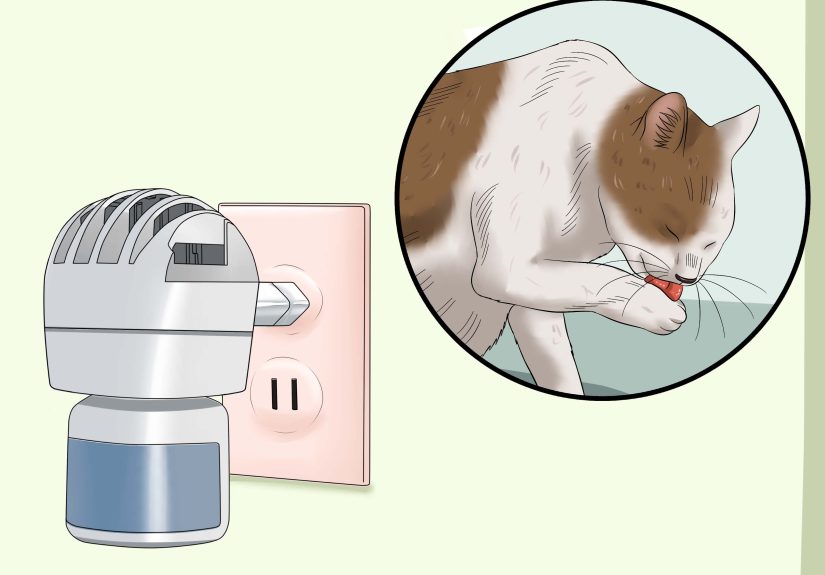
- Consider pheromone diffusers/sprays if your vet recommends them.
Example: If overgrooming started after a new roommate moved in, your cat may be coping with noise, scent changes, or less attention.
A stable routine plus dedicated enrichment time can make a real difference.
Step 8: Upgrade Enrichment (Bored Cats Invent Weird HobbiesLike Self-Barbering)
A cat with too much idle time can turn grooming into entertainment, stress relief, or both.
Enrichment gives your cat alternate behaviors that are healthier than “let me chew my own thigh fur.”
What helps
- Two short play sessions daily (think: hunt-catch-kill style with wand toys).
- Puzzle feeders to make meals mentally engaging.
- Window perches, bird videos (supervised), and rotation of toys to keep novelty alive.
Example: Cats that overgroom when left alone often improve when meals are delivered via puzzle feeders and the environment includes climbing and hiding options.
You’re basically turning your home into a cat-friendly theme parkminus the overpriced popcorn.
Step 9: Interrupt the Habit Safely (Protect the Skin While You Fix the Cause)
If your cat is actively damaging skin or creating bald spots fast, you may need a temporary barrier while treatment works.
Think of it as putting a “Do Not Lick” sign on the problem areabecause your cat did not read the memo.
What helps
- Vet-approved e-collar, soft cone, or recovery collar (short term).
- Medical pet shirt or onesie (if tolerated).
- Keep nails trimmed to reduce self-injury from scratching.
Example: If you start flea control today, your cat may still feel itchy for a while.
A temporary collar can prevent the skin from getting worse while you break the itch-lick cycle.
Step 10: Track Progress and Follow Up (Because Skin Problems Love Plot Twists)
Overgrooming is often multi-factorial and may take time to resolve.
Keeping track helps your vet adjust the plan and helps you spot patterns you’d otherwise miss.
What to track
- Daily grooming intensity (1–5 scale).
- New foods/treats, cleaning products, visitors, weather shifts, stressors.
- Photos of affected areas weekly.
- Any response to flea control, diet trials, or environmental changes.
Example: If symptoms improve on a strict diet trial but rebound when treats return, you’ve got a strong clue.
If stress reductions help but don’t fully fix it, allergies may still be contributing.
Frequently Asked Questions
Is hair-pulling always behavioral?
No. Behavioral overgrooming is real, but many veterinary sources emphasize that medical causes like parasites, allergies, infections, and pain are common drivers.
Treating “stress” without ruling out itch can delay real relief.
Why does it look like my cat is “pulling” fur?
Some cats nibble or chew their coat, especially on the belly, flanks, or legs, creating a barbered look.
Others lick so much the hair breaks off at the skin level.
How long does it take for fur to grow back?
It varies. Once the underlying cause is controlled, many cats show visible regrowth in weeks, but full coat recovery can take longerespecially if inflammation was severe or the behavior became habitual.
Conclusion: Your Cat Isn’t “Being Bad”They’re Being Uncomfortable
When a cat starts pulling fur out or overgrooming, it’s usually their way of saying: “Something feels wrong, and my tongue is my coping tool.”
The fastest path to a fluffy, comfortable cat is a step-by-step approach:
rule out medical causes, control parasites, address allergies and infections, check for pain, and support emotional wellbeing with routine and enrichment.
If you take away one thing, make it this: you’re not just stopping a behavioryou’re solving a problem.
And your cat will thank you the only way cats know how: by acting like they fixed it themselves.
Extra: Real-World Experiences and Lessons That Make This Easier (About )
When people first notice bald patches, the instinct is often to zoom straight into “anxiety” (and honestly, cats do radiate tiny CEO levels of stress).
But in real households, the most common experience is that overgrooming is a layer cake.
There’s usually a medical layer (itch or discomfort) and a lifestyle layer (routine changes, boredom, environmental stress).
Fixing one layer helpsbut fixing both is where the magic happens.
One common pattern cat parents report: they treat fleas once, don’t see fleas, and assume that wasn’t it.
Then the grooming continues, and everyone gets discouraged.
The “aha” moment tends to be learning that flea allergy can be triggered by very little exposure and that consistent preventionnot a single heroic applicationis what changes the trajectory.
In multi-pet homes, the breakthrough often comes when everyone is treated at the same time and the environment (bedding, carpets, favorite nap thrones) is cleaned like it owes money.
Another frequent experience: the cat is overgrooming the belly, and the owner tries switching foods repeatedlychicken today, salmon tomorrow, duck by Friday.
But allergy workups and diet trials aren’t random; they’re structured.
People who see the best results treat it like a science experiment: one controlled change at a time, strict rules, and enough duration to matter.
Once they commit to a vet-guided plan, they often realize the “diet chaos” was preventing any clear answers.
Stress-related grooming tends to show up around life events that humans dismiss as “no big deal.”
Rearranging furniture. A new scented laundry detergent. A partner moving in.
A baby gate appearing overnight like a plot device.
In those stories, what helps most is predictability: feedings at the same time, play sessions as daily anchors, and giving the cat safe vertical space where the world can’t surprise them from behind.
People are often shocked by how much a simple routine changeten minutes of interactive play after work, puzzle feeding at dinnerreduces grooming intensity.
The most underrated lesson: sometimes overgrooming is about pain, especially in older cats.
Owners may say, “But she’s still eating and purring,” as if purring is a notarized certificate of wellness.
Cats can purr when stressed or uncomfortable, and many hide stiffness until it’s advanced.
In a lot of households, the turning point happens when someone notices the cat isn’t jumping as high, is hesitating on stairs, or is suddenly grooming one hip area obsessively.
Addressing pain under veterinary guidance can reduce grooming dramaticallyand it’s one of the most satisfying “I can’t believe that was it” moments.
The overall takeaway from these real-world patterns is reassuring:
most cases improve when you stop trying to “out-stubborn” the behavior and start treating the cause like a checklist.
Your job isn’t to win a staring contest with a cat’s tongue.
Your job is to make your cat comfortable enough that grooming goes back to normalwhere it belongs.