Table of Contents >> Show >> Hide
- What Actually Affects Bust Size?
- The Healthiest Ways to Reduce Breast Size Naturally
- What Changes Appearance but Not Breast Tissue?
- What Does Not Work?
- When to Talk to a Doctor
- Breast Reduction Surgery: The Most Direct Option
- How to Build a Realistic Plan
- Common Experiences Related to “How to Reduce Your Bust”
- Final Thoughts
If you searched “how to reduce your bust,” chances are you want answers that are practical, realistic, and not sprinkled with internet fairy dust. Maybe your chest feels heavy during workouts. Maybe clothes fit everywhere except the top half. Maybe your shoulders are tired of carrying the plot twist in every outfit. Whatever brought you here, the good news is this: there are healthy, evidence-based ways to think about breast size, comfort, and appearance without falling for miracle creams, sketchy detoxes, or “do this one weird trick” nonsense.
Let’s start with the truth. Breasts are made up of both fatty tissue and glandular tissue. That means breast size can sometimes change with overall body-weight changes, hormones, age, pregnancy history, and genetics. In other words, there is no universal “bust reduction hack.” For some people, losing body fat leads to a noticeable change in breast size. For others, the difference is modest because glandular tissue plays a bigger role. That is why two people can follow similar habits and get very different results.
This guide walks through what can actually help, what only changes appearance, what is pure myth, and when it makes sense to talk to a healthcare professional. The goal is not to chase somebody else’s body ideal. It is to help you feel more comfortable, more mobile, and more confident in your own skin.
What Actually Affects Bust Size?
Before trying to reduce your bust, it helps to understand what you are working with. Breast size is influenced by several factors:
1. Body fat percentage
Because breasts contain fat, a reduction in overall body fat may reduce breast size for some people. Notice the phrase overall body fat. You cannot target fat loss in one area of the body with exercises alone. Chest workouts can strengthen the muscles underneath your breasts, but they do not directly melt breast tissue like a candle in July.
2. Hormones
Breast tissue can change during puberty, menstrual cycles, pregnancy, breastfeeding, perimenopause, and menopause. Some medications and hormone-related conditions can also affect breast fullness. So if your bust seems to change size at different times, your body is not being dramatic for fun. Hormones are part of the story.
3. Genetics
Yes, genetics gets a vote. Some people naturally store more tissue in the breast area than others. That means your “small change” might require more patience than a social media post would have you believe.
4. Age and life stage
Breasts naturally change over time. Tissue composition, skin elasticity, and fullness may shift with age. So the answer to “how to reduce your bust” may look different at 17, 27, 47, and beyond.
The Healthiest Ways to Reduce Breast Size Naturally
If your goal is a smaller bust without surgery, the safest and most realistic strategy is to focus on healthy body habits that may reduce overall fat while improving comfort and posture.
Create a sustainable calorie deficit, not a crash diet
If you are trying to lose body fat, slow and steady wins the race. Extreme dieting may cause short-term weight changes, but it is hard to maintain and can leave you tired, cranky, and eyeing a family-size pizza like it personally offended you. A balanced eating pattern built around vegetables, fruit, lean protein, beans, whole grains, nuts, seeds, and healthy fats is far more realistic than a “juice cleanse” that tastes like lawn clippings and regret.
Focus on meals that keep you full and energized. For example, a breakfast with Greek yogurt, berries, and oats will usually carry you farther than coffee and vibes. Lunch could be grilled chicken or tofu with brown rice and vegetables. Dinner might be salmon, roasted potatoes, and a big salad. The idea is consistency, not perfection.
Do regular cardio
Cardio helps burn calories and supports overall fat loss. Walking, cycling, swimming, dancing, jogging, rowing, and elliptical sessions all count. You do not need to become a fitness superhero by Friday. A solid routine of moderate-intensity exercise most days of the week is enough to build momentum.
If larger breasts make workouts uncomfortable, start with low-impact options. Walking is underrated, gentle on the joints, and much more realistic than promising yourself that you will suddenly love 6 a.m. burpees.
Add strength training
Strength training matters because it helps preserve lean muscle while you lose fat. It also supports posture, shoulder stability, and upper-back strength, which can make a larger bust feel less physically demanding. Exercises like rows, lat pulldowns, chest presses, wall push-ups, overhead presses, and band pull-aparts can help your upper body feel stronger and more supported.
Will strength training reduce breast tissue directly? No. Will it improve the way your chest, shoulders, and back carry weight? Absolutely. Think of it as giving your frame better scaffolding.
Improve posture
Poor posture can make a heavy chest feel even heavier. Rounded shoulders and a forward head position can increase strain on your neck and upper back. Practicing neutral posture, stretching tight chest muscles, and strengthening your back can improve comfort and even change the way your bust looks in clothing.
Sometimes the issue is not just breast size. It is how the body is forced to manage the weight all day long.
Wear the right bra
This one does not reduce breast tissue, but it can dramatically reduce discomfort and make your bust appear more controlled. A properly fitted bra can improve support, reduce bounce during exercise, minimize shoulder strain, and help clothing fit better. A high-support sports bra is especially useful if workouts feel uncomfortable.
And yes, many people are wearing the wrong size. The bra industry has quietly been running a chaos campaign for decades.
What Changes Appearance but Not Breast Tissue?
Some strategies can make your bust look smaller without actually changing size. That does not make them fake or useless. It just means they are appearance tools, not tissue-changing tools.
Minimizer bras
Minimizer bras redistribute breast tissue to create a smoother silhouette under clothing. The change is visual, not anatomical, but it can be a game changer for button-down shirts and fitted tops.
Clothing choices
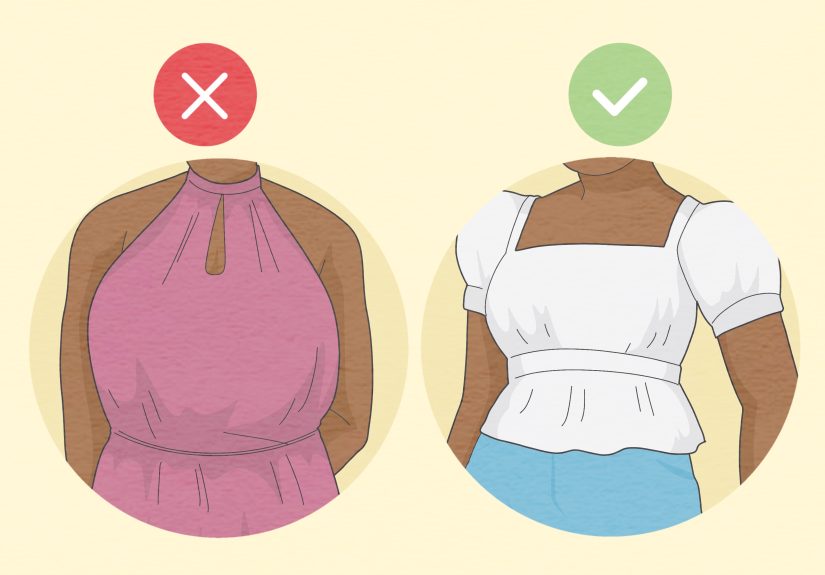
Structured fabrics, V-necks, wrap tops, and darker solid colors can create a balanced look if that is your goal. Meanwhile, high necklines with bulky ruffles may make the chest area look fuller. Fashion is not magic, but it is absolutely strategy.
Posture and muscle tone
Better posture and stronger upper-body muscles can subtly shift how your bust sits and moves. Again, not a size change, but sometimes a noticeable difference in overall silhouette.
What Does Not Work?
Let’s save you time, money, and emotional energy.
Spot reduction exercises
You cannot do a set of magical chest exercises and expect breast fat to vanish on command. Fat loss does not work like ordering extra pickles off a burger. Your body decides where it loses fat first.
Breast reduction creams and oils
There is no strong medical evidence that topical creams meaningfully reduce breast size. If a product promises a dramatic change in a week, your wallet may be the only thing getting lighter.
Detoxes, cleanses, and rapid-weight-loss supplements
These approaches are often ineffective, unsustainable, or risky. Quick-fix supplements can also interfere with medications or cause side effects. If a label sounds like a chemistry final exam and a fairy tale had a baby, pass.
Wrapping, taping, or using unsafe compression
Anything that restricts breathing, irritates the skin, or causes pain is not a smart solution. Supportive bras are one thing. Unsafe compression is another. Comfort should never require sacrificing safety.
When to Talk to a Doctor
If your breasts are causing pain or interfering with daily life, this is not vanity. It is a quality-of-life issue. You should consider seeing a healthcare professional if you have:
- Ongoing neck, back, or shoulder pain
- Deep bra-strap grooves
- Skin irritation or repeated rashes under the breasts
- Trouble exercising because of breast size or discomfort
- Numbness, tingling, or posture problems related to breast weight
- A sudden change in breast size, shape, or symmetry
- A new lump, nipple discharge, dimpling, redness, swelling, or skin changes
Sudden or unusual breast changes should not be brushed off as “probably nothing.” Most breast changes are not cancer, but some symptoms do need prompt medical evaluation.
Breast Reduction Surgery: The Most Direct Option
If natural methods have not helped enough and your bust is causing ongoing physical or emotional strain, breast reduction surgery may be worth discussing with a qualified doctor. This procedure removes excess breast tissue, fat, and skin to create a smaller breast size.
Who considers it?
People often look into breast reduction because of chronic pain, skin irritation, posture issues, difficulty exercising, trouble finding clothing, or simply feeling physically limited by breast size.
What are the benefits?
Many patients report relief from neck and back pain, better mobility, less skin irritation, and easier exercise after surgery. For some, it is not just about appearance. It is about being able to move through the day without constant discomfort.
What are the trade-offs?
It is still surgery, which means recovery time, scars, and possible risks such as bleeding, infection, sensation changes, wound-healing issues, and the possibility that breastfeeding ability may be affected. Results can also change later with weight fluctuations, pregnancy, aging, and hormonal changes.
If you are considering surgery, the smartest move is a thorough consultation with a board-certified specialist who can explain risks, benefits, recovery, and whether the procedure fits your goals and health history.
How to Build a Realistic Plan
If you want a practical path forward, keep it simple:
- Set a comfort-based goal. Example: less bouncing during workouts, fewer shoulder grooves, or easier clothing fit.
- Improve support first. Get fitted for an everyday bra and a high-support sports bra.
- Start moving consistently. Aim for walking, cycling, swimming, or other cardio you can actually maintain.
- Add two strength sessions per week. Focus on upper back, shoulders, chest, and core.
- Eat balanced meals. Prioritize protein, fiber, and minimally processed foods over restrictive fads.
- Track how you feel, not just how you look. Pain levels, posture, workout comfort, and clothing fit matter.
- See a doctor if symptoms are significant. Especially if pain, rashes, or sudden breast changes are involved.
Common Experiences Related to “How to Reduce Your Bust”
One of the most common experiences people describe is frustration with exercise. A person may feel motivated to become more active, only to realize that running, jumping, or even fast stair climbing feels uncomfortable because the chest moves too much. That often leads to a vicious cycle: exercise is uncomfortable, so they avoid it, and then they feel stuck. In many cases, the first breakthrough is not a dramatic transformation. It is simply finding a supportive sports bra and choosing low-impact movement like walking, incline treadmill sessions, cycling, or swimming. Once movement feels manageable, consistency becomes easier.
Another experience people talk about is clothing fatigue. Shirts may fit in the shoulders but pull at the chest. Button-downs can gap open at the worst possible moment, which is rude behavior from a shirt, frankly. Dresses may fit the bust and hang awkwardly everywhere else. For many people, the desire to reduce their bust is less about chasing a beauty standard and more about wanting clothes to fit without a negotiation. Sometimes a minimizer bra, tailoring, or different necklines solves half the problem before body changes even happen.
There is also the posture issue. People with a fuller bust often describe feeling like they are always adjusting: rolling their shoulders back, tugging on bra straps, stretching their neck, or trying to stand taller without feeling stiff. They may not realize how much upper-back weakness and chest tightness are contributing until they begin a simple strength routine. A few weeks of rows, band work, core training, and posture awareness can make the body feel more balanced, even if the bust size itself has not changed much yet.
Many people also go through a season of trying things that do not work. They buy creams. They save random workouts from social media. They hear that “this tea melts fat” or “this wrap shrinks inches overnight.” Usually, what follows is disappointment. The most helpful shift is understanding that the body does not do targeted, overnight edits. When people stop chasing miracle tricks and start focusing on sustainable habits, they often feel less stressed and more in control.
Then there are those whose breast size causes real physical symptoms: back pain by the end of the day, bra grooves that look like angry little commas on the shoulders, under-breast rashes in hot weather, and a constant sense of heaviness. For them, talking to a doctor can be incredibly validating. Instead of hearing “just deal with it,” they learn that these concerns are legitimate medical quality-of-life issues. Some decide to keep working on weight management and support strategies. Others explore surgery. Both paths are valid.
Perhaps the most important experience of all is realizing that the goal does not have to be perfection. For some people, success means dropping a cup size. For others, it means jogging comfortably, standing straighter, or wearing a T-shirt without feeling restricted. Progress can be physical, practical, and emotional all at once.
Final Thoughts
If you want to reduce your bust, the healthiest path is usually a combination of realistic expectations, supportive clothing, regular exercise, balanced nutrition, and a strong dose of skepticism toward miracle products. Natural change is possible for some people, especially when overall body fat decreases, but it is rarely instant and never perfectly targeted. If your bust is causing pain, posture problems, skin irritation, or limiting your daily life, it is worth talking to a healthcare professional about your options.
Your body does not need punishment. It needs support, strategy, and maybe a better sports bra.