Table of Contents >> Show >> Hide
- What Are Gum Pockets, Exactly?
- Can You Reduce Gum Pockets Naturally?
- The Best Natural and At-Home Ways to Support Healthier Gums
- 1. Brush Gently Twice a Day With Fluoride Toothpaste
- 2. Clean Between Your Teeth Every Day
- 3. Try a Warm Saltwater Rinse
- 4. Use an Alcohol-Free Mouth Rinse if It Helps
- 5. Stop Smoking and Ditch Tobacco
- 6. Get Blood Sugar Under Better Control
- 7. Eat Like Your Gums Live in Your BodyBecause They Do
- 8. Stay Consistent With Dental Cleanings
- What Home Remedies Cannot Do
- When You Should See a Dentist Soon
- Professional Treatments That Often Shrink Pockets More Effectively
- A Simple 2-Week Gum-Friendly Home Routine
- Experiences People Commonly Have When Trying to Reduce Gum Pockets Naturally
- Final Thoughts
- SEO Tags
If the phrase gum pockets makes you picture tiny cargo shorts hanging off your molars, you are not alone. It sounds weirdly adorable. Unfortunately, periodontal pockets are not cute. They are one of the clearest signs that your gums are irritated, pulling away from your teeth, or dealing with a deeper gum infection.
The good news is that you can improve gum health at home. The less-fun-but-important news is that you cannot scrub away advanced periodontitis with wishful thinking, herbal vibes, or a salt rinse that deserves an Oscar. If your gums are swollen and inflamed, smart home care may reduce that inflammation and make shallow pockets look better. But if tartar, bacteria, or bone loss are already involved, you will usually need professional treatment, too.
This guide breaks down what gum pockets are, whether you can shrink them naturally, which home remedies are actually worth your time, and when it is time to stop Googling and call a dentist.
What Are Gum Pockets, Exactly?
In a healthy mouth, your gums fit snugly around each tooth. There is naturally a tiny space between the gum tissue and the tooth, but it should stay shallow. Once plaque, tartar, and inflammation build up, that space can deepen. That deeper gap is what people call a gum pocket or periodontal pocket.
At first, the problem may be simple gingivitis: red, puffy gums that bleed when you brush or floss. At that stage, the tissue is inflamed, but the damage is still often reversible. If the infection progresses into periodontitis, the gums can begin separating from the teeth, and the supporting bone may also be affected. That is when the pocket becomes more than a “maybe I should floss more” situation.
Common signs that gum pockets may be forming include bleeding gums, chronic bad breath, tenderness, gum recession, teeth that look longer than usual, sensitivity, pain while chewing, or teeth that feel a little loose or shifted. In other words, your mouth will often send warning texts before the real drama starts.
Can You Reduce Gum Pockets Naturally?
Sometimes, yesbut only to a point.
If your gums are inflamed and swollen, improving your home care can reduce the inflammation. When the swelling goes down, the space between the gum and tooth may seem smaller. That is the best-case “natural improvement” story, and it is most likely when the problem is still early.
But if you have deeper periodontal pockets caused by hardened tartar below the gumline, ongoing infection, or bone loss, home remedies alone are not enough. You cannot brush away tartar once it hardens, and you definitely cannot regrow lost bone with coconut oil and optimism.
So the honest answer is this: natural methods can support healthier gums and may help shallow pockets improve, but they do not replace dental treatment for established periodontitis.
The Best Natural and At-Home Ways to Support Healthier Gums
If your goal is to reduce gum inflammation, protect your teeth, and give your gums the best shot at tightening back up, these are the home strategies with the most practical value.
1. Brush Gently Twice a Day With Fluoride Toothpaste
Brushing is not a wrestling match. A soft-bristled toothbrush and a gentle technique are more helpful than aggressive scrubbing. Harsh brushing can irritate the gums and make recession worse, which is basically the oral-care version of trying to fix a scratch by using sandpaper.
Brush for two minutes, twice a day, paying special attention to the gumline. An electric toothbrush can be a smart upgrade if you tend to rush, brush too hard, or miss spots. For many people, it makes consistent plaque removal easier without requiring Olympic-level hand skills.
2. Clean Between Your Teeth Every Day
This is the step many people skip, and then they act shocked when the dentist gives them that look. Plaque loves the tight spaces between teeth because your toothbrush cannot reach there well. Daily interdental cleaning helps disrupt that plaque before it hardens into tartar.
You can use:
- traditional dental floss,
- floss holders,
- interdental brushes, or
- a water flosser.
If regular floss feels like trying to thread a needle during an earthquake, a water flosser or interdental brush may be easier to stick with. The best tool is the one you will actually use every day without bargaining with yourself.
3. Try a Warm Saltwater Rinse
A warm saltwater rinse is not magic, but it is a solid low-cost support move. It can help soothe irritated tissues, freshen the mouth, and make inflamed gums feel less angry. Think of it as crowd control, not a full reconstruction project.
A simple routine is to mix about half a teaspoon of salt into a cup of warm water, swish gently for 30 seconds, and spit it out. Once or twice a day is usually enough for short-term relief. Do not swallow it, and do not treat it like a replacement for brushing, flossing, or seeing a dentist.
4. Use an Alcohol-Free Mouth Rinse if It Helps
For some people, an alcohol-free mouth rinse can be a helpful add-on, especially when the gums are sore or plaque control needs a boost. If your dentist recommends an antimicrobial rinse, follow those directions carefully. Just remember that mouthwash is the supporting actor, not the lead. If the plaque stays put, the problem stays put.
If your mouth feels dry easily, avoid alcohol-heavy rinses that can make that worse. Dry mouth matters because saliva helps protect your teeth and gums. Less saliva means bacteria get a more comfortable living situation than they deserve.
5. Stop Smoking and Ditch Tobacco
If you smoke or use chewing tobacco, this is one of the most important things you can do for your gums. Tobacco use is strongly linked with the development and progression of periodontal disease. It also makes healing harder, which is a terrible deal all around.
Some people brush, floss, rinse, and buy every fancy oral-care gadget in the aisle, yet their gums still struggle because tobacco keeps undermining everything. Quitting is not easy, but for gum health, it is one of the biggest levers you can pull.
6. Get Blood Sugar Under Better Control
If you have diabetes or prediabetes, gum health and blood sugar affect each other more than many people realize. Poor glucose control can make gum disease worse, and gum inflammation can make diabetes harder to manage. Not exactly a dream partnership.
If your gums bleed often, feel swollen, or keep getting irritated, keeping your blood sugar in range may help calm the cycle. That does not replace dental care, but it can improve how your gums respond to treatment and home care.
7. Eat Like Your Gums Live in Your BodyBecause They Do
There is no single superfood that erases gum pockets overnight. If one existed, it would already have a dramatic TV ad and a celebrity spokesperson holding kale. But your overall eating pattern does matter.
A gum-friendly diet generally means:
- limiting sugary drinks and sticky snacks,
- drinking water regularly,
- choosing fiber-rich foods that encourage chewing and saliva flow,
- including foods rich in vitamins and minerals, and
- keeping highly processed snacks from becoming your full-time personality.
Chewing sugar-free gum after meals may also help some people by stimulating saliva, especially if dry mouth is an issue. Look for xylitol if it agrees with you.
8. Stay Consistent With Dental Cleanings
Yes, this is technically not a home remedy. But if your goal is to reduce gum pockets naturally and sensibly, you need to know where home care ends and professional care begins. Once plaque hardens into tartar, it has to be removed by a dental professional.
Routine cleanings help prevent gingivitis from moving into periodontitis. If you already have gum pockets, your dentist may recommend more frequent cleanings or periodontal maintenance rather than the standard once-or-twice-a-year schedule.
What Home Remedies Cannot Do
Let us save you some time, money, and awkwardly flavored mouth experiments. Home remedies cannot:
- remove tartar below the gumline,
- diagnose pocket depth,
- reverse bone loss from advanced periodontitis,
- treat a gum abscess safely, or
- replace scaling and root planing when it is needed.
That means trendy “natural cures” should be viewed with caution. Oil pulling, essential oils, hydrogen peroxide hacks, and DIY paste recipes often get oversold online. Some may temporarily freshen the mouth. Some may irritate tissues if overused. None should be treated like a substitute for evidence-based gum care.
If a remedy sounds too good to be true, especially if it promises to “rebuild gums in days,” it probably belongs in the same category as detox foot pads and miracle wrinkle cucumbers.
When You Should See a Dentist Soon
Book a dental visit if you notice:
- bleeding that keeps happening,
- red, swollen, or tender gums,
- persistent bad breath,
- receding gums,
- pain while chewing,
- loose or shifting teeth, or
- a bad taste or possible pus near the gums.
These symptoms can point to periodontitis or even a periodontal abscess. And while a warm salt rinse may make you feel temporarily more put together, it will not solve an infection hidden under the gumline.
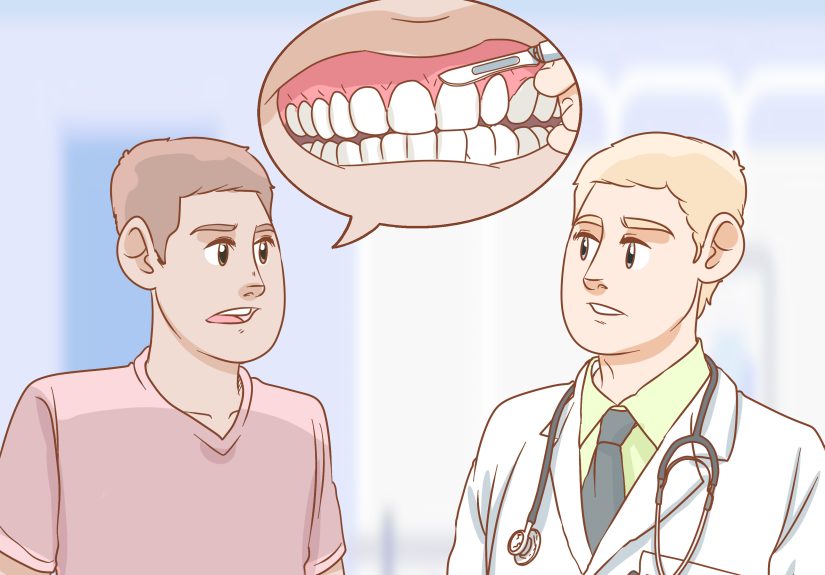
A dentist or periodontist can measure the pocket depth, check for bone loss on X-rays, and tell you whether the issue is early inflammation or a more advanced problem. That diagnosis matters because treatment is different at each stage.
Professional Treatments That Often Shrink Pockets More Effectively
If your dentist confirms periodontitis, common treatments may include:
- scaling and root planing to remove plaque and tartar below the gumline,
- periodontal maintenance visits to keep pockets under control,
- prescription rinses or localized medications in some cases, and
- surgical or regenerative procedures for advanced disease.
The phrase “deep cleaning” gets thrown around a lot, but what it usually means is scaling and root planing. It is not glamorous, but it is often the most effective next step when pockets are too deep to manage with a toothbrush and a positive attitude.
A Simple 2-Week Gum-Friendly Home Routine
If you want a realistic plan, try this:
Morning
- Brush for two minutes with a soft brush and fluoride toothpaste.
- Brush gently along the gumline, not like you are polishing a grill.
- If your dentist advised it, use an alcohol-free rinse afterward.
Evening
- Clean between teeth with floss, interdental brushes, or a water flosser.
- Brush again for two minutes.
- Use a warm saltwater rinse if your gums feel irritated.
All Day
- Drink water.
- Cut back on sugary snacks and drinks.
- Avoid smoking or vaping.
- Chew sugar-free gum after meals if dry mouth is a problem.
- Schedule a dental appointment if symptoms are not improving.
If you follow this for two weeks and your gums still bleed, swell, or feel sore, do not keep waiting for nature to send a miracle. Call the dentist.
Experiences People Commonly Have When Trying to Reduce Gum Pockets Naturally
One of the most common experiences people describe is surpriseusually the “I thought I was brushing fine” kind. A person may brush every day and still discover that they barely clean along the gumline or almost never clean between their teeth. Once they switch to a softer brush, slow down, and start flossing or using a water flosser consistently, the first thing that improves is often bleeding. Their gums may look less puffy within a couple of weeks, and their mouth feels cleaner overall. That early improvement can be encouraging, and it often convinces them to keep going.
Another very common experience is thinking the problem has been “fixed” because the gums stop bleeding, only to learn at the dental office that deeper pockets are still there. This happens because inflammation can calm down before the underlying tartar and pocketing are fully addressed. In real life, many people do feel better with home care but still need scaling and root planing to remove buildup below the gumline. The takeaway is not that home care failed. It is that home care and professional care often work best as a team.
People who start using warm saltwater rinses often say the rinse makes their gums feel soothed and less tender, especially during a flare-up of irritation. That can be genuinely helpful, particularly if the mouth feels raw or puffy. But the same people also tend to notice that saltwater has limits. It can calm things down, but it does not create that truly smooth, clean feeling that comes after professional tartar removal. It is relief, not resolution.
There is also the experience of people who finally address a major risk factor and suddenly see better results. Smokers sometimes notice that their gums respond more predictably after quitting tobacco. People with diabetes may find that when their blood sugar improves, their gums seem less inflamed and heal better after treatment. These changes are not flashy, but they are powerful. Gum health often improves when the rest of the body gets better support, too.
Then there are people who try every natural trick they can find onlineoil pulling, homemade rinses, special powders, mystery drops with leaves on the labelbefore realizing that what they really needed was consistency. In many cases, the basics win: brushing twice a day, cleaning between teeth daily, drinking water, watching sugar, and keeping dental appointments. It is not dramatic, but it works far better than chasing internet magic.
Finally, many people say the biggest shift was mental, not mechanical. They stopped viewing gum care as something optional and started treating it like part of their daily health routine. Once that happened, the routine became easier to maintain. Their gums bled less, breath improved, cleanings got easier, and they felt more in control. That is probably the most realistic experience of all: reducing gum problems is usually not about one miracle remedy. It is about steady habits, honest expectations, and getting professional help when the signs point to something deeper.
Final Thoughts
If you are trying to reduce gum pockets naturally, the smartest approach is also the least flashy: clean your teeth thoroughly, clean between them every day, use gentle supportive remedies like warm saltwater when needed, avoid tobacco, keep blood sugar under control, and get professional care when symptoms do not improve.
That may not be the most exciting answer on the internet, but it is the one your gums would probably vote for. Home remedies can absolutely help reduce inflammation and support healthier gums. They just should not be asked to do a periodontist’s job.