Table of Contents >> Show >> Hide
- What to Know Before You Start
- How To Insert a Tampon Step by Step
- How To Insert a Non-Applicator Tampon
- What a Correctly Inserted Tampon Feels Like
- Common Beginner Mistakes
- Does It Hurt to Put in a Tampon?
- How Long Can You Wear a Tampon?
- How To Remove a Tampon Safely
- Tampon Safety Tips That Actually Matter
- Signs You Should Call a Doctor
- Frequently Asked Questions
- Final Thoughts
- Real-Life Experiences: What First-Time Tampon Use Often Feels Like
- SEO Tags
If you’ve ever held a tampon in one hand and a rising sense of drama in the other, welcome. You are extremely not alone. Learning how to properly insert a tampon can feel weirdly high-stakes the first time, even though the actual process is usually much less dramatic than your brain makes it out to be. The good news is that tampon insertion is a skill, not a magical talent handed out at puberty like a coupon book.
Once you know what angle to use, which size to start with, and what “correct” is supposed to feel like, the whole thing gets much easier. This guide breaks down tampon insertion step by step, explains common beginner mistakes, and covers safety tips that actually matter. We’ll also talk about what to do if a tampon hurts, feels stuck, or seems to have vanished into another dimension. Spoiler: it did not.
If you’re looking for first-time tampon tips, practical tampon insertion advice, and real talk in plain English, you’re in the right place.
What to Know Before You Start
Before you even unwrap a tampon, here’s the most helpful mindset shift: your body is not failing this test. Tampon use often takes a few tries because your muscles tense up when you’re nervous, and tense muscles are not exactly known for their hospitality.
For beginners, the easiest option is usually a light or regular absorbency tampon with a smooth plastic applicator. A slimmer tampon generally feels easier to insert, especially on your first few attempts. You should also try tampon insertion while you’re actually on your period, not as a random dress rehearsal. Menstrual flow gives the vaginal canal more moisture, which helps the tampon slide in more comfortably.
It also helps to remember that the vagina does not go straight up. It angles slightly back toward your lower back. That single detail solves a surprising number of first-time tampon problems.
How To Insert a Tampon Step by Step
1. Wash Your Hands
Start with soap and water. This is not glamorous advice, but it is solid advice. Clean hands reduce the chance of introducing bacteria while inserting the tampon.
2. Choose the Right Tampon
Pick the lowest absorbency tampon that will handle your flow for a few hours. If you’re brand new to tampons, go for a light or slim regular tampon. Bigger is not better here. Bigger is just bigger.
3. Get Into a Comfortable Position
There is no single “official” tampon stance, despite what your nerves may suggest. Common positions include:
- sitting on the toilet with your knees apart
- standing with one foot on the toilet seat or bathtub edge
- squatting slightly
- lying down if that helps you relax
The best position is whichever one makes your pelvic muscles unclench and your body cooperate.
4. Find the Vaginal Opening
If you’re unsure where the tampon goes, a hand mirror can help. The urethra, where urine comes out, is much smaller and not the target here. The vaginal opening sits below it. This is one of those moments where a little anatomy knowledge saves a lot of confused repositioning.
5. Hold the Applicator Correctly
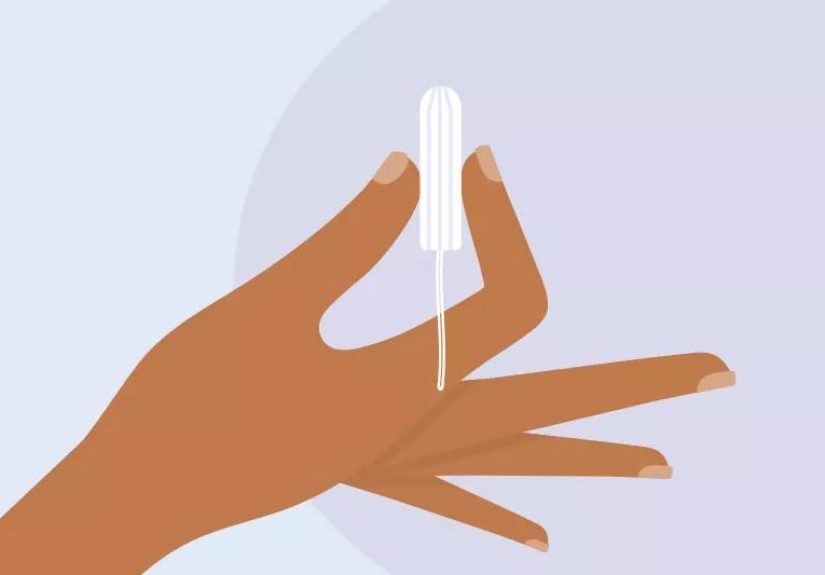
If you’re using an applicator tampon, hold it at the grip area with your thumb and middle finger. The string should hang out from the end. The rounded tip goes in first. The plunger is what pushes the tampon out of the applicator once it’s in place.
6. Aim Back, Not Straight Up
This is the golden rule. Gently place the tip of the applicator at the vaginal opening and angle it toward your lower back, not toward your belly button and definitely not straight upward like you’re launching a tiny cotton rocket.
7. Insert the Applicator Gently
Slide the applicator in slowly until your fingers reach the grip and are close to your body. If you feel sharp pain, stop. Don’t force it. A little awkwardness is common; pain is your cue to pause, breathe, and adjust the angle or try again later.
8. Push the Plunger
Once the applicator is positioned comfortably, use your index finger to push the plunger all the way in. This releases the tampon into the vagina. Then gently remove the applicator, leaving only the string outside your body.
9. Check How It Feels
If the tampon is inserted correctly, you generally shouldn’t feel it. If it feels pokey, scratchy, or weirdly “there,” it may not be in far enough or may be sitting at the wrong angle. You can try gently pushing it a bit higher if the string and position allow, but if it still feels uncomfortable, remove it and start over with a fresh tampon.
How To Insert a Non-Applicator Tampon
If you’re using a tampon without an applicator, the process is similar, except your clean finger becomes the insertion tool. Unwrap the tampon, hold it with the string hanging down, place the tip at the vaginal opening, and gently push it inward with your index finger at a slight backward angle. Keep going until the tampon feels comfortably in place and the string remains outside your body.
Some people prefer digital tampons because there’s less packaging and more control. Others try them once and immediately decide that applicators are a beautiful modern convenience. Both reactions are valid.
What a Correctly Inserted Tampon Feels Like
A properly inserted tampon should feel secure but basically unnoticeable. You should be able to walk, sit, and go about your day without feeling like you’re smuggling a tiny rolled-up towel in your pelvis. If you can clearly feel the tampon while standing or walking, it likely needs to be placed a little higher or reinserted.
Removal should also feel manageable. A tampon that is still pretty dry can feel uncomfortable coming out, which is one reason it helps to choose the correct absorbency. If removal feels rough every single time, you may be using a tampon that’s too absorbent for your flow.
Common Beginner Mistakes
Using Too High an Absorbency
Super absorbency sounds efficient, but for beginners it often creates unnecessary discomfort, especially on lighter-flow days. Use the lightest absorbency that does the job.
Trying to Insert It Too Straight
If you meet resistance, the angle is often the issue. Aim back toward your lower back, not straight up.
Being Too Tense
Pelvic muscles that are clenching for dear life can make insertion much harder. Take a breath, drop your shoulders, and give yourself a minute.
Practicing When You’re Not on Your Period
Dry tampon insertion is usually less comfortable. It’s much easier to learn when you actually have menstrual flow.
Forgetting the String
The string should stay outside the body. That’s the built-in exit strategy, and it deserves your respect.
Does It Hurt to Put in a Tampon?
Usually, no. Tampon insertion might feel unfamiliar at first, but it should not be intensely painful. Mild discomfort can happen when you’re learning, when you’re tense, or when the tampon is too dry or too large. But strong pain is not something to just shrug off and blame on bad vibes.
If inserting a tampon is very painful, impossible, or consistently feels like you’re hitting a wall, there may be something else going on. Some people have more hymenal tissue, a hymen variant, pelvic floor tightness, or vaginismus. These issues can make tampon insertion difficult or painful. If that sounds familiar, check in with a healthcare professional instead of continuing the battle like it’s a personal challenge from the universe.
How Long Can You Wear a Tampon?
A tampon should generally be changed every 4 to 8 hours and should never be left in for more than 8 hours. That’s one of the most important tampon safety rules. You should also use tampons only during your period.
If you’re sleeping for eight hours or less, insert a fresh tampon right before bed and change it as soon as you wake up. If you’re likely to sleep longer, or you simply don’t want to keep track of the clock while unconscious like a menstrual project manager, wear a pad overnight instead.
How To Remove a Tampon Safely
Wash your hands, sit or squat in a comfortable position, and gently pull the string downward and forward. Go slow. If it feels dry and resistant, the tampon may not be full enough yet. In that case, it can help to wait a little longer, as long as you stay within the safe wear window.
If the string is hard to find, don’t panic. A tampon cannot travel past the vagina and get lost in the rest of your body. Try relaxing, bearing down gently, and reaching in with clean fingers. If you still can’t remove it, contact a healthcare professional.
Tampon Safety Tips That Actually Matter
- Use the lowest absorbency that works for your flow.
- Change your tampon every 4 to 8 hours.
- Never leave a tampon in for more than 8 hours.
- Wash your hands before and after insertion or removal.
- Use tampons only when you have your period.
- Throw used tampons and applicators in the trash, not the toilet.
- Do not ignore severe pain, dizziness, fever, or unusual symptoms.
Signs You Should Call a Doctor
Reach out to a healthcare professional if:
- you cannot insert a tampon despite repeated attempts
- tampon insertion is very painful
- you cannot remove a tampon
- you think you may have left a tampon in too long
- you have foul odor, unusual discharge, irritation, or fever
- you develop symptoms of toxic shock syndrome, such as high fever, vomiting, diarrhea, dizziness, fainting, confusion, or a rash that looks like a sunburn
Toxic shock syndrome is rare, but it is serious. If those symptoms show up during your period or soon after tampon use, remove the tampon and get urgent medical care.
Frequently Asked Questions
Can a virgin use a tampon?
Yes. Using a tampon does not determine virginity. A tampon can stretch hymenal tissue in some people, but that is not the same thing as sex, and it does not change whether someone is a virgin.
Can you swim with a tampon?
Yes. Tampons are a popular period product for swimming, sports, and other activities where a pad may be less convenient.
Can a tampon get stuck?
It can be harder to remove if it’s dry or if the string is tucked up, but it cannot disappear into the rest of your body. If you can’t remove it, a clinician can help.
Should you use scented tampons?
Unscented products are generally the safer bet if your skin is sensitive. Fragranced menstrual products can be irritating for some people.
Final Thoughts
Learning how to properly insert a tampon is one of those life skills that looks intimidating right up until it clicks. The big takeaways are simple: start with the smallest absorbency that works, relax your body, aim toward your lower back, and remember that a correctly placed tampon should feel comfortable enough to forget about. If you’re struggling, you’re not bad at this. You’re just new at it.
Give yourself room to learn, skip the self-judgment, and know when to get help if pain or difficulty persists. Period care should make life easier, not turn your bathroom into an emotional obstacle course.
Real-Life Experiences: What First-Time Tampon Use Often Feels Like
Many first-time tampon users describe the experience in almost the exact same way: “I thought this would be simple, and then suddenly I forgot how anatomy works.” That’s more normal than you might think. One of the most common early experiences is inserting the tampon at the wrong angle and immediately deciding the entire concept is suspicious. Usually, the problem is not the tampon itself. It’s the angle, the tension, or the fact that your brain has decided this is a crisis.
Another very common experience is getting the tampon in, standing up, and thinking, “Oh. I can definitely feel that.” When that happens, the tampon is often not inserted far enough. Many people say their first successful moment came after realizing the vagina tilts back, not straight up. That tiny anatomical detail can be the difference between “absolutely not” and “wait, that’s it?”
Some people also find that the first day of trying tampons is not the day they become tampon experts. They may try once, give up, wear a pad, and try again later in the same cycle or next month. That doesn’t mean they failed. It means they were learning. Tampons are more like contact lenses than magic tricks. Most people need a little practice before the process feels automatic.
A lot of beginners also mention that their second or third try is dramatically easier than the first. By then, they know which position feels best, how to hold the applicator, and how much gentleness is actually needed. The first attempt often comes with too much force or too much hesitation. Later attempts are calmer and more accurate. Confidence helps the pelvic floor relax, which makes insertion smoother. In other words, sometimes the trick is not heroism. It’s less overthinking.
There are also people who discover that tampons are simply not their favorite period product, and that is perfectly fine. Some try them for swimming or sports and then go right back to pads, period underwear, or cups for everyday use. Others become loyal tampon users after one successful attempt. The “best” period product is the one that works for your body, your comfort level, and your routine.
Then there’s the emotional side. First-time tampon use can come with embarrassment, nerves, and a weird fear of doing something wrong forever. But many people later look back and laugh at how enormous the whole thing felt at the time. Once they understand their own anatomy and the rhythm of their period, tampon insertion becomes just another small routine, like brushing your teeth or searching for the good hair tie.
The most reassuring shared experience is this: many people who once thought, “I will never figure this out,” absolutely did. Usually not because they were naturally gifted at tampon insertion, but because they got better information, used a smaller tampon, relaxed a little, and tried again without judging themselves. That’s the real beginner story for a lot of people. Less perfection. More progress.