Table of Contents >> Show >> Hide
- Why Make Your Own Stenciled Welcome Mat?
- Supplies You’ll Need
- Step-by-Step: How to Make a Stenciled Welcome Mat
- Design Ideas & Variations
- Common Mistakes and How to Avoid Them
- How to Care for Your Stenciled Welcome Mat
- Real-Life Experiences & Extra Tips for Making a Stenciled Welcome Mat
- 1. Test on a Corner First
- 2. Darker Paint Colors Usually Look Better
- 3. Thin Layers Beat Thick Globs Every Time
- 4. Vinyl Stencils vs. Paper Stencils
- 5. Don’t Skip the Drying and Curing Time
- 6. Use Your First Mat as a Learning Project
- 7. Think About Where the Mat Lives
- 8. Make It a Group or Family Project
- 9. Keep a “Stencil Box” for Future Projects
Your front door does a lot of heavy lifting. It greets guests, collects packages, and silently witnesses your late-night snack runs. The least we can do is give it a custom welcome mat that says more than just “Welcome” in tiny, tired letters. A DIY stenciled welcome mat is a quick, budget-friendly project that looks high-end, holds up to foot traffic, and lets your personality shine before anyone even rings the bell.
In this guide, inspired by the fun, creative spirit of Hometalk-style projects, we’ll walk through everything you need to know: the right kind of mat, the best paint for rough coir fibers, how to keep your stencil from bleeding, and pro-level tips so your masterpiece doesn’t fade away after the first rainy day.
Why Make Your Own Stenciled Welcome Mat?
Store-bought doormats are fine… until you realize everyone on the block has the exact same one. Making your own stenciled welcome mat gives you a few major perks:
- Endless customization: Funny quotes, monograms, seasonal designs, house numbers, or even your Wi-Fi password (for the brave).
- Budget-friendly: A plain coir mat plus paint and a stencil is usually cheaper than a trendy designer mat.
- Creative fun: It’s a short, satisfying project you can finish in an afternoon, even as a beginner.
- Gift-worthy: A custom mat makes an awesome housewarming or holiday gift that looks way more expensive than it actually is.
Plus, once you learn the basic method, you can crank out mats for every season, holiday, and mood. One for Halloween, one for Christmas, one for “Please hide packages from my kids.”
Supplies You’ll Need
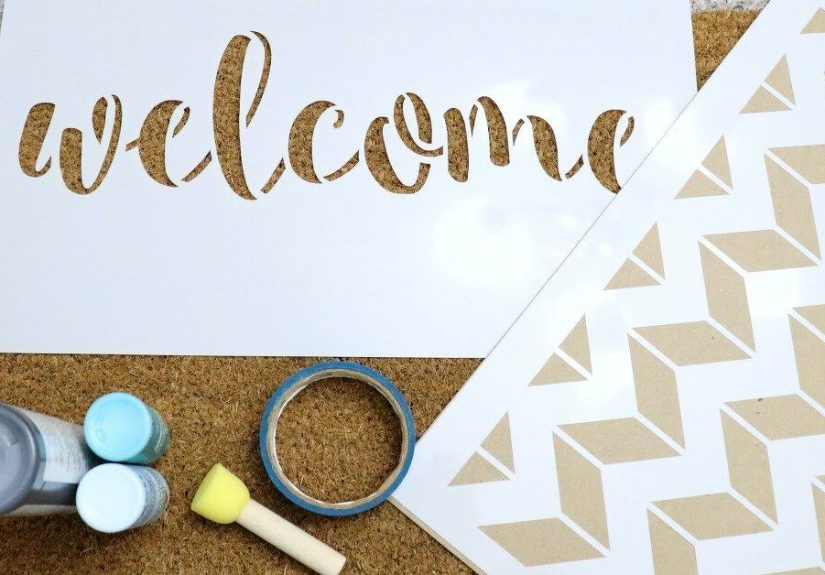
The exact products can vary, but most successful DIY welcome mat tutorials use a similar supply list. Here’s what you’ll want to gather before you start:
Base Materials
- Plain coir doormat: Coir (the rough, fibrous mat made from coconut husks) holds paint well and is widely used in DIY projects.
- Stencil: You can use:
- Pre-made reusable stencils
- Vinyl stencils cut with a Cricut or Silhouette
- DIY cardboard or cardstock stencils printed and cut by hand
Paint & Sealant
- Outdoor-rated acrylic paint or porch & floor enamel: These adhere better to coir and handle moisture and UV light more effectively than regular craft paint.
- Stencil brush or pouncer: A stiff, round brush is ideal for dabbing paint straight down into the fibers.
- Optional sealer: Clear outdoor spray sealer or a product like Flex Seal spray can help your design last longer, especially in harsh weather.
Adhesives & Tools
- Painter’s tape
- Repositionable spray adhesive (for paper or plastic stencils)
- Ruler or measuring tape
- Craft knife or scissors (if cutting your own stencil)
- Drop cloth or cardboard to protect your work surface
- Gloves and a mask when spraying sealers (safety first)
Step-by-Step: How to Make a Stenciled Welcome Mat
Step 1: Prep Your Workspace & Mat
Start by laying down a drop cloth, plastic sheet, or a flattened cardboard box. Coir sheds a bit, and paint splatters happen, especially when you’re enthusiastically dabbing.
Shake or vacuum your mat to remove loose fibers and dust. A clean surface helps the paint really grab onto the coir. If the mat is damp from being outside, let it dry completely before painting.
Step 2: Plan Your Design
Decide what you want your mat to say or show. Some popular ideas:
- “Welcome-ish (Depends Who You Are)”
- “Hope You Brought Tacos”
- Classic “Welcome” or “Hello” in a bold script
- Family name or monogram
- Seasonal messages like “Hello Fall” or “Merry & Bright”
If you’re using a vinyl or paper stencil, lay it on top of the mat first (without adhesive) to visualize spacing. Use a ruler to center your design so it doesn’t look like your mat had too much coffee.
Step 3: Secure the Stencil
This is the step that separates crisp, clean designs from fuzzy, paint-bleed disasters.
- Spray the back of your stencil lightly with repositionable spray adhesive, let it get tacky for about a minute, and then press it firmly into the mat.
- Use painter’s tape around the edges of the stencil to keep it from shifting.
- Press down all the small inner pieces (like the centers of letters O, A, R, etc.) so they’re flat and secure.
On coir, stencils never stick perfectly, so good taping and careful dabbing are your best friends.
Step 4: Apply the Paint (The Right Way)
This is where the magic happens. The trick is to get the paint into the fibers without flooding the stencil edges.
- Pour a small amount of paint onto a paper plate.
- Dip just the tips of your stencil brush into the paint, then dab off the excess onto the plate or a scrap paper. You want the brush “dry-ish,” not dripping.
- Use an up-and-down pouncing motion to dab the paint onto the mat through the stencil. Don’t brush side to sidethis pushes paint under the stencil and causes bleeding.
- Build color gradually. It’s better to do two or three light coats than one thick, runny coat.
For very rough coir mats, you may want to push the brush firmly down, almost “stabbing” the paint into the fibers (gently, of course). This helps coverage and durability.
Step 5: Let It Dry and Remove the Stencil
Allow the paint to dry to the touchusually 15–30 minutes per layer, depending on your climate and the paint you used. When it’s dry enough that it doesn’t transfer to your finger, carefully peel up the stencil.
Pull the stencil straight up rather than sliding it sideways to avoid smearing. Use a small detail brush to touch up any thin spots or rough edges if needed.
Step 6: Seal Your Design (Optional but Recommended)
This step is optional, but if your mat will sit in direct rain or heavy sun, sealing can extend its life. You have two main options:
- Clear outdoor spray sealer: A matte or satin clear coat designed for exterior use. Apply light, even coats over the painted area in a well-ventilated space.
- Rubberized spray coating: Products like Flex Seal can create a tougher, more durable finish where the design lives. They cost more and are usually available in limited colors, but they’re very sturdy.
Allow the mat to cure for at least 24 hours after sealing before you put it in a high-traffic spot.
Design Ideas & Variations
Once you’ve mastered the basic technique, you can start having real fun with your DIY welcome mat:
Layered Mats
Pair your stenciled coir mat with a larger patterned rug underneatha buffalo check, striped cotton rug, or a seasonal print. This “layered porch” look is all over decor blogs and instantly makes your entryway feel styled.
Colorful Backgrounds
Instead of just painting the text, paint a full border, stripes, or a color-blocked background before adding your stencil. Let the base color dry fully, then stencil your lettering on top in a contrasting shade.
Seasonal Swaps
Create a collection of mats you can rotate through the year:
- Spring: Florals or “Hello Sunshine”
- Summer: “Welcome to the Patio” or beachy icons
- Fall: Leaves, pumpkins, or “Oh My Gourd”
- Winter: Snowflakes and cozy sayings
Monograms & House Numbers
For a classic, slightly more formal look, stencil a large initial in the center and your house number in one corner. It looks like something from a pricey catalog but is totally DIY.
Common Mistakes and How to Avoid Them
Problem: Paint Bleeding Under the Stencil
Fix it: Use less paint on the brush, dab off the excess, and stick to a pouncing motion. Make sure your stencil is well-adhered with spray adhesive and painter’s tape.
Problem: Faded Design After a Few Weeks
Fix it: Use outdoor or porch/floor paint instead of basic craft paint, and consider adding a clear outdoor sealer. Also, if possible, place the mat under a covered porch or awning to protect it from direct rain and harsh sun.
Problem: Uneven or Off-Center Design
Fix it: Mark the center of the mat and stencil with light pencil marks on tape or use a ruler to measure spacing before sticking anything down. Dry-fit your stencil first, then commit.
Problem: Stencil Pieces Lifting While Painting
Fix it: Press the stencil into the mat before painting and touch down any loose areas with more painter’s tape. You can also work in smaller sections if your stencil is very detailed.
How to Care for Your Stenciled Welcome Mat
To keep your custom design looking sharp, treat your mat with a bit of kindness:
- Shake it out regularly to remove dirt and debris.
- Avoid scrubbing the painted area with stiff brushes.
- If it gets very wet, let it dry completely before using it again.
- Consider rotating mats seasonally so each one gets a break from constant sun and rain.
Even with the best materials and sealer, painted coir mats are eventually a “wear item.” The good news? By the time it looks tired, you’ll be itching to make a new design anyway.
Real-Life Experiences & Extra Tips for Making a Stenciled Welcome Mat
After you’ve made a couple of mats, you start collecting little tricks that don’t always make it into quick tutorialsbut they make a big difference in the final result. Here are some experience-based tips and observations to help you get pro-looking results from the start.
1. Test on a Corner First
Coir mats are not all created equal. Some are tightly packed and smooth; others are wild, fluffy, and determined to fling paint back at you. Before committing to your full design, test your paint and brush technique on a corner or the back edge of the mat. You’ll quickly see how much pressure you need and how the color looks once it dries.
2. Darker Paint Colors Usually Look Better
High-contrast designs are easier to read from the street and age more gracefully. Black or deep charcoal paint on a natural tan coir mat is classic and forgiving. Bright colors can be fun (hello, hot pink “Hey There!”), but they may fade faster in direct sun. If you love color, consider using it for borders or small accents while keeping the main lettering dark.
3. Thin Layers Beat Thick Globs Every Time
The number one rookie mistake is loading the brush with too much paint. It feels efficient, but that’s how you get fuzzy letters and blobs around the edges. Working in thinner layers gives you more control, and the color still ends up rich because you’re building it up in the fibers. Think “tap-tap-tap” rather than “smoosh-and-hope.”
4. Vinyl Stencils vs. Paper Stencils
If you have a cutting machine (like a Cricut or Silhouette), vinyl stencils are incredibly handy. They cling a bit better to the coir and can give you crisper lines. However, don’t feel like you need fancy equipmentcardstock or freezer paper stencils still work well when combined with spray adhesive and painter’s tape. The real key is securing the stencil and using the right painting motion.
5. Don’t Skip the Drying and Curing Time
It’s tempting to throw your gorgeous new mat straight onto the porch the second the paint feels dry. Give it more time than you thinkideally 24 hours or longer, especially if you’ve used multiple layers of paint or added a sealer. Paint that feels dry on top may still be soft deeper in the fibers, and letting it cure helps prevent peeling and premature wear.
6. Use Your First Mat as a Learning Project
Even if your first mat isn’t “Pinterest perfect,” it’s still going to look charming at your door. Treat it as a low-pressure learning experience. Maybe you’ll discover that you’re heavy-handed with paint, or that you prefer bold block letters over intricate script. The next mat will be better, and the one after that will have your neighbors asking where you ordered it.
7. Think About Where the Mat Lives
If your front door is fully exposed to rain and strong sun, don’t beat yourself up if the mat wears out faster. Coir naturally breaks down over time, and constant weather exposure speeds up the process. If you have a small covered area, that’s the VIP spot for your stenciled mat. For uncovered entries, sealing and darker paint become extra important.
8. Make It a Group or Family Project
Stenciled mats are a fun weekend project to do with friends or family. One person can handle measuring and positioning, another can tape or dab paint, and the kids can help shake the mat clean or choose the sayings. Just keep young helpers away from spray sealers and sharp tools, and give them their own little practice mat or scrap piece to decorate.
9. Keep a “Stencil Box” for Future Projects
Once you’ve cut or bought a stencil you love, store it flat in a folder or box along with extra painter’s tape, a stencil brush, and a small bottle of your favorite outdoor paint. Next time inspiration hitsmaybe for a holiday mat or a giftyou’ll be 80% ready without a trip to the store.
The more you play with stenciled welcome mats, the more you realize they’re an easy way to refresh your entry, try out new fonts and styles, and add personality to your home. Whether your vibe is cozy farmhouse, modern minimal, or “sarcastic but friendly,” there’s a mat design waiting to happen right at your front door.