Table of Contents >> Show >> Hide
- Understanding the Mick Thomson Mask Style
- Materials You Will Need
- Step 1: Study the Shape Before You Cut
- Step 2: Make a Paper Template
- Step 3: Transfer the Template to EVA Foam
- Step 4: Add the Signature Mouth Guard
- Step 5: Build the Brow, Cheeks, and Panel Lines
- Step 6: Shape the Mask for a Better Fit
- Step 7: Add Straps and Interior Padding
- Step 8: Seal the Foam Before Painting
- Step 9: Paint the Metallic Base
- Step 10: Weather the Mask Without Making Mud
- Step 11: Improve the Eye Area
- Step 12: Final Seal and Wear Test
- Common Mistakes to Avoid
- Safety Tips for DIY Slipknot Mask Makers
- How to Style the Mask for Photos or Cosplay
- Experience Notes: What Making a Mick Thomson Slipknot Mask Teaches You
- Conclusion
A Mick Thomson Slipknot mask is not just a costume piece; it is a whole attitude with straps. It looks cold, severe, industrial, and just a little bit like it could judge your guitar tone from across the room. Mick Thomson, known to Slipknot fans as #7, has long been recognized for his intense stage presence, crushing guitar work, and a mask style that usually leans into metallic menace, sharp structure, and an unmistakable mouth-guard look.
This guide shows you how to make a Mick Thomson Slipknot mask-inspired project for personal cosplay, Halloween, fan displays, photoshoots, or music-room decoration. The goal is not to create a counterfeit commercial replica. Instead, you will build a safe, wearable, original fan-art version using accessible craft materials, smart planning, and enough patience to avoid turning your dining table into a crime scene of foam scraps and silver paint.
Before starting, remember one rule: a mask should look scary, not be scary to wear. Good visibility, breathing space, lightweight materials, and safe paints matter more than perfect sharp edges. Your finished mask should feel comfortable, stay secure, and let you see where you are going. Nothing ruins a dramatic entrance faster than walking confidently into a bookshelf.
Understanding the Mick Thomson Mask Style
The classic Mick Thomson mask look is built around a few visual ideas: a strong faceplate shape, a hard metallic finish, dark eye openings, a heavy jaw area, and a mouth section that resembles a grille or guard. Over different Slipknot eras, the exact mask details have changed, but the overall personality has stayed consistent: minimal, brutal, and built like a machine that listens exclusively to down-tuned riffs.
For a DIY version, you do not need to copy every tiny feature. In fact, a slightly stylized version often looks better because it fits your face, your skill level, and your available materials. Think of the mask in three major zones: the brow and eyes, the cheek panels, and the mouth guard. If those three areas feel balanced, people will immediately understand the inspiration.
Materials You Will Need
The safest beginner-friendly approach is to use EVA foam or sturdy craft foam instead of fiberglass, resin, metal, or hard plastic. EVA foam is light, affordable, flexible, and forgiving. It can be cut, layered, shaped, sealed, and painted to resemble aged metal without turning the project into an advanced industrial workshop.
Recommended Materials
- 5 mm EVA foam or thick craft foam for the main faceplate
- 2 mm craft foam for raised details, ridges, and panel lines
- Poster board or cardstock for making the template
- Pencil, ruler, flexible measuring tape, and masking tape
- Child-safe scissors or supervised craft cutting tools
- Low-temperature hot glue or strong craft glue
- Elastic straps or adjustable mask straps
- Foam-safe primer or flexible craft sealer
- Acrylic paint in silver, gunmetal, black, and dark gray
- Soft brush, sponge, and paper towels for weathering
- Clear water-based sealer for the final finish
Use water-based paints whenever possible, choose art materials with clear safety labels, and work in a ventilated area. If you are under 18, get adult help with cutting, heat, adhesives, or anything with warning labels. A mask can be metal-looking without being made from anything risky. Foam plus paint can do a surprisingly convincing job, and foam does not clank against your face like a tiny medieval appliance.
Step 1: Study the Shape Before You Cut
The biggest mistake beginners make is grabbing foam first and planning later. That is how you end up with a mask shaped like a confused potato. Start by studying reference photos of Mick Thomson’s mask from official band images, live performance photos, and reputable music publications. Look at the silhouette more than the tiny details.
Notice the tall, narrow feeling of the face. The eye openings usually feel dark and stern. The mouth section is the main feature, often appearing as a metallic guard or grille. The cheeks and jaw create a strong downward pull, which gives the mask its aggressive look. Sketch a simplified version on paper. Do not worry if your first sketch looks like an angry toaster. That is part of the process.
Step 2: Make a Paper Template
Hold a sheet of poster board in front of your face and mark the rough positions of your eyes, nose bridge, cheekbones, and chin. Remove the paper and draw half of the mask shape on one side. Fold the paper down the middle and cut both sides at once so the mask is symmetrical. Symmetry is important here because an uneven mask can accidentally look less “stage monster” and more “craft project that fought a lawn mower.”
Cut out the eye openings larger than you think you need. You can always make them look smaller later with dark mesh or painted foam rims, but you cannot safely wear a mask that blocks your vision. Hold the template up to your face and check that you can see forward and slightly to the sides. Also check that the bottom of the mask does not press against your throat or restrict jaw movement.
Step 3: Transfer the Template to EVA Foam
Place the paper template on your EVA foam and trace around it. Cut the shape carefully. If you are using scissors, make slow, clean cuts instead of hacking through the foam like you are late for battle. If a sharper craft tool is needed, ask an adult to help and always cut away from hands on a protected surface.
Once the main faceplate is cut, hold it up to your face again. Mark where your eyes, nose, and mouth need space. At this stage, comfort matters more than detail. If it pinches your nose or sits too close to your lips, trim carefully. A great mask is one you can actually wear for more than four minutes without rethinking every life choice that led you here.
Step 4: Add the Signature Mouth Guard
The mouth guard is the visual anchor of a Mick Thomson Slipknot mask-inspired design. Cut a rectangular or slightly curved mouth plate from thin craft foam. Then add vertical slats, grille lines, or raised bars using narrow strips of 2 mm foam. Keep the edges soft and rounded. Do not use metal strips, sharp plastic, or anything that could cut your face if the mask shifts.
Glue the mouth piece onto the lower front of the mask. For a stronger look, layer the foam so the mouth guard sits slightly raised from the faceplate. Paint will later make this section look heavier than it really is. That is the secret of costume work: the audience sees “industrial steel,” while your face feels “lightweight foam sandwich.”
Step 5: Build the Brow, Cheeks, and Panel Lines
Mick Thomson’s mask style often feels sculpted and armored. You can create that effect by adding foam strips around the brow, cheekbones, and jaw. Use thin foam to build angular panels. A raised brow makes the eye openings look darker and more intense. Cheek pieces make the mask feel less flat. Jaw details pull the design downward, creating that severe Slipknot-inspired silhouette.
Do not overdo the details. Too many random foam strips can make the mask look busy. Choose a few strong lines: one across the brow, two along the cheeks, and a layered mouth area. The best version feels deliberate, not like your foam scraps held a committee meeting.
Step 6: Shape the Mask for a Better Fit
EVA foam can be gently shaped, but safety comes first. If heat shaping is used, it should be done with adult supervision, good ventilation, and careful temperature control. Many beginners can skip heat shaping entirely by using curved cuts, darts, and layered foam. You can also bend the mask slightly by hand and glue small overlap seams at the sides to create a face-hugging curve.
Try the mask on after each adjustment. The center should sit comfortably over the nose bridge. The cheeks should not dig into your skin. The mouth area should allow airflow. If you plan to wear it at a convention, party, or show, comfort is not optional. A mask that looks perfect but feels awful becomes a wall decoration very quickly.
Step 7: Add Straps and Interior Padding
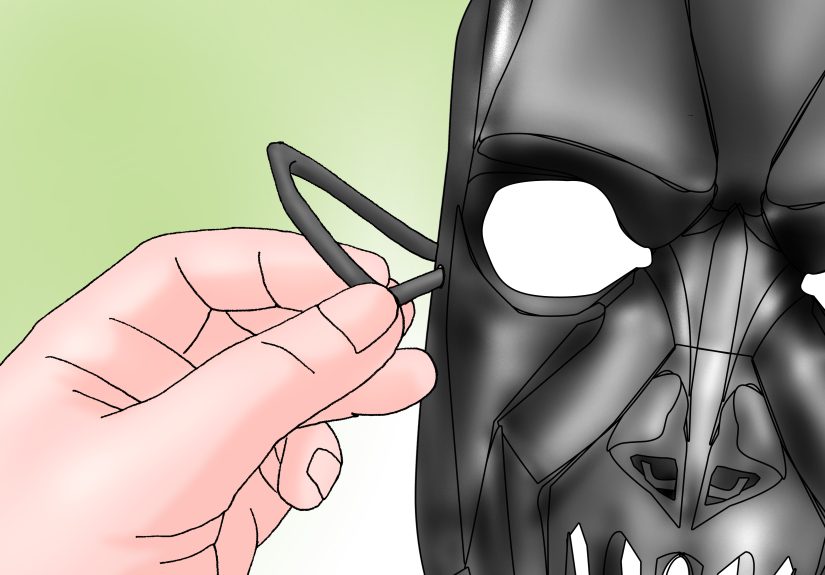
Attach elastic straps to the sides of the mask using glue and extra foam tabs. Reinforce the attachment points because straps take more stress than most beginners expect. A single thin glue line is not enough. Sandwich the strap end between the mask and a small foam patch to spread the tension.
Add small pieces of soft foam inside the forehead and cheek areas if needed. Interior padding helps the mask sit away from your skin, improves airflow, and keeps sweat from turning the inside into a tiny swamp. Keep padding minimal around the nose and mouth so breathing stays easy.
Step 8: Seal the Foam Before Painting
Raw foam absorbs paint unevenly. To get a smoother metallic finish, apply a flexible foam-safe primer or craft sealer before painting. Use thin coats and let each coat dry fully. Thick coats can crack, peel, or hide your details. Patience here makes the final result look much more professional.
Avoid strong solvent-based products unless you have proper adult supervision, ventilation, and safety equipment. For most DIY mask makers, water-based acrylics and sealers are the smarter choice. They are easier to clean, easier to control, and much less dramatic than discovering halfway through that your paint is attacking the foam like a tiny chemical goblin.
Step 9: Paint the Metallic Base
Start with a dark base coat, such as black or charcoal gray. Once dry, sponge on gunmetal and silver acrylic paint in thin layers. Do not paint the whole mask bright silver at once. Realistic metal has shadows, dull spots, scuffs, and uneven tones. The dark base underneath makes the mask look deeper and more worn.
Use a dry brush technique for highlights. Dip a brush lightly into silver paint, wipe most of it off on a paper towel, then drag it gently across raised edges. This catches the foam ridges and makes them look like worn metal. The mouth guard, brow, and cheek panels should receive the strongest highlights because those areas would naturally catch the most light.
Step 10: Weather the Mask Without Making Mud
Weathering gives the mask character. Mix black acrylic paint with a little water to create a thin wash. Brush it into grooves, seams, and corners, then wipe the surface with a paper towel. The dark paint stays in the low areas and creates depth. Repeat slowly until the mask looks aged, not dirty.
For scratches, use a small brush or sponge with silver paint and lightly touch edges and corners. Keep scratches random but controlled. If every scratch is the same size and direction, it will look fake. Think of wear around the mouth guard, brow, and outer edges. Those are places that would naturally get handled, bumped, and scuffed.
Step 11: Improve the Eye Area
The eyes create the mood. Paint the inside edges black to deepen the shadows. If you want a darker look, add breathable black mesh behind the eye openings, but only if you can still see clearly. Test the mask in bright and dim lighting. Something that looks fine at your desk may become a visibility disaster in a hallway.
Never sacrifice vision for accuracy. Costume masks should have eye holes large enough for full practical sight. If the eye shape looks too open, use makeup around your eyes or a dark hood under the mask to create the illusion of deeper shadows. That trick is safer than shrinking the openings until you are navigating by vibes.
Step 12: Final Seal and Wear Test
Once the paint is fully dry, apply a light coat of clear water-based sealer. This helps protect the finish from fingerprints and minor scratches. Let the mask dry completely before wearing it. Paint and sealers need time to cure, and your face should not be the testing laboratory.
Do a 10-minute wear test at home. Walk around, look side to side, breathe normally, and check whether the straps pull too tightly. If the mask fogs, feels hot, blocks vision, or smells strongly of paint, adjust it before taking it anywhere. A good Mick Thomson Slipknot mask-inspired build should feel secure, breathable, and dramatic without becoming a personal sauna.
Common Mistakes to Avoid
Making the Mask Too Heavy
Heavy masks look impressive on a table but become annoying on your face. Foam is your friend. Keep layers strategic and avoid unnecessary bulk. The mouth guard can look heavy while staying lightweight.
Using Paint That Cracks
Flexible materials need flexible finishes. Thin acrylic layers usually work better than thick paint. Let each layer dry before adding another. Rushing paint is how good projects become sticky sadness.
Ignoring Ventilation
A mask needs airflow. Leave space around the nose and mouth, avoid sealing every opening, and do not wear the mask during running, driving, cycling, or any activity where vision and breathing are critical.
Copying Too Literally
The best fan-made masks capture the vibe without trying to pass as official merchandise. Add your own panel lines, weathering pattern, or strap style. Personal interpretation makes the project more creative and helps it stand apart.
Safety Tips for DIY Slipknot Mask Makers
Safety should be part of the design, not an afterthought. Use lightweight materials, avoid sharp edges, and choose soft costume accessories. Make sure the mask fits securely without squeezing your head. Large enough eye openings and good ventilation are essential, especially if the mask will be worn for more than a quick photo.
When painting or sealing, work where fresh air can circulate. Read product labels. Choose non-toxic art supplies when possible. Keep glue guns upright on a safe surface, avoid touching melted glue, and let all materials cool and dry before wearing the mask. If you feel dizzy, irritated, or uncomfortable while crafting or wearing the mask, stop immediately and get fresh air.
How to Style the Mask for Photos or Cosplay
A Mick Thomson-inspired mask works best with dark clothing, a black hoodie, black gloves, or a simple stage-ready outfit. You do not need a full replica costume to make the mask pop. In fact, a plain black background can make the metallic faceplate look more powerful in photos.
For photography, use side lighting to catch the raised details. A light from above or slightly behind can make the eye area look deeper. Avoid direct flash from the front because it can flatten the paint job and make the mask look like a silver pancake with attitude.
Experience Notes: What Making a Mick Thomson Slipknot Mask Teaches You
Making a Mick Thomson Slipknot mask-inspired project is one of those crafts that looks simple until you actually start. At first, it feels like you are just cutting out a face shape and painting it silver. Then you discover that every tiny decision changes the whole mood. Move the eyes a little lower and the mask looks tired. Make the mouth guard too wide and it starts looking cartoonish. Add too much black wash and suddenly the mask appears to have survived three garage fires and a bad breakup.
The first real lesson is that shape matters more than detail. Beginners often spend too much time adding little scratches, dots, and lines before the main silhouette works. The mask can have perfect weathering, but if the faceplate is too round or the jaw is too short, it will not feel like the heavy, severe #7 style. Start big. Get the brow, cheeks, and mouth guard right. Details are dessert, not dinner.
The second lesson is that comfort changes everything. A mask that looks amazing for thirty seconds can become unbearable after ten minutes if the straps pull behind your ears, the nose bridge digs in, or the eye holes are too narrow. During a real wear test, you notice things you never see on the workbench. Maybe the mouth area needs more space. Maybe the padding shifts. Maybe your glorious dramatic entrance is interrupted because you cannot find the door handle. Testing early prevents public comedy.
The third lesson is that metallic paint is all about restraint. The temptation is to cover the entire mask in bright silver and call it done. That usually creates a toy-like finish. A darker base with slow dry-brushed highlights looks far more realistic. The best results come from building layers: black, gunmetal, dull silver, then tiny edge highlights. The process feels slow, but the final effect is worth it. The mask starts to look less like foam and more like something dragged out of a heavy metal machine shop.
Another useful experience is learning when to stop. Weathering is addictive. You add one scratch, then another, then a few more, and suddenly the mask looks like it lost a fight with a blender. Step back often. Take photos with your phone because photos reveal balance problems quickly. If the mask looks good from six feet away, it will probably work well for cosplay or display.
Finally, this project teaches respect for stage design. Slipknot masks are memorable because they are not random decorations. They support character, performance, lighting, and identity. A fan-made Mick Thomson Slipknot mask should do the same on a smaller scale. It should feel intentional. It should be safe to wear. It should look powerful without needing dangerous materials. And when you finally put it on, look in the mirror, and see that cold metallic expression staring back, you get the best reward in DIY culture: the quiet, ridiculous joy of thinking, “Yeah, I made that.”
Conclusion
Learning how to make a Mick Thomson Slipknot mask is really about combining music fandom, costume design, and smart crafting. Start with a strong template, use lightweight foam, build the mouth guard and panel lines carefully, then create a worn metallic finish with patient paint layering. Keep safety at the center: clear vision, easy breathing, soft edges, secure straps, and non-toxic materials matter just as much as the final look.
The finished mask does not need to be an exact replica to be successful. If it captures the severe shape, the metallic attitude, and the unmistakable Slipknot-inspired energy, you have done the job. Better yet, you have made something original with your own hands. That is more satisfying than clicking “add to cart,” and it comes with fewer mysterious shipping delays.