Table of Contents >> Show >> Hide
- Why Corgi Puppies Need a Smart House Training Plan
- The 14 Steps to House Train a Corgi Puppy
- Step 1: Start on Day One
- Step 2: Pick One Potty Area and Stick With It
- Step 3: Build a Schedule So Predictable It Could Host a Talk Show
- Step 4: Supervise Like You Are Guarding the Crown Jewels
- Step 5: Use a Crate the Right Way
- Step 6: Reward Immediately and Generously
- Step 7: Add a Potty Cue
- Step 8: Keep Meals on a Regular Feeding Schedule
- Step 9: Keep Outdoor Potty Trips Boring Until the Job Is Done
- Step 10: Handle Accidents Without Drama
- Step 11: Do Not Give Too Much Freedom Too Soon
- Step 12: Create a Calm Nighttime Routine
- Step 13: Expect Setbacks During Growth, Stress, or Change
- Step 14: Know When to Call the Veterinarian
- Common House Training Mistakes Corgi Owners Make
- How Long Does It Take to House Train a Corgi Puppy?
- Extra Experiences With House Training Corgi Puppies
- Conclusion
Corgi puppies are adorable, clever, and just confident enough to act like they pay the mortgage. That bright little brain is great news for training, but it also means your puppy will notice every inconsistency in your routine. If breakfast happens at 7:00 one day, 9:30 the next, and “whenever I remember” on Saturday, your corgi will not file a formal complaint. They will simply pee on your rug and let you connect the dots.
The good news is that house training a corgi puppy is absolutely doable when you combine structure, timing, supervision, and rewards. Corgis are smart, active little herders that usually do best when life makes sense. Give them a clear routine, a predictable potty spot, and immediate praise for doing the right thing, and you are already ahead of the game.
This guide walks you through a practical 14-step plan to help your corgi puppy learn where to go, when to go, and how to succeed without turning your living room into a cautionary tale. Expect progress, not perfection. House training is rarely a straight line. It is more like a winding trail with a few puddles along the way.
Why Corgi Puppies Need a Smart House Training Plan
House training is not about waiting for your puppy to “grow out of accidents.” It is about building habits. Puppies do not automatically know that grass is for bathroom business and your hallway is not. They learn through repetition, management, and reward.
With corgis, routine matters even more because they are usually quick learners with busy minds. They thrive when they know what comes next. They also have plenty of energy, and excitement can lead to “oops” moments if you miss their cues. The goal is to make the right behavior easy and the wrong behavior unlikely.
The 14 Steps to House Train a Corgi Puppy
Step 1: Start on Day One
Do not wait a week for your puppy to “settle in” before beginning house training. The first day home is the right day to start. The moment your corgi puppy arrives, take them straight to the potty area before introducing the entire house, the toy basket, and Uncle Dave, who insists every dog loves him.
Early consistency prevents confusion. Every accident your puppy has indoors becomes one more rehearsal of the wrong habit. You are not being strict. You are being clear.
Step 2: Pick One Potty Area and Stick With It
Choose one outdoor bathroom spot and keep using it. Puppies learn faster when the location stays the same because the smell helps trigger the behavior you want. Walk your corgi to that same patch of grass each time, preferably through the same door.
If you live in an apartment or have limited outdoor access, you can use potty pads or an indoor potty station temporarily. Just be consistent. If your long-term goal is outside-only potty habits, begin transitioning as soon as your routine allows.
Step 3: Build a Schedule So Predictable It Could Host a Talk Show
A solid potty schedule is the backbone of house training. Take your corgi puppy out:
- First thing in the morning
- Right after naps
- After meals
- After drinking a lot of water
- After play sessions
- After crate time
- Before bedtime
Younger puppies need very frequent breaks. When in doubt, go out. It is far easier to prevent an accident than to explain to your carpet why it keeps getting involved.
Step 4: Supervise Like You Are Guarding the Crown Jewels
House training goes fastest when your puppy is either actively supervised, safely confined, or outside in the potty area. Those are the three lanes. Wandering unsupervised around the house is how puppies quietly make terrible decisions behind a chair.
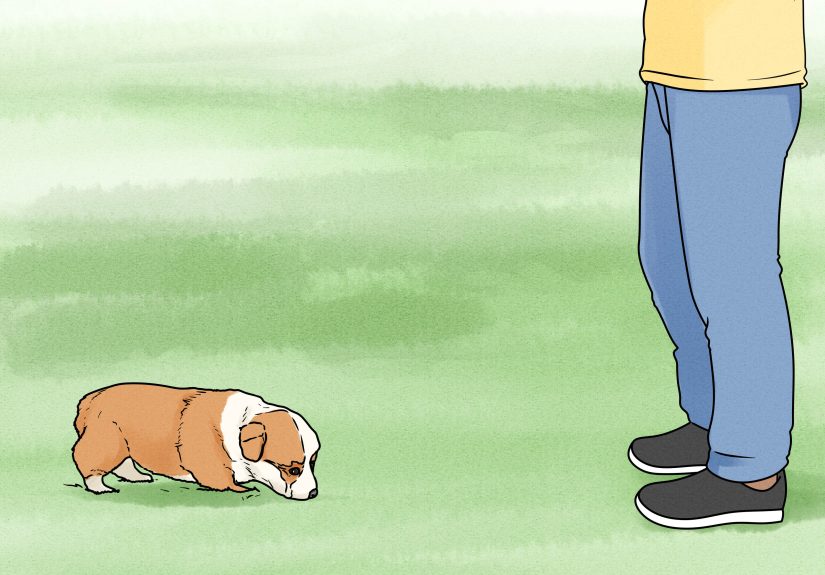
Keep your corgi near you with a leash, use baby gates, or limit access to one easy-to-clean room. Watch for common pre-potty signals such as sniffing, circling, sudden wandering away, pausing during play, or heading toward a familiar accident zone. When you see those signs, move quickly and calmly.
Step 5: Use a Crate the Right Way
A crate can be one of the best house training tools because most puppies prefer not to soil their sleeping area. But the crate has to feel safe, not like puppy jail. Introduce it with treats, meals, chew toys, and calm praise. Let your corgi see it as a cozy den, not a consequence.
Choose a crate that is large enough for your puppy to stand, turn around, and lie down comfortably, but not so huge that one side becomes the bedroom and the other side becomes the bathroom. If your puppy seems deeply distressed in a crate, a pen or gated room may be a better temporary management option while you work on comfort and confidence.
Step 6: Reward Immediately and Generously
The second your corgi finishes peeing or pooping in the correct spot, praise them and offer a treat. Not five minutes later. Not when you get back inside. Right there, right then. Timing matters because puppies connect rewards to what just happened.
Use a happy voice. Keep treats small and ready in your pocket. This is not bribery. This is communication. Your puppy is learning, “Ah, yes, this patch of grass makes the humans weirdly delighted and produces snacks. Excellent.”
Step 7: Add a Potty Cue
Once your puppy starts reliably going in the right place, add a cue such as “go potty” or “do your business.” Say it softly as they begin to eliminate, then reward right away. Over time, the cue can help your corgi understand what you want during cold mornings, rainy evenings, and those dramatic moments when they suddenly forget why they went outside.
Step 8: Keep Meals on a Regular Feeding Schedule
Free-feeding makes potty timing harder. Regular meals create more predictable bathroom patterns, which makes house training easier. Feed at roughly the same times each day, and pay attention to how soon your puppy usually needs to go after eating.
If you are tracking progress, write down mealtimes, potty times, and accidents for a week or two. Patterns often appear faster than you expect. You may discover your corgi reliably needs a potty break 15 to 20 minutes after breakfast or gets the “I need to poop immediately” zoomies after dinner.
Step 9: Keep Outdoor Potty Trips Boring Until the Job Is Done
Many puppies see the backyard as an amusement park. Leaves are flying. Birds exist. The wind is suspicious. Your corgi may forget the mission entirely. Keep potty trips calm and businesslike until they go. Use a leash if needed, stand quietly, and avoid turning the trip into a play session too soon.
Once your puppy finishes, then the praise, treat, and a little freedom can happen. This teaches a simple lesson: potty first, party second.
Step 10: Handle Accidents Without Drama
Your puppy will have accidents. That does not mean they are stubborn, spiteful, or plotting against your hardwood floors. It means they are a puppy.
If you catch your corgi in the act, interrupt gently and quickly take them to the correct potty area. If you find the mess later, just clean it. Do not scold, rub their nose in it, or deliver a speech about trust and betrayal. Punishment often creates fear and confusion, not better bathroom habits.
Use an enzymatic cleaner to remove odor thoroughly. If your puppy can still smell the old accident, they may treat that spot like an approved bathroom branch office.
Step 11: Do Not Give Too Much Freedom Too Soon
One of the biggest house training mistakes is expanding your puppy’s access to the home before they are ready. A few successful days do not equal total freedom. Think of privilege as something your corgi earns one room at a time.
When your puppy is staying dry consistently and signaling better, gradually increase access. If accidents start again, scale back. That is not failure. That is information.
Step 12: Create a Calm Nighttime Routine
Night training gets easier when bedtime is predictable. Give your corgi puppy a final potty trip right before bed. Keep the last outing quiet and low-key. If your puppy wakes in the night, take them out for a quick bathroom break with minimal excitement, then return them to sleep.
This is not the time for fetch, deep emotional bonding, or a snack buffet. Keep it boring. Boring helps puppies understand that midnight is for bathroom business and going back to bed.
Step 13: Expect Setbacks During Growth, Stress, or Change
Even puppies doing well can regress for a bit. Changes in schedule, visitors, weather, travel, teething, overexcitement, and normal development can all disrupt progress. Corgis, with their alert little brains and strong opinions, sometimes react to changes by forgetting what they knew yesterday.
If regression happens, return to the basics: tighter supervision, more frequent potty breaks, better timing with rewards, and less freedom indoors. Most setbacks improve quickly when the structure returns.
Step 14: Know When to Call the Veterinarian
Sometimes accidents are not just training problems. If your corgi puppy is urinating very frequently, straining, dribbling, having bloody urine, suddenly worsening after doing well, or seeming uncomfortable, talk with your veterinarian. Medical issues such as urinary tract problems, digestive upset, or other conditions can look like failed house training.
If your puppy keeps soiling the crate despite a sensible schedule, that also deserves a closer look. Always rule out health issues before assuming the problem is stubbornness. Puppies are many things, but they are usually not tiny criminal masterminds.
Common House Training Mistakes Corgi Owners Make
- Being inconsistent: Different rules from different family members slow everything down.
- Missing the reward window: Praise must happen right after the correct potty behavior.
- Letting the puppy roam too early: Freedom should be earned, not granted out of optimism.
- Using punishment: Fear does not teach the right bathroom location.
- Ignoring patterns: A simple potty log can reveal exactly when your puppy needs to go.
- Cleaning poorly: Lingering odor can invite repeat accidents.
How Long Does It Take to House Train a Corgi Puppy?
There is no magic deadline. Some corgi puppies catch on quickly, while others need several months of repetition before they become fully reliable. Progress depends on age, consistency, supervision, prior environment, and whether everyone in the house is following the same plan.
A good benchmark is this: if the number of accidents is steadily going down and your puppy is choosing the potty area more often, you are moving in the right direction. Focus less on perfection and more on trend lines. House training success is usually built through dozens of tiny wins, not one grand breakthrough.
Extra Experiences With House Training Corgi Puppies
One of the most common experiences corgi owners talk about is how fast these puppies understand the pattern but how slowly they become fully reliable. That sounds contradictory, but it is true. A corgi puppy may understand by week two that outside is the right place, then still have accidents in week five because they got distracted by excitement, stayed awake too long, or had access to one room too many. That gap between “gets it” and “always does it” is normal.
Another common experience is realizing that corgis are often masters of routine. When owners begin taking them out at the same times every day, progress usually speeds up. Breakfast, potty. Nap, potty. Play, potty. Bed, potty. Once the schedule becomes predictable, many puppies start heading toward the door at the right times as if they have quietly appointed themselves assistant household managers.
Many people also discover that enthusiasm can sabotage success. Corgi puppies are energetic little comedians. You take them outside, they bounce after a leaf, bark at nothing, inspect the air like tiny agricultural consultants, and completely forget why they came out. Then they come inside and have an accident 90 seconds later. That experience teaches owners to keep potty trips boring until the mission is complete. It sounds simple, but it changes everything.
Crate training brings its own learning curve. Some corgi puppies settle into a crate quickly when fed there and given chew toys. Others object with the emotional intensity of a Shakespearean monologue. Owners who move too fast often think the crate “doesn’t work,” when the real issue is that the puppy has not yet built a positive association. Slowing down, rewarding calm behavior, and keeping crate sessions short at first usually helps.
Weather is another surprisingly big factor. Plenty of puppies will happily potty outside on a sunny day but act personally offended by rain. A corgi faced with wet grass may look at you as if you created the weather on purpose. Owners often need patience, a leash, and a quiet wait to help puppies learn that the rules do not change just because the sky is being dramatic.
Families with kids often mention another real-world challenge: mixed messages. One person rewards the puppy. Another forgets. One person notices the sniffing signal. Another assumes the puppy is “just exploring.” One person takes the pup out after playtime. Another opens the back door and hopes for the best. House training gets much easier when the whole household follows the same steps.
And then there is the emotional side. Owners often feel discouraged after a bad day, especially when they thought the puppy was making steady progress. But one rough afternoon does not erase all the learning that came before it. In many homes, the turning point comes when people stop treating accidents as disasters and start treating them as data. More supervision? Different timing? Better cleanup? Shorter play sessions before potty? That mindset shift helps both the puppy and the humans relax.
In the end, most corgi owners say the same thing: the process can be messy, funny, exhausting, and weirdly rewarding. One day you realize there have been no accidents for a while, your puppy is heading to the door on their own, and the routine that once felt impossible now feels automatic. That is when you know the training worked. Also, that is when your corgi will probably start a completely different project, like stealing socks.
Conclusion
House training a corgi puppy is less about luck and more about structure. Start immediately, use a regular potty schedule, supervise closely, reward success fast, and keep accidents boring. Add a crate or pen for management, clean thoroughly, and resist the urge to hand out too much freedom too early.
Most of all, remember that your puppy is learning a life skill, not taking a final exam. Stay patient, stay consistent, and keep your sense of humor handy. With time, repetition, and a pocket full of treats, your corgi puppy can absolutely learn to keep the bathroom business where it belongs.