Table of Contents >> Show >> Hide
- What “Forcing” a Hyacinth Bulb Actually Means
- Quick Checklist: What You’ll Need
- Step 1: Choose the Right Bulbs (This Is Where Success Starts)
- Step 2: Plan Your Timing (So You’re Not Guessing at Your Own Kitchen Counter)
- Step 3: Chill the Bulbs (The “Winter” Part of Winter Blooms)
- Step 4: Set Up Your Bulb in a Forcing Vase (The Classic Method)
- Step 5: The Pebbles Method (If You Don’t Have a Forcing Vase)
- Step 6: Move to Light at the Right Moment (Timing Matters)
- Water Care 101 (Because Clean Water = Happy Roots)
- How to Keep Blooms From Flopping Over Like a Tired Rooster
- Troubleshooting: When Your Bulb Isn’t Cooperating
- After the Bloom: Can You Save the Bulb?
- Safety Note (Quick but Important)
- FAQ: Fast Answers for Busy Humans
- Conclusion: Your Winter Bloom Plan in One Sentence
- Extra: Real-World Experiences and Lessons Learned (500+ Words)
Winter has a talent for turning our homes into beige caves of dry air and “Is it 5 p.m. yet?” energy.
Enter hyacinths: small bulbs with big main-character fragrance. And the best part? You can grow
them in a vaseno soil, no mud, no mystery gnatsjust water, patience, and the tiny thrill of watching roots
do their underground thing… above ground.
This guide walks you through “forcing” hyacinth bulbs in a vase so they bloom indoors during winter. We’ll cover
the easiest method (classic hyacinth forcing vase), a pebbles-in-a-glass-bowl backup plan, timing for holiday-to-late-winter
flowers, and the common mistakes that make bulbs sulk, flop, or rot like a forgotten salad.
What “Forcing” a Hyacinth Bulb Actually Means
Forcing is basically convincing a spring bulb that it survived winter and it’s safe to bloom now. Hyacinths need a cold
period (chilling) to trigger the internal chemistry that leads to flowering. Once that cold requirement is met, you give
the bulb moisture, roots, and lightand it does the rest (with dramatic flair).
Quick Checklist: What You’ll Need
- Hyacinth bulbs (preferably “pre-chilled” if you want fast winter blooms)
- Hyacinth forcing vase (hourglass-shaped) or a clear container + pebbles
- Clean water (room temperature is fine)
- A cool, dark spot (garage, basement, unheated room, or a fridge plan)
- A bright window once shoots appear
- Optional: gloves (some people find hyacinth bulbs irritating to handle)
Step 1: Choose the Right Bulbs (This Is Where Success Starts)
If you want winter blooms, bulb quality matters. Choose bulbs that are large, firm, and heavy for their size.
Skip anything soft, moldy, or damaged. Bigger bulb usually means a bigger flower spikeand in hyacinth terms,
bigger is basically the whole point.
Pre-chilled vs. non-chilled bulbs
Pre-chilled bulbs are the “express lane.” They’ve already had their cold requirement met by the grower,
so you can start them in water right away and bloom sooner.
Non-chilled bulbs are totally fine too, but you’ll need to chill them yourself for several weeks (details below).
If you’re reading this in midwinter and want flowers soon, pre-chilled bulbs will make you feel like a genius.
Step 2: Plan Your Timing (So You’re Not Guessing at Your Own Kitchen Counter)
Most hyacinths need a solid chilling period, then a few additional weeks to grow roots, send up a flower spike, and bloom.
The exact timing varies by variety and conditions, but the rhythm stays the same: cold first, then water + light.
| Goal | When to Start Chilling | When You’ll Likely See Blooms |
|---|---|---|
| January blooms | September | January |
| February blooms | October | February |
| March blooms | November | March |
If you’re using pre-chilled bulbs, you can skip the chilling calendar and jump straight to the vase steps.
If you’re chilling bulbs yourself, keep reading.
Step 3: Chill the Bulbs (The “Winter” Part of Winter Blooms)
Hyacinth bulbs generally need roughly 12–15 weeks of cold conditions to bloom well. The sweet spot is refrigerator-cold,
not freezer-coldthink “crisper drawer, not cryogenic chamber.”
How to chill hyacinth bulbs at home
-
Keep bulbs dry. Place them in a paper bag or breathable mesh bag. Don’t seal them in plastic like leftovers.
Bulbs need airflow. - Refrigerate at a steady cold temperature. Aim for a consistent chill that stays above freezing.
-
Keep bulbs away from ripening fruit. Fruits can release ethylene gas, which can interfere with bulbs and lead to poor results.
Translation: don’t store your bulbs next to apples unless you enjoy botanical heartbreak. - Check occasionally. If you see mold, wipe gently and discard any bulbs that turn soft or mushy.
Near the end of chilling, you may notice tiny root nubs or pale growth. That’s your bulb’s way of saying, “I am ready.
I have waited. I demand a vase.”
Step 4: Set Up Your Bulb in a Forcing Vase (The Classic Method)
A hyacinth forcing vase is designed to cradle the bulb above water so the roots can reach down while the bulb stays dry.
This is important because bulbs sitting directly in water can rot.
How to position the bulb
- Fill the vase with water to just below where the bulb will sit.
-
Set the bulb in the top with the pointed end up. The base of the bulb should be close to the water
but not submerged. - Double-check the gap. You want the bulb hovering above water so roots grow toward moisture.
Where to place the vase at first
Start in a cool, dark location. Darkness encourages root development and prevents the shoot from racing into a flimsy,
pale sprint. A basement corner, unheated entryway, or cool closet can workjust don’t forget it exists.
Step 5: The Pebbles Method (If You Don’t Have a Forcing Vase)
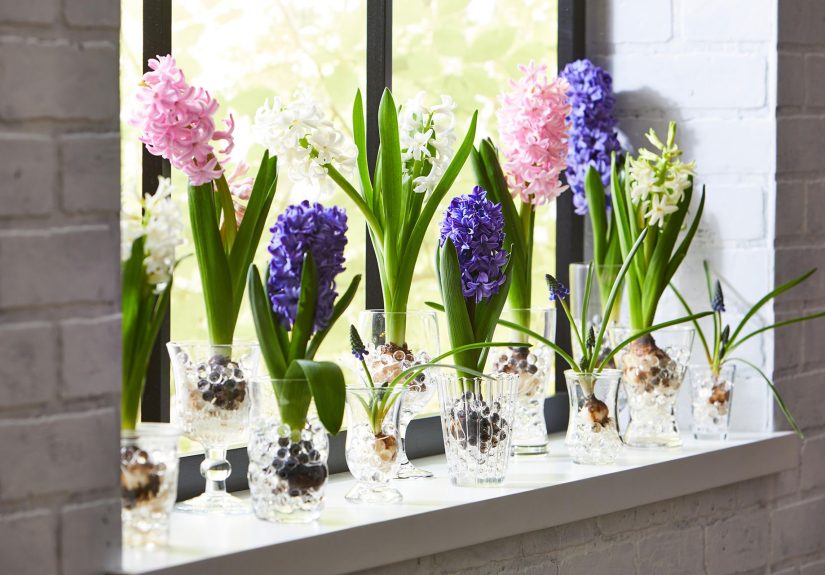
No fancy vase? No problem. You can use a clear glass bowl or cylinder vase and a thick layer of clean pebbles or gravel
to stabilize the bulb.
- Add pebbles to the container (a few inches deep).
- Set the bulb on top of the pebbles, base down, point up.
- Add water so it reaches the pebbles and the very bottom/root area, but doesn’t cover the bulb.
- Keep it cool and dark until roots and shoots develop.
Bonus: Clear containers let you watch roots grow. It’s weirdly soothinglike a screensaver, but alive and slightly judgmental.
Step 6: Move to Light at the Right Moment (Timing Matters)
Once you have a strong root system and shoots that are a couple inches tall, it’s time to transition to brighter conditions.
This shift helps the plant green up and build the energy to bloom.
The “soft launch” to brighter light
- Start with bright, indirect light for a day or two (especially if it’s been very dark).
- Then move to a sunny window where it gets strong light.
- Keep it cool if possiblecooler indoor temps usually mean sturdier stems and longer-lasting flowers.
Water Care 101 (Because Clean Water = Happy Roots)
Your job is basically “root concierge.” Check the water level regularly and top off as needed so roots can reach moisture.
If the water turns cloudy or funky, dump it out, rinse the vase, and refill. Clean water helps prevent rot and keeps things
smelling like “spring” and not “science fair.”
Common water mistakes to avoid
- Water touching the bulb: increases the chance of rot.
- Letting water drop too low: can dry out developing roots.
- Never changing water: encourages bacteria buildup.
How to Keep Blooms From Flopping Over Like a Tired Rooster
Hyacinths smell amazing, but they can get a little top-heavy. If your flower spike leans or flops, it’s usually due to warmth,
low light, or both.
Sturdier stems and longer blooms
- Give strong light once it’s in the growth phase.
- Rotate the vase every day or two so it grows straight instead of lunging toward the window.
- Keep temperatures on the cool side (especially at night) to slow the bloom for longer enjoyment.
- Use a support if needed: a discreet stake, or a decorative ribbon around the stems can help.
Troubleshooting: When Your Bulb Isn’t Cooperating
Problem: Bulb is rotting
Likely cause: The bulb is sitting in water or water is too high.
Fix: Lower the water so it’s just beneath the bulb base. Change water and rinse the vase.
Problem: Leaves grow, but no flower spike
Likely cause: Incomplete chilling, or the bulb wasn’t large/healthy enough.
Fix: For next time, ensure a full chilling period and choose larger bulbs. Pre-chilled bulbs can be more reliable for winter forcing.
Problem: Short stem, flower stuck low in the leaves
Likely cause: Sometimes hyacinths need a brief return to darkness to encourage the flower to extend.
Fix: Try a short stint in dimmer conditions for a few days (while keeping water maintained), then return to bright light.
Problem: Mold on bulb surface
Likely cause: Poor airflow or excess moisture.
Fix: Wipe gently, improve airflow, and make sure the bulb itself stays dry above the waterline.
After the Bloom: Can You Save the Bulb?
After flowering, hyacinths in water have used a lot of stored energy. You can try to keep the bulb going, but expectations should be realistic:
many forced bulbs won’t rebloom well the next season, especially if they were grown in water instead of soil.
If you want to try anyway
- Remove the spent flower spike once it fades, but keep the leaves if possible.
- Continue bright light for a bit so leaves can photosynthesize and rebuild reserves.
- Transition to soil (a pot is fine), then eventually plant outdoors when conditions allow.
- Be patient. It may take a year or more to regain bloom strengthif it blooms again at all.
Safety Note (Quick but Important)
Hyacinths are beautiful, but the bulbs can be irritating and are considered toxic if eaten. If you have curious pets or small children,
place vases out of reach and wash hands after handling bulbs.
FAQ: Fast Answers for Busy Humans
Do I need a special hyacinth vase?
It helps a lot because it keeps the bulb dry while letting roots reach water, but you can absolutely use a pebble method
in a regular glass container.
How long does it take to bloom once I put it in water?
After chilling, many hyacinths bloom within a few weeks, depending on temperature and light. Warmer rooms speed things up,
cooler rooms slow them down (and usually extend bloom life).
Why does my hyacinth smell so strong?
Because hyacinths are basically perfume in plant form. If it’s too intense, move it to a cooler room or a larger space.
Your nose is allowed to set boundaries.
Conclusion: Your Winter Bloom Plan in One Sentence
Chill the bulbs, suspend them just above water, start them cool and dark, then move them to bright light and cooler indoor temps
and you’ll get lush, fragrant hyacinth blossoms when winter is still acting like it owns the place.
Extra: Real-World Experiences and Lessons Learned (500+ Words)
People who try hyacinths in a vase for the first time often expect a simple “bulb + water = flower” miracle, and honestly,
that’s not far offas long as you respect the bulb’s one big demand: cold time first. The most common “experience”
beginners report is the emotional whiplash of seeing roots explode with enthusiasm while the top of the bulb seems to do nothing.
This is normal. Roots are the opening act; the flower is the headline.
A fun pattern many home growers notice is that hyacinths become tiny seasonal calendars. Start chilling in early fall, and by the time
holiday decorations go up, you’re also quietly running a bulb operation like a floral speakeasy. When you finally move the vase to a bright
window, the daily changes are surprisingly satisfyingroots lengthen, shoots green up, and the flower spike thickens like it’s preparing
for a grand entrance. It’s one of those rare indoor gardening projects where you can practically see progress between coffee refills.
Another common lesson: light direction matters. Hyacinths will lean toward a window like they’re eavesdropping on the sun.
Rotating the vase every day or two feels almost silly until you skip it and end up with a plant doing an aggressive sideways pose. The fix
is easyrotate consistentlybut many people only believe this advice after living through the “crooked hyacinth era.”
Temperature also becomes very real, very fast. In warm rooms, hyacinths can grow quickly and bloom sooner, but the flower stalk may be softer,
and the blooms may not last as long. In cooler rooms, growth is steadier and the display often lasts longerkind of like how cookies cool better
when you don’t hold them over the oven vent and whisper encouragement. A lot of growers end up “night-cooling” their hyacinths by moving them
away from heating vents or into a slightly cooler space after sunset. Even small temperature tweaks can noticeably change how long the flowers hold up.
Water maintenance is where the project quietly separates the casual dabblers from the vase-forcing legends. People often start with pristine water
and then forget that roots are living things. If the water gets cloudy, it’s not a moral failureit’s a sign to rinse and refresh. Those who build
a tiny routine (peek at water while making tea, top off on trash night, rinse when cloudy) tend to have the best results. The payoff is a root system
that stays clean and functional, which makes the bloom phase smoother and less prone to stress.
Finally, there’s the scent. Many people adore it at first and then realize hyacinths can perfume a whole home like they’re competing for a fragrance contract.
The real-life hack is placement: a larger room, a cooler spot, or even a nearby open window can make the scent feel pleasantly “springy” instead of
“I can taste purple.” If you’re gifting a forced hyacinth, this is worth mentioningbecause gifting should be a joy, not an aromatherapy jump-scare.
The overall takeaway from these experiences is surprisingly encouraging: hyacinths reward consistency more than expertise. If you get the chilling right,
keep the bulb above water, and give decent light once growth starts, you’ll usually end up with winter blooms that feel borderline magical. And if one bulb
refuses to cooperate? That’s not a failureit’s simply your invitation to try again with a different variety, a better bulb, or a slightly cooler spot.
Winter is long. Hyacinths are persuasive. You’ve got options.