Table of Contents >> Show >> Hide
- The Straight Answer (and the Part That Surprises People)
- What Shingles Actually Is
- Why Chickenpox Matters So Much
- “I Never Had Chickenpox”… Are You Sure?
- Can You Get Shingles After the Chickenpox Vaccine?
- Can You “Catch” Shingles From Someone Else?
- So Who Should Worry About Shingles Risk?
- Vaccines: The Most Useful Plot Twist
- When to Get Medical Help
- Common Myths (Because Viruses Love Confusion)
- Bottom Line
- Experiences People Commonly Share About This Question (Illustrative Scenarios)
Shingles has a reputation for showing up uninvited, overstaying its welcome, and making you regret every tight waistband you own.
So it’s no surprise people ask: “Can I get shingles if I’ve never had chickenpox?”
The short version is reassuring, but the real world is a little messierbecause viruses are messy, memory is messy,
and a lot of people had chickenpox so mildly they barely noticed (or they were too young to remember).
Let’s untangle what’s true, what’s “technically possible,” and what you can actually do about it.
The Straight Answer (and the Part That Surprises People)
Shingles happens when the varicella-zoster virus (VZV) wakes back up inside your body.
VZV is the same virus that causes chickenpox. After chickenpox, the virus doesn’t always leaveit can
“go quiet” in nerve tissue for years and later reactivate as shingles.
So if you’ve truly never been exposed to VZV in any form, you generally won’t develop shingles.
That’s because shingles isn’t something you “catch” like a cold; it’s usually a reactivation of a virus already
living in your body.
Here’s the surprise: many people who swear they never had chickenpox actually didthey just didn’t know it.
Chickenpox can be mild, misdiagnosed, or remembered as “some random itchy week in kindergarten.”
What Shingles Actually Is
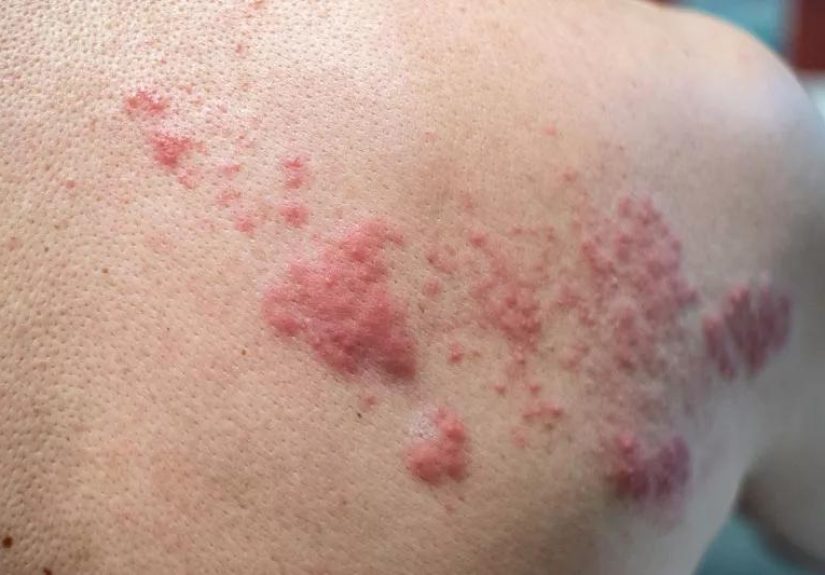
Shingles (also called herpes zoster) usually causes a painful, tingling, or itchy rash that often appears on one side of the body.
It can also bring fatigue or a general “I feel off” vibe before the rash shows up.
The pain isn’t just dramashingles involves nerves. And for some people, the nerve pain can outlast the rash.
That lingering pain is called postherpetic neuralgia (PHN), and it’s the most common complication of shingles.
Why Chickenpox Matters So Much
Chickenpox is the first encounter with VZV. After the initial infection, your immune system calms things down,
but the virus can remain dormant in nerve tissue. Years later, when immune defenses are less sharp (aging, certain illnesses,
or immune-suppressing medications), VZV can reactivate as shingles.
That’s why shingles is more common as people get older, and why it’s also more likely when the immune system is weakened.
In the U.S., shingles is common enough that about 1 in 3 people will develop it during their lifetime.
“I Never Had Chickenpox”… Are You Sure?
People say this all the timeand sometimes they’re right. But often, one of these is happening:
1) You had a very mild case
Not everyone gets the classic “storybook” chickenpox rash. Some cases are mild enough to look like bug bites,
heat rash, or a random viral rash that vanished before anyone took a photo (and yes, life existed before phone cameras).
2) You had it too young to remember
If chickenpox happened when you were a toddler, you might only remember that you once ate crayonsnot the virus.
Family stories get fuzzy over time, and “I don’t remember it” becomes “I never had it.”
3) You grew up in a different place or time
Chickenpox patterns vary depending on vaccination programs and local outbreaks. Some people didn’t get chickenpox as kids,
then encountered VZV later through school, work, travel, or familysometimes without realizing it.
4) You were vaccinated for chickenpox (and that still counts as exposure)
This is the big one. If you received the varicella (chickenpox) vaccine, you’ve been exposed to a weakened form of VZV.
That vaccine can prevent chickenpoxor make breakthrough cases much milderbut it also means shingles is still
possible later (though generally less common and less severe than after natural chickenpox).
Can You Get Shingles After the Chickenpox Vaccine?
Yes, it can happen. The chickenpox vaccine uses a live, weakened virus, and in rare cases that virus can reactivate later
as shingles. The good news is that shingles after vaccination tends to be less frequent and often less severe
than shingles after natural chickenpox.
If you’re unsure whether you had chickenpox or were vaccinated, a clinician can help you interpret your history.
But in many casesespecially for shingles vaccination guidanceformal proof of past chickenpox isn’t required.
Can You “Catch” Shingles From Someone Else?
Not exactly. You typically can’t catch shingles from someone who has shingles.
Shingles is usually a reactivation inside the person who already carries VZV.
However, there’s an important twist:
if you’ve never had chickenpox and you’ve never been vaccinated for it, you can get
chickenpox after direct contact with fluid from a shingles rash (the blister fluid carries the virus).
Then, later in life, that chickenpox infection could set the stage for shingles.
Practical takeaway: if someone has an active shingles rash, covering it and avoiding direct contact with the lesions matters,
especially around people who are not immune to chickenpox.
So Who Should Worry About Shingles Risk?
In general, shingles risk rises with age and with immune system changes. Some risk factors include:
- Older age (risk increases with each decade)
- Immune suppression (certain medications, cancer treatments, organ transplant care, etc.)
- Health conditions that weaken immune response
- History of chickenpox (even if it was mild or forgotten)
And remember: because so many people have been exposed to VZV, the question isn’t usually “Is shingles possible?”
It’s more like, “How do I lower my oddsand avoid complications?”
Vaccines: The Most Useful Plot Twist
There are two different vaccine conversations people mix up:
Chickenpox (varicella) vaccine
This vaccine helps prevent chickenpox and reduces the chance of severe disease. In the U.S., routine childhood vaccination is
a two-dose series, and adolescents/adults without evidence of immunity are also recommended to receive two doses on an appropriate schedule.
Shingles vaccine (Shingrix)
In the U.S., Shingrix is recommended for adults 50 and older (two doses, spaced a few months apart),
and also for certain immunocompromised adults 19 and older.
The goal is simple: prevent shingles and reduce the risk of complications like PHN.
If you’re in an eligible group, talk with a healthcare professional about whether the shingles vaccine is right for youespecially if your
medical situation involves immune suppression or you’re unsure of your chickenpox history.
When to Get Medical Help
If you suspect shingles, it’s smart to contact a clinician promptlybecause antiviral treatment is time-sensitive and works best when started early.
Seek urgent evaluation if:
- The rash is near your eye or on your face
- You have a weakened immune system
- You’re experiencing severe pain, fever, or rapidly spreading symptoms
- You’re pregnant or caring for someone who is pregnant, newborn, or immunocompromised and there’s possible exposure
Common Myths (Because Viruses Love Confusion)
Myth: “If I never had chickenpox, I can relax forever.”
If you’ve never had chickenpox and never had the vaccine, you’re not in the shingles clubbut you may still be at risk of
catching chickenpox if exposed. Chickenpox isn’t always a harmless childhood rite of passage, especially for teens and adults.
Myth: “You can catch shingles like you catch the flu.”
You generally can’t “catch shingles” from another person. But you can catch chickenpox from someone with shingles
if you aren’t immuneand that can later lead to shingles down the road.
Myth: “The chickenpox vaccine means shingles is impossible.”
Shingles can still happen after vaccination, but it’s typically less common and may be milder than shingles following natural chickenpox infection.
Bottom Line
If you’ve truly never had chickenpox and never had the chickenpox vaccine, shingles is unlikelybecause shingles usually requires prior VZV exposure.
But many people who believe they never had chickenpox actually did (mildly or unnoticed), and people vaccinated against chickenpox can still develop shingles later.
The best “adulting” move is prevention: understand your vaccination history, protect people who are not immune around active shingles rashes,
and talk to a healthcare professional if you’re eligible for the shingles vaccine or if you think you may have symptoms.
Experiences People Commonly Share About This Question (Illustrative Scenarios)
To make this topic feel less abstract, here are a few realistic, composite “life moments” that often show up when people ask,
“Can I get shingles if I never had chickenpox?” These are illustrative (not real patient stories),
but they reflect the kinds of situations clinicians and public health sources discuss.
The “My Mom Swears I Never Had It” Moment
Someone in their 30s or 40s gets a painful rash and says, “ImpossibleI never had chickenpox.”
Their parent backs them up: “You never got it, not even once.” Then the conversation turns to childhood details:
Did you have an “itchy week” during a daycare outbreak? Were you ever sent home with “a weird rash”?
Many families realize they might have missed itor the case was so mild it didn’t register as chickenpox.
The lesson isn’t that anyone “forgot” on purpose. It’s that mild infections can be forgettable, and memory is not a medical record.
The “I Was Vaccinated… So Why Me?” Surprise
Another common scenario: a young adult who had the chickenpox vaccine assumes shingles is off the table forever.
When they hear shingles can still happen after vaccination, they feel blindsidedlike the fine print showed up late.
What usually helps is reframing: vaccination dramatically reduces chickenpox risk and can reduce shingles risk compared with natural infection.
“Still possible” is not the same as “likely.” People often feel better once they understand vaccines lower risk and severity,
even if they can’t guarantee a zero-percent chance.
The “I Was Around Someone With ShinglesAm I Going to Get It?” Panic
This one shows up after a family gathering: an aunt mentions she has shingles, everyone freezes mid-potato salad,
and someone whispers, “If I never had chickenpox, can I get shingles now?”
The key detail is that shingles itself isn’t usually “caught” from another person. But if someone isn’t immune to chickenpox,
there is a risk of getting chickenpox from direct contact with the blister fluid from an active shingles rash.
People often describe feeling relieved once they learn the difference between catching chickenpox versus developing shingles.
They also tend to remember one practical point: keep shingles rashes covered and wash handssimple actions that reduce risk.
The “My Immune System Changed” Reality Check
People sometimes connect the dots after a major health change: starting immune-suppressing medication, going through chemotherapy,
or managing a condition that affects immune response. In these scenarios, the person may not be olderbut their immune system is under
different rules than it used to be.
The emotional experience is often a mix of frustration and anxiety: “I’m doing everything rightwhy is this happening?”
For many, the empowering part is learning there are prevention tools (including vaccination for eligible groups) and that early medical care
can help reduce complications.
The “Is This Shingles or Something Else?” Guessing Game
Finally, many people go through a day or two of uncertainty: tingling skin, a patch of pain, maybe a few bumps that could be anything.
The internet offers 47 conflicting answers in under 10 seconds. The most helpful “experience-based” takeaway is this:
if there’s a new, unusual rash with painespecially in a band on one side of the bodyit’s worth contacting a clinician sooner rather than later.
People often say they wish they hadn’t tried to “wait it out” because early evaluation matters.
If you recognize yourself in any of these scenarios, you’re not alone. This topic is confusing because it mixes biology (latency and reactivation),
public health (vaccination and immunity), and everyday life (imperfect memory and unexpected exposure).
The good news is that once you know how shingles really works, the choices become clearerand a lot less scary.