Table of Contents >> Show >> Hide
- Before You Begin: Know When Cat Eye Drops Are Needed
- Supplies You Need to Give Your Cat Eye Drops
- How to Give Your Cat Eye Drops: 11 Steps
- Step 1: Wash Your Hands
- Step 2: Read the Prescription Label Carefully
- Step 3: Let the Drops Warm Slightly in Your Hand
- Step 4: Choose a Calm Location
- Step 5: Position Your Cat Securely
- Step 6: Use the “Cat Burrito” if Needed
- Step 7: Gently Clean Around the Eye
- Step 8: Hold the Head Steady
- Step 9: Hold the Bottle Above the Eye Without Touching It
- Step 10: Apply the Prescribed Number of Drops
- Step 11: Reward Your Cat Immediately
- Common Mistakes to Avoid
- What If Your Cat Fights the Eye Drops?
- How to Tell If the Eye Drops Are Working
- Safety Tips for Cat Eye Medication
- Experience-Based Tips: What Really Helps When Giving Cat Eye Drops
- Conclusion
Giving your cat eye drops sounds simple until your calm, sleepy house panther suddenly transforms into a furry escape artist with four paws, eighteen opinions, and the flexibility of cooked spaghetti. The good news? With the right setup, a calm approach, and a little strategic snack diplomacy, you can learn how to give your cat eye drops safely without turning your bathroom into a rodeo arena.
Cat eye drops may be prescribed for conjunctivitis, corneal irritation, dry eye, injury, inflammation, infection, or other eye problems. Because a cat’s eyes are delicate and eye conditions can worsen quickly, eye medication should be used exactly as directed by your veterinarian. Never use human eye drops, leftover pet medication, or “it worked for my cousin’s cat” drops unless your vet says so. Your cat’s eyeballs deserve better than mystery science.
This guide walks you through 11 practical steps for applying cat eye drops, plus safety tips, common mistakes, and real-life experience from the trenches of feline medicine time.
Before You Begin: Know When Cat Eye Drops Are Needed
Eye drops for cats are not a casual grooming product. They are usually part of a treatment plan after a veterinary exam. Your vet may check for scratches, ulcers, infection, tear production, eye pressure, or signs of respiratory illness. Common warning signs include squinting, redness, thick yellow or green discharge, excessive tearing, pawing at the eye, cloudiness, swelling, a visible third eyelid, or keeping one eye closed.
If your cat’s eye looks painful, cloudy, injured, or suddenly worse, contact a veterinarian promptly. Eye issues are tiny in size but big in drama, and waiting too long can make treatment harder.
Supplies You Need to Give Your Cat Eye Drops
Before you bring your cat into the scene, gather everything. Cats notice hesitation the way detectives notice fingerprints.
- Vet-prescribed cat eye drops
- A clean towel or blanket
- Cotton balls or gauze
- Warm water for gentle cleaning
- Treats, wet food, or another reward
- A helper, if your cat is especially wiggly
- Good lighting
Check the label before every dose. Confirm the correct eye, number of drops, frequency, and whether the bottle needs shaking or refrigeration. If your cat uses more than one eye medication, ask your vet how long to wait between them; many veterinary instructions recommend spacing different eye medications apart so the first one is not immediately washed away.
How to Give Your Cat Eye Drops: 11 Steps
Step 1: Wash Your Hands
Start with clean hands. Eye medication needs to stay clean, and your cat’s eye should not meet whatever your fingers touched five minutes ago. Soap and water are enough. Dry your hands well so you do not fumble the bottle like it is trying to escape too.
Step 2: Read the Prescription Label Carefully
Before you touch your cat, read the label. Make sure you are using the correct medication, especially if you have multiple pets or multiple bottles. Look for instructions such as “one drop in the left eye twice daily” or “apply to both eyes every eight hours.” This step prevents the classic household medical error known as “Wait, was this the ear medicine?”
Step 3: Let the Drops Warm Slightly in Your Hand
If the medication has been refrigerated, hold the closed bottle in your hand for a minute or two. Do not microwave it or place it in hot water. Slightly warming the bottle by hand may make the drops feel less shocking. Nobody enjoys an icy surprise in the eye, not even a cat who willingly sleeps in a sink.
Step 4: Choose a Calm Location
Pick a quiet room with a door you can close. Avoid loud TVs, barking dogs, curious children, and other cats who think the towel is a wrestling invitation. A bathroom, laundry room, or small bedroom can work well. Place your supplies within reach so the process is quick and confident.
Step 5: Position Your Cat Securely
Some cats do best sitting on a table or counter with a non-slip towel underneath. Others are calmer on your lap. If your cat tends to back away, position them facing away from you, with their body gently tucked against your torso. This makes backing up less effective. Do not squeeze or pin them harshly; secure does not mean squashed.
Step 6: Use the “Cat Burrito” if Needed
For cats with enthusiastic paws, wrap them in a towel with only the head exposed. This is often called the cat burrito. The goal is not to trap your cat forever; it is to prevent scratches and keep everyone safe for a few seconds. Keep the wrap snug but comfortable. If your cat panics, pause and try again later or ask your vet for a demonstration.
Step 7: Gently Clean Around the Eye
If there is crust or discharge around the eye, moisten a cotton ball or gauze pad with warm water and gently wipe from the inner corner outward. Use a fresh piece for each eye to avoid spreading infection. Do not scrub. Do not press on the eyeball. You are cleaning a cat’s face, not polishing a bowling ball.
Step 8: Hold the Head Steady
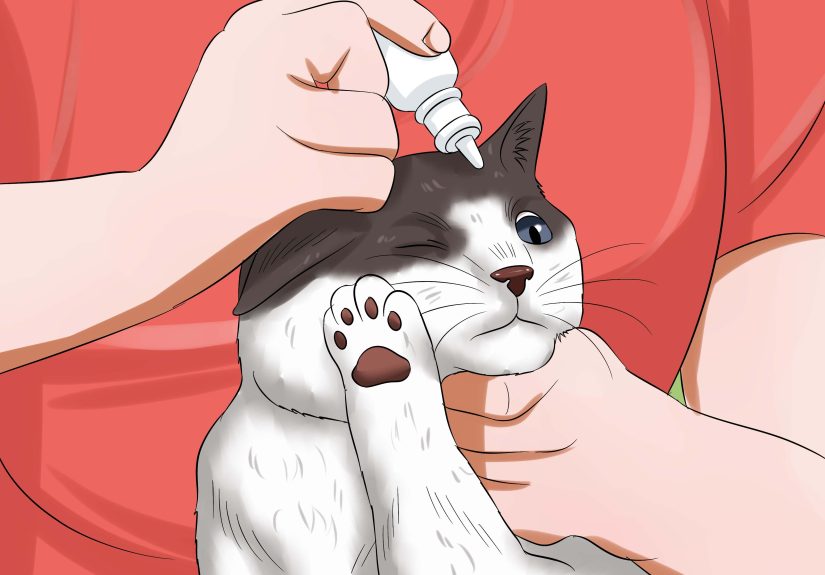
Place your non-dominant hand under your cat’s chin or gently on top of the head. Tilt the nose slightly upward. Many people find it easier to approach from behind or from the side instead of bringing the bottle straight toward the cat’s face. Cats often object to objects flying directly at their eyeballs, which is fair.
Step 9: Hold the Bottle Above the Eye Without Touching It
With your dominant hand, hold the eye drop bottle between your thumb and fingers. Keep the tip close enough to aim, but do not let it touch the eye, eyelid, fur, whiskers, or your fingers. Touching the tip can contaminate the medication or accidentally scratch the eye. If the tip touches anything, ask your veterinarian or pharmacist what to do before continuing.
Step 10: Apply the Prescribed Number of Drops
Use one finger to gently lift the upper eyelid or lower the lower eyelid, depending on what feels easiest. Squeeze the prescribed number of drops onto the surface of the eye or into the small pocket made by the lower lid. One good drop is usually better than three panicked splashes across the forehead. If you miss completely, stay calm and try once more. If you are unsure whether the drop went in, call your vet for advice rather than doubling doses on your own.
Step 11: Reward Your Cat Immediately
Release your cat gently and offer a treat, praise, wet food, brushing, or whatever your cat loves. The reward should happen right away so your cat connects medicine time with something positive. Even if the process was not perfect, end on a calm note. Your cat may still glare at you, but at least it will be a well-medicated glare.
Common Mistakes to Avoid
Using Non-Prescribed Eye Drops
Do not use over-the-counter human eye drops unless your veterinarian specifically approves them. Some ingredients may be inappropriate for cats, and certain eye conditions require very specific treatment. A red or watery eye could be caused by infection, trauma, ulceration, allergy, pressure changes, or another problem. The wrong drops can delay proper care.
Touching the Bottle Tip to the Eye
The applicator tip should stay clean. If it touches the eye or fur, bacteria and debris may contaminate the bottle. Keep the tip hovering above the eye, like a tiny helicopter with excellent hygiene standards.
Stopping Treatment Too Early
Your cat may look better before the problem is fully resolved. Continue the medication for the full time prescribed unless your vet tells you otherwise. Stopping early may allow infection or inflammation to return.
Turning Medication Time Into a Chase Scene
Do not chase your cat around the house with the bottle in your hand. That teaches your cat that eye drops are a horror movie sequel. Instead, prepare the room first, stay calm, and use rewards. If your cat hides after every dose, ask your vet about gentler handling strategies.
What If Your Cat Fights the Eye Drops?
Some cats accept eye drops with mild annoyance. Others act as if you have personally betrayed the ancient feline kingdom. If your cat resists, try a few adjustments.
First, practice handling when no medication is involved. Touch your cat’s head, reward them, and stop. Later, lift the chin, reward, and stop. Over time, the routine becomes less suspicious. Second, use high-value treats. Ordinary kibble may not be enough; try a lickable cat treat, tuna water, or a favorite wet food if your cat can safely eat it. Third, choose the right timing. A sleepy cat may be easier to medicate than a cat in full midnight zoomies mode.
If the struggle is intense, contact your veterinarian. They may demonstrate technique, recommend a different formulation such as ointment, adjust the treatment schedule, or discuss safe options for anxious cats. Do not risk injury to yourself or your pet.
How to Tell If the Eye Drops Are Working
Improvement depends on the diagnosis, but you may notice less squinting, reduced redness, decreased discharge, less pawing, and a brighter, more open eye. Your cat may also act more comfortable, eat better, and hide less. However, improvement should not be guessed from vibes alone. Follow your vet’s recheck instructions, especially for ulcers, injuries, glaucoma concerns, or infections that do not clear quickly.
Call your vet if symptoms worsen, your cat seems painful, the eye becomes cloudy, discharge increases, your cat stops eating, or you cannot give the medication as directed. “I got most of it near the face” may not be enough for a serious eye problem.
Safety Tips for Cat Eye Medication
- Use only medication prescribed for your cat.
- Keep the bottle tip clean and capped.
- Do not share eye medication between pets.
- Do not use expired medication.
- Ask your vet before combining drops with ointments.
- Store the medication exactly as directed.
- Schedule rechecks when recommended.
Experience-Based Tips: What Really Helps When Giving Cat Eye Drops
In real life, giving cat eye drops is less like a medical textbook and more like negotiating with a tiny, suspicious roommate who owns knives on each foot. The first experience many cat owners have is messy: one drop lands on the whiskers, one lands on the towel, and the cat gives a look that says, “Our relationship is under review.” That is normal. Skill improves quickly once you stop trying to be perfect and start trying to be consistent.
One of the best practical lessons is to prepare before your cat arrives. Open the towel, loosen the bottle cap, place treats nearby, and read the label first. The longer you hold your cat while searching for supplies, the more time they have to develop an escape plan. Cats are excellent project managers when the project is leaving.
Another helpful trick is to approach from behind rather than the front. When the bottle comes straight toward the face, many cats pull back or clamp their eyes shut. If your cat faces away from you, tucked gently against your body, you can tilt the chin up and drop the medication from above. This feels less confrontational and gives you better control.
The towel wrap is also underrated. Some owners feel guilty using it, but a calm towel wrap can be kinder than a chaotic wrestling match. The key is to keep it brief and gentle. Wrap, drop, reward, release. Do not keep your cat bundled while you lecture them about responsibility. They will not reflect on their choices.
Rewards matter. Even cats who are not usually food-motivated may respond to a special treat used only after medication. Lickable treats are especially useful because they keep the cat in one place for a few seconds and create a positive ending. For some cats, the reward may be playtime, brushing, or simply being allowed to leave with dignity.
It also helps to stay emotionally neutral. Cats notice tension. If you approach like you are defusing a bomb, your cat may assume there is a bomb. Breathe, move slowly, speak softly, and keep the session short. If you miss the first drop, do not groan dramatically. Your cat does not need live commentary.
For multi-dose schedules, build the drops into daily routines. For example, give them before breakfast and dinner if the prescription timing allows. Pairing medication with predictable events makes it easier for you to remember and less surprising for your cat. Use phone reminders if needed, because “I’ll remember” is famous last words in pet care.
Finally, know when to ask for help. If you cannot get the drops in, your vet would rather know early than discover later that your cat received three days of eyebrow treatment. Veterinary technicians are often excellent at teaching hands-on medication technique. A five-minute demonstration can save a week of frustration.
The biggest takeaway is this: your cat does not have to love eye drops. The goal is safe, calm, effective treatment. With patience, preparation, and a reward worthy of royal approval, medication time can become less dramatic for both of you.
Conclusion
Learning how to give your cat eye drops takes patience, but it is absolutely manageable. Set up your supplies first, handle your cat gently, keep the applicator clean, apply only the prescribed dose, and reward your cat afterward. Most importantly, stay in close contact with your veterinarian if symptoms worsen or the medication routine is not working. Your cat may never send you a thank-you card, but healthier eyes, less discomfort, and fewer dramatic squints are pretty good reviews.
Note: This article is for educational purposes and does not replace veterinary diagnosis or treatment. Use only eye medication prescribed by your veterinarian and contact your vet promptly if your cat’s eye symptoms worsen.