Table of Contents >> Show >> Hide
- Why Stainless Steel Gets Streaky So Easily
- What You Need to Clean Stainless Steel Appliances
- How to Clean Stainless Steel Appliances Without Leaving Streaks
- The Best Cleaners for Stainless Steel Appliances
- How to Remove Common Stainless Steel Problems
- What Not to Use on Stainless Steel Appliances
- Traditional Stainless Steel vs. Fingerprint-Resistant Finishes
- How Often Should You Clean Stainless Steel Appliances?
- Pro Tips for a Streak-Free Finish Every Time
- Common Mistakes That Cause Streaks
- Final Thoughts
- Real-Kitchen Experience: What Cleaning Stainless Steel Is Actually Like
Stainless steel appliances are the overachievers of the kitchen. They look polished, modern, and expensiveeven when the rest of the room is being held together by coffee and optimism. But they also have one tiny personality flaw: they love to show fingerprints, water spots, greasy smudges, and mystery streaks that appear five minutes after you swear you just cleaned them.
The good news is that learning how to clean stainless steel appliances like a pro without leaving streaks is not complicated. The bad news is that a lot of people make it harder than it needs to be. Too much cleaner, the wrong cloth, wiping against the grain, or letting water air-dry can all leave your refrigerator, dishwasher, or range looking like it lost a fight with a spray bottle.
This guide breaks down the easiest, safest, and most effective way to clean stainless steel appliances for a streak-free shine. You’ll learn what tools to use, which cleaners work best, what to avoid, and how to handle fingerprints, grease, and stubborn spots without damaging the finish.
Why Stainless Steel Gets Streaky So Easily
Before you start scrubbing, it helps to know why stainless steel is so dramatic about cleaning. Most streaks happen because of one of these problems:
- Too much product: Excess cleaner leaves residue behind.
- Hard water: Minerals can dry into cloudy spots.
- The wrong cloth: Rough cloths and paper towels can leave lint or fine scratches.
- Cleaning against the grain: This pushes residue into the brushed finish and makes streaks more visible.
- Skipping the dry step: Air-drying is basically an engraved invitation for water spots.
In other words, streaks usually are not a sign that stainless steel is impossible to clean. They are a sign that the cleaning process needs a little less chaos and a little more strategy.
What You Need to Clean Stainless Steel Appliances
You do not need a cabinet full of specialty products to get stainless steel looking sharp. In most cases, these simple supplies will do the job:
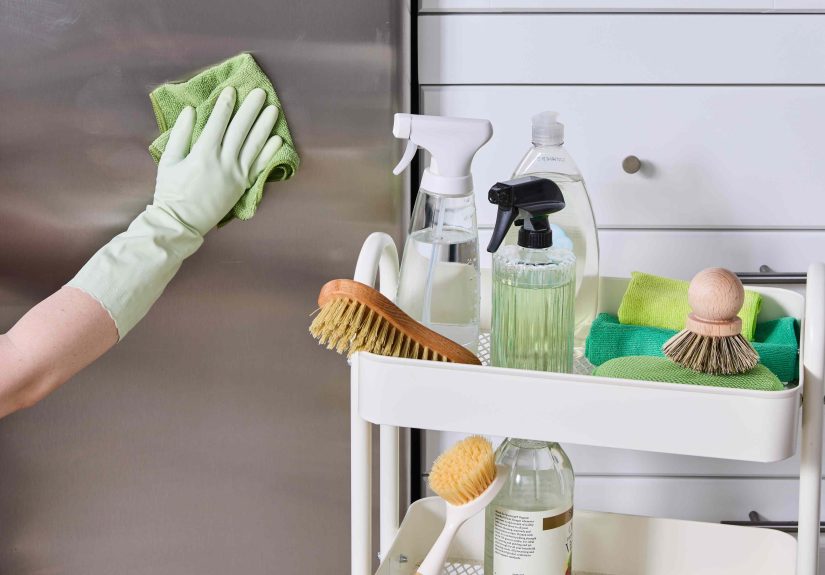
- 2 to 3 clean microfiber cloths
- Warm water
- Mild dish soap
- A soft nonabrasive sponge
- A dry buffing cloth
- Optional: a stainless steel cleaner or polish
- Optional: baking soda for stuck-on grime
- Optional: distilled water if your tap water leaves spots
If you like DIY cleaning solutions, you can also keep diluted vinegar on hand for some traditional stainless steel surfaces. But here is the important catch: always check your owner’s manual first. Some manufacturers allow vinegar in certain situations, while others advise avoiding vinegar or acidic cleaners on coated, fingerprint-resistant, or specialty finishes. When in doubt, mild dish soap and warm water is the safest bet.
How to Clean Stainless Steel Appliances Without Leaving Streaks
1. Identify the grain first
Stainless steel has a grain, similar to wood. Look closely and you will usually see faint lines running vertically or horizontally. That is your roadmap. Always wipe and buff in the same direction as the grain if you want a smooth, streak-free finish.
2. Start with a dry microfiber cloth
Before adding any moisture, wipe the appliance with a dry microfiber cloth. This removes dust, crumbs, and loose debris that can smear around once liquid hits the surface. It also prevents you from dragging tiny particles across the finish.
3. Use a mild cleaner on the cloth, not the appliance
Mix a few drops of dish soap into warm water. Dampen a microfiber cloth or soft sponge with the solution. The cloth should be damp, not dripping. Then wipe the appliance with the grain.
Applying cleaner to the cloth instead of spraying the surface directly gives you more control and reduces drips, residue, and streaking. It is especially helpful on refrigerator doors, dishwasher fronts, and oven panels where excess cleaner loves to run into seams and handles.
4. Wipe gently but thoroughly
Work one section at a time. Use long, even strokes instead of frantic circles. Pay extra attention to high-touch areas like handles, edges, and the space around water dispensers. If you are dealing with greasy fingerprints, let the damp cloth sit on the spot for a few seconds before wiping.
5. Rinse away any residue
Take a second clean cloth lightly dampened with plain water and wipe the surface again, still following the grain. This removes leftover soap residue, which is one of the biggest causes of cloudy streaks.
6. Dry immediately
This is the step people skip, and it is exactly why they end up glaring at streaks afterward. Use a clean, dry microfiber cloth to buff the surface right away. Again, go with the grain. Drying immediately helps prevent water spots and restores shine.
7. Add polish only if needed
If you want extra shine, you can finish with a small amount of stainless steel polish or a tiny dab of mineral oil on a clean cloth. Use a very light touch. Too much oil will create a greasy film, which is the opposite of “professional.” Think subtle glow, not salad dressing.
The Best Cleaners for Stainless Steel Appliances
Mild dish soap and warm water
This is the gold standard for routine cleaning. It is gentle, effective, inexpensive, and recommended by many appliance manufacturers for day-to-day care. It cuts through grease without being overly harsh, and it is the best place to start if you are unsure what your appliance finish can handle.
Stainless steel cleaner
A store-bought stainless steel cleaner can work well when you want extra shine or need help with heavy fingerprints. Choose one made specifically for stainless steel, and follow the label directions carefully. More is not better. A light application plus a good buff is what creates that polished showroom look.
Baking soda paste
For stubborn stuck-on grime, mix baking soda with a small amount of water to make a paste. Apply it gently with the grain, let it sit briefly, then wipe clean and rinse thoroughly. This works well on tougher messes, but do not scrub aggressively.
Diluted vinegar
Vinegar is often recommended in DIY cleaning circles because it can cut through grease and water spots. It may be fine for some traditional stainless steel surfaces, but not all. Some manufacturers specifically caution against vinegar or acidic cleaners on certain finishes, especially fingerprint-resistant models. That is why the manual always wins. If your manufacturer says no, it is a no.
How to Remove Common Stainless Steel Problems
Fingerprints
Fingerprints are the unofficial mascot of stainless steel kitchens. For light smudges, a damp microfiber cloth followed by a dry one is often enough. For heavier marks, use the dish soap method and buff dry right away.
Grease splatters
Grease near the stove or oven usually needs a little extra patience. Use warm soapy water and let the damp cloth sit on the greasy area for a minute to loosen buildup. Wipe with the grain, rinse, and dry. If the grease is stubborn, a gentle baking soda paste can help.
Water spots
Water spots are usually caused by mineral deposits left behind when moisture evaporates. The fix is simple: use less water, dry faster, and consider distilled water if your tap water is especially hard. On approved surfaces, a suitable spot treatment can help, but prevention is easier than correction.
Cloudy residue
If your appliance looks dull after cleaning, you probably have cleaner buildup. Wipe it down with a cloth dampened in plain water, then dry and buff with a fresh microfiber cloth. Many “mysterious” streaks are just leftover product hanging around like an uninvited guest.
What Not to Use on Stainless Steel Appliances
If you want your appliances to stay shiny and scratch-free, avoid these common mistakes:
- Steel wool
- Abrasive scrubbers or scouring pads
- Bleach or chlorine-based cleaners
- Ammonia-based products
- Oven cleaner
- Harsh powders
- Rough paper towels on delicate finishes
- Random all-purpose sprays without checking the label
These products can scratch the surface, dull the finish, or leave residue behind. Some can even damage specialty coatings. Stainless steel is durable, but it is not indestructible. It prefers gentle treatment and holds grudges when scrubbed with the wrong thing.
Traditional Stainless Steel vs. Fingerprint-Resistant Finishes
Not all stainless steel finishes behave the same way. Traditional stainless steel often tolerates more polishing and specialty cleaners. Fingerprint-resistant stainless steel usually has a protective coating or a different finish treatment, which means it may need simpler care.
That is why one brand might suggest an oil-based polish for shine, while another may tell you to stick with mild soap and water only. If your appliance is fingerprint-resistant, black stainless, or another premium finish, check the care instructions before trying vinegar, polish, or any “miracle” cleaner from the internet.
How Often Should You Clean Stainless Steel Appliances?
For most kitchens, a quick wipe-down two or three times a week keeps stainless steel under control. Deep cleaning once a week is usually enough unless you cook heavily or have a household where every fridge door is treated like a handprint museum.
A smart routine looks like this:
- Daily or every other day: Buff away visible fingerprints with a dry or slightly damp microfiber cloth.
- Weekly: Clean with warm water and mild dish soap, rinse, and dry thoroughly.
- As needed: Spot-clean grease, dried splatters, or water marks before they build up.
The less buildup you allow, the easier it is to keep your stainless steel appliances streak-free.
Pro Tips for a Streak-Free Finish Every Time
- Use separate cloths for washing, rinsing, and drying.
- Clean one small section at a time instead of soaking the entire surface.
- Always buff dry immediately after cleaning.
- Use the least amount of product needed.
- Test any new cleaner on a small hidden area first.
- Follow the grain during every stepwashing, rinsing, drying, and polishing.
- Keep a dedicated microfiber cloth in the kitchen for quick touch-ups.
The real professional secret is not some magical spray. It is consistency. Gentle cleaner, microfiber cloth, with the grain, dry right away. That simple routine beats most overcomplicated hacks.
Common Mistakes That Cause Streaks
If your appliances still look streaky after cleaning, one of these habits is probably the culprit:
- You are spraying too much cleaner directly on the surface.
- You are using one cloth for everything.
- You are wiping in circles instead of following the grain.
- You are leaving cleaner residue behind.
- You are letting the surface air-dry.
- You are using a product your appliance finish does not like.
When in doubt, simplify the routine. Stainless steel usually looks best after less fuss, not more.
Final Thoughts
If you have been battling streaks, smudges, and cloudy residue, the solution is refreshingly boringin the best possible way. The best method for cleaning stainless steel appliances without leaving streaks is to use a soft microfiber cloth, mild dish soap, water, and a dry buffing cloth. Work with the grain, rinse away residue, and dry immediately. That is it. No drama, no aggressive scrubbing, and no need to empty half the cleaning aisle onto your refrigerator.
Once you get the rhythm down, keeping stainless steel shiny becomes a fast maintenance job instead of a weekend annoyance. Your kitchen looks cleaner, your appliances look newer, and you get to enjoy that rare household victory: a surface that actually stays polished for more than eight seconds.
Real-Kitchen Experience: What Cleaning Stainless Steel Is Actually Like
Anyone who has lived with stainless steel appliances for more than a week knows the experience is a little funny. You buy the refrigerator or dishwasher because it looks sleek and sophisticated. It gives your kitchen that “I absolutely have my life together” energy. Then someone opens the fridge after eating toast with peanut butter, and suddenly the door looks like a detective has been dusting it for fingerprints.
That is the real-life part nobody talks about enough: stainless steel is beautiful, but it is also a magnet for evidence. Kids leave smears. Adults leave smears. Even the person who claims they “barely touched it” somehow leaves a full handprint right in the center. And if you cook often, the area near the stove collects a thin layer of grease that is easy to ignore until the afternoon sun hits it and exposes everything.
In actual day-to-day use, the best cleaning habit is not a giant deep-cleaning marathon. It is the quick reset. A dry microfiber cloth kept in a nearby drawer can save you from a lot of frustration. One fast wipe after dinner, another quick buff before guests arrive, and suddenly your kitchen looks much more put together than it probably feels. That is the difference between stainless steel that always looks messy and stainless steel that looks intentionally polished.
There is also a learning curve. A lot of people start by using too much cleaner because they assume more spray means more shine. But the experience usually teaches the opposite lesson. Too much product often creates a weird smeary haze that only looks worse once it dries. Then comes the second lesson: if you do not dry the surface immediately, water spots show up like they paid rent. That is the moment many people realize the dry microfiber cloth is not optional. It is the closer. It is the mop-up crew. It is the unsung hero of the entire operation.
Another common experience is discovering that every stainless steel appliance is a little different. One refrigerator seems perfectly happy with a simple soap-and-water wipe. Another acts offended by the same treatment unless you buff it twice. A fingerprint-resistant finish may need a gentler approach than an older brushed stainless range. That is why reading the care instructions actually matters. It sounds boring, yes, but it can save you from dull spots, streaks, and the regret of experimenting with the wrong cleaner at 9 p.m. on a Tuesday.
Over time, most people settle into a practical routine. Smudges get wiped before they become buildup. Grease gets handled before it turns sticky. The appliance doors get a quick buff instead of a full spa treatment. And once that rhythm clicks, stainless steel stops feeling high-maintenance. It just becomes another surface you know how to manage well. The shine lasts longer, cleaning goes faster, and your kitchen keeps that polished look without demanding your entire weekend. That is probably the most honest experience-based tip of all: stainless steel is easiest to clean when you stop trying to rescue it and start maintaining it.