Table of Contents >> Show >> Hide
- Why Pearl Necklace Care Is Different
- What You Need Before You Start
- How to Clean a Pearl Necklace: 5 Steps
- How Often Should You Clean a Pearl Necklace?
- Common Mistakes to Avoid
- When to Take Your Pearl Necklace to a Professional
- Pearl Necklace Care Tips for Long-Term Shine
- Extra : Real-Life Experiences and Lessons From Cleaning Pearl Necklaces
- Final Thoughts
Pearls are the divas of the jewelry box. They are elegant, timeless, and always ready to make an outfit look more expensive than it really was. But unlike diamonds or metal chains that can survive a little rough handling, pearls are delicate. Their surface can react badly to chemicals, too much heat, too much moisture, and the kind of aggressive scrubbing people use when cleaning a frying pan. In other words, your pearl necklace deserves a spa day, not a power wash.
If you have been wondering how to clean a pearl necklace without ruining its glow, the good news is that the process is simple. The even better news is that you do not need a drawer full of fancy tools. A soft cloth, a little lukewarm water, and a gentle touch will do most of the work. The trick is knowing what not to do. Pearls do not want bleach, vinegar, toothpaste, harsh jewelry cleaner, or a thrilling ride in an ultrasonic machine. They want calm, kindness, and a low-drama cleaning routine.
In this guide, you will learn exactly how to clean pearls at home in five safe steps, how often to clean a pearl necklace, which common mistakes to avoid, and when it is smarter to let a jeweler take over. Whether your necklace is a treasured heirloom, a wedding gift, or the one piece in your jewelry collection that makes you feel instantly put together, these pearl necklace care tips will help keep it luminous for years.
Why Pearl Necklace Care Is Different
Before diving into the steps, it helps to understand why pearl jewelry care is a little more particular than standard jewelry cleaning. Pearls are organic gems formed in mollusks, and their outer surface, called nacre, is softer and more vulnerable than many other gemstones. That means everyday things such as perfume, hairspray, makeup, sweat, harsh cleansers, and even rough fabrics can dull their shine over time.
A pearl necklace also has another weak spot: the thread. Many strands are knotted on silk or another delicate material. If you soak the necklace, hang it while wet, or put it away before it is fully dry, the string can stretch, weaken, or trap grime around the drill holes. So yes, pearls are glamorous, but they also have strong opinions about maintenance.
What You Need Before You Start
Gather everything first so you are not balancing a damp necklace in one hand while searching for soap with the other.
- A very soft microfiber or cotton cloth
- A second dry, soft cloth
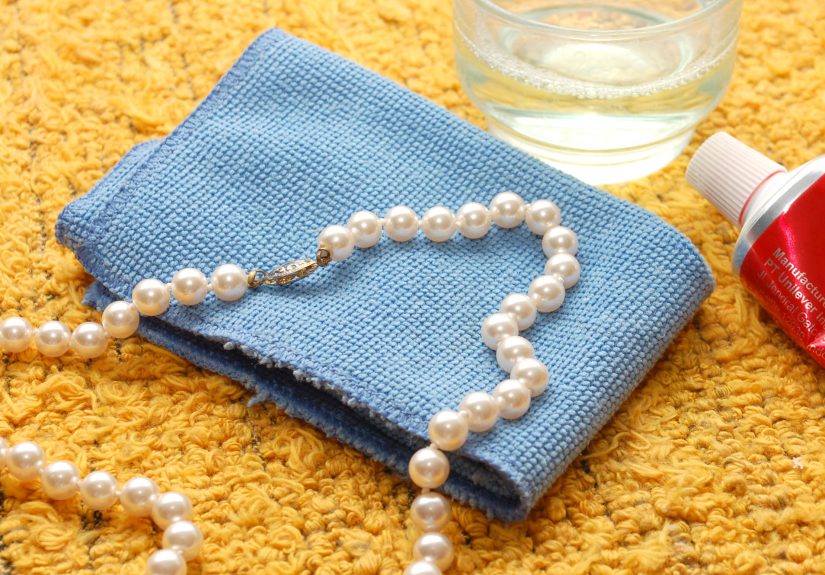
- A small bowl of lukewarm water
- A drop of mild, clear dish soap or gentle baby soap
- A clean, dry towel
Avoid paper towels, rough fabrics, toothbrushes, baking soda, vinegar, ammonia, alcohol, bleach, silver cleaner, steam cleaners, and ultrasonic cleaners. If a cleaning trick sounds great for a sink or a science experiment, it probably does not belong anywhere near your pearls.
How to Clean a Pearl Necklace: 5 Steps
Step 1: Inspect the Necklace Before Cleaning
Start by laying the pearl necklace flat on a clean towel and giving it a quick inspection. Look at the pearls, the knots, the clasp, and the thread between each pearl. If the necklace seems loose, dirty near the drill holes, frayed, stretched, or damaged, do not go full DIY hero. That is a sign the necklace may need professional restringing or cleaning.
This step matters because a weak strand can get worse when moisture is added. If your necklace is antique, sentimental, or visibly worn, it is smarter to be cautious. Pearls may look serene, but a fragile strand can betray you at the worst possible moment, usually in public, usually over tile flooring.
Step 2: Wipe Away Surface Oils and Residue
Before using any water at all, gently wipe the necklace with a clean, dry, soft cloth. This removes surface oils, dust, makeup, and residue from skin care products. If you wear your pearls regularly, this simple wipe-down after every use is actually one of the best pearl cleaning habits you can build.
Think of this as routine pearl maintenance rather than deep cleaning. A quick wipe keeps buildup from settling on the nacre, which means you will not need more involved cleaning nearly as often. It is the jewelry version of washing your face before bed: boring, easy, and surprisingly effective.
Step 3: Make a Mild Cleaning Solution and Dampen the Cloth
For deeper cleaning, mix a small amount of lukewarm water with just a drop of mild soap. Then dip a soft cloth into the solution and wring it out well. The cloth should be damp, not dripping. This is the part where many people go wrong. You are not giving your pearl necklace a bath. You are giving it a careful wipe.
Do not submerge the necklace in water, especially if it is strung. Soaking can weaken the thread and allow moisture to linger inside the drill holes. Pearls may come from water, but your finished necklace does not need to swim in it.
Step 4: Gently Clean Each Pearl and the Clasp
Using the damp cloth, gently wipe each pearl one by one. Move slowly and do not scrub. Focus on areas where makeup, body oil, or grime may collect. If the clasp has residue on it, wipe that too, but keep your motions gentle so you do not pull on the strand.
If one pearl seems especially dirty, resist the urge to attack it like it offended you personally. Just go over it a little more carefully with the damp cloth. Harsh rubbing can wear down the nacre and leave the pearls looking dull. When it comes to how to clean pearls, gentleness is not just a suggestion. It is the whole strategy.
Step 5: Dry the Necklace Flat and Store It Properly
Once the necklace is clean, wipe it again with a fresh dry cloth to remove any remaining moisture. Then lay it flat on a towel and let it air-dry completely before putting it back in your jewelry box. Do not hang it to dry, because moisture and gravity together can stretch the thread.
When it is fully dry, store the necklace flat in a soft pouch or a fabric-lined jewelry box, away from harder gemstones and metal pieces that can scratch it. Skip airtight plastic bags, which are not ideal for pearls. A little breathable protection goes a long way in preserving their luster.
How Often Should You Clean a Pearl Necklace?
If you wear your pearl necklace often, wipe it with a soft cloth after each use. That is the easiest and safest form of pearl jewelry cleaning. A more thorough cleaning with a damp cloth and mild soap can be done occasionally when the necklace looks dull or has visible buildup.
For heavily worn pearl strands, it is also wise to have them checked by a jeweler periodically. If the thread loosens, becomes discolored, or the knots are no longer snug, restringing may be needed. Some experts recommend restringing regularly if the necklace is worn often, while occasional wear may require less frequent maintenance. The key is not to wait until disaster strikes and your pearls decide to scatter dramatically across a restaurant floor.
Common Mistakes to Avoid
Learning how to clean a pearl necklace is partly about knowing what to skip. These mistakes are common and completely avoidable:
- Soaking the necklace: This can weaken or stretch the thread.
- Using harsh cleaners: Ammonia, bleach, vinegar, alcohol, and abrasive products can damage the pearl surface.
- Using steam or ultrasonic cleaning: These methods are too harsh for pearls.
- Scrubbing with a brush: Even a soft brush can be too aggressive for nacre on a pearl strand.
- Storing pearls with other jewelry: Harder gemstones and metals can scratch them.
- Putting pearls on before perfume or hairspray: Pearls should be the last thing you put on and the first thing you take off.
If pearls could write a list of boundaries, it would look a lot like that.
When to Take Your Pearl Necklace to a Professional
At-home pearl cleaning is great for routine care, but not every necklace should be handled in the kitchen under overhead lighting and blind confidence. Professional help is the better choice if:
- The strand looks stretched or frayed
- The pearls are antique or highly valuable
- Dirt is trapped near the drill holes
- The clasp is loose or damaged
- The pearls have a peeling, flaky, or badly dulled surface
- You are not sure whether the necklace is real pearl, cultured pearl, or imitation pearl
A jeweler can inspect the thread, clean the necklace safely, and recommend restringing if needed. This is especially useful for heirloom strands or wedding pearls that you want to keep in excellent condition for years.
Pearl Necklace Care Tips for Long-Term Shine
Good cleaning is only half the story. The rest is daily care. Put your pearl necklace on after makeup, sunscreen, perfume, and hairspray have fully dried. Wipe it after wearing. Keep it away from chlorinated pools, hot tubs, showers, and sweaty workout sessions. Store it flat and separate from harder jewelry. And if you wear pearls often, let a jeweler inspect the strand once in a while.
These simple habits make a real difference. Pearls do not need a complicated routine, but they do appreciate consistency. Think gentle skincare, not boot camp.
Extra : Real-Life Experiences and Lessons From Cleaning Pearl Necklaces
Anyone who has owned pearls for a while tends to collect a few stories, and most of them teach the same lesson: pearl necklace care is less about heroic cleaning and more about smart, gentle habits. One of the most common situations happens after a wedding or formal event. A pearl necklace looks beautiful all evening, but by the end of the night it has picked up foundation, setting spray, perfume, and a little skin oil from hours of wear. People often toss it back into the box and promise themselves they will clean it later. Then “later” turns into three months. When they finally pull it out, the shine seems muted. Usually, the fix is simple: a soft cloth, a careful wipe, and a mild damp cleaning. The bigger lesson is that pearls reward immediate, low-effort care much more than occasional rescue missions.
Another very real experience happens with inherited jewelry. Someone opens a box from a mother, grandmother, or aunt and finds a strand of pearls that has clearly lived a full life. The necklace may still be beautiful, but the thread often tells the truth. It may be stretched, dingy, or weak near the clasp. Many people assume the pearls themselves need aggressive cleaning, when the actual issue is that the necklace needs professional restringing first. This is why inspection matters so much. A necklace can look glamorous from a distance and still be one sneeze away from becoming 87 tiny escape artists.
Then there is the over-cleaner’s story, which is almost a rite of passage. Someone reads a generic article about jewelry cleaning, grabs a brush, mixes a strong solution, or lets the strand sit in water because “it worked on my gold bracelet.” Bad idea. Pearls are not gold bracelets. The result may not be immediate disaster, but over time the surface can lose some of its soft glow, or the thread can weaken. It is a frustrating lesson, but a memorable one. With pearls, less is usually more. Gentle beats thorough. Damp beats soaked. Patient beats forceful.
A lot of pearl owners also learn the “last on, first off” rule the hard way. Maybe they sprayed perfume after getting dressed. Maybe hairspray drifted onto the necklace while styling for dinner. Maybe sunscreen and body lotion met the pearls on a beach vacation. None of these moments feels dramatic at the time, but repeated exposure can gradually dull the nacre. Many people notice the difference only after they begin wiping their pearls after every wear. Suddenly the necklace stays brighter, feels cleaner, and needs fewer deep cleanings. It is not magic. It is just maintenance doing its job.
One more common experience involves storage. Pearls tossed into a crowded jewelry box often come out looking a little worse for wear. They may rub against metal chains, hard gemstones, or rough clasps. Owners sometimes think the pearls need polishing, when really they need a better place to rest. A soft pouch or fabric-lined compartment solves a lot of problems before they begin. If there is a grand moral to all these pearl stories, it is this: pearls are not high-maintenance, but they are high-standard. Treat them gently, clean them carefully, and they will keep showing up with that quiet glow that makes every outfit look smarter.