Table of Contents >> Show >> Hide
- Why Use a Kettle Instead of a Pot?
- Before You Start: A 45-Second Kettle Check
- How to Boil Water with a Stovetop Kettle
- How to Boil Water with an Electric Kettle
- What “Boiling” Actually Means (and How to Recognize It)
- Altitude: When Your Kettle Boils Fasterbut the Water Isn’t as Hot
- Temperature Tricks for Better Tea and Coffee (Without Becoming a Lab Tech)
- Safety First: Avoid Steam Burns and “Oops” Moments
- Common Kettle Mistakes (and How to Fix Them)
- How to Clean and Descale Your Kettle (Stovetop or Electric)
- FAQ: Kettle Questions People Whisper to Search Bars
- Conclusion: Your Kettle, Your Hot-Water Era
- Real-Life Kettle Experiences (Because Boiling Water Has Lore)
Boiling water sounds like the culinary equivalent of blinkingautomatic, effortless, not worth a full set of instructions.
And yet, the internet is littered with tales of scorched kettles, lava-hot steam burns, and that one whistle that
somehow screams only when you step into the other room.
Whether you’ve got a classic stovetop tea kettle (the kind that announces “WATER IS HOT!” like it’s performing at Madison Square Garden)
or a modern electric kettle with buttons, presets, and the confidence of a small spaceship, this guide will walk you through
boiling water safely, efficiently, and with better results for tea, coffee, instant noodles, oatmeal, and anything else that starts with
“just add hot water.”
Why Use a Kettle Instead of a Pot?
You can boil water in a saucepan. You can also cut pizza with a spoon if you really commit to the bit.
Kettles are built for one job: heating water quickly and pouring it neatly. That means less waiting, fewer drips, and fewer “oops”
moments when you try to pour from a pot that weighs as much as a bowling ball.
Electric kettles, in particular, heat water directly and typically waste less heat than many stovetop setups. Stovetop kettles still win
points for simplicity (no outlet required) and for working beautifully during power outagesassuming you can still find your matches.
Before You Start: A 45-Second Kettle Check
1) Choose your water
Tap water is fine for most households. If your water is very hard (lots of minerals), you’ll likely see limescale build up faster inside
the kettle, which can affect taste and heating performance over time. Filtered water can reduce scale and keep flavors cleanerespecially
if you’re making tea or coffee where water taste matters.
2) Check capacity marks
Most kettles have a minimum and maximum fill line. Staying within that range helps prevent overheating (too little water) and messy
splashing (too much water). Overfilling also increases the chance of boiling water burping out of the spout like a tiny geyser with
something to prove.
3) Confirm the lid is secure
A properly closed lid improves heating speed and helps keep steam from escaping in unpredictable directions (like toward your hand).
With electric kettles, a secure lid also supports safe auto shut-off performance on many models.
How to Boil Water with a Stovetop Kettle
Stovetop kettles are wonderfully straightforward: water goes in, heat goes under, whistle happens (or you see steam), and you pour.
The big “gotchas” are heat level, forgetting it on the burner, and steam burns during the pour.
Step-by-step (stovetop)
-
Fill the kettle with cold water to the desired amount, staying below the max line (or below the spout opening if no markings).
Cold water is generally recommended because it starts with more dissolved oxygen than water that’s been sitting warm, which can help
tea taste fresher. - Close the lid tightly. If you have a whistling kettle, make sure the whistle piece is seated correctly.
-
Place the kettle on the burner that best matches the kettle’s base size. Use a back burner when possible.
If you have an induction stove, confirm your kettle is induction-compatible (many stainless steel kettles are; some aren’t). -
Set heat to medium-high. Full blast can be okay, but it increases the odds of a too-aggressive boil (and a louder whistle).
Medium-high usually boils quickly without turning your kitchen into a steam-themed roller coaster. -
Wait for a rolling boil. On a whistling kettle, you’ll hear it. On a non-whistling kettle, look for steady steam and/or
listen for vigorous bubbling. -
Turn off the heat (or remove the kettle) as soon as it boils. Leaving an empty kettle on heat can damage it, discolor finishes,
and in extreme cases create safety hazards. - Pour carefully using an oven mitt if the handle is hot. Keep your face and hand away from the spout pathsteam burns happen fast.
Stovetop pro tips
- Don’t walk away “for just a second.” Kettle time is weird time; it expands and contracts based on your confidence.
- Turn handles inward so they don’t stick out where they can be bumpedespecially around kids or busy kitchens.
- Whistle etiquette: if your kettle whistles before the water is truly boiling, the whistle may be loose or partially blocked. Check the fit.
How to Boil Water with an Electric Kettle
Electric kettles are the “set it and forget it” of boiling waterexcept you should still remember it exists, because it’s about to
contain very hot water. Many models auto shut off when they reach boiling, and some let you heat to specific temperatures for
coffee and tea.
Step-by-step (electric)
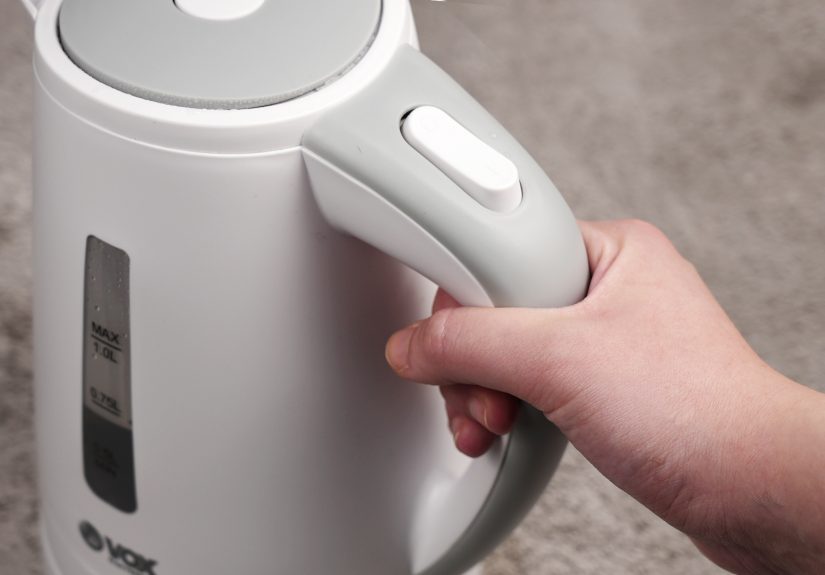
- Set the base on a dry, flat surface away from the edge of the counter. Keep the cord tucked in so it can’t be yanked.
- Fill the kettle between the minimum and maximum marks. Avoid overfillingspills + electricity is a combo nobody asked for.
- Close the lid fully, then place the kettle on its base.
- Plug in and switch on. If your kettle has temperature presets, choose the one you want (more on temps below).
- Let it run until it shuts off (or until it reaches the selected temperature). Most electric kettles stop automatically at boil.
- Pour slowly. Even without a gooseneck spout, a controlled pour reduces splashing and steam blowback.
- Unplug when not in use, especially before cleaning. Let it cool fully before wiping or descaling.
Electric kettle “don’ts” that save your morning
- Don’t immerse the base, cord, or body in water. Cleaning should be wiping + rinsing (where allowed), not dunking.
- Don’t boil anything but water unless the manufacturer explicitly says it’s okay. Milk, broth, and sugary drinks can scorch, foam over, or damage heating elements.
- Don’t run it empty. Even with boil-dry protection, it’s rough on the kettle and can shorten its lifespan.
What “Boiling” Actually Means (and How to Recognize It)
“Boiling” isn’t just “there are a few bubbles.” A rolling boil is when bubbles rise vigorously and continuously across the surface.
In practical terms: the water is actively churning, not politely fizzing at the edges.
At sea level, water boils at about 212°F (100°C) under standard atmospheric pressure. That boiling point drops as altitude increases.
So yes, your water can be boiling at a lower temperature in the mountainsand no, the kettle is not broken; it’s just doing physics.
If you’re boiling water for beverages, reaching a rolling boil is usually enough. If you’re boiling water for emergency drinking safety during a
boil water advisory, follow public health guidance on boil time (see the altitude section below).
Altitude: When Your Kettle Boils Fasterbut the Water Isn’t as Hot
The higher you are above sea level, the lower the boiling point of water. A helpful rule of thumb used in food safety guidance:
with each ~500-foot increase in elevation, the boiling point drops by just under 1°F. That means boiling happens soonerbut at a cooler temperature.
Quick altitude cheat sheet (approximate)
- Sea level (0 ft): ~212°F
- 2,500 ft: ~207°F (give or take)
- 5,000 ft: ~202°F (give or take)
- 7,500 ft: ~198°F (commonly cited example)
Boiling water to make it safe to drink
If you’re under a boil water advisory or dealing with an emergency water situation, public health guidance typically recommends bringing clear water
to a full rolling boil for 1 minute, and at higher elevations (commonly above 6,500 feet), boiling for 3 minutes.
This extra time compensates for the lower boiling temperature at altitude.
Important reality check: boiling kills many disease-causing organisms, but it does not remove chemical contaminants. If officials warn about
chemical pollution, boiling won’t magically turn the water into spring water.
Temperature Tricks for Better Tea and Coffee (Without Becoming a Lab Tech)
If your goal is “hot water,” a rolling boil is fine. If your goal is “great coffee or tea,” temperature suddenly matters.
Many coffees extract best around 195–205°F, which is just below boiling at sea level. This is why temperature-controlled electric kettles
are beloved by pour-over fans: they can hit a target temperature and hold it steady.
Easy beverage temperature guide
- Coffee (most brewing methods): 195–205°F
- Black tea: often near boiling (roughly 200–210°F)
- Oolong tea: hot, but not always boiling (often ~190–206°F)
- Green tea: gentler heat (commonly ~175–180°F)
- White tea: usually below boiling (often ~185°F)
- Herbal tea: typically full boil / near-boil
“I don’t have a thermometer” hacks
- For coffee: bring water to boil, then let it sit 30–60 seconds before pouring (often lands you in the sweet spot).
- For green tea: boil, then rest a few minutes so it cools down before steeping (your taste buds will thank you).
- For precision: a variable-temp electric kettle removes the guessing game entirely.
Bonus: gooseneck kettles help you pour slowly and evenlyespecially useful for pour-over coffee where controlled flow affects extraction.
If you’ve ever watched someone make pour-over coffee like it’s a graceful water ballet, that’s the gooseneck advantage.
Safety First: Avoid Steam Burns and “Oops” Moments
Hot water is sneaky. You can’t always see steam clearly, but it can burn skin quickly. Scald burns commonly come from hot liquids and steam in the kitchen,
including boiling water from kettles.
Simple safety rules that prevent dramatic stories
- Create space: keep kids and pets away while boiling and pouring. A “kid-free zone” near the stove/counter helps a lot.
- Handle position matters: on the stove, keep handles turned inward and use back burners when possible.
- Respect steam: when opening a lid, angle it away from your face. Steam rises fast and doesn’t care about your plans.
- Don’t overfill: splashes happen at the worst timeusually right when you’re wearing socks.
- For minor burns: cool the area with cool water for a few minutes and cover with a clean, dry cloth. Seek medical help for more serious burns.
Common Kettle Mistakes (and How to Fix Them)
Mistake: Leaving a stovetop kettle on too long
Fix: Use a timer on your phone. Most kettles boil in a few minutes depending on volume and stove power. If you’re easily distracted, set the timer
the moment you turn on the burner. Your future self will feel very loved.
Mistake: Electric kettle won’t turn on
Fix: Check the basicsplug fully seated, kettle properly on the base, lid closed, and enough water above the minimum line. Some kettles refuse to start
if they detect too little water or an improperly seated kettle.
Mistake: Water tastes “off”
Fix: Descale the kettle (see the cleaning section) and consider filtered water if your tap water has strong mineral taste. Also rinse well after any
cleaning methodlingering vinegar smell is not the artisanal note you’re looking for.
Mistake: Mineral buildup (white chalky spots)
Fix: That’s limescale from minerals in water. It’s common, especially with hard water. Regular descaling keeps heating efficient and helps your drinks taste better.
How to Clean and Descale Your Kettle (Stovetop or Electric)
Think of descaling like brushing your teeth: optional in theory, deeply beneficial in practice. Limescale can coat the inside of the kettle, dull the finish,
and sometimes slow heating. The good news: you don’t need fancy products. Two common approaches are white vinegar and citric acid.
Option A: Vinegar method (classic, effective, smells like a science fair)
- Fill the kettle with a mixture of equal parts water and white vinegar (or enough to cover the scale line).
- Bring it to a boil (stovetop or electric), then turn it off.
- Let it sit 15–30 minutes (longer for heavy buildup).
- Pour out the solution and rinse thoroughly.
- Boil a full kettle of plain water once or twice, then discard (this helps remove vinegar odor).
Option B: Citric acid method (powerful, less odor)
- Fill the kettle with water to cover the scale line.
- Add citric acid (commonly about 1–2 tablespoons per liter / ~4 cups of water; adjust for your kettle size and buildup).
- Bring to a boil, then let it soak about 10–30 minutes.
- Pour out, wipe gently with a soft sponge if needed, and rinse very well.
- Boil and discard one kettle of plain water to finish.
How often should you descale?
It depends on your water hardness and how often you boil. If you see visible white deposits, smell odd mineral notes, or notice slower heating,
it’s time. For hard water + daily use, monthly descaling is common. For softer water or occasional use, every couple of months may be plenty.
Cleaning the outside
Let the kettle cool completely. Wipe the exterior with a damp cloth and mild soap if needed. Avoid abrasive scrubbers that can scratch finishes.
For electric kettles, keep the base and electrical contacts dry.
FAQ: Kettle Questions People Whisper to Search Bars
Does boiling water in a kettle “purify” it?
Boiling can kill many germs, which is why it’s recommended during some emergency water situations. But it does not remove chemical contaminants.
For official advisories, follow local guidance.
Is it okay to re-boil water?
For everyday beverage use, it’s generally fine, though repeatedly boiling and topping off can concentrate minerals and affect taste.
If flavor matters (tea/coffee), fresh cold water is usually better.
Can I boil water for ramen or oatmeal in the kettle?
Yesboil in the kettle, then pour into your bowl/cup. Just don’t cook the noodles inside the kettle unless it’s designed for that purpose.
Many kettles are water-only for good reasons (cleaning, safety, longevity).
Why does my kettle whistle but the water isn’t hot enough?
A loose or misaligned whistle cap can sound early. Check that it’s seated properly, and aim for a true rolling boil before turning off heat
if you need maximum temperature.
Conclusion: Your Kettle, Your Hot-Water Era
Boiling water with a kettle is one of those tiny skills that quietly upgrades daily life. It’s faster than a pot, more pour-friendly, andwhen you
pay attention to temperaturecan make your coffee and tea taste noticeably better. Stovetop kettles are beautifully simple; electric kettles are convenient
and often more precise. Either way, fill to the right level, watch for a rolling boil, respect steam, and descale once in a while so your kettle stays
speedy (and your water doesn’t taste like “minerals with a hint of yesterday”).
Real-Life Kettle Experiences (Because Boiling Water Has Lore)
The first time I truly appreciated a kettle wasn’t in a fancy coffee shop or a perfectly styled kitchenit was during a chaotic morning when everything
was running five minutes late and my brain was running on “loading…” It turns out that a kettle is basically a tiny, reliable assistant that never says,
“I’m overwhelmed,” as long as you give it water and don’t abuse it.
With a stovetop kettle, you learn a kind of kitchen awareness that feels almost old-school comforting. You start to recognize the stages:
the quiet beginning, the soft hush of warming water, the first little murmurs of bubbles, and thenfinallythe whistle that sounds like it’s trying to
warn the entire neighborhood that your tea is ready. The whistle can be annoying, sure, but it’s also a built-in reminder system. I’ve had days where
that whistle saved me from walking away and forgetting the kettle existed while I answered one email that turned into six emails and a small existential crisis.
Electric kettles, on the other hand, feel like the modern upgrade you didn’t realize you needed until you used one for a week. The auto shut-off is
pure peace. You press a button, do literally anything else, and the kettle handles the finish line without drama. The first time you use a temperature
presetsay, 175°F for green teait’s a “wait, this is legal?” moment. Suddenly your green tea stops tasting bitter and starts tasting like you actually
know what you’re doing. And when you’re making pour-over coffee, a gooseneck electric kettle turns the whole process from “random splashy pour” into
something that looks intentional, even if you’re still in pajamas.
There’s also the “kettle saves dinner” category of experiences. If you’ve ever tried to boil a big pot of water for pasta on a weak stove, you know
the pain: you stand there staring like your willpower can raise the temperature. A kettle hack I’ve used more than once is boiling water in the kettle
first, then pouring that hot water into the pot to jump-start the stove process. It’s not magicjust speedand it can shave minutes off cooking when
you’re hungry enough to consider eating dry spaghetti like a crunchy snack.
Of course, kettles also teach humility. I have absolutely poured too fast and created a splash zone worthy of a theme park. I have also opened a lid
without thinking and gotten a faceful of steam that instantly reminded me: hot water is not here to play. The “respect the steam” lesson is real, and it
sticks with you after exactly one incident.
My favorite kettle memory is from a rainy weekend when the power flickered on and off. The electric kettle was useless, so the stovetop kettle got to
be the hero. There was something oddly satisfying about the simple routinefill, heat, wait, whistlewhile the weather did its dramatic soundtrack outside.
A mug of something hot (tea, cocoa, instant soupno judgment) makes a house feel calmer. And in that moment, the kettle wasn’t just a tool; it was a
tiny ritual machine that turned “annoying day” into “okay, we can handle this.”
So yesthis is “just” boiling water. But it’s also the first step to a better cup of coffee, a soothing tea break, faster cooking, and the small comfort
of knowing you can make hot water happen anytime you need it. That’s bigger than it sounds.