Table of Contents >> Show >> Hide
- What “Bending” Really Is (And What It Definitely Isn’t)
- Quick Reality Check: Which Notes Can You Bend?
- The Two Big Ingredients of a Good Bend
- Your First Bend: The Friendly “4 Draw” Method
- How to Tell If You’re Actually Bending (And Not Just Getting Weird)
- Draw Bends vs. Blow Bends (Same Family, Different Personalities)
- Common Problems (And the Fix That Usually Works)
- Practice Drills That Make Bending Stick
- Simple Blues Examples Using Bends (Tiny Licks, Big Payoff)
- Advanced Corner (Optional): Overblows, Overdraws, and “Yes, But Later”
- Gear & Setup Tips (Because Sometimes It’s Not Just You)
- Wrap-Up: Your “Bend Blueprint” in One Minute
- Extra: Real-World “Woodshed” Experiences ( of What Learners Commonly Run Into)
Bending a note on a harmonica is the moment your instrument stops sounding like a cheerful little train whistle and starts sounding like it has feelings. The good news: you don’t need superpowers, titanium lungs, or a secret handshake with the blues gods. You “just” need to reshape the inside of your mouth so the pitch drops on purpose, not by accident (and not by panic).
This guide breaks bending down into simple, repeatable movesplus troubleshooting, practice drills, and a few “please don’t do that” warnings for your reeds. We’ll focus mainly on the standard 10-hole diatonic harmonica (the classic blues harp), because that’s where bending is a core skill.
What “Bending” Really Is (And What It Definitely Isn’t)
A bend is a controlled pitch drop. You change the shape of your vocal tracttongue, throat, soft palateso the note slides down to a lower pitch. You’re not bending the metal reeds with your mind. You’re changing the “resonance chamber” in your mouth so the instrument responds differently.
Think of it like whistling: you can whistle higher or lower without changing the whistle itselfyour mouth shape does the work. With harmonica bending, you’re doing a similar “shape shift,” but the reeds are doing the vibrating.
Quick Reality Check: Which Notes Can You Bend?
On a standard Richter-tuned 10-hole diatonic, the most commonly taught bending zones are:
- Draw bends (lower/middle holes): Typically holes 1–6 are where beginners learn the classic draw bends.
- Blow bends (high holes): Usually holes 8–10 are the easiest “official” blow bends to target.
You may hear “holes 7–10 blow bend” and “holes 1–6 draw bend” as a simplified rule of thumb. In real life, some holes have very small bend ranges, and certain bends can be subtle, finicky, or treated more like expressive dips than reliable “extra notes.” Translation: if a chart disagrees with another chart, nobody’s lyingyour harp setup and how you play matter.
The Two Big Ingredients of a Good Bend
1) An Airtight Seal (Your Lips Are the Gasket)
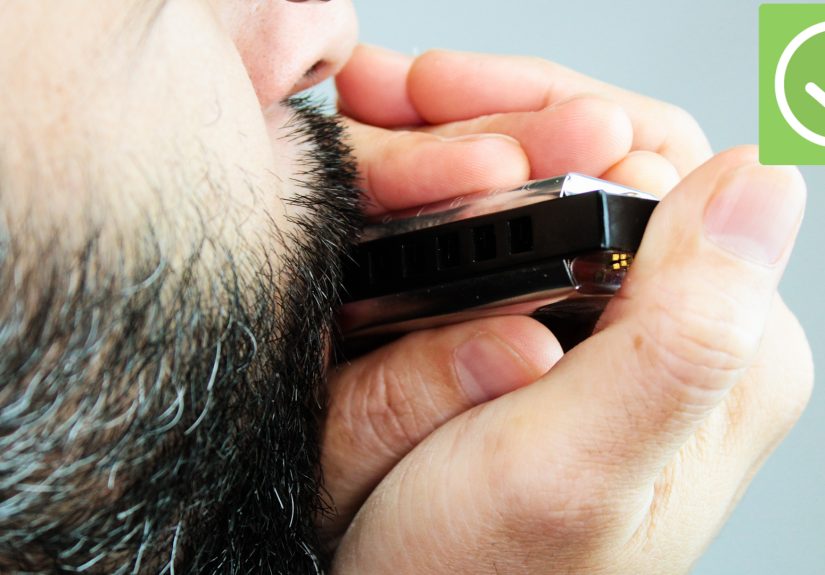
Bending is hard if air leaks. Your lips should seal around the target hole(s) without squeezing like you’re trying to juice the harmonica. A relaxed, airtight embouchure is the sweet spot.
2) Vocal-Tract Control (Your Tongue Is the Steering Wheel)
The bend happens mostly behind the lipstongue arch, tongue position, and throat openness. Beginners often try to “suck harder.” That’s like trying to parallel park by flooring the gas pedal. Instead, you want steady airflow and a precise shape change.
Your First Bend: The Friendly “4 Draw” Method
If you want the classic starting point, use a C harmonica and go for hole 4 draw. It’s famous because it tends to cooperate sooner than the deeper, moodier bends on holes 2 and 3.
Step 1: Play a Clean Single Note
Draw on hole 4 and make it sound clear and stable. If you’re hitting multiple holes, fix that first. Bending multiplies whatever is happeningso if you start messy, your bend becomes advanced jazz (by accident).
Step 2: Relax Your Jaw (Seriously)
Drop your jaw slightly as if you’re about to say “ah.” Keep your lips sealed around the hole. Your face should look calm, not like you’re trying to drink a milkshake through a coffee stirrer.
Step 3: Move the Tongue Like You’re Shifting Vowels
While drawing gently, move from an “EE” feeling (higher tongue) toward an “OO” feeling (lower/backer tongue). Don’t voice itjust shape it.
- EE = tongue higher/forward, smaller mouth space
- OO = tongue lower/back, bigger mouth space
Step 4: Find the “Click” Zone (Slow Motion Wins)
Make the vowel shift slowly. The pitch should begin to drop. If the note chokes (stops sounding), ease up and reduce force. If nothing changes, exaggerate the tongue movement a bit and keep the airflow steady.
Step 5: Hold the Bent Pitch (The Real Flex)
Getting a bend for a split second is Step One. Holding it in tune is Step Two. Once you hear the bend, try to freeze your mouth shape for one full second. Then release back to the unbent note.
How to Tell If You’re Actually Bending (And Not Just Getting Weird)
Use one of these “proof tests”:
- Tuner test: A clip-on tuner or tuning app shows if the pitch really drops.
- Neighbor-note test: On many harps, the bent pitch will approach a nearby note you can also find elsewhere.
- Record yourself: Your ears are honest… after the fact. (In the moment, they’re very polite.)
Bonus tip: some learning tools play target bend pitches so you can match them. If you can “hear” the destination, your mouth finds it faster.
Draw Bends vs. Blow Bends (Same Family, Different Personalities)
Draw Bends: The “Classic Blues” Moves
Draw bends are where most players start. They’re the bread-and-butter of blues phrasing: cries, scoops, and that “human voice” wobble. Holes 4 and 6 are often friendlier early on; holes 2 and 3 can be dramatic (multiple bend levels and higher sensitivity).
Blow Bends: The High-Note Gymnastics
Blow bends live up top and often require more finesse. If draw bends feel like lowering a drawbridge, blow bends can feel like lowering a chandelier with dental floss. It’s doablejust more precise.
Many players find blow bends easier to learn on lower-key harps (like G) before moving up to brighter keys (like C), because the “feel” can be more forgiving.
Common Problems (And the Fix That Usually Works)
“I’m Drawing Harder and Nothing Happens.”
Fix: draw gentler, slow down the tongue movement, and keep the seal airtight. Bending is not powered by brute force; it’s powered by shape control. Too much force often makes the note squeal, choke, or go sharp-ish and miserable.
“The Note Cuts Out When I Try to Bend.”
Fix: ease up. If the reed chokes, you’re overshooting the shape or using too much pressure. Think “smooth slide,” not “aggressive vacuum cleaner.”
“I Can Bend It, But It’s Out of Tune.”
Fix: practice holding a single bend level with a tuner. Start by bending down to the pitch, then try hitting the pitch directly without sliding (this builds muscle memory).
“Hole 2 and 3 Are Ruining My Self-Esteem.”
Fix: welcome to the club. Those holes have wider bend ranges and can feel unstable at first. Use a pitch target (tuner or reference tone), and approach in layers:
- Get a small bend (even a tiny dip).
- Hold it steady.
- Then explore deeper bends one at a time.
“My Harmonica Feels Hard to Bend.”
Fix: sometimes it’s technique; sometimes it’s the instrument setup. Airtight harps tend to respond more easily. Also, bent playing can fatigue reeds faster, and worn reeds can behave inconsistently. If one hole is stubborn on one harp but easy on another, it’s not your imagination.
Practice Drills That Make Bending Stick
Drill 1: The “Bend Sandwich”
Play: unbent note → bent note → unbent note, slowly, on one hole. This teaches control and clean transitions.
Example (C harmonica, hole 4 draw):
- 4 draw (clean) → 4 draw bend (down) → 4 draw (clean)
Drill 2: Bend Levels (Especially on Hole 3 Draw)
Some holes offer multiple bend “steps.” Instead of sliding randomly, aim for each level like it’s a separate note. Use a tuner and treat each step as a destination.
Drill 3: Add Rhythm So It Becomes Music
Bends aren’t a science experimentyou’re going to use them in time. Put a simple shuffle or metronome on and practice bending on beats 2 and 4. Your future solos will thank you.
Simple Blues Examples Using Bends (Tiny Licks, Big Payoff)
Here are a few beginner-friendly ideas in harmonica tab style. (A minus sign indicates draw; a quote mark indicates a bend.)
Lick 1: The “Hello, Blues” Scoop
-4" -4 -4" -4
Start with a quick dip (bend) and return. It’s like adding seasoningsmall move, big flavor.
Lick 2: A Classic Cry on Hole 2
-2" -2 -2" -2 -1
The 2 draw bend is iconic for blues. Don’t rush it. If it squeals, lower the force and slow the tongue shift.
Lick 3: High-End Shine (Blow Bend Teaser)
+9 +9" +9 +8
Blow bends add expressive “top-end” color. Keep it gentlehigh reeds don’t love being bullied.
Advanced Corner (Optional): Overblows, Overdraws, and “Yes, But Later”
Overblows and overdraws can unlock chromatic notes on a diatonic, but they’re not the first stop on the bending train. They require precision, a well-set-up harp, and clean single-note control. If regular bends are still unpredictable, focus there firstoverbends build on the same mouth-shape skills, just with tighter tolerances.
Gear & Setup Tips (Because Sometimes It’s Not Just You)
- Start with a decent, airtight harmonica. Models designed for responsiveness tend to make learning easier.
- Key choice matters. Many lessons assume a C harp, but some learners find certain bends feel easier on lower keys.
- Go easy on the reeds. Aggressive bending can fatigue reeds faster than straight playingcontrol beats force every time.
- Maintenance helps. A dirty or leaky harmonica can fight you. Keep it clean and dry it properly after playing.
Wrap-Up: Your “Bend Blueprint” in One Minute
- Get a clean single note first.
- Seal the hole with relaxed, airtight lips.
- Use gentle airflowno vacuum cleaner heroics.
- Shift tongue/throat shape (EE → OO) until pitch drops.
- Hold the bend in tune (use a tuner), then release cleanly.
- Turn it into music with rhythm and short licks.
If bending feels impossible today, that’s normal. It often arrives in weird little “click” momentsthen vanishesthen comes back like a stray cat you accidentally fed once. Keep sessions short, focused, and relaxed. Your harmonica is basically teaching your mouth a new accent, and accents take repetition.
Extra: Real-World “Woodshed” Experiences ( of What Learners Commonly Run Into)
Most harmonica players’ first bending journey follows a surprisingly consistent storylinelike a mini TV series where Episode 1 is “Optimism,” Episode 2 is “Confusion,” and Episode 3 is “Why Is Hole 2 Personally Attacking Me?”
Early on, many learners report a “false bend” phase: the note gets quieter, warbly, or choked, and it feels like something changedbecause something didbut the pitch didn’t really drop in a controlled way. That’s usually a sign of too much pressure or a leaky seal. When you reduce force and keep the embouchure stable, you’ll often notice the note suddenly becomes louder and richer even before it bends. That’s the instrument rewarding the right kind of airflow. It’s also why so many teachers say bending is related to tone: good tone is often the doorway into a good bend.
Another common experience is the “one-hit wonder” bend. You finally get a clean drop on hole 4 drawamazing!and then it disappears for an hour (or a day). That doesn’t mean you lost the skill. It means your mouth stumbled into the correct resonance shape briefly, and now you’re building the map back to it. Recording yourself and using a tuner can speed up that mapping process, because you stop guessing and start aiming.
Then comes the “multiple levels” awakening, usually on hole 3 draw. Players often discover that they can bend it, but they can’t land the same pitch twice. It slides like a bad shopping cart wheel. The breakthrough here is treating each bend level like a separate note with its own mouth shapealmost like different vowels. Instead of “bending deeper,” you’re switching between stable targets. This is where slow practice wins. You’re training coordination, not proving toughness.
Blow bends, for many people, feel like learning bending all over againbecause the sensation is different. Some learners describe it as “more forward” and “smaller,” with the tongue doing finer adjustments. The high holes are also less forgiving about excess air. When players finally get a clean blow bend on 8 or 9, the most common reaction is: “Oh! That was tiny.” Exactly. The movement is smaller than you thinkand that’s why brute force slows you down.
Finally, there’s the most encouraging experience of all: once bending “clicks,” everything else improves too. Your tone gets fuller, your single notes clean up, and your phrasing becomes more vocalbecause bending forces you to listen closely and shape sound intentionally. So even if you’re still negotiating with hole 2 draw like it’s a stubborn vending machine, you’re not wasting time. You’re building the control that makes the harmonica a real instrumentnot just a pocket-sized noisemaker with confidence.