Table of Contents >> Show >> Hide
- First: What “Stiff Peaks” Actually Means
- The “Stiff Peaks” Checklist (Do These Before You Start)
- Step-by-Step: How to Beat Egg Whites to Stiff Peaks
- The Science (In Plain English): Why Egg Whites Whip at All
- Common Mistakes That Prevent Stiff Peaks (and How to Fix Them)
- Special Situations: Humidity, Soufflés, and “Why Is My Meringue Crying?”
- Safety Note: When Egg Whites Are Not Fully Cooked
- Quick Troubleshooting Table
- Conclusion: Stiff Peaks Are a Skill, Not a Personality Test
- Shared Kitchen Experiences: Real-World “Stiff Peaks” Lessons (About )
Beating egg whites to stiff peaks is one of those kitchen skills that feels like magic… right up until your “clouds” turn into sad bubbles
and you start blaming the moon phase, your mixer, and maybe your childhood. Here’s the good news: stiff peaks aren’t mysterious.
They’re a predictable result of clean equipment, smart timing, and knowing what you’re looking at.
This guide will walk you through a reliable method (plus troubleshooting that actually solves problems), so you can whip egg whites
into glossy, stable peaks for meringues, soufflés, angel food cake, pavlova, and morewithout needing a pep talk from your oven.
First: What “Stiff Peaks” Actually Means
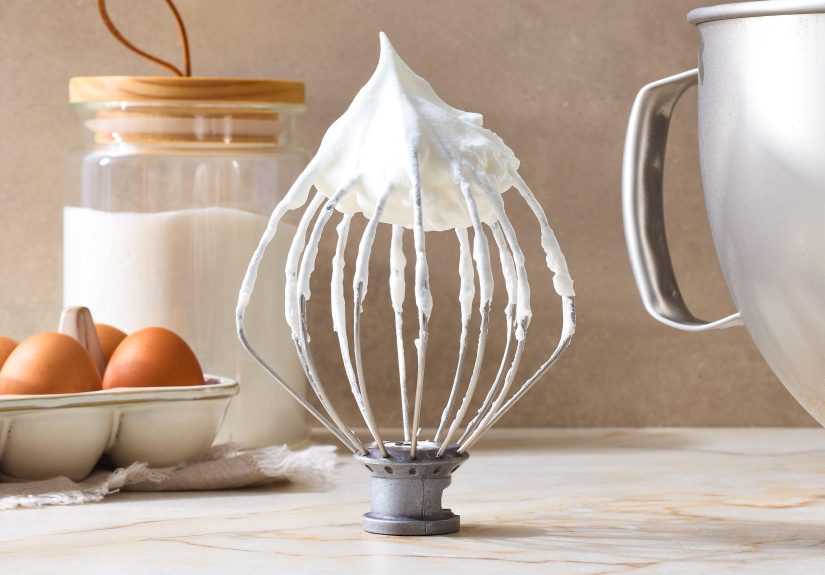
“Stiff peaks” means the foam is strong enough to hold a peak that stands straight up when you lift the whisk. The mixture should look
glossy (especially if sugar is involved), feel dense and silky, and stay put instead of slowly melting back into the bowl.
Quick visual cues
- Soft peaks: Peaks form, but the tip flops over like a sleepy puppy ear.
- Medium/firm peaks: Peaks hold shape, but the tip bends slightly.
- Stiff peaks: Peaks stand tall and proud. No drooping. No sliding. No drama.
One more thing: stiff peaks can mean different end goals depending on the recipe. For a soufflé, you want stiff peaks that are stable
but not dry. For meringue cookies, you want stiff peaks that are glossy, thick, and pipeable.
The “Stiff Peaks” Checklist (Do These Before You Start)
1) Separate eggs like you’re defusing a tiny bomb
Egg whites hate fat. Even a small smear of yolk can block foaming and keep you stuck in the “sad latte foam” stage.
Separate eggs while they’re cold (it’s easier), then let the whites sit until they’re closer to room temperature
for faster, higher volume whipping.
2) Pick the right bowl: metal or glass wins
Stainless steel or glass bowls are easiest to get truly grease-free. Plastic can hold onto oily residue even after washing,
which is like inviting your egg whites to fail. (Polite invitation. Immediate RSVP. Total chaos.)
3) Clean like you mean it
Wash and dry the bowl and whisk thoroughly. If you want to be extra, wipe the bowl with a little vinegar or lemon juice on a paper towel,
then dry it. The goal is simple: no grease, no water, no mystery residue.
4) Know your stabilizers (optional, but helpful)
A small amount of acid helps stabilize egg white foam by supporting the protein network as it traps air.
Common choices: cream of tartar, lemon juice, or white vinegar.
- Cream of tartar: A classic stabilizer for meringues and whipped whites.
- Lemon juice / white vinegar: Handy substitutes when you’re out of cream of tartar.
- Copper bowl: Copper can help stabilize egg whites due to a chemical interaction with egg proteins. Great if you have one; not required.
Practical rule of thumb: use a small pinch for a few whites, or about 1/8 teaspoon per 2 egg whites
if you like numbers. You don’t need to treat it like a chemistry finaljust don’t dump in a spoonful like it’s sugar.
Step-by-Step: How to Beat Egg Whites to Stiff Peaks
Step 1: Start slow (yes, really)
Begin on low to medium speed until the whites look foamy and full of small bubbles. This builds a stronger foam structure.
Starting too fast can create big bubbles that pop more easily, which makes the foam less stable.
Step 2: Add acid at the foamy stage (if using)
Once the whites are foamy, add cream of tartar (or a few drops of lemon juice/vinegar). Keep mixing.
Step 3: Increase speed and watch the stages
Move to medium-high speed. You’ll see the whites turn from foamy to opaque and thicker. They’ll start leaving faint trails from the whisk.
When you lift the whisk and a peak forms, you’re approaching the peak stages.
Step 4: If you’re adding sugar, timing matters
For meringues and many desserts, sugar helps stabilize the foambut it also slows whipping if added too early or all at once.
Add sugar gradually once you’re at soft peaks (or just on the way there), a spoonful at a time, while the mixer runs.
Keep whipping until the mixture looks thick and glossy and holds stiff peaks.
Step 5: Confirm stiff peaks (no guesswork)
- Whisk test: Lift the whisk straight up. The peak should stand tall without folding over.
- Look test: The foam should look smooth and cohesivenot bubbly like soap suds.
- Bowl tilt test: Tilt the bowl slightly; the foam should stay put, not slide.
The famous “turn the bowl upside down over your head” trick exists, but it’s also how kitchen ceilings get their personality.
If you must try it, do it over the sink and do it briefly. Your hair deserves better.
The Science (In Plain English): Why Egg Whites Whip at All
Egg whites are mostly water and proteins. Beating unfolds (denatures) those proteins, and they form a network that traps air bubbles.
That network is your foam. Fat interferes with that network. Acid helps it behave. Sugar helps stabilize it by thickening the liquid around bubbles.
Heat (as in Swiss or Italian meringue methods) can further stabilize the foam by partially coagulating proteinsbasically giving your foam
a stronger backbone.
Common Mistakes That Prevent Stiff Peaks (and How to Fix Them)
Mistake 1: There’s yolk in the whites
Even a little yolk can keep whites from whipping properly. If you see yolk, scoop it out with a clean spoon immediately.
If it’s mixed in, it’s often faster to start over (sorry, but also… better than rage-whipping for 20 minutes).
Mistake 2: Your bowl/whisk has grease or detergent residue
Rewash and dry everything. Wipe with vinegar or lemon juice. Switch to metal or glass.
If your whites won’t foam beyond big bubbles, grease is a top suspect.
Mistake 3: You used carton egg whites and they’re not cooperating
Many carton whites whip fine, but results vary by brand and formulation. Some take longer to reach volume.
If you need maximum volume and reliability (like for macarons or angel food cake), fresh shell egg whites are often more consistent.
If you need safer raw preparations, look for pasteurized egg products and expect that whipping may take longer.
Mistake 4: You added sugar too fast
Sugar needs time to dissolve. If you pour it in quickly, you can weigh down the foam and end up with gritty, unstable whites.
Add sugar slowly once foam is established. If it turns runny after sugar, keep whippingoften it just needs more time.
Mistake 5: You overbeat the whites
Overbeaten whites look dry, grainy, and clumpy. They may start weeping liquid. The foam structure has tightened too far and is breaking.
Fix: If you catch it early, try adding one fresh egg white and whipping briefly to bring it back together.
If it’s very dry and separated, it’s usually better to restart for best results (especially for delicate batters).
Special Situations: Humidity, Soufflés, and “Why Is My Meringue Crying?”
Humidity: the invisible meringue villain
Meringue loves to absorb moisture. On humid days, it may stay sticky, weep, or soften. If you’re making baked meringues:
- Bake low and slow, and let them dry out thoroughly.
- Cool in the oven with the door cracked if your recipe recommends it.
- Store airtight as soon as fully cooled.
Soufflés and cakes: stiff peaks with a “soft landing”
For soufflés and foam cakes, stiff peaks are importantbut you don’t want dry, overbeaten whites. Stop at stiff peaks that still look
satiny and cohesive. Then fold gently (and stop folding once the batter looks evenly combinedover-folding deflates the foam).
Safety Note: When Egg Whites Are Not Fully Cooked
Some recipes (like certain frostings, mousse-style desserts, or uncooked meringue) may involve raw or lightly cooked egg whites.
Food safety guidance commonly recommends using pasteurized eggs or egg products for recipes that won’t fully cook the eggs,
especially for children, older adults, pregnant people, and anyone immunocompromised.
If you want a more stable, safer option for frostings and toppings, consider Swiss meringue (heating whites and sugar over a double boiler)
or Italian meringue (hot sugar syrup whipped into whites). Both methods heat the mixture and create a sturdier foam.
Quick Troubleshooting Table
| Problem | What it looks like | Most likely cause | Fix |
|---|---|---|---|
| Won’t foam | Big bubbles, watery | Grease/yolk in bowl | Reclean bowl/whisk; start over if yolk is mixed in |
| Foams but won’t peak | Loose, collapses | Too cold, too little structure | Let whites warm slightly; start low then increase speed |
| Grainy/dry | Clumpy, dull | Overbeaten | Add a fresh white and whip briefly (if minor) or restart |
| Sticky/weeping meringue | Moist beads, syrupy | Humidity or under-drying | Dry longer; cool in oven; store airtight |
| Gritty meringue | Sugar crystals | Sugar not dissolved | Add sugar slowly; whip longer until smooth |
Conclusion: Stiff Peaks Are a Skill, Not a Personality Test
If you remember only three things, make them these: keep fat away, build foam gradually, and
stop at the right moment. Once you can reliably hit stiff peaks, a whole world of desserts opens upairy soufflés,
cloudlike cakes, glossy meringues, and toppings that make people think you secretly went to pastry school.
And if a batch goes sideways? Congratulationsyou’re officially baking. Clean the bowl, try again, and remind your egg whites who runs this kitchen.
(Hint: it’s you. Not the humidity.)
Shared Kitchen Experiences: Real-World “Stiff Peaks” Lessons (About )
If you ask a room full of home bakers about stiff peaks, you’ll hear the same stories in different accents. Someone will swear they
did “everything right,” someone else will blame their mixer, and at least one person will confess they tried to rescue a failed meringue
with “positive energy.” Here are a few common, experience-based lessons that show up again and againand the practical fix that usually
solves them.
1) The “I washed the bowl!” moment
Many people discover (the hard way) that “washed” doesn’t always mean “grease-free.” A bowl can look spotless but still carry a thin film
of oil, especially if it’s plastic or was washed alongside greasy pans. The most reliable habit is using a metal or glass bowl and drying it
completely. Some bakers also do a quick vinegar wipe as cheap insurance. The funny part? The fix feels too simpleuntil you try it and suddenly
your whites triple in volume like they’ve been holding a grudge.
2) The “why is it taking FOREVER?” spiral
Another common experience: whipping feels endless, especially with smaller amounts of whites, carton whites, or pasteurized eggs.
People often crank the speed to maximum immediately, which can create larger bubbles and a less stable foam. Starting slower to build structure,
then increasing speed, tends to produce a more dependable peak. The emotional arc is predictable: impatience → high speed → frustration →
“maybe this recipe is wrong” → finally, peaks appear five minutes later. The recipe wasn’t wrong. The clock just needed you to stop staring at it.
3) The “I blinked and overbeat them” tragedy
Overbeaten egg whites are the baking equivalent of overcooked pasta: they go from perfect to ruined faster than your group chat can pick a restaurant.
Many bakers notice the whites turning dull, clumpy, and a little dry around the edges. That’s your cue to stop. If it happens, a surprisingly common
rescue attempt is adding one fresh white and whipping briefly to re-smooth the mixture. Sometimes it works well enough for a batter; sometimes it doesn’t.
But the real lesson people take away is this: when you’re close to stiff peaks, stop multitasking. The egg whites deserve your full attention for, like,
sixty seconds.
4) The “humidity sabotaged my masterpiece” complaint
Bakers in humid climates often report meringues that feel sticky or weep even when baked. That’s not a personal failuremeringue is hygroscopic, meaning
it attracts water. The workaround many people adopt is choosing Swiss or Italian meringue for stability, drying baked meringues longer, and storing them
airtight immediately once cooled. A lot of “my meringue cried” stories end with the same advice: don’t leave them hanging out on the counter like they’re
waiting for a cab.
5) The “folding panic” after perfect peaks
One last shared experience: you finally nail stiff peaks, then you fold them into batter and… everything deflates. The usual culprit is over-folding or
stirring too aggressively. Many bakers learn to fold in stagesmixing a small portion of whites first to lighten the batter, then folding in the rest
gently. When done right, you keep more air and get the rise you wanted. When done wrong, you still get dessertjust with a little less swagger.