Table of Contents >> Show >> Hide
- What Is a Mesh Watch Strap?
- Before You Start: Know Your Clasp Type
- Tools You Need to Adjust a Mesh Watch Strap
- How Tight Should a Mesh Watch Strap Be?
- How to Adjust a Mesh Watch Strap: Step-by-Step Tutorial
- Step 1: Lay the Watch Face Down on a Soft Cloth
- Step 2: Find the Adjustable Clasp Plate
- Step 3: Insert the Tool Into the Clasp Slot
- Step 4: Lift the Clasp Plate
- Step 5: Slide the Clasp to Adjust the Strap Length
- Step 6: Align the Clasp With a Groove
- Step 7: Press the Clasp Plate Closed
- Step 8: Put the Watch On and Test the Fit
- How to Adjust a Magnetic Milanese Loop
- Common Mistakes to Avoid
- Troubleshooting: Why Won’t My Mesh Strap Adjust?
- How to Care for a Mesh Watch Strap After Adjustment
- When Should You Ask a Professional?
- Real-Life Experience: What Adjusting a Mesh Watch Strap Actually Feels Like
- Conclusion
A mesh watch strap is one of those small accessories that somehow manages to look elegant, modern, and slightly mysterious at the same time. It is sleek enough for a dinner jacket, relaxed enough for a T-shirt, and flexible enough to sit comfortably on the wrist all day. But when it arrives too loose, too tight, or dangling like a tiny metal hammock, the romance fades quickly.
The good news is that learning how to adjust a mesh watch strap is usually easier than resizing a traditional metal bracelet. In many cases, you do not need to remove links, visit a jeweler, or perform delicate surgery under a magnifying glass. Most mesh watch bands use a sliding clasp that can be opened, moved along the strap, aligned with a groove, and snapped back into place. That is the whole magic trick.
This step-by-step tutorial explains how to adjust a mesh watch band safely, how to find the right fit, what tools to use, what mistakes to avoid, and how to keep the strap comfortable after adjustment. Whether you own a minimalist dress watch, a fashion watch, a smartwatch with a Milanese loop, or a stainless steel mesh bracelet, this guide will help you resize it without turning your dining table into a crime scene for tiny metal parts.
What Is a Mesh Watch Strap?
A mesh watch strap, often called a Milanese strap or mesh bracelet, is made from tightly woven metal. Instead of solid metal links, the band has a flexible woven structure that wraps smoothly around the wrist. The design dates back to classic Italian-inspired metalwork, but today it appears on everything from slim quartz watches to smartwatches.
The biggest advantage of a mesh watch strap is adjustability. Many models use a sliding clasp rather than removable links. That means you can fine-tune the length more precisely than you can with a standard bracelet. If your wrist swells a little on a hot day or shrinks slightly in cold weather, a mesh band gives you more room to find the sweet spot.
Before You Start: Know Your Clasp Type
Before adjusting anything, look closely at your watch strap. Mesh bands usually come with one of three common closure styles.
1. Sliding Lock Clasp
This is the most common type on classic mesh watch straps. The clasp slides along the mesh and locks into small grooves or indentations on the underside of the band. You open the clasp with a small flat tool, move it to the right position, and press it closed.
2. Magnetic Milanese Loop
This style is common on smartwatches. Instead of a locking clasp, the strap loops through a connector and fastens with a magnet. It is highly adjustable because you simply pull the band tighter or looser, then let the magnet hold it in place.
3. Link-Style Metal Bracelet
Some watch bands look like mesh from a distance but are actually metal bracelets with removable links. These require pin removal, a link tool, or professional sizing. If your band has arrows on the underside of links, it may not be a sliding mesh strap.
Tools You Need to Adjust a Mesh Watch Strap
You do not need a professional workshop. For most mesh straps, gather these simple items:
- A spring bar tool, strap tool, or small flathead screwdriver
- A soft cloth or microfiber towel
- Good lighting
- A flat surface
- Optional: masking tape to protect the clasp from scratches
The most important tool is something small, flat, and sturdy enough to lift the clasp tab. Avoid sharp knives if possible. Yes, a kitchen knife feels convenient, but so does eating cereal from a saucepan until someone sees you. A proper small tool gives you better control and reduces the risk of scratching the watch.
How Tight Should a Mesh Watch Strap Be?
A watch should feel secure but not restrictive. A practical rule is the one-finger test: you should be able to slide the tip of one finger between the strap and your wrist without forcing it. If the watch spins like a loose bracelet, it is too loose. If the band leaves deep marks, pinches skin, or makes your hand feel like it is applying for independence, it is too tight.
Mesh straps are smooth and flexible, so they should sit comfortably without pulling hair or digging into the wrist. The watch case should stay mostly centered on the top of your wrist during normal movement. A tiny bit of movement is fine. A watch that migrates halfway up your arm by lunchtime needs another adjustment.
How to Adjust a Mesh Watch Strap: Step-by-Step Tutorial
Step 1: Lay the Watch Face Down on a Soft Cloth
Place a microfiber cloth on a table and lay the watch face down. This protects the crystal and case from scratches while you work. Make sure the strap is fully open and flat. Good lighting helps you see the clasp mechanism and the grooves on the back of the mesh band.
If the watch is brand new, remove any protective stickers from the clasp or underside of the strap before sizing. Stickers can hide grooves and may trap sweat or moisture later.
Step 2: Find the Adjustable Clasp Plate
Look for the small rectangular locking plate on the clasp. It usually has a slot or opening where you can insert a tool. This is the part that holds the clasp in place along the mesh strap.
Do not confuse the locking plate with the hook or safety clasp used to close the watch around your wrist. You are adjusting the sliding base of the clasp, not forcing open the entire closure system like a tiny medieval drawbridge.
Step 3: Insert the Tool Into the Clasp Slot
Insert the tip of your spring bar tool or small flathead screwdriver into the slot on the clasp plate. Keep the handle angled toward the watch case rather than pressing against any straight pin. This helps prevent bending or damaging the pin that supports the clasp.
Use gentle upward pressure. The clasp plate should pop open. It may feel firm, especially on a new watch, but it should not require heroic force. If you are gritting your teeth, stop and check that your tool is in the correct slot.
Step 4: Lift the Clasp Plate
Once the tool catches the slot, lift the clasp plate upward. You only need to open it enough to free the clasp from the grooves on the strap. Do not bend it backward beyond its natural range. The goal is to unlock the clasp, not audition for a metal-folding competition.
If the plate opens halfway and resists, use your thumb and finger to gently finish opening it. Keep the watch flat so the clasp does not suddenly slide or fall.
Step 5: Slide the Clasp to Adjust the Strap Length
Now slide the clasp along the mesh strap. Moving the clasp toward the watch case usually makes the strap tighter. Moving it away from the watch case usually makes the strap looser.
Make small adjustments at first. A few grooves can make a noticeable difference on the wrist. If you are unsure, start slightly loose. It is better to adjust twice than to create a fit so tight your wrist starts writing a complaint letter.
Step 6: Align the Clasp With a Groove
Look at the underside of the mesh strap. You should see small grooves or indentations spaced along the band. The clasp must sit directly in one of these grooves. If it lands between grooves, it may not lock correctly and could slide during wear.
This alignment step is the secret to a secure adjustment. A mesh watch strap does not lock by friction alone. It needs the clasp tooth or indentation to fit into the strap groove. Take a second to line it up neatly.
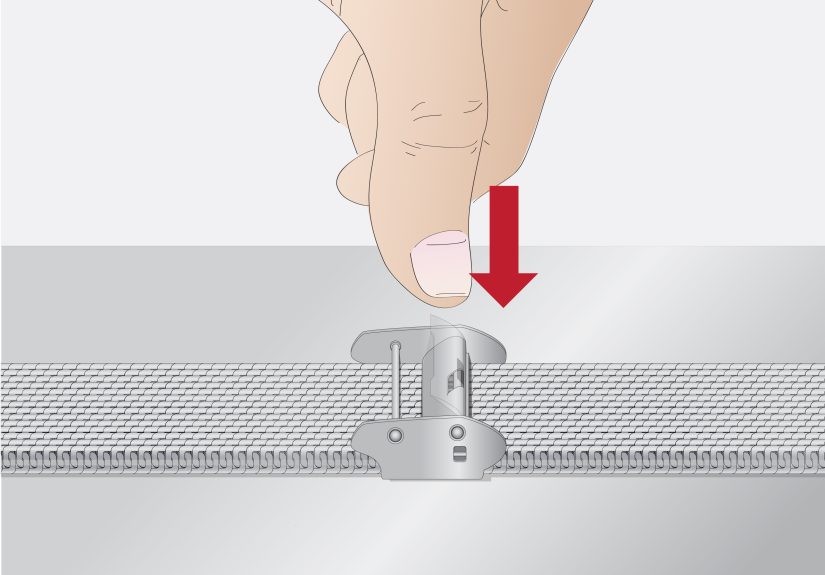
Step 7: Press the Clasp Plate Closed
When the clasp is in the right position, press the plate down firmly until it snaps shut. You should feel or hear a small click. The plate should sit flat against the clasp.
If it does not close completely, do not force it with pliers. Reopen the plate, check the groove alignment, and try again. A clasp that refuses to close is usually misaligned, not stubborn on purpose.
Step 8: Put the Watch On and Test the Fit
Fasten the watch on your wrist and move your hand naturally. Rotate your wrist, type a few imaginary emails, and pretend to check the time dramatically like you are late for a train in a movie. The watch should remain comfortable and secure.
Use the one-finger test again. If your finger slides under the strap comfortably and the watch does not flop around, you are in good shape. If the fit feels off, reopen the clasp and move it one or two grooves at a time.
How to Adjust a Magnetic Milanese Loop
A magnetic Milanese loop is even simpler. Put the watch on your wrist, pull the free end of the strap until the watch feels secure, and place the magnetic closure against the mesh. The magnet should hold the band in position.
For smartwatch bands, make sure the strap is installed correctly in the case connector. Some Milanese loops can be opened fully by sliding the magnetic closure through the lug or connector, while older versions may not allow the closure to pass through. Do not yank the magnet through if it resists. That is not adjustment; that is how tiny disasters get scheduled.
Common Mistakes to Avoid
Using Too Much Force
The clasp should open with controlled pressure. If you force it, you may bend the locking plate or damage the pin. Work slowly and keep the tool seated in the clasp slot.
Locking the Clasp Between Grooves
This is the most common mistake. If the clasp is not aligned with a groove, it may feel closed but slip later. Always check the underside before snapping the plate shut.
Scratching the Clasp
A small flathead screwdriver works, but it can scratch polished metal. Use a proper watch tool if you have one. If not, place a tiny piece of masking tape near the slot for extra protection.
Making the Strap Too Tight
Wrists change size during the day because of temperature, activity, and hydration. A strap that feels perfect in the morning may feel tight in the afternoon. Leave enough room for natural movement.
Troubleshooting: Why Won’t My Mesh Strap Adjust?
The Clasp Will Not Open
Check that your tool is in the correct slot. The adjustment slot is usually on the clasp plate, not on the outer folding clasp. Apply steady upward pressure. If it still will not open, take the watch to a jeweler or watch repair shop.
The Clasp Slides After I Close It
The clasp is probably not seated in a groove. Open it again, align it carefully, and press it closed until it sits flat.
The Strap Pulls Hair
Mesh bands can occasionally catch wrist hair if worn too loose or if the mesh has rough edges. Try a slightly snugger fit. If the strap still catches, inspect the mesh for damage.
The Watch Still Feels Unbalanced
Move the clasp in small increments. The case should sit centered on the wrist. If the clasp ends up too far to one side, the watch may feel uneven even if the circumference is technically correct.
How to Care for a Mesh Watch Strap After Adjustment
Mesh straps look refined, but they collect dust, lotion, sweat, and everyday grime in the woven metal. Clean the strap regularly with a soft, lint-free cloth. For most stainless steel mesh straps, a lightly damp cloth can help remove buildup. Dry the band thoroughly before wearing it again.
Avoid soaking watches that are not water resistant. Even if the strap is stainless steel, the watch case, seals, clasp, or decorative coating may require more careful handling. When in doubt, remove the strap from the watch before cleaning or follow the manufacturer’s care instructions.
Also avoid harsh chemicals, abrasive pads, and aggressive polishing. Mesh has many tiny surfaces, and rough treatment can dull the finish. A gentle approach keeps the strap looking crisp without turning it into an accidental science experiment.
When Should You Ask a Professional?
Most sliding mesh straps are easy to adjust at home. However, you should visit a watch professional if the clasp is jammed, the mesh is bent, the watch is expensive, or you are unsure whether your band is truly adjustable. Professional sizing is usually quick and can prevent costly damage.
You should also seek help if the bracelet uses removable links, push pins, split pins, or screws. Those systems are different from a sliding mesh clasp and may require a specific tool. Guessing your way through a metal bracelet can lead to lost pins, scratched links, and language your neighbors did not need to hear.
Real-Life Experience: What Adjusting a Mesh Watch Strap Actually Feels Like
The first time you adjust a mesh watch strap, it can feel more intimidating than it should. The clasp looks tiny, the slot looks suspiciously delicate, and the whole watch seems to whisper, “Please don’t scratch me.” But once you understand the mechanism, the process becomes surprisingly satisfying.
One useful experience is to work in very small steps. Many people slide the clasp too far on the first try, snap it shut, put the watch on, and discover that they have created either a wrist tourniquet or a bracelet for a much larger human. Mesh straps are sensitive to small changes because the clasp grooves are close together. Moving the clasp two or three grooves can completely change the fit.
Another practical lesson is that the “perfect” fit is not always the tightest fit. A watch may feel secure when it is snug, but comfort matters more over several hours. If you type, drive, cook, or move your wrist a lot during the day, leave a little breathing room. A good mesh strap should feel like it belongs on your wrist, not like it is trying to win an arm-wrestling match.
Lighting also makes a bigger difference than most people expect. Under dim light, the grooves on the underside of the strap can be hard to see. That is when people accidentally lock the clasp between grooves. Under bright light, you can clearly line up the clasp tooth with the indentation and avoid slippage. A desk lamp can be the difference between a five-minute adjustment and twenty minutes of muttering.
A soft cloth is another underrated hero. It protects the watch face, but it also stops the watch from sliding around while you work. Mesh straps are flexible, and the case can move as you apply pressure to the clasp. A cloth gives the watch some grip and saves the crystal from scratches.
People with smaller wrists often find that mesh straps are more comfortable than traditional bracelets because the adjustment is more precise. Instead of removing full links and hoping the result is close enough, you can place the clasp exactly where it feels best. For larger wrists, the benefit is similar: you can loosen the band without adding links, as long as the strap has enough length.
After adjustment, wear the watch for a full day before deciding whether the fit is final. Your wrist may feel different in the morning, after exercise, or in warmer weather. If the strap leaves deep marks, loosen it by one groove. If the watch slides toward your hand every time you reach for something, tighten it slightly. The best adjustment is the one you forget about because the watch simply feels right.
Finally, do not be embarrassed to ask a jeweler for help. Adjusting a mesh watch strap is easy, but some clasps are stiff, coated, decorative, or unusually built. A professional can usually handle it quickly. There is no prize for scratching a brand-new watch in the name of independence. Sometimes the smartest DIY move is knowing when to let someone with better tools take over.
Conclusion
Adjusting a mesh watch strap is a simple skill that makes a big difference in comfort, style, and daily wear. Most sliding mesh bands only require a small flat tool, a soft surface, and a little patience. Open the clasp, slide it to the right position, align it with a groove, press it closed, and test the fit on your wrist.
The key is to avoid rushing. Use gentle pressure, protect the watch from scratches, and make small adjustments until the strap feels secure without being tight. Once you get it right, your mesh watch strap should look sharp, feel smooth, and stay comfortably in place from morning coffee to evening plans.
Note: This article is written for general educational use. Always follow the care and sizing instructions provided by your specific watch brand, especially for premium watches, coated metal straps, smartwatches, and bands with magnetic or nonstandard closures.