Table of Contents >> Show >> Hide
- What Poseidon And Burevestnik Actually Represent
- Why Russia Built These Systems In The First Place
- How They Shift The Nuclear Arms Race
- Do Poseidon And Burevestnik Change The Balance Overnight?
- What The United States And Its Allies Are Likely To Take From This
- Experience In A New Nuclear Age: What This Shift Feels Like On The Ground
- Conclusion
Russia’s nuclear strategy has never exactly been known for subtlety, but Poseidon and Burevestnik take that habit and strap a reactor to it. These two headline-grabbing systems are not just new weapons in the usual sense. They are political signals, engineering gambles, and arms-control headaches rolled into one. More importantly, they reveal how the modern nuclear arms race is changing: it is becoming less about counting classic missiles and bombers, and more about finding strange new ways to dodge defenses, stretch deterrence, and keep rivals guessing.
Poseidon is an autonomous, nuclear-capable underwater vehicle designed to travel vast distances and approach targets from beneath the sea. Burevestnik is a nuclear-powered, nuclear-capable cruise missile built around the idea of extreme endurance and an unpredictable route. In Russian messaging, both systems are sold as proof that Moscow can bypass U.S. missile defenses and preserve its deterrent no matter how the strategic map evolves. In plain English, the Kremlin is saying: “Nice shield. Shame if someone flew around it.”
That boast matters because the nuclear balance between the United States and Russia is now entering a rougher phase. New START, the last major bilateral treaty limiting deployed strategic nuclear forces, expired on February 5, 2026. That does not mean a mushroom cloud is scheduled for lunch, but it does mean the old framework of predictability has weakened. In that environment, unusual systems like Poseidon and Burevestnik matter more than their actual deployment numbers might suggest. They inject uncertainty into deterrence, stress early-warning systems, and complicate any future effort to rebuild arms control from the rubble.
What Poseidon And Burevestnik Actually Represent
Poseidon: the underwater disruptor
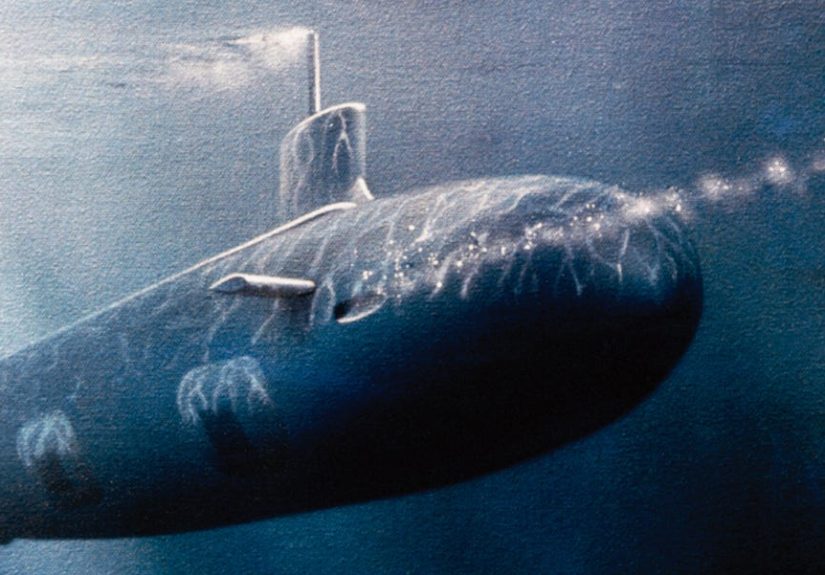
Poseidon is best understood as a strategic underwater delivery system built for surprise, endurance, and psychological effect. Rather than behaving like a traditional ballistic missile, it would approach from the maritime domain, likely launched from specially configured submarines. That alone makes it disruptive. Nuclear deterrence has long depended on reasonably clear categories: land-based missiles, submarine-launched missiles, and bombers. Poseidon muddies those categories by turning the ocean itself into a more unpredictable delivery path.
Its strategic value is not that it replaces Russia’s nuclear triad. It does not. Russia already has intercontinental ballistic missiles, ballistic missile submarines, and bombers for that purpose. Poseidon’s value is that it creates an additional lane of retaliation, one meant to bypass missile-defense assumptions and target the vulnerabilities of coastal states and naval infrastructure. Whether it is eventually deployed in large numbers is almost beside the point. Even in limited numbers, it forces military planners to widen the map of what counts as a strategic threat.
Burevestnik: the flying loophole
Burevestnik, often discussed in the West as “Skyfall,” is the aerial cousin in this family of strategic curveballs. Unlike a standard cruise missile, it is intended to use nuclear propulsion to extend flight time dramatically. The appeal, at least from Moscow’s perspective, is obvious: a system that can travel on a complicated route, stay airborne far longer than a conventional cruise missile, and approach defended territory from unexpected directions could be marketed as a defense-buster.
That does not automatically make it a miracle weapon. Analysts have long questioned how practical, safe, and reliable the system will be. Nuclear propulsion sounds impressive in a presentation, but it also introduces extraordinary technical and environmental risk. Burevestnik’s development history has been shadowed by skepticism, poor test reports, and the deadly 2019 accident at Nyonoksa that was widely linked to its program. In other words, it is both a strategic concept and a cautionary tale with a radiation monitor standing nearby.
Why Russia Built These Systems In The First Place
To understand why Poseidon and Burevestnik matter, it helps to look beyond the hardware and into Russian strategic thinking. Moscow has long argued that U.S. missile defense, precision conventional strike capabilities, and advanced surveillance systems could eventually erode Russia’s second-strike credibility. Whether that fear is fully justified is debated, but the political logic is consistent: if the United States invests in better shields and faster precision weapons, Russia will invest in stranger swords.
That helps explain why Vladimir Putin highlighted exotic systems in 2018 with so much theatrical flair. The message was not merely that Russia had built new toys. The message was that Russia could still penetrate any evolving Western defense architecture and therefore remained impossible to disarm or intimidate. Poseidon and Burevestnik fit this logic neatly because both are meant to bypass the geometry of traditional missile defense. One comes from underwater. The other can take a long, odd, hard-to-predict path through the sky.
There is also a deeper political motive. These systems are symbols of great-power relevance. Russia’s economy is much smaller than America’s, and its conventional military performance has hardly inspired universal awe. Nuclear modernization therefore carries extra prestige value. In domestic and international messaging, Poseidon and Burevestnik allow Moscow to claim that it is not merely keeping up with the United States, but inventing a different game altogether.
How They Shift The Nuclear Arms Race
They expand deterrence beyond familiar categories
The classic U.S.-Russia nuclear balance was built around systems that were terrible but legible. Ballistic missiles had known basing patterns, known warning timelines, and known treaty categories. Poseidon and Burevestnik push the competition into murkier territory. By adding new routes of attack and new types of platforms, they make deterrence broader, less transparent, and harder to model.
That matters because deterrence is not just about destructive power. It is about confidence, signaling, and shared expectations. The more unusual the system, the more uncertainty it creates in a crisis. A weapon that can approach from the sea floor or loiter on an unconventional path does not just threaten targets. It threatens the mental shortcuts decision-makers rely on when minutes matter.
They complicate warning and defense planning
Missile defense systems, early-warning networks, and strategic planning tools are typically optimized for known classes of threats. Poseidon and Burevestnik are designed, at least in theory, to exploit the seams between those systems. Even if they are never deployed at scale, they can force the United States and its allies to spend more on undersea surveillance, air and missile defense integration, maritime awareness, and infrastructure hardening. That is one way an arms race works in practice: not only through bigger arsenals, but through broader and costlier defensive adaptation.
In that sense, these systems are asymmetric pressure tools. Russia does not necessarily need thousands of them. It only needs enough credibility to force Washington and NATO to ask annoying, expensive questions. In strategic competition, making your rival spend money on uncertainty is a feature, not a bug.
They raise the danger of accidents and miscalculation
One of the most disturbing aspects of both programs is that their risk begins before any wartime scenario. Nuclear-powered delivery systems are not normal military equipment. Their testing, handling, and recovery create environmental and safety concerns that conventional missiles do not. The 2019 accident linked to Burevestnik development was a vivid reminder that exotic strategic systems can generate peacetime danger as well as wartime instability.
This is one reason many arms-control experts see Poseidon and Burevestnik as destabilizing even if their near-term military utility remains uncertain. A weapon can be strategically disruptive without being elegant. Sometimes it is disruptive precisely because it is hard to control, hard to verify, and hard to discuss calmly in treaty language without everyone reaching for aspirin.
They make post-New START arms control even harder
Arms control works best when both sides can define, count, inspect, and verify what they are limiting. Poseidon and Burevestnik are nightmares for that process. They do not fit neatly into the treaty logic built for deployed ICBMs, SLBMs, and heavy bombers. That was already a problem while New START still existed. After the treaty’s expiration in 2026, the challenge became even sharper.
Now the issue is not just whether these systems should be included in future negotiations. It is whether the political trust and technical structure needed to include them can be rebuilt at all. Novel systems often become bargaining chips because they are difficult to categorize and easy to dramatize. Moscow can use them as leverage. Washington can point to them as evidence that future agreements must be broader and tougher. The result is a familiar arms-race paradox: the very systems that make arms control more necessary also make it more difficult.
Do Poseidon And Burevestnik Change The Balance Overnight?
Not exactly. That is the part often lost beneath the dramatic headlines. Russia’s nuclear deterrent does not depend on Poseidon or Burevestnik. Its strategic rocket forces, ballistic missile submarines, and bomber fleet remain the backbone of its arsenal. Many experts also remain cautious about how mature these two programs really are, especially given years of technical setbacks and the gap between Russian claims and independently verified operational status.
But “not decisive overnight” does not mean “not important.” These systems matter because they shift the character of competition. They encourage a future in which strategic rivalry is less transparent, more technically diverse, and more politically theatrical. They push both sides toward a world where novelty itself becomes a deterrent signal. That world is harder to stabilize because it rewards ambiguity and prizes shock value.
Poseidon and Burevestnik also carry symbolic power. They tell Russia’s military and political elite that the country can still produce strategic surprises. They tell foreign audiences that Moscow intends to remain a nuclear superpower with options outside traditional categories. And they tell future negotiators that any serious arms-control architecture will have to address not only how many weapons exist, but what weird shapes the next ones might take.
What The United States And Its Allies Are Likely To Take From This
For Washington and NATO, the main lesson is not panic. It is adaptation. Poseidon and Burevestnik suggest that strategic competition is moving toward mixed-domain deterrence, where undersea systems, long-endurance cruise missiles, cyber vulnerabilities, missile defenses, and conventional precision strike all interact more tightly than before. The answer is therefore not just “build more.” It is also “think wider.”
That means future policy debates will likely focus on three big questions. First, how should the United States invest in defenses and warning systems without triggering a runaway spending spiral? Second, how can arms control be redesigned to cover novel strategic systems rather than pretending the world still ends neatly at bomber bases and missile silos? Third, how can crisis communication and transparency survive when both sides increasingly value ambiguity?
Those are not glamorous questions, but they are the ones that decide whether an arms race remains managed competition or drifts into something more dangerous. Nuclear history teaches a blunt lesson: the scariest phase is often not when a weapon is fully integrated, but when governments are still arguing about what it means, how real it is, and whether the other side is bluffing.
Experience In A New Nuclear Age: What This Shift Feels Like On The Ground
If you want to understand the real experience of a renewed nuclear arms race, do not start with the glossy presentation slides or the dramatic animation clips. Start with the people who have to live inside the uncertainty. For arms-control officials, the experience is one of shrinking clarity. During the treaty-heavy years, they could at least rely on categories, inspection routines, notification systems, and a common vocabulary. Today, the job feels more like trying to organize traffic during a storm while someone keeps inventing new kinds of vehicles. Poseidon and Burevestnik are part of that feeling. They do not simply add danger; they add fuzziness.
For military planners, the experience is different but equally uncomfortable. These systems force them to think across domains that used to be managed more separately. Undersea surveillance, coastal resilience, missile warning, airborne detection, strategic communications, and alliance reassurance now overlap more tightly. That creates pressure inside defense institutions. Budgets stretch. Priorities compete. Everyone wants certainty, and certainty politely leaves the room.
For communities near testing sites and strategic infrastructure, the experience is even more concrete. The Burevestnik program’s association with a deadly 2019 accident reminded the world that nuclear risk is not only about warheads and doctrine. It is also about transport, recovery operations, secrecy, local safety, and the fear that comes when official information arrives late, thin, or not at all. In that sense, exotic weapons create a peculiarly modern anxiety: even peacetime development can feel like a low-grade emergency conducted behind closed doors.
European allies experience this shift through political exposure. Every time the treaty framework weakens, Europe hears the old Cold War floorboards creak a little louder. Governments have to reassure publics, interpret Washington, read Moscow, and avoid either complacency or panic. That is exhausting statecraft. It is also deeply human. Nuclear strategy can sound abstract right up until elected leaders start wondering whether deterrence credibility, alliance unity, and civil defense are all becoming harder to explain to ordinary voters.
And then there is the broader public experience, especially for younger generations who were told the most dangerous nuclear decades belonged to history class. The return of terms like “strategic stability,” “nuclear modernization,” and “arms race” creates a strange emotional whiplash. People are not necessarily living in daily fear, but they are being reminded that technological sophistication does not always equal safety. Sometimes it means the opposite. Sometimes the smartest machine in the room is also the least reassuring one.
That is why Poseidon and Burevestnik matter beyond their technical specifications. They change the atmosphere of nuclear politics. They make competition feel less bounded and less familiar. They remind diplomats, defense planners, and civilians alike that the nuclear age never really ended; it just got a software update and a more complicated user interface. Unfortunately, that interface still comes with no helpful tutorial and no safe “undo” button.
Conclusion
Poseidon and Burevestnik do not erase the old nuclear balance, but they do bend it in troubling ways. They expand Russia’s menu of strategic signaling, challenge traditional defenses, heighten accident risks, and make post-New START arms control more difficult just when it is most needed. Their real power lies not only in what they might do in a conflict, but in how they reshape the calculations, fears, and costs of competition before a conflict ever begins.
That is the real shift in Russia’s nuclear arms race. It is no longer only about more warheads or faster missiles. It is about ambiguity, bypass routes, and systems designed to live in the gray zones that older treaties never handled well. Poseidon and Burevestnik are, in that sense, less a side story than a warning: the next era of deterrence may be defined by weapons that are as politically disruptive as they are militarily novel.
Note: This article is intended for public-interest analysis and education. It is based on public reporting and arms-control research and does not endorse the development or use of nuclear weapons.