Table of Contents >> Show >> Hide
- Quick Answer: Typical Garage Door Replacement Cost in 2025
- What You’re Actually Paying For
- Cost by Garage Door Size and Configuration
- Cost by Material: Steel vs. Wood vs. “Wow, That’s Glass”
- Insulated vs. Uninsulated: When R-Value Actually Matters
- Upgrades That Move the Needle on Price
- Hidden Costs (a.k.a. “Why Is My Quote Higher Than the Internet Said?”)
- Repair vs. Replace: When a Full Replacement Isn’t Necessary
- How to Save Money Without Buying Regret
- Resale Value: Does a New Garage Door Pay Off?
- 3 Realistic Budget Examples
- Final Thoughts
- Homeowner Experiences: What It Really Feels Like to Replace a Garage Door (About )
Your garage door is basically your home’s giant moving eyelid: it opens, it closes, and when it gets cranky, everyone hears about it.
Replacing a garage door can be one of the best “wow-for-the-money” upgrades you can makeboosting curb appeal, improving security,
quieting down the daily rumble, and (in many markets) helping resale value.
But here’s the honest truth: garage door replacement cost has a wide range. A straightforward, standard-size steel door can be
relatively budget-friendly, while a custom wood carriage-style beauty (with windows, insulation, and smart controls) can climb into
“this door has a better wardrobe than I do” territory.
Quick Answer: Typical Garage Door Replacement Cost in 2025
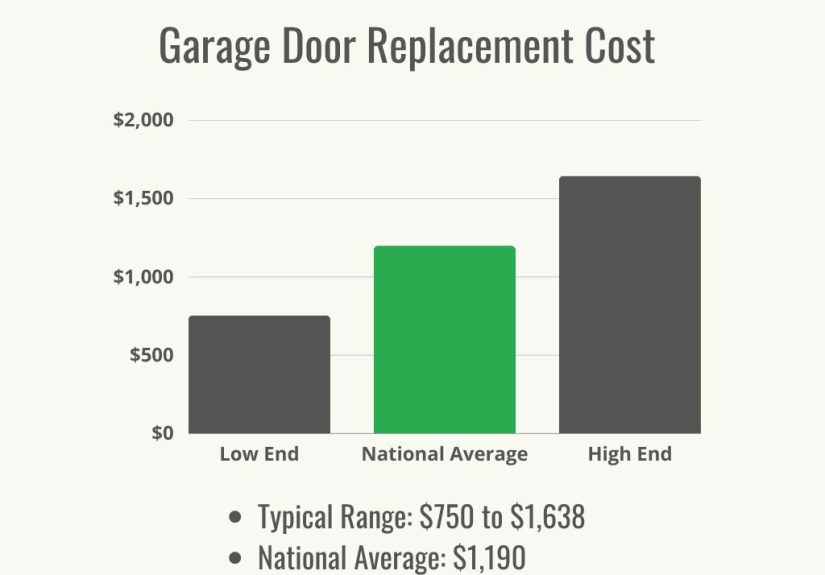
Most homeowners land somewhere in the middle, but pricing depends on size, material, insulation, and upgrades. As a general planning
range, you’ll see projects commonly quoted from about $1,500 to $6,000 installed, with many homeowners clustering around the
low-to-mid thousands for a standard replacement.
- Budget-friendly replacements: Basic, standard-size doors with minimal upgrades.
- Mid-range upgrades: Insulated steel/composite doors, windows, better hardware, improved sealing.
- Premium projects: Full-view glass, custom wood, specialty designs, heavy insulation, smart features, and electrical work.
The easiest way to think about it: the door itself drives most of the cost, and labor is usually a smaller (but still meaningful)
sliceunless the job gets complicated (nonstandard opening, framing repairs, electrical upgrades, etc.).
What You’re Actually Paying For
A garage door replacement isn’t just “swap panel, walk away.” A proper install includes several moving parts (literally), and the quote
often bundles them together:
1) The door and its construction
Door pricing varies based on material, thickness, insulation, wind-load rating (important in storm-prone areas), and design. The difference
between “thin steel sandwich” and “insulated, reinforced, whisper-quiet champion” adds up fast.
2) Labor and setup
Professional installation commonly runs a few hundred dollars for standard jobs. Complexity raises laborthink tall doors, specialty tracks,
tight headroom, or a heavy custom door that needs extra hands.
3) Removal and disposal
Some installers include haul-away of the old door and hardware; others list it separately. If you’re replacing a door that has been “mostly
held together by vibes and a prayer,” removal can take longer.
4) Hardware, tracks, and springs
Depending on what’s reusable, you may need new tracks, rollers, cables, hinges, and springs. Springs are under serious tension and are not
a casual DIY moment.
5) Opener and automation (optional, but common)
If you’re going from manual to automaticor upgrading an older openeryour total can increase. Smart openers, battery backup, keypads,
and quiet belt-drive systems can be worth it if you use your garage daily.
Cost by Garage Door Size and Configuration
Size matters here. Wider doors require more material, reinforcement, and often heavier-duty hardware. Multiple doors can cost more than a
single double door because you’re effectively buying and installing “two of everything.”
| Garage Door Size / Setup | Typical Installed Cost Range | Notes |
|---|---|---|
| 1-car door (standard single) | $500 – $3,000 | Basic steel is often lowest; insulation/windows push higher. |
| 2-car (one double door) | $800 – $5,000 | Popular choice; spans budget steel to upgraded insulated doors. |
| 2-car (two single doors) | $1,200 – $4,900 | Can cost more than one double due to extra hardware/labor. |
| 3-car (one double + two singles) | $1,400 – $7,000 | More openings = more labor and components. |
| 3-car (three singles) | $1,700 – $7,200 | Often the priciest “standard” setup due to volume of work. |
Cost by Material: Steel vs. Wood vs. “Wow, That’s Glass”
Material choice is one of the biggest levers in your budget. If you want the best balance of price, durability, and low maintenance,
steel usually wins. If you want true carriage-house charm, wood can be stunning (and pricier). If you want the
modern full-view look, glass can be a showstopper (and a wallet-opener).
| Material | Typical Cost Range (per door) | Best For |
|---|---|---|
| Aluminum | $600 – $2,900 | Lightweight, modern styles, lower rust risk. |
| Steel | $650 – $3,200 | Value + durability; great for most homes and climates. |
| Wood | $900 – $4,500 | Classic curb appeal; higher maintenance and price. |
| Composite / faux wood | $650 – $4,800 | Carriage look with less upkeep than real wood. |
| Vinyl | $800 – $2,500 | Low maintenance, dent-resistant options in some lines. |
| Fiberglass | $800 – $2,700 | Can mimic wood; may suit coastal or humid regions. |
| Glass / full-view | $2,500 – $8,000 | Modern architecture, maximum “curb appeal bragging rights.” |
Tip: If you love the carriage-door style but not the maintenance, composite or steel “carriage look” doors often give you the vibe without
the constant sanding-and-staining relationship commitment.
Insulated vs. Uninsulated: When R-Value Actually Matters
Insulation isn’t just for people who enjoy cozy garages (though that’s valid). It matters if:
- Your garage is attached to the house (temperature transfer affects comfort and energy use).
- You have a room above or next to the garage that gets too hot/cold.
- You use the garage as a workshop, gym, or “escape room for adults.”
- You want a quieter door (insulated doors can reduce rattling and vibration).
Insulated garage doors are often priced higher than standard doors, but they can improve comfort, durability, and sound control. If your
garage is detached and you’re not heating/cooling it, insulation may be more “nice-to-have” than “must-have.”
Upgrades That Move the Needle on Price
Some upgrades are small splurges. Others are full-on “this door is now a luxury product.” Here are the most common cost boosters:
Windows and decorative hardware
Adding windows can elevate curb appeal instantlyjust remember: more glass usually means more cost. Decorative handles and hinges can
create a carriage-house look without a carriage-house price tag.
Automation and smart features
Upgrading from manual to automatic typically adds cost, especially if you choose a smart opener with app control, camera features, or battery
backup. It’s a convenience upgrade that many homeowners use multiple times a dayso it’s not exactly a vanity purchase.
Wind-load reinforcement
In hurricane- or storm-prone regions, wind-load rated doors (and bracing) can be a smart investment. The upfront cost may be higher, but the
goal is simple: keep the door where it belongs when the weather shows up angry.
Hidden Costs (a.k.a. “Why Is My Quote Higher Than the Internet Said?”)
Online averages are helpful for planning, but real homes have real quirks. These are common add-ons that surprise homeowners:
- Old door removal/haul-away: Sometimes included, sometimes not.
- Track replacement: New door + old bent tracks = bad combo.
- Framing repairs: Rot, water damage, or shifting can require carpentry.
- Electrical work: If you need a new outlet/circuit for an opener, that’s a separate trade (and separate budget).
- Permits: Often not required for a straight replacement, but possible if you change the opening size or structure.
- Opener compatibility: Sometimes a heavy new door and a tired old opener aren’t best friends.
The best way to avoid sticker shock is to ask contractors exactly what’s included: door, hardware, new tracks, disposal, warranty, opener
setup, and any expected repairs to the surrounding framing.
Repair vs. Replace: When a Full Replacement Isn’t Necessary
Not every garage door problem requires a full replacement. If the door is structurally sound and relatively modern, repairs can be a smarter
financial move.
Common repair scenarios
- Spring replacement: Often far cheaper than a new doorthough it should be handled by a pro due to safety risks.
- Panel replacement: If one section is damaged and the model is still available, a panel swap can cost less than a full door.
- Track/roller issues: Noisy, jerky movement can sometimes be solved with new rollers, alignment, and a tune-up.
- Opener issues: A new opener can transform day-to-day use without changing the door itself.
Replacement starts to make more sense when the door is heavily dented, warped, rotting, repeatedly failing, or no longer safeand especially
when repair costs stack up like parking tickets.
How to Save Money Without Buying Regret
“Cheapest possible” is rarely the sweet spot for something this large, heavy, and frequently used. Instead, aim for value:
- Choose a standard size: Custom measurements can raise costs fast.
- Pick steel for the best price-to-performance: Durable, common, widely available.
- Limit customizations: Windows and specialty finishes add up.
- Compare at least 2–3 quotes: Not just pricecompare what’s included.
- Ask about warranties: Door, hardware, and labor coverage matter.
- Time it right if possible: Some markets have seasonal demand spikes (and lead times).
Resale Value: Does a New Garage Door Pay Off?
A garage door replacement is often cited as a top curb-appeal upgrade, and industry cost-vs-value research has shown exceptionally strong
resale impact in many regions. That doesn’t mean you get a check back the next morning (sadly), but it does suggest this project can be
financially strategic if you’re selling soonor simply want your home to look sharp and function better.
Translation: if your garage door looks like it survived three hailstorms and a grudge match with a trash can, replacing it can be one of the
quickest visual upgrades to the entire front of your house.
3 Realistic Budget Examples
Example 1: “Clean and Simple” (Single-Car Steel, Minimal Upgrades)
You choose a standard, no-frills steel door in a common size, reuse your opener if it’s in good shape, and skip windows. This is the classic
“solid upgrade without drama” projectoften one of the most affordable ways to replace a garage door.
Example 2: “Comfort Upgrade” (Double Door, Insulated Steel + Windows)
You add insulation for comfort and noise reduction, plus a top row of windows for curb appeal. The door costs more, but daily quality-of-life
improvesespecially if your garage is attached or you spend time in it.
Example 3: “Curb Appeal Centerpiece” (Full-View Glass or Custom Carriage Style)
You’re turning the garage door into an architectural feature. Expect higher costs for materials, customization, and hardwareand potentially
a higher-end opener to handle the weight and balance smoothly.
Final Thoughts
The “right” garage door replacement cost is the one that matches your home, climate, lifestyle, and budgetwithout leaving you with a door
that’s loud, flimsy, or constantly needing service. If you want the best value for most homes, a quality insulated steel door with a reputable
installer is hard to beat. If you want maximum curb appeal, design-forward options like carriage styles or full-view glass can be worth it
just plan for a bigger number.
Most importantly: get detailed quotes, confirm what’s included, and prioritize safety. Your garage door is heavy, under tension, and not the
place to “learn as you go” unless you enjoy emergency room co-pays.
Homeowner Experiences: What It Really Feels Like to Replace a Garage Door (About )
If you ask homeowners what they remember most about replacing a garage door, you rarely hear, “Ah yes, the spreadsheets.” You hear stories.
The kind that start with, “So I thought it would be simple…” and end with a much nicer-looking house.
The “Wait, That’s Not Included?” Moment
One of the most common experiences is discovering how different quotes can benot because one contractor is “good” and the other is “bad,”
but because the line items aren’t the same. Some quotes include haul-away, new tracks, upgraded rollers, and new weatherstripping. Others
assume you’ll reuse old hardware (or pay extra later). Homeowners who feel happiest afterward usually say they asked one key question:
“What exactly is included in this price?” That single sentence can prevent surprise add-ons and awkward follow-up invoices.
Noise: The Unexpected Upgrade That Feels Like Luxury
People expect a new door to look better. What they don’t always expect is how different it sounds. Homeowners who replace an older, thin door
often describe the new one as “surprisingly quiet,” especially if they chose insulation or better rollers. If you have bedrooms near the garage,
this can feel like a stealth home improvementnobody sees it, but everyone enjoys it. It’s the same vibe as replacing a rattling window:
you don’t realize how loud it was until it’s gone.
Weather Sealing: The Small Detail With Big Daily Impact
Another common “aha” moment is noticing fewer drafts, less dust, and fewer mystery leaves showing up in the garage. A new door often comes
with fresh bottom seals and tighter perimeter sealing, and homeowners in cold, hot, or windy climates tend to rave about this more than they
expected. It’s not glamorous, but it’s the difference between a garage that feels like a giant outdoor closet and one that feels like part of
the home.
Design Choices: Everyone Becomes a Front-of-House Architect
Many homeowners say they underestimated how much the garage door affects the whole home’s appearance. Once you start browsing styles,
suddenly you’re comparing window shapes, panel profiles, colors, and decorative hardware like you’re curating a museum exhibit.
(You’re not alone.) The best experiences tend to come from choosing a style that matches the house’s architecture instead of chasing a trend.
“Modern full-view” can look incredibleon the right home. Carriage style can be timelessif it fits the exterior. When it works, homeowners
often say their house looks “newer,” even though they didn’t touch anything else.
The Biggest Lesson: A Great Installer Matters as Much as the Door
Finally, homeowners frequently mention that the installation quality makes or breaks the experience. A well-installed door runs smoothly,
seals properly, and doesn’t sound like a shopping cart on gravel. A rushed install can lead to noisy operation, alignment issues, and repeat
service calls. The most satisfied homeowners tend to say the same thing: they didn’t just shop for a doorthey shopped for a pro who would
stand behind the work.
In the end, replacing a garage door is one of those projects that can feel expensive on paper but surprisingly rewarding in real lifebecause
it improves the look, function, comfort, and daily rhythm of your home. And you get to enjoy it every time you pull into the driveway.