Table of Contents >> Show >> Hide
- The Viral Hot Spring Simulation Everyone Is Talking About
- The Real Tragedy Behind the Animation: The Colin Scott Case
- Why Yellowstone’s Hot Springs Can Literally Dissolve a Body
- How the Simulation Recreates the Science (Without the Gore)
- Why People Can’t Stop Sharing It
- What the Viral Story Gets Right and Wrong
- Staying Safe Around Hot Springs (Yellowstone and Beyond)
- Reflections and Experiences Around the Viral Hot Spring Story
Every few weeks the internet rediscovers something that makes us all collectively say,
“Okay, that’s enough screen time for today.” The latest contender? A horrifying yet
strangely mesmerizing simulation of a man who falls into a Yellowstone hot spring
and dissolves in less than a day a real-life tragedy turned into a viral 3D
animation that would fit right in on a Bored Panda scroll-a-thon.
The video doesn’t come out of nowhere. It’s based on an actual fatal accident in
Yellowstone National Park, where a visitor stepped off the boardwalk, slipped into
an acidic hot spring, and was gone by the next day. The simulation uses modern
graphics and real geothermal science to show what might have happened inside that
toxic, boiling pool of water.
It’s dark. It’s educational. It’s also a reminder that Yellowstone’s colorful pools
are less “natural spa” and more “do-not-touch chemistry lab from the underworld.”
Let’s unpack the true story behind the viral video, the science that makes such a
nightmare scenario possible, and what this all means for anyone planning a trip to
hot spring country.
The Viral Hot Spring Simulation Everyone Is Talking About
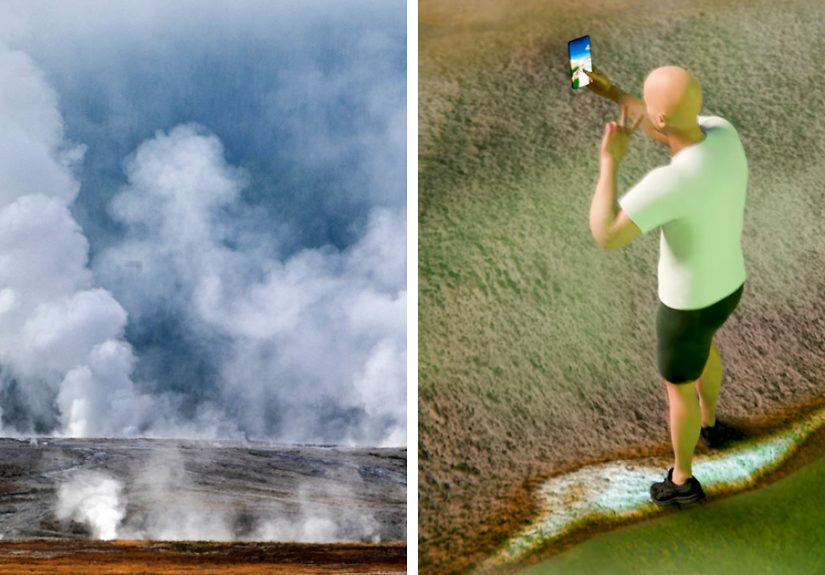
The viral clip, created by a YouTuber fascinated with disasters and science
explainers, dramatizes a Yellowstone accident from 2016. Using a 3D model of a
human body, the video walks viewers through the timeline of what happens after a
person falls into a superheated, acidic pool:
- Impact with near-boiling water
- Instant, full-body scalding
- Progressive breakdown of skin and muscle tissue
- Eventual dissolution of most soft tissues in less than 24 hours
According to coverage of the simulation, the creator didn’t just guess; they
reportedly drew on the official incident report, geothermal studies, and
research on how acid interacts with organic tissue.
The result is something halfway between a science lesson and a horror short the
kind of content that goes viral because it’s both terrifying and impossible to look
away from.
While the style and pacing could easily sit on a Bored Panda “horrifying science
facts you wish you didn’t know” list, the video is grounded in a real, devastating
story.
The Real Tragedy Behind the Animation: The Colin Scott Case
The simulation is based on the death of 23-year-old Colin Scott, who died in
Yellowstone National Park on June 7, 2016. Scott and his sister left the designated
boardwalk in the Norris Geyser Basin area, reportedly looking for a place to soak
an illegal and very dangerous activity sometimes called “hot potting.”
According to park documents, Scott walked several hundred feet off the path to the
edge of a thermal pool. When he leaned over to test the water, he slipped and fell
in. His sister, who had been recording video on her phone, ran for help, but there
was no quick way to rescue someone from a pool like that.
Rangers later found remains and some personal belongings in the water including
his wallet and flip-flops but a lightning storm and the dangerous conditions cut
the recovery effort short. When they returned the next day, the pool was empty of
remains. The extreme heat and acidity of the water had destroyed his body overnight,
a conclusion confirmed in official reports and news coverage.
This is the emotional core the simulation is built on. It’s not a fictional what-if;
it’s an attempt to visualize what scientists, rangers, and investigators already
know about Yellowstone’s most volatile waters.
Why Yellowstone’s Hot Springs Can Literally Dissolve a Body
To understand why this story is even possible, you have to know a bit about
Yellowstone’s geothermal chemistry. Those rainbow pools that look like mystical
portals? Many of them are essentially open-air pressure cookers full of hot,
acidic water.
Scalding Temperatures at High Elevations
Yellowstone sits at a high elevation, so water boils at around 199°F (93°C) instead
of the usual 212°F (100°C). Measurements in geyser basins routinely show pools at
or near that boiling point. Some of the hottest features recorded
temperatures of about 100°C during investigations into thermal accidents.
At those temperatures, even neutral-pH water can cause severe burns in under a
second. You can’t “get used to it.” You can’t slowly lower yourself in. If you fall
in, you’re essentially being submerged in boiling water.
Acid That Eats Through Organic Tissue
Norris Geyser Basin, where Scott’s accident took place, is one of the hottest and
most acidic thermal areas in Yellowstone. The National Park Service notes that many
of the waters there are acidic; Echinus Geyser, for example, has a pH around 3.5,
similar to vinegar.
Studies of Yellowstone’s hydrothermal waters show that some pools and outflows in
the region are acid-sulfate systems with pH values between 1 and 5 similar to
stomach acid at the low end.
That acidity is driven by volcanic gases like hydrogen sulfide, which microbes help
turn into sulfuric acid.
Combine that with boiling temperatures, and you get water that can break down soft
tissues very quickly. Multiple reports on the Scott case and other hot spring
accidents describe bodies dissolving or being reduced to partial remains within a
day.
A Perfect (Deadly) Chemistry Experiment
From a grimly scientific point of view, a Yellowstone hot spring is a highly
efficient biological disposal system: hot, acidic, constantly circulating, and full
of dissolved minerals. Soft tissues like skin and muscle are especially vulnerable.
Bones last longer, but over time even those can be weakened and break apart.
It’s not just humans, either. In 2025, tourists watched in horror as a bison
stumbled into a hot spring and died in the scalding water. Officials noted that the
nearly boiling temperatures would gradually break down the carcass, leaving mainly
bones.
The simulation that’s now going viral is essentially showing this process in fast
forward: heat, acid, circulation, dissolution.
How the Simulation Recreates the Science (Without the Gore)
One reason the video gained traction is that it doesn’t rely on actual graphic
imagery. Instead, it uses a digital model and a time-lapse style to show what
would happen inside the spring over the course of hours.
Based on descriptions in coverage of the simulation, the progression looks
something like this:
- First seconds: Full-body third-degree burns from boiling water.
- First hour: Outer layers of skin and soft tissue begin to break down.
- Several hours: Muscles and organs soften, detach, and disperse in the turbulent water.
- By the next day: Most soft tissue is gone; only small fragments or bones may remain.
That timeline tracks with what investigators concluded in Scott’s case and what
we know about how heat and acid work together.
The video’s power comes from the way it turns dry phrases like “extreme heat and
acidity dissolved the remains” into something visual you can actually understand.
You don’t see real footage; you see a model slowly disappearing into cloudy,
roiling water. It’s unsettling precisely because it’s plausible.
Why People Can’t Stop Sharing It
So why is this story everywhere? On the surface, it’s classic viral-content
territory: real-life horror meets science explainer meets dark curiosity. But
there’s more going on.
Morbid Curiosity From a Safe Distance
Humans have always been drawn to stories of danger especially when they come with
the reassurance of “this happened to someone else, somewhere else, and I’m safe on
my couch.” The video lets viewers explore a worst-case scenario without being in
any actual danger.
The “I Had No Idea It Was That Bad” Factor
Many people see photos of Yellowstone’s hot springs and think “spa day,” not
“instant-death boiling acid.” The simulation shatters that illusion. The comments
on coverage of the video are full of variations on:
- “I knew the water was hot, but not that it could dissolve a body.”
- “I’ll never let my kids step off those boardwalks, ever.”
In that sense, the video functions as a brutal but effective public-safety message.
The Internet’s Love of Edutainment
Finally, this fits into a broader trend: educational horror. Think volcanic
simulations, tsunami reconstructions, plane crash breakdowns. We like information,
but we also like a little adrenaline with it. This hot spring simulation delivers a
strong dose of both.
What the Viral Story Gets Right and Wrong
While the video is grounded in real science and a real case, it’s still a
dramatization. That means it nails some things and glosses over others.
What It Gets Right
- The danger is real. Yellowstone really does have pools hot and acidic enough to dissolve soft tissues in less than a day.
- Leaving the path is deadly. Almost every serious thermal injury in the park involves someone stepping off designated trails or ignoring warnings.
- Recovery is often impossible. Once someone falls in, rescuers are limited by both safety and chemistry.
Where It Can Mislead
-
The emotional cost. No animation can capture the trauma for family, witnesses, or first responders.
Turning a tragedy into “content” risks making it feel like just another spooky
clip in the algorithm. -
Pain and time. The video may unintentionally suggest that death is
instant and painless. While severe burns can cause rapid unconsciousness, those
initial seconds are almost certainly excruciating. -
The “it could never be me” mindset. Some viewers might think only
reckless thrill-seekers are at risk. In reality, even a momentary distraction or
a misplaced step near thin crust can be enough.
Staying Safe Around Hot Springs (Yellowstone and Beyond)
If there’s one useful takeaway from a video like this, it’s that geothermal areas
deserve the same respect you’d give an industrial chemical plant or a live
volcano because that’s basically what they are.
Simple Rules That Save Lives
- Stay on boardwalks and marked trails. They’re not there to “ruin the fun”; they’re built directly over slightly safer ground.
- Assume the crust is fragile. That gorgeous white or pastel “beach” around a pool can be a thin layer over scalding water or mud.
- Keep kids and pets close. Curious little feet can cover a lot of distance in a few seconds.
- Respect warning signs. “Danger: Thermal Area” means “this can kill you quickly,” not “this might be mildly unpleasant.”
- Never treat a hot spring as a bath. “Hot potting” in Yellowstone is illegal for a reason.
If Something Goes Wrong
If someone does fall into a hot spring or breaks through thin crust:
- Do not jump in after them you’ll likely become a second victim.
- Call or alert park rangers immediately.
- Follow ranger instructions; they are trained for thermal incidents.
Real heroism in a geothermal area often looks like staying calm, calling for help,
and not adding to the casualty count.
Reflections and Experiences Around the Viral Hot Spring Story
Watching the simulation and then reading the underlying reports is a strange,
sobering experience. On one hand, the video is polished, almost cinematic. On the
other, the reality it represents is painfully human: a young person on a trip,
taking a wrong step that can’t be undone.
People who’ve actually visited Yellowstone often describe an odd contrast. By the
parking lot and boardwalk entrance, it feels like any other busy national park:
kids with ice cream, parents juggling cameras, tour buses idling. But as soon as
you step into the geyser basins, everything changes. The air smells like sulfur.
Steam seeps out of the ground. The earth hisses. Pools shift color with temperature
and microbial life. You can feel the heat radiating off the ground, even on a cool
day.
Many visitors say that once you’ve seen those pools up close, you can’t imagine
willingly walking off the boardwalk. The idea of searching for a “natural hot tub”
there feels surreal. The viral simulation taps into that same cognitive dissonance:
we know, intellectually, that Yellowstone sits on top of a massive volcano, but the
bright colors and clear water still trick our brains into seeing “safe” and
“inviting.”
For some viewers, the video becomes a teaching tool. Teachers use similar clips in
geology or earth science classes to explain geothermal systems and volcanic energy.
Parents planning a Yellowstone trip might show a toned-down explanation to older
kids: not to scare them for fun, but to make the rules feel real. “This is why you
don’t hop the rail for a better selfie” lands differently when you’ve seen even a
stylized version of what can happen.
People who’ve had near-misses in other wild settings slipping on wet rocks near a
waterfall, getting too close to a cliff edge, underestimating ocean waves often
see their own stories reflected in the Scott case. The specifics differ, but the
pattern is familiar: a beautiful place, a small decision to bend the rules, and
suddenly a situation that spirals out of control.
There’s also a broader internet conversation happening around videos like this.
Where’s the line between raising awareness and exploiting tragedy? Is turning a
real person’s death into a viral “did you know?” clip inherently disrespectful, or
can it be a powerful cautionary tale that prevents future deaths? Honest people can
disagree but one constructive response is to remember the victim as a human
being, not just a case study, and to let their story change how we behave in
similar places.
If there’s any “takeaway experience” worth having here, it’s this: wild places are
gorgeous, but they are not curated attractions built entirely for our convenience.
Yellowstone’s hot springs were boiling, acidic windows into the Earth long before
we built parking lots next to them. When a simulation like this goes viral, it
offers a grim but valuable reminder: the rules, railings, and boardwalks aren’t
there to spoil the fun they’re there so you can go home with photos and stories
instead of becoming one.
So yes, the title “Horrifying Simulation Of Man Who Fell Into Hot Spring And
Dissolved In A Day Goes Viral” sounds like something ripped straight from a Bored
Panda headline generator. But beneath the click-worthy phrasing lies a simple,
serious message: respect the places you visit, especially when the ground itself is
simmering under your feet.