Table of Contents >> Show >> Hide
- Why This LA Story Still Resonates
- What Makes Handmade Ceramic Hardware So Appealing?
- The Juju Made Effect: Small Object, Big Identity
- Where Handmade Ceramic Hardware Works Best
- How to Style Ceramic Hardware Without Overdoing It
- Practical Tips Before You Buy
- Why Handmade Hardware Keeps Winning
- Experience Section: Living With Handmade Ceramic Hardware
- Conclusion
- SEO Tags
There are home upgrades that require spreadsheets, contractor quotes, and one emotionally exhausting trip to a tile showroom. Then there are upgrades like handmade ceramic hardware, which ask only for a screwdriver, a little taste, and the willingness to admit that your old cabinet knobs have been phoning it in for years.
That is part of the charm behind the story of an LA blogger turned maker whose ceramic pieces helped remind design lovers that hardware is not just the practical thing you grab when your hands are full of groceries. It is a detail with personality. In the case of Juliana Hung, known as Juju, it is also a lesson in how blogging, industrial design, and handmade craft can collide in a way that feels fresh, useful, and quietly beautiful. Her Juju Made ceramic knobs, with their white glaze and sculptural shapes, helped elevate a humble category that had long been stuck between “builder-basic” and “grandma’s porcelain goose phase.”
Today, handmade ceramic hardware still feels relevant because it sits at the intersection of several enduring design desires: tactile surfaces, artisanal craftsmanship, small-batch individuality, and easy updates with high visual impact. In other words, it is the kind of home detail that can make a room feel curated without forcing you to refinance your happiness.
Why This LA Story Still Resonates
The appeal of handmade ceramic hardware is not just about aesthetics. It is also about origin. When a blogger or designer begins making physical objects, the work often carries a point of view that feels more personal than mass-market decor. Juliana Hung’s path from industrial designer with a popular blog to founder of Juju Made gave her hardware a built-in narrative. These were not anonymous knobs dropped out of a giant catalog; they were objects shaped by a person with a visual language, a following, and a clear sense of proportion.
That origin matters because hardware is one of the most intimate design elements in a home. You touch it every day. Kitchen drawers, bathroom vanities, linen cabinets, dressers, pantry doors, even walls if a knob doubles as a hookthese are constant points of contact. Good hardware has to perform, but great hardware also creates a tiny design moment each time your hand reaches for it.
That is why ceramic pieces from independent makers continue to stand out. They offer the warmth and variation that many homeowners now crave, especially as interior design moves away from sterile perfection and toward rooms that feel layered, lived-in, and human.
What Makes Handmade Ceramic Hardware So Appealing?
1. It brings texture to flat surfaces
Cabinet fronts are often broad planes of painted wood, laminate, or veneer. Ceramic hardware interrupts that flatness with a soft, tactile surface. Even in a minimalist kitchen, a rounded ceramic knob can add dimension without screaming for attention. It is the design equivalent of a great side character: not the star of the movie, but somehow the one everybody remembers.
2. It makes small spaces feel custom
One of the smartest things about hardware is that it can dramatically change the feel of a room without changing the room itself. A stock vanity can feel custom. A plain dresser can feel collected. A rental kitchen can look more intentional. Swapping hardware is consistently recommended by design experts because it is relatively affordable, often reversible, and surprisingly transformative.
3. It celebrates imperfection in a good way
Handmade ceramics carry slight variations in shape, glaze, edge, and finish. That is not a flaw. That is the point. In a world of factory-perfect repetition, ceramic hardware feels alive. Each piece can have a slightly different personality, and those subtle differences add depth to a room. The result is not messy. It is soulful.
4. It softens hard materials
Modern interiors often rely on stone, metal, glass, and painted cabinetry. Ceramic knobs help soften those surfaces. They introduce an organic note that can keep kitchens and bathrooms from feeling too sharp or too cold. White ceramic, in particular, works beautifully because it reads as clean and sculptural rather than fussy.
The Juju Made Effect: Small Object, Big Identity
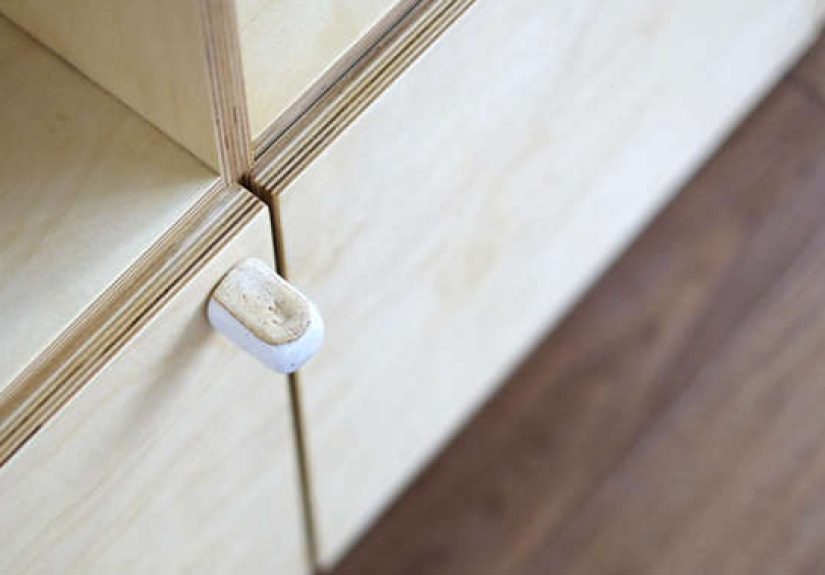
What made Juju Made’s ceramic hardware memorable was not just that it was handmade. It was the combination of restraint and play. The knobs were glazed in white, which made them easy to place in a wide range of interiors, but their forms were sculptural enough to feel special. Some shapes were rounded, some half-moon-like, and some versatile enough to function as wall hooks. That dual-purpose quality is especially smart, because it extends the life of the design language beyond cabinetry and into entries, bathrooms, and bedrooms.
There is a lesson here for anyone shopping for artisan hardware: the best pieces do not rely on loud color or novelty to stand out. They rely on form, finish, and material integrity. Ceramic hardware works best when it feels intentional, not gimmicky. It should look like it belongs in the room, even if it happens to be the one detail that gets all the compliments.
It also helps that ceramic hardware photographs beautifully. Bloggers understood early that small details can carry a room in an image, and social media only amplified that truth. A close-up of a handmade knob on a painted cabinet door is catnip for design lovers because it communicates style, craft, and restraint all at once.
Where Handmade Ceramic Hardware Works Best
Kitchens
Kitchens are the most obvious place for a hardware upgrade, and for good reason. Cabinet knobs and drawer pulls are often called the jewelry of the kitchen because they are the finishing touch that can shift the entire mood of the room. Handmade ceramic knobs work especially well in white kitchens, warm wood kitchens, cottage-inspired spaces, and rooms that need one soft note to balance stone counters or metal fixtures.
In a kitchen with simple cabinetry, ceramic knobs can provide just enough personality without disrupting clean lines. In a more traditional or vintage-inspired kitchen, they can reinforce a collected look. And in a rental kitchen, they are one of the easiest ways to add style without committing to a renovation. Just save the original hardware in a labeled bag instead of launching it into the junk drawer abyss.
Bathrooms
Bathroom vanities are another great fit. Handmade ceramic knobs bring softness to painted cabinetry and pair beautifully with marble, quartz, or ceramic tile. A standard vanity can look more custom simply by switching out generic hardware for pieces with texture and shape. This is particularly effective in small bathrooms, where one strong detail can do a lot of visual heavy lifting.
Dressers and storage pieces
Do not stop at built-ins. Dressers, nightstands, armoires, and credenzas all benefit from ceramic hardware. A thrifted wood dresser with handmade knobs can look far more elevated than its price tag suggests. It is one of the easiest ways to make secondhand furniture feel intentionally styled rather than temporarily tolerated.
Wall hooks and multipurpose spots
One of the most charming aspects of Juju Made’s pieces is that some can work as hooks as well as knobs. That flexibility opens up all sorts of possibilities: entryway drop zones, bath towels, necklaces, hats, aprons, or the denim jacket you claim you are “definitely putting away later.” Handmade ceramic hooks can make these practical zones feel less utilitarian and more considered.
How to Style Ceramic Hardware Without Overdoing It
Handmade ceramic hardware tends to look best when the surrounding materials let it breathe. If your cabinets are already heavily detailed, choose simpler ceramic forms. If your room is minimal, a more sculptural knob can become the punctuation mark that keeps the space from reading flat.
White ceramic is particularly useful because it can move across styles with ease. It looks crisp against dark paint, soft against pale wood, and quietly sophisticated against white cabinets. If you are mixing materials, ceramic pairs especially well with unlacquered brass, aged bronze, oak, walnut, and natural stone. That mix of hard and soft, shiny and matte, is where the magic happens.
Scale matters too. Oversized hardware can look dramatic, but it is not always the right move for ceramic. Part of ceramic’s appeal is its hand-feel, so choose a size that feels comfortable and proportionate. You want something that feels substantial, not something that makes every drawer open like a tiny strength-training session.
Practical Tips Before You Buy
Measure first, fall in love second
Before ordering new hardware, measure your existing hole spacing. This is especially important for drawer pulls. Matching the center-to-center width of your current hardware can save you from drilling new holes, patching old ones, and saying words your cabinets do not deserve to hear.
Think about placement
Placement changes how expensive hardware looks. On upper cabinet doors, knobs or pulls typically align with the frame rail for a clean, intentional appearance. On lower drawers, placement may shift slightly above center so the hardware appears visually balanced. Tiny adjustments make a noticeable difference.
Consider durability honestly
Ceramic is durable for everyday use, but it is still ceramic. That means you should treat it with a little respect. Avoid slamming drawers, especially on heavily used cabinets. If you have small kids who open everything like they are auditioning for an action movie, choose sturdy mounting hardware and check it periodically.
Clean gently
Handmade hardware should not be attacked with abrasive pads or harsh cleaners. A soft cloth, mild soap, and lukewarm water are usually enough. The goal is to preserve the finish, not strip it like you are interrogating it for design secrets.
Why Handmade Hardware Keeps Winning
Trends come and go, but handmade ceramic hardware has a few things working in its favor that feel bigger than trend cycles. First, it taps into the ongoing appetite for authenticity. People want homes that feel personal rather than mass-produced. Second, it offers a relatively accessible way to support independent makers and design-driven small businesses. Third, it provides emotional value. A handmade object carries the sense that someone made a choice, took time, accepted variation, and valued the result.
That emotional value is often missing in big renovation conversations. We talk about resale value, square footage, appliance packages, and stone slabs, but many of the details that make a home memorable are smaller and more tactile. Hardware is one of those details. It is often the first thing your hand meets, and that makes it oddly powerful.
There is also a broader design shift toward warmth, texture, and craftsmanship. Whether you call it cottage-inspired, collected, layered, or simply less boring, the mood is the same: people want interiors with feeling. Handmade ceramic hardware delivers that in a format that is small, useful, and visually rich.
Experience Section: Living With Handmade Ceramic Hardware
I did not fully understand the appeal of handmade ceramic hardware until I replaced a set of generic pulls on an old cabinet with a few ceramic knobs that had slightly uneven glazing and a shape that felt more sculpted than manufactured. Before that, I thought hardware was mostly a checkbox item. You chose something in brass or black, made sure it fit the holes, and moved on with your life. That is the practical approach, and there is nothing wrong with it, but it misses the pleasure part.
What surprised me first was how often I noticed the knobs during ordinary routines. Morning coffee. Putting away clean dishes. Reaching for hand towels. Opening a drawer for scissors because, as always, the scissors had migrated. Each time, the hardware felt pleasant in the hand in a way that metal often does not. Ceramic has a softness to it even when it is cool. It feels quiet, almost calm, and that small sensory difference changed how the room felt over time.
The second surprise was visual. In photos, handmade ceramic hardware can look like a subtle detail. In person, it has much more presence. Light catches the glaze differently throughout the day. Slight variations in form become part of the charm instead of something to hide. On a painted cabinet, the knobs almost looked like tiny pieces of sculpture. They made the entire piece of furniture seem more thoughtful, even though the actual upgrade took less time than scrolling for takeout.
I also learned that ceramic hardware changes the emotional temperature of a space. A kitchen can be full of hard-working materialsstone, steel, painted wood, glass, tileand all of those surfaces are useful, but they can also feel a little brisk. Ceramic introduces a note of humanity. It is not flashy. It just softens everything around it. That effect was strongest in the bathroom, where even one small swap made the vanity feel less generic and more like a piece somebody had chosen on purpose.
There were practical lessons too. Measuring mattered. More than once. I learned very quickly that “that looks about right” is not a recognized unit in home improvement. I also learned that good hardware encourages you to notice everything else. Once the knobs were beautiful, suddenly the paint color needed to be a touch warmer, the towels needed to stop looking like they came from a gas station, and the soap dispenser had to earn its place. Handmade details have standards, apparently.
What stayed with me most, though, was the sense of connection. Mass-market hardware can look nice, but handmade ceramic pieces feel like objects with a backstory. They suggest a hand, a kiln, a glaze test, a decision. They remind you that homes are built from dozens of tiny encounters, not just major renovations. A knob is a small thing, but it is also one of the few objects in a room that you see, touch, and use every day. When that object is beautiful, the effect is cumulative. It does not shout. It gently improves the mood over and over again.
That is why the idea of handmade ceramic hardware from an LA blogger continues to resonate. It is not only about one designer or one collection. It is about what happens when someone treats an ordinary household object like it deserves imagination. Once you live with that kind of detail, the old builder-grade hardware starts to look like it owes you an apology.
Conclusion
Handmade ceramic hardware from an LA blogger is more than a niche design story. It is a reminder that the smallest elements in a room can carry the most personality. Juliana Hung’s Juju Made knobs helped spotlight a category that many people overlook, proving that cabinet hardware can be sculptural, tactile, versatile, and deeply expressive without losing its everyday usefulness.
For homeowners, renters, and design obsessives alike, ceramic hardware offers an unusually smart upgrade: easy to install, rich in texture, and capable of making standard cabinetry feel custom. It works in kitchens, bathrooms, furniture makeovers, and even on the wall as hooks. Most importantly, it brings a sense of craft into spaces that often rely too heavily on uniformity.
And really, that may be the best reason to love it. In a home full of practical things, handmade ceramic hardware manages to be practical and poetic. Not bad for something smaller than your palm.