Table of Contents >> Show >> Hide
- The Moment the Verdict Landed
- A Decade-Long Case That Refused to Fade
- What Prosecutors Said Happened
- How Murder-for-Hire Cases Get Proven
- The Charges, in Plain English
- The Sentencing: Life Without Parole, Plus Additional Time
- Why the “Grandma” Angle Hits So Hard
- What This Story Says About High-Conflict Custody Battles
- FAQ: The Questions People Keep Asking
- Conclusion: The Price of “Winning” at All Costs
- Real-World Experiences Around a Story Like This (500+ Words)
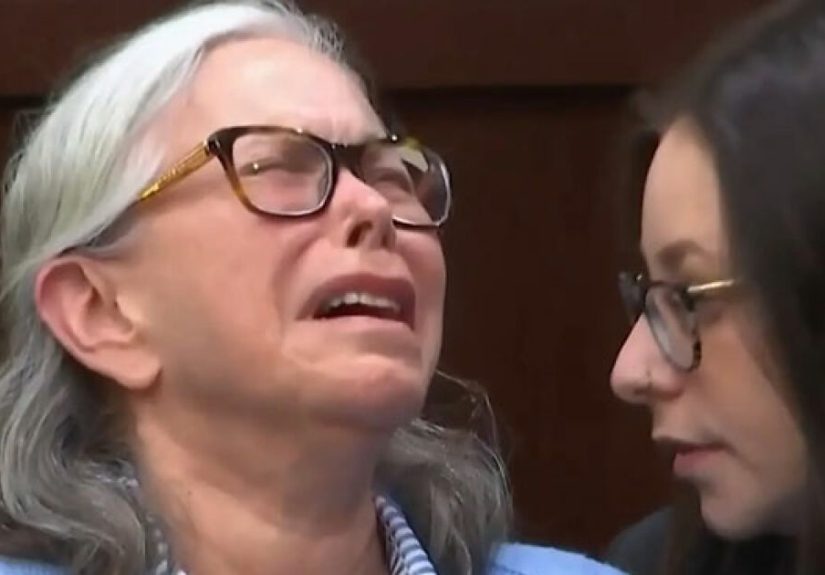
A “grandma” sobbing in court is one of those visuals that short-circuits the brain. We’re trained to associate grandmothers with casseroles, birthday cards, and the occasional wildly unfiltered comment at Thanksgivingnot first-degree murder. And yet, in Tallahassee, a jury convicted 75-year-old Donna Adelson (often described in coverage as the matriarch of a wealthy South Florida family) in a murder-for-hire case that has been building like a slow-boil thriller for more than a decade.
This isn’t just a headline built for shock value. It’s a case about a bitter custody dispute, a long investigative timeline, and the kind of “family conflict” that spirals so far out of bounds it ends in tragedy. Let’s unpack what happened, why it mattered, and what the verdict tells us about how murder-for-hire cases are prosecutedand how quickly “winning” can turn into losing everything.
The Moment the Verdict Landed
When the verdict came down, the courtroom didn’t get a tidy, TV-ready reaction. It got something raw: audible emotion, shaking, crying, and a judge who had to pause proceedings to restore order. Reports described Adelson reacting as the guilty verdict for first-degree murder was announced, prompting the judge to warn her against further outbursts in front of the jury. That split-second became the image many people will rememberbecause it’s human, messy, and deeply unsettling.
But the tears weren’t the story. The story was the decision behind them: a jury concluded the prosecution proved, beyond a reasonable doubt, that Adelson was guilty of participating in a murder-for-hire plot connected to the 2014 killing of Florida State University law professor Dan Markel.
A Decade-Long Case That Refused to Fade
Dan Markel was shot and killed in 2014 in Tallahassee, where he taught at Florida State University. By the time Adelson’s trial reached a verdict in September 2025, the case had become a long-running sagaone that kept resurfacing through arrests, trials, convictions, and new allegations as investigators and prosecutors worked through layers of intermediaries.
Why this case hooked so many people
Some cases attract attention because they’re mysterious. This one attracted attention because it was complicated. The reporting highlighted a combustible mix:
- A contentious divorce and custody battle with high stakes and long memory.
- Relocation conflictthe kind that turns “Where should the kids live?” into a war over identity, control, and family loyalty.
- Affluence and accessthe prosecution’s portrait of a family with resources, influence, and the ability to move pieces on the board.
- A “middleman” structure common in murder-for-hire plots, which can make cases harder to proveand even more fascinating to follow.
If courtroom drama were a streaming series, this one wouldn’t be a limited run. It’s the kind of story that keeps getting “renewed” because the legal system is methodical and slow, and because conspiracies don’t unravel neatly.
What Prosecutors Said Happened
In broad strokes, prosecutors argued that Markel’s murder wasn’t randomit was arranged. The state’s theory, as reflected in major coverage, was that the killing was tied to Markel’s refusal to allow his ex-wife (Adelson’s daughter, Wendi Adelson) to relocate with their children from Tallahassee to South Florida. A court ruling prevented the move, and prosecutors told jurors that resentment over that decision helped drive the plot.
According to reporting, multiple people were convicted in connection with the murder-for-hire plan, including individuals described as the hired shooters and an intermediary described as the “go-between.” Adelson’s son, Charlie Adelson, was also convicted and sentenced to life in prison in the broader case timeline. (Important note: Wendi Adelson has denied involvement and has not been charged.)
The classic “buffer” pattern in murder-for-hire cases
Murder-for-hire conspiracies often look like a human game of telephoneexcept the final message is “do the worst thing imaginable.” The alleged structure described across coverage follows a familiar pattern:
- People with a motive (custody, money, revenge, control) who want distance from the crime.
- Intermediaries who connect the “why” to the “how.”
- Hired perpetrators who commit the violence.
- Payments and logistics that can be traced through records, testimony, and communications.
That’s why these cases often take years. The very point of a murder-for-hire plot is to create separationlegal and emotionalbetween the planner and the trigger puller. Prosecutors have to bridge that gap with evidence solid enough to hold up under cross-examination and appeals.
How Murder-for-Hire Cases Get Proven
If you’ve ever watched a crime show and thought, “Why don’t they just know who did it?”murder-for-hire is the answer. The entire concept is built on plausible deniability. So prosecutors typically lean on a “mosaic” approach: many pieces that, together, form a picture.
Common evidence threads
- Cooperating witnesses (sometimes participants) who trade information for reduced sentences.
- Call and location records that show contact patterns before and after key events.
- Financial evidence suggesting payments, reimbursements, or unexplained transfers.
- Statements and behavior that prosecutors argue reveal intent, planning, or consciousness of guilt.
- Trial-to-trial consistencywhen earlier convictions create a roadmap for later prosecutions.
In this case, public reporting described a long chain of convictions and a narrative of orchestration connected to the family conflict. That history matters: each completed trial can clarify facts, lock in testimony, and refine how prosecutors explain the alleged conspiracy to a jury.
The Charges, in Plain English
When headlines say “guilty of murder-for-hire,” that’s a shorthand. Courtrooms speak a more specific languageone that matters because each charge has distinct elements the state must prove.
First-degree murder
First-degree murder generally involves premeditation. In a murder-for-hire context, the state’s argument is essentially: this wasn’t a heat-of-the-moment tragedy; it was planned. A jury verdict on this count signals jurors accepted that planning element beyond a reasonable doubt.
Conspiracy
Conspiracy is about agreement and intent. You don’t have to personally commit the act of violence to be convicted of conspiracywhat matters is whether prosecutors proved an agreement to commit the crime and steps taken to advance it.
Solicitation
Solicitation focuses on asking or encouraging someone else to commit a crime. In other words, it targets the “recruitment” momentwhere a plan turns into an assignment.
Those chargesfirst-degree murder, conspiracy, and solicitationshow up repeatedly in murder-for-hire cases because they address different roles: the planner, the organizer, the connector, and the person who ultimately carries out the act.
The Sentencing: Life Without Parole, Plus Additional Time
After the conviction, Adelson was sentenced to life in prison without the possibility of parole for the murder charge, with additional time for the other counts to be served consecutively, according to reporting. At sentencing, she maintained her innocence and framed the outcome as unjust, while the judge criticized what he characterized as a lack of remorse and emphasized the strength of the evidence described at trial.
Sentencing moments often reveal the emotional collision at the center of these cases: the convicted person insisting they didn’t do it, the court declaring it’s convinced they did, and the victim’s family describing the kind of grief that doesn’t fade just because a verdict is finally reached.
Why the “Grandma” Angle Hits So Hard
“Grandma” is a shortcut word. It tells your brain: safe, familiar, nurturing. So when the headline pairs it with “murder-for-hire,” the contrast becomes the hook.
But there’s also a quieter reason it hits: families are where we expect conflict to be survivable. You can hate your ex. You can resent your in-laws. You can argue about custody schedules and school zones and holiday pickups. We assume those fights, however ugly, stay within the boundaries of law and decency.
This caseat least as prosecutors presented it and jurors ultimately acceptedillustrates what happens when conflict becomes identity, and identity becomes justification. When someone starts thinking, “We’re not just disagreeingwe’re being wronged,” the moral guardrails can loosen. And that’s when the unthinkable starts to feel, to a person in that mindset, weirdly “logical.”
What This Story Says About High-Conflict Custody Battles
Let’s be crystal clear: most custody disputes do not lead to violence. Not even close. But high-conflict custody battles can create an emotional ecosystem where bad ideas breed fastespecially when multiple relatives get involved, everyone picks a side, and “protecting the kids” becomes a slogan people use to excuse almost anything.
Four ways conflict escalates in families
- Control masquerades as concern. “I’m just trying to help” can become “I must decide.”
- Echo chambers form. Family members reinforce the same grievance until it feels like fact.
- Short-term wins replace long-term thinking. The goal shifts from “stable kids” to “beat him.”
- Boundaries collapse. Everyone gets a vote in a relationship they’re not actually in.
In coverage of this case, the custody and relocation conflict was repeatedly highlighted as central to the alleged motive. And whether you view the legal outcome through the prosecution’s lens or the defense’s objections, the broader warning stands: turning family conflict into a crusade can have catastrophic consequences.
FAQ: The Questions People Keep Asking
Was this an isolated case or part of a bigger prosecution?
Public reporting describes multiple convictions connected to the killing over several years, reflecting a broader prosecution strategy focused on the alleged network behind the murder-for-hire plot rather than a single defendant.
Has Dan Markel’s ex-wife been charged?
No. Reporting consistently states that Wendi Adelson has denied involvement and has not been charged.
Why did it take so long?
Cases involving multiple defendants, intermediaries, and cooperating witnesses often move slowly. Each trial can produce testimony and evidence that strengthens or clarifies the case against the next person in the alleged chain.
Conclusion: The Price of “Winning” at All Costs
One of the most haunting parts of murder-for-hire cases is how ordinary the motive can sound at the start: a custody fight, a relocation dispute, a grudge that calcifies. Then, step by step, it becomes something elsesomething irreversible.
The image of a grandmother crying at a guilty verdict is powerful. But the deeper takeaway is colder: if jurors believed the prosecution’s case, then those tears came at the end of a path paved with decisionschoices that took a family conflict and turned it into a death. In the end, nobody “wins.” Not the family fractured by blame. Not the children forced to grow up inside the fallout. Not the person who spends life in prison insisting they’re innocent. And certainly not the man who never got the chance to grow old.
Real-World Experiences Around a Story Like This (500+ Words)
True-crime headlines can make cases feel like entertainment, but real people experience the aftermath in ways that don’t fit neatly into a verdict form. While every case is unique, stories like “Grandma in tears after a jury finds her guilty” tend to echo a few common, very human experiencesespecially for jurors, families, and communities caught in the blast radius.
1) The jury experience: heavy, mundane, and unforgettable
People often imagine jurors spending days in dramatic suspense, like they’re in a courtroom movie. In reality, the experience is usually a strange mix of routine and gravity: early mornings, long stretches of listening, legal instructions that feel like a foreign language, and the constant awareness that your decision will change lives. Jurors in a high-profile murder-for-hire case aren’t just weighing “Did something bad happen?”they’re sorting intent, planning, credibility, and whether a chain of people really connects the defendant to the crime.
And then comes the moment of the verdict, where the courtroom energy shifts in a second. Some jurors describe that moment as physically intenseheart pounding, stomach droppingbecause you’re watching the consequence of your decision land on a human being in real time. If the defendant cries, shakes, or collapses emotionally, it doesn’t automatically change the logic of the verdict, but it can leave an imprint. You can think someone is guilty and still feel shaken by the sight of them breaking down.
2) The victim’s family experience: grief with paperwork attached
Families of victims often live with a weird contradiction: they want the process to move faster because the waiting hurts, but they also want it done correctly because a weak case can collapse. In long-running prosecutions, grief gets “scheduled.” Families end up measuring time in hearings, trial dates, continuances, and sentencing daysmilestones nobody asked for. When a case lasts years, people also relive the loss repeatedly. Each trial can reopen wounds: the same facts, the same photos, the same last-day timeline.
Even when a verdict arrives, closure is rarely a clean ending. It can feel more like a door clicking shut on one chapter while leaving others unresolvedespecially if appeals are expected, or if questions remain about other potential involvement.
3) The children’s experience: loyalty conflicts and lifelong echoes
In cases rooted in custody conflict, the children become the silent center of the storm. Even if they’re not physically present in court, their lives are shaped by decisions made by adults who said they were acting “for the kids.” As those children grow up, they may face identity questions that feel impossible: How do you love your family and still confront what happened? What do you do with the fact that the adults around you were fighting over you while everything burned down?
These situations can create loyalty bindsfeeling that caring about one side is betrayal of the other. Many people who grow up in high-conflict family systems describe needing years to untangle what was “love,” what was “control,” and what was simply chaos wearing a caring mask.
4) The community experience: a lingering “how did this happen here?”
When a prominent local figure is killedespecially a professional like a law professorcommunities often experience a collective shock that lasts. People replay the same questions: Was it random? Was it personal? Could it happen again? And when the story points toward a family-driven conspiracy, the discomfort gets sharper. It challenges the comforting belief that danger is always “outside.” Sometimes, as ugly as it sounds, the threat is domesticborn out of relationships, resentment, and private wars that spill into public tragedy.
That’s the emotional undercurrent behind headlines like this. The tears are real. The consequences are real. And the long shadow of the storyon jurors, families, and communitiesdoesn’t end when the courtroom lights turn off.