Table of Contents >> Show >> Hide
- Why a Firewood Log Carrier Matters More Than People Think
- Types of Firewood Log Carriers
- How to Choose the Best Firewood Log Carrier
- Safety and Ergonomics: Don’t Let the Carrier Hurt You
- Firewood Quality, Storage, and Carrier Performance
- Best Use Cases and Carrier Setups
- Maintenance: Keep Your Log Tote Working for Years
- Common Mistakes to Avoid
- Buyer’s Quick Checklist
- Real-World Experiences With Firewood Log Carriers (Extended Section)
- Conclusion
If you heat with wood, you already know this truth: firewood has two modes“peaceful rustic charm” and “tiny bark explosion across your clean floor.”
A good firewood log carrier sits right in the middle and saves the day. It keeps splinters contained, protects your back (or at least your dignity),
and makes hauling logs from pile to hearth way less chaotic.
This guide combines practical advice used by U.S. fire safety organizations, home improvement experts, and fireplace-focused publications to help you choose, use,
and maintain the right log tote. We’ll cover materials, sizing, ergonomics, storage strategy, and real-life usage patterns so you can stop making
six tiny trips and start making one smart one.
You’ll also find buyer checklists, cleaning tips, and a longer “real-world experiences” section at the end for practical scenarios. Whether you run a wood stove
all winter or light a weekend fire pit for marshmallows and storytelling, this article will help you pick a wood carrier bag that actually earns its keep.
Why a Firewood Log Carrier Matters More Than People Think
Most homeowners first buy a carrier for convenience. Then they realize it also improves cleanliness, safety, and fuel quality handling. Without a carrier,
loose logs scrape walls, leave debris trails, and force awkward body positions that strain wrists and lower back. With the right carrier, you get:
- Cleaner floors: bark, dust, and chips stay inside the tote.
- Better load control: balanced handles reduce swinging and dropped logs.
- Fewer trips: larger capacity, smarter stacking, less time outside in freezing weather.
- Safer movement: improved grip and posture for stairs, decks, and thresholds.
- Less indoor clutter: carry only what you need for one burn cycle.
In short, a good carrier turns wood hauling from “winter obstacle course” into a repeatable routine.
Types of Firewood Log Carriers
1) Canvas Log Totes
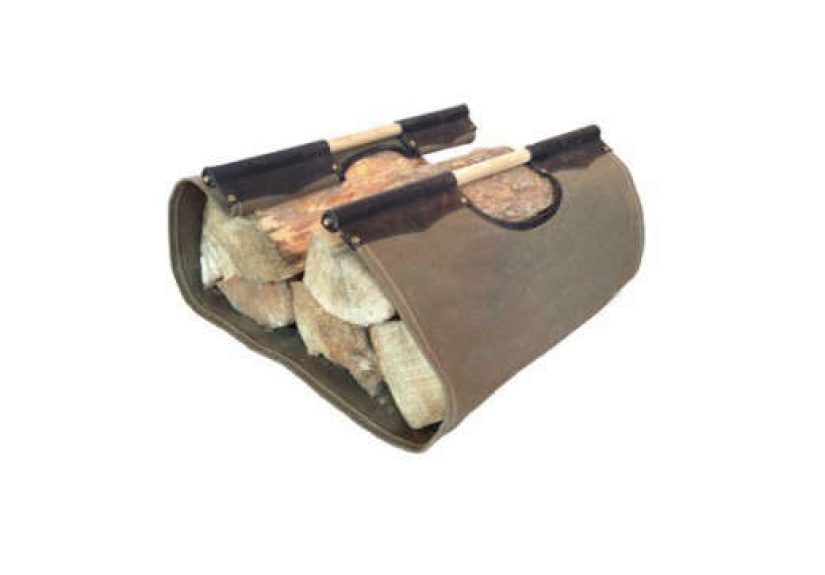
The most common option. Heavy-duty canvas (especially waxed canvas) offers a strong balance of durability, flexibility, and debris control. It folds flat,
stores easily, and usually costs less than leather.
2) Leather and Leather-Trim Carriers
Leather looks premium and ages beautifully, but full-leather carriers are often heavier and pricier. Many homeowners prefer a hybrid: canvas body with leather handles.
That combo delivers comfort where your hands need it and rugged fabric where logs rub.
3) Open-Ended Sling Carriers
These usually have strong handles with open sides, allowing extra-long logs to stick out. Great for oversized splits, less ideal if you want to contain bark and dust.
4) Metal-and-Fabric Hybrids
Some designs include a rigid frame or insert for shape retention. They’re helpful if you dislike floppy bags, but they can be bulky to store.
5) Decorative Indoor Baskets
Attractive near a hearth, but not always ideal for transporting wood from outside. Many people pair a transport carrier with a separate indoor holder.
How to Choose the Best Firewood Log Carrier
Size and Capacity
Match carrier size to your stove or fireplace cyclenot to your ambition at 10 p.m. in January. For many homes, a medium tote holding enough wood for one evening
burn is the sweet spot. Oversized carriers invite overloading and awkward lifting.
Material Weight and Build Quality
Look for reinforced stitching at stress points, riveted handles, dense fabric, and abrasion-resistant bottoms. If you move wood through snow or damp patios,
waxed or treated canvas helps resist moisture and grime.
Handle Comfort
Padded wraps, thicker grips, and handle spacing matter more than marketing photos. Test whether your hands can keep a neutral wrist position.
Narrow handles can dig in fast when carrying heavier hardwood.
Debris Containment
If your home has light rugs, choose a tote with higher side walls and a closed bottom. Open sling designs are convenient, but they can “decorate” your hallway with bark confetti.
Log Length Compatibility
Measure your typical split length before buying. A carrier that’s too short creates unstable loads; too large and logs shift during transport.
Storage Footprint
Collapsible carriers are ideal for smaller homes. Rigid carriers look neat but take up constant floor space.
Safety and Ergonomics: Don’t Let the Carrier Hurt You
A log carrier helps, but physics still wins. Respect load limits, use solid footwear, and avoid twisting while lifting. Occupational ergonomics guidance commonly emphasizes
keeping loads close to the body, bending through hips and knees, and minimizing awkward one-sided carrying. Translation: no heroic one-arm lumberjack moves on icy steps.
Simple Lifting Sequence
- Place the carrier on stable ground near your stack.
- Load heavier logs first for a low center of gravity.
- Squat or hinge at hips, keep chest up, and grip both handles evenly.
- Stand with legs, not lower back; keep the carrier close.
- Take shorter steps, especially near thresholds and stairs.
Home Fire Safety Basics While You’re Here
- Keep anything combustible at least 3 feet from fireplaces and stoves.
- Have chimneys/vents inspected and cleaned regularly by qualified professionals.
- Use working smoke and carbon monoxide alarms.
- Place cooled ashes in a metal container with a lid, away from the house.
Firewood Quality, Storage, and Carrier Performance
Your carrier can only perform as well as your wood prep. Wet or poorly stored logs are heavier, smokier, harder to light, and messier to transport.
Target Dryness
Many U.S. wood-burning best-practice guides recommend seasoned wood with moisture around 20% or less. Drier wood is lighter to carry, burns hotter, and
produces less smoke and creosote risk than green wood.
Stacking and Seasoning
Store wood outdoors, off the ground, with the top covered and sides open for airflow. That setup helps seasoning while reducing mold and pest issues.
“Buy It Where You Burn It”
For campground and regional use, firewood campaigns and federal land managers repeatedly warn against long-distance movement of wood due to invasive insects and diseases.
Local sourcing protects forests and often gives you species better adapted to local burning conditions.
Know Your Measurements
If you buy bulk wood, remember that a full cord is traditionally 128 cubic feet (4′ x 4′ x 8′ stacked). Knowing this helps you compare price, estimate trip counts, and avoid
overpaying for loosely stacked loads.
Best Use Cases and Carrier Setups
Scenario A: Daily Wood Stove Heating
Use two carriers: one rugged outdoor tote for transport and one cleaner indoor bin for staging. This split system reduces mess and extends the indoor carrier’s lifespan.
Scenario B: Occasional Fireplace Ambiance
A medium waxed-canvas tote is ideal. You get enough wood for one evening without dominating your living room.
Scenario C: Fire Pit and Patio Nights
Choose water-resistant fabric and easy-clean surfaces. Outdoor use means mud, dew, and occasional beverage incidents.
Scenario D: Cabin or Campground Weekends
Lightweight collapsible carriers shine here. Pair them with locally purchased firewood to reduce pest transfer risk.
Maintenance: Keep Your Log Tote Working for Years
Routine Cleaning
- Shake out bark and dust after each use.
- Vacuum seams monthly during heavy burn season.
- Spot-clean canvas with mild soap and a damp cloth.
- Avoid soaking leather handles; condition occasionally if needed.
Seasonal Inspection Checklist
- Check stitching at handle anchors.
- Inspect rivets/snaps for movement.
- Look for bottom abrasion or punctures.
- Retire carriers with structural failures before they fail mid-trip.
Common Mistakes to Avoid
- Buying by looks only: A stylish tote that can’t handle weight is décor, not gear.
- Overloading every trip: Faster in theory, risky in practice.
- Ignoring moisture content: Wet wood is heavy, smoky, and frustrating.
- Dragging the bag: Shortens carrier life and tears seams.
- Skipping chimney care: Efficient hauling doesn’t replace safe burning.
- Moving firewood long distances: Not worth the ecological risk.
Buyer’s Quick Checklist
- ✅ Heavy-duty canvas or reinforced build
- ✅ Comfortable, strong handles
- ✅ Capacity matched to your burn cycle
- ✅ Good debris containment
- ✅ Easy to clean and store
- ✅ Safe to lift when loaded
Real-World Experiences With Firewood Log Carriers (Extended Section)
In real homes, log carriers rarely fail in dramatic fashion. They fail quietlysmall annoyances that stack up: wood dust on socks, bark in the hallway, sore fingers by
mid-January, and one handle that somehow always twists right when you reach the front step. People who report the best long-term outcomes usually treat carrier choice as a
routine system decision, not a one-time purchase. They pair wood quality, storage method, and hauling path.
One common experience comes from families switching from arm-carrying to a structured tote. The immediate change is less mess, but the bigger surprise is pace. With a stable
carrier, they stop rushing and start making safer trips. That means fewer dropped logs, fewer doorframe dings, and less shoulder fatigue. Another pattern appears in homes with
kids or pets: once the carrier has better sidewalls and a flatter base, the loading area becomes predictable. Predictability matters when people or pets cross the same path.
Apartment fireplace users report different priorities. They care less about maximum load and more about clean transfer from car trunk to elevator to living room. In that setting,
a carrier with closed ends and easy wipe-down surfaces consistently wins over open slings. Nobody wants bark fragments in elevator corners. Urban users also mention that a smaller,
balanced carrier feels better on stairs than a giant bag packed to the limit.
Cabin owners and weekend campers often share a lesson they learned the hard way: “local wood only” is not just a rule sign at the entrance; it changes planning. People who buy
local firewood at the destination typically carry less volume and make more frequent, shorter trips. A flexible tote works better than a rigid decorative holder in those conditions.
When the ground is wet or uneven, lighter loads improve stability and reduce slips.
Another common experience is seasonal adaptation. Early winter users often overpack because they want to avoid the cold. By mid-season, they switch to smaller, repeatable loads
because they realize comfort and consistency beat brute force. This is especially true for households heating daily: a carrier that’s “right-sized” for one burn cycle tends to reduce
strain and improve routine. The best setup is the one everyone in the house can use safelynot just the strongest person.
People who care about aesthetics also find a practical compromise. They use one rugged outdoor carrier and one attractive indoor holder. The rugged tote handles dirt, moisture, and
rough surfaces. The indoor holder stays clean and complements the room. This two-zone system is one of the most repeated “wish we did this sooner” upgrades in fireplace homes.
Maintenance experiences are equally consistent: when owners shake out debris after each use and inspect seams once a month, carriers last noticeably longer. Ignoring minor seam wear
almost always ends with a sudden failure at the worst momentusually when the bag is full and the fire is already going out. Small upkeep prevents those dramatic cold-night surprises.
Finally, experienced users almost always connect carrier performance with burn quality. Dry, seasoned wood is lighter, cleaner, and less punishing to carry. Wet logs feel like gym
equipment and leave more grime behind. So while a firewood log carrier is technically an accessory, in day-to-day life it becomes the “hinge point” between storage, safety, comfort,
and the quality of the fire itself. Get the carrier right, and everything around your fireplace routine gets easier.
Conclusion
The best firewood log carrier is not necessarily the most expensive oneit’s the one that fits your wood size, burn routine, and hauling path while keeping you safe
and your home cleaner. Prioritize reinforced construction, comfortable handles, practical capacity, and debris control. Pair it with properly seasoned firewood, smart stacking, and basic
heating safety habits, and your entire winter routine improves. Less mess. Fewer trips. Better fires. Happier floors.
Research basis for factual guidance (not for publication rendering):