Table of Contents >> Show >> Hide
- What Fallen Angels Was, and Why It Felt Different
- A Movie-Star Experiment Before “Prestige TV” Was a Brand
- Why the Show Felt Like Prestige TV Before Prestige TV Fully Existed
- The Best Examples of What the Series Could Do
- Why It Didn’t Become a Canon-Defining Smash
- Why Fallen Angels Still Matters
- The Experience of Discovering Fallen Angels Today
- Conclusion
Long before television started swaggering around in expensive shoes and calling itself “prestige,” Fallen Angels slipped into the room like a private eye with a bruised jaw and a better tailor. Showtime’s neo-noir anthology never became a household obsession, never inspired endless recap culture, and never got to enjoy the victory lap that later cable landmarks did. Instead, it became one of those titles TV nerds mention with the same expression normally reserved for rare vinyl, vanished restaurants, and the one jacket they should never have donated.
That is exactly what makes Fallen Angels so fascinating now. On paper, it looked almost suspiciously modern: premium cable backing, stylish literary adaptations, movie-star casting, big-name directors, and a willingness to let atmosphere do some of the heavy lifting. In execution, it was uneven, occasionally indulgent, and gloriously in love with its own shadows. But that combination is part of the point. Fallen Angels didn’t fully become the future of prestige TV. It hinted at it. And sometimes hints are more interesting than victory speeches.
What Fallen Angels Was, and Why It Felt Different
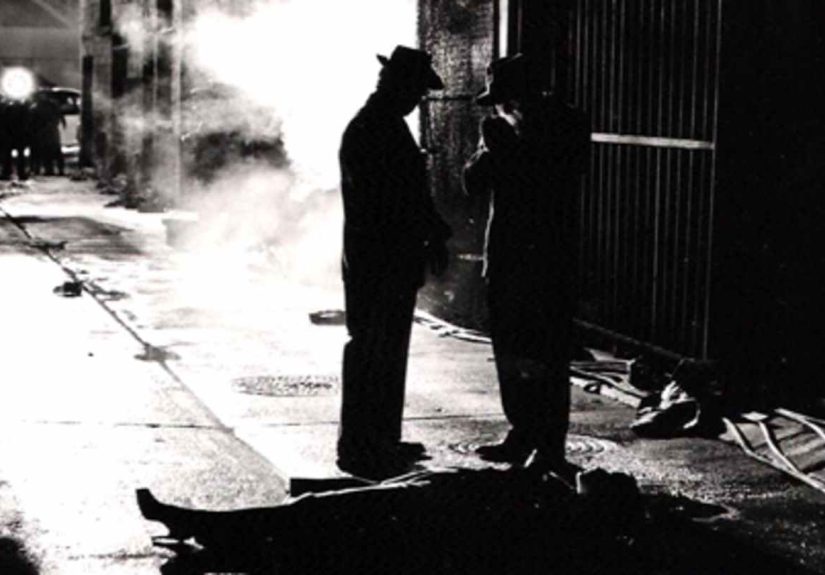
Fallen Angels arrived on Showtime in 1993 as a cycle of six half-hour neo-noir films, then returned in 1995 with a nine-episode second season. That alone made it unusual. Television at the time certainly had crime stories, but this series approached crime as a design problem, a literary exercise, and a mood machine all at once. The stories drew from hard-boiled and noir traditions, and the series leaned hard into smoky rooms, dangerous flirtation, crooked deals, and Los Angeles as a city that always looks best when it’s morally compromised.
In other words, this was not a cozy procedural. Nobody was here to solve a case, smile politely, and wrap things up before a detergent ad. Fallen Angels wanted viewers to sit in tension, style, and regret. It treated noir not as a museum piece, but as a living grammar for television. That alone made it feel far more cinematic than most TV crime fare of the era.
And then there was the pedigree. Sydney Pollack was involved at the top. The production carried the imprint of ambition rather than routine. Even when the material got pulpy, the series presented itself as something curated. You could feel the difference. Fallen Angels wasn’t asking to be consumed passively while folding laundry. It was asking for a dim room, some patience, and maybe a willingness to enjoy the fact that everybody on screen seemed one bad decision away from ruin.
A Movie-Star Experiment Before “Prestige TV” Was a Brand
One of the clearest ways Fallen Angels anticipated the future is in the company it kept. Today, it is normal to see major film actors and directors drift into television. Back then, that still felt like crossing a border. Fallen Angels crossed it with a grin.
Directors with real signatures
The series brought in filmmakers who either already mattered or very obviously would. Tom Hanks directed “I’ll Be Waiting.” Tom Cruise made his directing debut with “The Frightening Frammis.” Steven Soderbergh directed “The Quiet Room,” and later returned for the second-season episode “The Professional Man.” Alfonso Cuarón directed “Murder, Obliquely,” years before he would become one of the most acclaimed filmmakers on the planet. Jonathan Kaplan handled the finale “Since I Don’t Have You,” which stood out by going black-and-white, because subtlety is nice but sometimes noir wants to wear a neon sign that says look how noir I am.
That roster alone makes the series feel like a time capsule from an alternate timeline where cable TV was already being used as a directors’ lab. Not as filler. Not as a side hustle. As a place to experiment with tone, framing, rhythm, and genre.
Actors who treated television like it mattered
The cast list is just as striking. Gary Oldman, Gabrielle Anwar, Bruno Kirby, Marg Helgenberger, Joe Mantegna, Bonnie Bedelia, Peter Gallagher, Isabella Rossellini, Laura Dern, Alan Rickman, Diane Lane, James Woods, Gary Busey, Brendan Fraser, Christopher Lloyd, Bill Pullman, and Danny Glover all passed through the show. This was not bargain-bin casting. It was a showcase.
And the performances were not tossed-off guest spots. Laura Dern’s work on the series earned Emmy recognition. Bonnie Bedelia did too. Danny Glover’s turn as Philip Marlowe in the second-season adaptation of “Red Wind” picked up another Emmy nomination. That matters because it tells us the series was not only stylish. It was being taken seriously enough, at least in certain corners, to register as awards-level work.
Why the Show Felt Like Prestige TV Before Prestige TV Fully Existed
Prestige television is often described with a familiar checklist: auteur-driven, visually confident, performance-heavy, morally complicated, and aimed at adults who can survive without a laugh track every eight seconds. Fallen Angels checks more of those boxes than people might expect.
It trusted atmosphere
Modern prestige TV often understands that mood is not decoration; it is narrative. Think of the way later series would use landscape, lighting, silence, or architecture to build dread. Fallen Angels was already doing that. It cared deeply about hotel rooms, train compartments, art deco corners, lamps that looked like they had secrets, and faces sliced by shadow like everyone had walked directly into a bad choice. Contemporary reviewers noticed this right away. Even critics who found the storytelling uneven admitted the series looked transportive.
That visual confidence matters because prestige television depends on viewers believing that a show has a world, not just a plot. Fallen Angels had worlds. Some of them were more compelling than the stories inside them, but that, too, feels oddly contemporary.
It treated literary adaptation as a flex
The series adapted stories from writers associated with noir, hard-boiled fiction, and dark Americana. Raymond Chandler was in the mix. So were Cornell Woolrich, David Goodis, Jim Thompson, James Ellroy, and others. That literary spine gave the show something more substantial than empty retro cosplay. It was working with source material built on fatalism, class anxiety, masculine performance, sexual manipulation, and urban paranoia.
Prestige TV loves this move. Give viewers genre, but lace it with literary seriousness. Let them enjoy the thrill while also feeling a little smarter for being there. Fallen Angels understood that formula early.
It embraced curation over formula
The anthology model is another clue. Prestige television would later thrive on curated formats that allowed creators to reinvent tone and casting from season to season, or episode to episode. Fallen Angels was already operating with that freedom. Instead of locking itself into one detective, one police station, or one endlessly reusable plot engine, it kept changing shape.
That flexibility gave the show room to take chances. Sometimes those chances worked beautifully. Sometimes they wandered into self-conscious camp. But the willingness to risk inconsistency for the sake of identity is one of the most prestige-TV things imaginable. Safe television usually wants a franchise. Ambitious television often wants a personality.
The Best Examples of What the Series Could Do
If you want to understand why Fallen Angels lingers in critical memory, start with a few standout episodes.
“I’ll Be Waiting”
Tom Hanks’ episode is one of the clearest examples of the show’s charm. Set around the shuttered Ambassador Hotel, it turns a familiar noir premise into a melancholy chamber piece with style to spare. It has elegance, texture, and the faint feeling that everyone in the room already knows how badly this will end. Hanks also reportedly treated the project like an apprenticeship in camera work, which gives the episode an extra layer of historical interest. It is a future A-list filmmaker learning television by touching the machinery.
“The Quiet Room”
Soderbergh’s first contribution has the sort of chilly precision that later audiences would instantly label “prestige.” It is controlled without feeling stiff, moody without becoming parody, and emotionally sharp in a way that rises above pure homage. This is one of the episodes that makes the whole show feel prophetic. You can see television inching toward an era where directors would bring recognizable sensibilities to episodic storytelling instead of disappearing into house style.
“Murder, Obliquely”
Cuarón’s episode is thinner as story than as atmosphere, but what atmosphere. The triangle involving Laura Dern, Alan Rickman, and Diane Lane gives the episode a magnetic emotional imbalance. It is stylish, unstable, and visually assured. If prestige TV often sells itself as “watch very attractive people make disastrous emotional choices in beautifully lit rooms,” then this episode had the sales pitch ready decades early.
“Red Wind”
The second season’s adaptation of Chandler, with Danny Glover playing Philip Marlowe, feels especially notable in hindsight. It pushes the series beyond homage and toward reinterpretation. That is another prestige instinct: don’t just preserve the canon, argue with it a little. Recasting Marlowe through Glover’s presence shifts the texture of the material and hints at a more expansive approach to legacy storytelling.
Why It Didn’t Become a Canon-Defining Smash
Now for the cigarette-burn on the file folder: Fallen Angels did not become The Sopranos before The Sopranos. It did not become a mainstream cornerstone of television history. Why not?
First, it was inconsistent. That is not a fatal flaw for anthologies, but it is a problem when a show is selling itself on style and curation. A viewer can forgive one weak case in a procedural. In a boutique anthology, every episode feels like a referendum on the whole idea.
Second, the half-hour format could work against the material. Noir thrives on implication, but it also thrives on accumulation: grudges, pressure, seduction, paranoia, consequences. Some episodes feel like they want ten extra minutes and a stronger bottle of narrative whiskey.
Third, Fallen Angels arrived before the culture had fully built the pedestal on which prestige TV would later stand. There was no social-media afterlife to rescue it, no binge-release buzz cycle, no ecosystem of critics ready to transform every stylish cable experiment into a weekly event. It was ambitious, but it was early. Early work often gets remembered as “odd” when later work gets remembered as “visionary.” Timing is rude like that.
Why Fallen Angels Still Matters
What makes the series worth revisiting is not the claim that it perfected prestige TV in advance. It didn’t. What it did do was reveal the ingredients before the recipe went mainstream.
It showed that premium cable could act as a playground for filmmakers. It showed that television could be a home for short-form, director-driven storytelling with serious visual ambition. It showed that an anthology could function as a curated artistic object rather than a convenient delivery system for interchangeable plots. Most of all, it showed that viewers might follow style, tone, and authorship even when the stories didn’t always land cleanly.
That last point is huge. Prestige TV is not just about quality. It is about confidence. It is about a series saying, “Come to us for the worldview, not merely the mechanics.” Fallen Angels had that confidence. Sometimes maybe a little too much confidence. But frankly, that is a better problem than having none at all.
The Experience of Discovering Fallen Angels Today
Watching Fallen Angels now is a peculiar pleasure, because the experience is part archaeology, part criticism, and part time travel. This is not the kind of series you stumble across by accident while scrolling for something to half-watch with one eye on your phone. It has the aura of a title you have to hunt down, ask about, and perhaps slightly brag about once you’ve seen it. That sounds snobbish, but it is also part of the fun. The show arrives with a built-in feeling of discovery.
And once you start watching, the first sensation is often surprise. Not because every episode is a masterpiece, but because the show looks and behaves like television from a future that had not fully arrived yet. You keep noticing little things that feel out of time in the best way: the seriousness of the lighting, the trust in dead air, the confidence of the framing, the way dialogue is allowed to be brittle and strange instead of endlessly explanatory. It can feel less like “old TV” than like a modern limited series that somehow wandered into 1993 wearing suspenders.
There is also the pleasure of seeing major talent before the mythology calcified around them. Tom Hanks directing television before he became Tom Hanks the institution. Tom Cruise trying his hand behind the camera. Cuarón and Soderbergh showing how much directorial personality can fit into a compact runtime. Laura Dern and Alan Rickman turning an episode into something emotionally slippery and glamorous. For viewers who enjoy tracing creative lineages, Fallen Angels feels like opening an old notebook and discovering half the class became famous.
At the same time, the viewing experience is not smooth in the way modern prestige TV tends to be. The show can be arch. It can be self-conscious. It can overdo the noir perfume until the room practically smells like trench coat fabric and bad alibis. But those excesses are revealing. They remind you that experimentation is rarely tidy. Sometimes you can see the show reaching too hard for cool, but even that effort becomes part of its charm. Better an ambitious swing that leaves a scuff mark than a spotless piece of forgettable competence.
For younger viewers, the series can also be strangely educational. It makes visible a missing link in television history. Instead of leaping from conventional network formulas straight to the cable antihero boom, Fallen Angels shows an intermediate stage: premium television trying on cinematic seriousness, literary adaptation, and auteur energy before the marketplace had fully decided those things were bankable. You watch it and think, “Ah, so this is one of the rooms where the future was being rehearsed.”
And maybe that is the most satisfying experience of all. Fallen Angels does not merely entertain; it recalibrates the timeline. It reminds you that TV history is full of prototypes, side roads, and nearly-there breakthroughs. Not every important show is the one that wins the era. Some of them are the ones that whisper the winning strategy early, then disappear into the fog before the parade starts.
Conclusion
Fallen Angels remains a lost Showtime series, but “lost” should not be confused with “minor.” It was messy, stylish, overripe, ambitious, and far ahead of many of television’s habits. It assembled filmmakers and actors who gave the material more weight than a throwback genre exercise strictly required. It embraced literary noir, cinematic presentation, and curated identity years before those traits hardened into prestige-TV talking points.
So no, Fallen Angels was not the moment prestige television arrived in full. It was something more fragile and, in some ways, more interesting: a clue. A smoky, stylish clue. The kind a good detective would pin to the board, circle in red, and mutter, “This mattered more than people realized.”