Table of Contents >> Show >> Hide
- When a baby face rash is urgent
- Photo guide: how to “document” a rash like a pro
- Most common causes of baby facial rash (and what they usually mean)
- 1) Milia (tiny white “pearls”)
- 2) Erythema toxicum (newborn blotches with little bumps)
- 3) Baby acne (neonatal acne)
- 4) Drool rash (aka teething rash or “my baby is basically a fountain” rash)
- 5) Heat rash (miliaria)
- 6) Eczema (atopic dermatitis)
- 7) Seborrheic dermatitis (cradle cap on the face)
- 8) Contact irritation or allergic contact dermatitis (products, wipes, detergents)
- 9) Impetigo (bacterial skin infection)
- 10) Viral rashes that can involve the face
- 11) Hives (urticaria)
- At-home care that helps most baby face rashes (the “gentle routine”)
- Treatment by rash type (quick, practical, and realistic)
- Prevention tips (because repeating this twice is still easier than repeating it forever)
- What to ask your pediatrician (so you leave with a plan)
- Conclusion
- Real-Life Parent Experiences (Plus What They Learned)
A mysterious baby face rash can make even the calmest parent do a full “Google spiral” at 2 a.m.
(We’ve all been thereexcept the baby, who is sleeping like a tiny, smug potato.) The good news:
most facial rashes in babies are common, temporary, and manageable with gentle care.
This guide breaks down the most likely causes, what they typically look like, what you can do at home,
and the red flags that mean “call the pediatrician now.” It also includes a photo-style visual guide
(descriptions + “what to capture in a picture”) so you can compare patterns without guessing.
Important: A rash photo can’t diagnose your baby. Use this as a roadmap, not a final verdict.
When a baby face rash is urgent
If any of these are true, don’t wait it outget medical advice right away:
- Any fever in a baby under 3 months (especially 100.4°F / 38°C or higher).
- Trouble breathing, wheezing, swelling of lips/face, or sudden hoarse voice (possible severe allergy).
- Purple, bruise-like spots, widespread blistering, or a rash that looks like burns.
- Signs of infection: oozing pus, rapidly spreading redness, honey-colored crusts, or your baby seems very unwell.
- Dehydration signs (very dry mouth, fewer wet diapers) or baby won’t feed.
If your baby seems “off” in a way you can’t explain, trust that instinct. A quick call can save a lot of stress.
Photo guide: how to “document” a rash like a pro
If you’re going to message your pediatrician or go to a visit, a clear description (and good photos)
can speed things up. Here’s what to capture:
Checklist for your notes
- Age: newborn (0–4 weeks), infant (1–12 months), toddler.
- Timing: when it started, how fast it changed.
- Location: cheeks, chin, around mouth, eyelids, hairline, eyebrows, neck folds.
- Texture: dry/rough, greasy/scaly, tiny bumps, pimples, blisters, crusts, welts.
- Symptoms: itchiness, fussiness, fever, cold symptoms, drooling/teething, new foods, new products.
- Triggers: new wipes, detergent, lotion, sunscreen, pet contact, cold weather, heat/sweat.
“With photos” visual examples (descriptions + what to photograph)
Capture: close-up in natural light; show that bumps are pearly/white and not red/inflamed.
Capture: a wider shot showing patchy areas; note if it comes and goes.
Capture: front view + one side view; avoid flash glare.
Capture: include chin + neck fold if affected; note drooling/pacifier use.
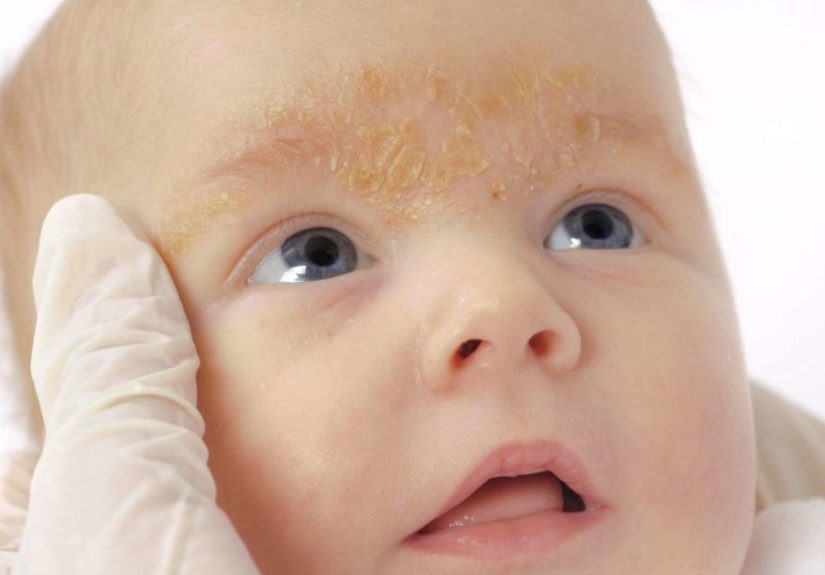
Capture: eyebrow area and hairline; show scale texture.
Most common causes of baby facial rash (and what they usually mean)
1) Milia (tiny white “pearls”)
Milia look like pinhead-sized white bumps, often on the nose or cheeks. They’re not pimples, not an allergy,
and not caused by “dirty skin.” They’re just tiny keratin plugs that newborn skin sheds as it matures.
Typical course: fades on its own over a few weeks.
What to do: nothing fancygentle cleansing with water and pat dry. No squeezing. No exfoliating.
2) Erythema toxicum (newborn blotches with little bumps)
Despite the intimidating name, this rash is common and harmless. You may see red blotches with small pale or
yellowish bumps in the center. It can appear and disappear like it’s playing peekaboo.
Typical course: usually starts in the first days after birth and resolves within about a week.
What to do: reassure yourself: your baby isn’t “reacting” to your parenting. This is normal newborn skin.
3) Baby acne (neonatal acne)
Baby acne looks like small red or white bumps or tiny pimples, usually on cheeks, forehead, or chin.
It’s thought to be related to hormones and developing skin oil glands.
Typical course: often starts around 2–4 weeks and can last weeks to months.
What to do: wash once daily with water and a mild cleanser if needed; avoid picking or “acne products.”
If it’s severe, scarring, or not improving over time, talk to your pediatrician.
4) Drool rash (aka teething rash or “my baby is basically a fountain” rash)
Drool + friction + time = irritated skin. You’ll often see redness and tiny bumps around the mouth, chin,
cheeks, and sometimes the neck or upper chest. Pacifiers and bibs can add friction and trap moisture.
Typical course: comes and goes with teething, illness, or “discovering hands.”
What to do: protect the skin barrier (more below) and keep the area gently dry.
5) Heat rash (miliaria)
Heat rash happens when sweat gets trapped under the skin. It can look like tiny pink or clear bumps and
often shows up in warm weather, after overdressing, or in skin folds.
What to do: cool the skin, remove extra layers, use cool compresses, and keep the area dry and airy.
6) Eczema (atopic dermatitis)
Eczema is a common, chronic “dry and itchy” skin condition. In babies, it often shows up on cheeks and scalp
(and later may shift to creases like elbows and knees). The skin may look red, rough, dry, and irritatedsometimes
with tiny bumps.
What to do: prioritize moisturizing and avoid triggers (fragrances, harsh soaps, scratchy fabrics).
Your clinician may recommend a short course of prescription topical steroids during flaresused correctly, they can be safe and effective.
7) Seborrheic dermatitis (cradle cap on the face)
Cradle cap isn’t just a scalp thing. Some babies get greasy or yellowish scale at the eyebrows, hairline,
behind ears, or around the nose. It can look dramatic but usually doesn’t itch much.
What to do: soften with a gentle emollient, wash, and use a soft brushno picking.
8) Contact irritation or allergic contact dermatitis (products, wipes, detergents)
If the rash lines up with a new wipe, soap, lotion, sunscreen, or detergent, contact irritation is a strong suspect.
You might see redness, dryness, or patchy irritation exactly where the product touches: around the mouth, on cheeks, or near the eyes.
What to do: stop the suspected product for 1–2 weeks, switch to fragrance-free basics, and see if it calms down.
9) Impetigo (bacterial skin infection)
Impetigo often appears around the nose or mouth as red sores that can break open and form a classic
honey-colored crust. It spreads easily from skin-to-skin contact (or from scratching).
What to do: call your pediatricianimpetigo is treated with antibiotics (topical or oral depending on extent).
10) Viral rashes that can involve the face
Some viral illnesses cause facial patterns, often with other clues like fever, runny nose, or mouth sores.
For example, hand, foot, and mouth disease typically includes mouth sores and a body rash; kids usually improve in 7–10 days.
Fifth disease can cause a bright red “slapped cheek” look in children.
What to do: focus on comfort and hydration, and call your pediatrician if symptoms are severe,
your child is very young, or you see concerning signs (fever, poor feeding, dehydration, or unusual rash patterns).
11) Hives (urticaria)
Hives look like raised, itchy welts that can move around the body and change shape. Triggers include viral infections,
foods, medications, or environmental exposures.
What to do: contact your clinician for guidance. If hives come with breathing issues, lip/tongue swelling,
or sudden hoarseness, treat it as an emergency.
At-home care that helps most baby face rashes (the “gentle routine”)
Step 1: Simplify the cleanse
- Use lukewarm water; if you need cleanser, choose a mild, fragrance-free option.
- Wash once daily (or after messy feedings), then pat dryno vigorous scrubbing.
- Avoid adult acne washes, alcohol-based products, and essential oils on baby skin.
Step 2: Rebuild the skin barrier
Many rashes get worse when the skin barrier is “leaky.” Thick creams or ointments (the kind that feel a bit greasy)
tend to lock in moisture better than thin lotions. A simple petrolatum-based ointment can be a barrier hero,
especially for drool rash and eczema-prone cheeks.
Step 3: Reduce moisture + friction (drool, bibs, pacifiers)
- Gently dab drool with a soft cloth (don’t rub like you’re polishing a tiny apple).
- Change wet bibs often; damp fabric can keep irritation going.
- Apply a thin barrier layer before naps/feeds if drool rash flares.
Step 4: Keep baby cool (for heat rash)
- Dress in light layers; avoid overdressing indoors.
- Use cool compresses; let skin air out when possible.
- Avoid heavy ointments on heat rash if it seems to trap warmth (use airflow first).
Step 5: Avoid common irritants
- Skip fragrances (including “natural” scented products).
- Use fragrance-free detergent; avoid dryer sheets on baby clothes.
- Be cautious with frequent wipe use on the facewater + soft cloth may be gentler for some babies.
Treatment by rash type (quick, practical, and realistic)
Baby acne
- Do: gentle wash once daily; be patient.
- Don’t: pop pimples, use OTC acne meds, or over-wash.
- Call your clinician if: it’s severe, scarring, or not improving after a couple of months.
Milia / erythema toxicum
- Do: watch and wait; take a photo for your records.
- Don’t: scrub, pick, or apply strong “spot treatments.”
Drool rash
- Do: keep area clean and dry, protect with a barrier ointment, reduce friction.
- Call your clinician if: rash cracks/bleeds, spreads quickly, or looks infected.
Eczema
- Do: moisturize frequently (especially after bathing), keep nails short, avoid triggers.
- Ask your clinician about: the right strength topical steroid for short-term flare control (especially on the face, where potency matters).
- Call your clinician if: there’s oozing, crusting, or your baby seems very itchy and can’t sleep.
Cradle cap on the face
- Do: soften scale with a gentle emollient, wash, use a soft brush/cloth to lift loosened flakes.
- Don’t: pick flakes that are stuck (it can irritate skin).
- Call your clinician if: it’s spreading fast, oozing, or very inflamed.
Impetigo
- Do: contact your pediatricianantibiotics are usually needed.
- Also: keep nails short, avoid sharing towels, wash hands often.
Hives
- Do: call your clinician for guidance and watch for triggers.
- Emergency: breathing trouble, facial swelling, vomiting with lethargy, or sudden voice changes.
Prevention tips (because repeating this twice is still easier than repeating it forever)
- Keep it boring: fragrance-free cleanser + moisturizer beats a 12-step skincare routine for babies.
- Barrier before drool: a thin protective layer can reduce teething rash flare-ups.
- Cool and dry: especially in humid climates or warm rooms.
- Patch test new products: try on a small area for a couple of days before full-face use.
- Know the “fever rule”: any fever in babies under 3 months deserves a call.
What to ask your pediatrician (so you leave with a plan)
- “Does this look more like irritation, eczema, infection, or allergy?”
- “If it’s eczema, what’s the best moisturizer and how often?”
- “If we need a medicated cream, what strength is safe for the face and for how long?”
- “What signs would mean we should be seen urgently?”
- “Could this be related to drooling, pacifier use, or a product we’re using?”
Bring your photos and your timeline notes. You’ll look ridiculously prepared (in the best way),
and your clinician can make decisions faster.