Table of Contents >> Show >> Hide
- What Wabi-Sabi Actually Means
- Why TikTok Turned Wabi-Sabi Into a Beauty Test
- Is There Really Such a Thing as a “Wabi-Sabi Face”?
- Why the Trend Feels Refreshing and Weird at the Same Time
- The Psychological Side of TikTok Beauty Tests
- What a Better Version of the Trend Looks Like
- How to Engage With the Trend Without Spiraling
- Final Take: Stop Asking if You “Have” Wabi-Sabi
- Experiences Related to “Do You Have Wabi Sabi? TikTok Beauty Test”
Every few months, TikTok invents a new way to make people stare at their own faces like they are cramming for a final exam called Am I Symmetrical Enough? Sometimes it is a filter. Sometimes it is a “rate me” trend. Sometimes it is a micro-aesthetic wrapped in soft lighting and a dramatic sound bite. And lately, one phrase has floated into that same orbit: wabi-sabi.
The phrase sounds poetic, mysterious, and just exotic enough for the internet to grab it by the sleeve and drag it into the beauty discourse. Suddenly, people are asking a question that feels very 2026: Do you have wabi-sabi? On TikTok, that often translates to something like this: Are your features a little unusual, a little asymmetrical, a little lived-in, a little human in a way that reads as beautiful?
That is where the trend gets fascinating, because the answer is both yes and no. Yes, TikTok is clearly craving a break from polished, algorithm-approved perfection. But no, wabi-sabi is not a clinical facial category, a dermatologist’s checklist, or a secret beauty test that decides whether your nose, freckles, under-eyes, or smile lines qualify as aesthetically blessed. The whole point of wabi-sabi is that beauty does not arrive factory-sealed.
So let’s unpack what this TikTok beauty test is really doing, why it feels refreshing and risky at the same time, and why the smartest way to engage with the trend is not to grade your face but to rethink the entire grading system.
What Wabi-Sabi Actually Means
Before TikTok got involved, wabi-sabi already had a long, rich life as a Japanese aesthetic and philosophical idea. At its core, it points toward beauty in imperfection, impermanence, simplicity, and authenticity. Think weathered ceramics, natural textures, uneven surfaces, age marks, humility, and the quiet dignity of things that do not scream for attention.
In other words, wabi-sabi was never born to become a viral face-ranking category between “clean girl,” “glass skin,” and “snatched.” It is less about optimization and more about acceptance. Less “How do I fix this?” and more “Why am I assuming this needs fixing?” That distinction matters.
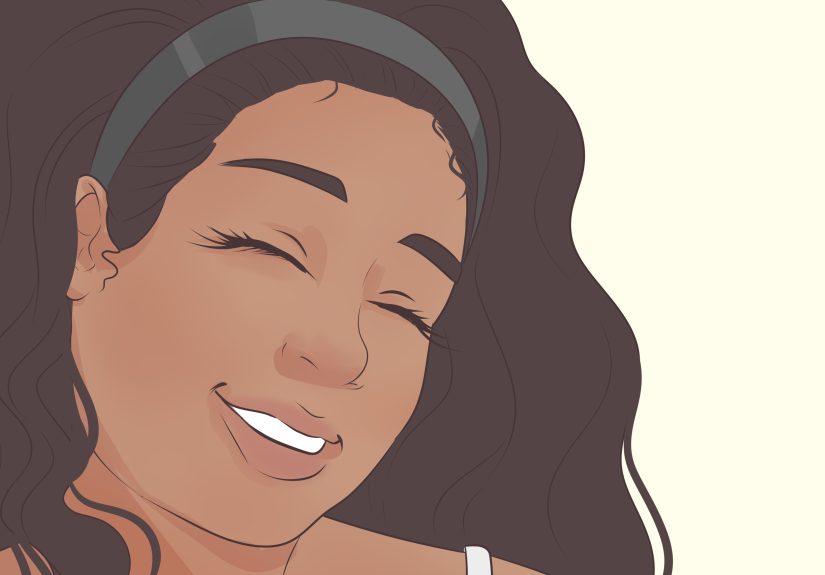
When people borrow wabi-sabi into beauty talk, they are usually reaching for a feeling: the idea that a face can be compelling because it is not overly edited, not perfectly balanced, not polished into oblivion. A slightly crooked smile. A broad nose with character. Dark circles that make someone look expressive rather than “tired and in need of intervention.” Skin texture that reads like skin, not laminated peach glass.
That part makes sense. But once the internet turns a philosophy into a “test,” it risks flattening the meaning. Wabi-sabi stops being a worldview and starts acting like a vibe quiz. And the minute a vibe becomes a score, TikTok puts on a lab coat and chaos begins.
Why TikTok Turned Wabi-Sabi Into a Beauty Test
TikTok did not invent insecurity, but it has certainly upgraded the user interface. The platform thrives on fast visual judgment, quick identity labels, and repeatable formulas. That makes it the ideal breeding ground for beauty tests disguised as harmless fun.
First came overt rating culture: beauty scanners, attractiveness filters, symmetry obsessions, “inverted” camera reveals, and side-by-side comparisons that convince ordinary people their faces are somehow malfunctioning. Then came the backlash: trends celebrating “flaws,” visible under-eyes, broad noses, textured skin, and features that look inherited rather than manufactured.
The rise of “wabi-sabi” in TikTok beauty language sits right in that backlash lane. It gives users a prettier vocabulary for rejecting perfection. Instead of saying, “Actually, I like my asymmetry,” the trend says, “Maybe this is wabi-sabi.” That reframe is emotionally powerful because it turns a perceived defect into a design feature.
There is also a bigger cultural shift happening here. Hyper-perfected beauty has become exhausting. The “effortless” face takes an awful lot of effort. The “natural” look is often 14 products, strategic concealer, and the kind of lighting that deserves its own agent. After years of filler discourse, filter face, and AI-smoothed skin, many users are hungry for a beauty language that feels softer, stranger, and more forgiving.
From Flawless to Lived-In
That is why trends celebrating dark circles, eye bags, uneven features, and facial individuality keep gaining traction. What used to be framed as something to correct is now getting repackaged as something expressive. The internet, for once, seems interested in faces that look inhabited.
Still, repackaged is the key word. TikTok rarely leaves anything in peace. The moment a rebellious idea starts trending, it can become its own performance. Imperfection becomes an aesthetic. Realness becomes curated. “I am embracing my flaws” becomes a content strategy with ring lights, captions, and affiliate links. The rebellion wears lip gloss.
Is There Really Such a Thing as a “Wabi-Sabi Face”?
Not in any scientific or medically meaningful way. There is no official “wabi-sabi face shape,” no objective ratio, no board-certified beauty index that can tell you whether your features qualify. If someone online presents wabi-sabi beauty as a measurable category, they are improvising with confidence, which is one of TikTok’s core skills.
That does not mean the idea is useless. It just means it works better as a lens than a label.
A wabi-sabi lens might help you appreciate features that beauty culture usually treats as errors: asymmetry, softness, signs of age, inherited traits, scars, texture, or expressions that make a face feel deeply specific. It can help shift your attention from standardization to character. But once you ask, “Do I have it?” you are already drifting back into the same beauty-evaluation trap the concept was supposed to interrupt.
The irony is delicious. A philosophy about escaping perfectionism gets turned into another thing to achieve. The internet really saw “beauty in imperfection” and said, “Great, but can we optimize that too?”
Why the Trend Feels Refreshing and Weird at the Same Time
This trend lands because it offers relief. For people worn out by “fix your face” culture, the idea that a face can be memorable because it is slightly off-center, expressive, textured, or aging naturally feels like a cool drink of water in the middle of a contour tutorial.
It also feels weird because many users are still approaching it through the logic of approval. They are not simply enjoying their features; they are asking whether their imperfections are the right kind of imperfections. In other words: not all flaws, apparently, but curated flaws. Beautiful flaws. Marketable flaws. Flaws that photograph well.
That is where the trend can quietly become exclusionary. If wabi-sabi turns into code for “you are unconventional, but in a cinematic way,” then we are still just reorganizing the same beauty hierarchy. We are not dismantling it. We are redecorating it with softer language and moodier lighting.
The Psychological Side of TikTok Beauty Tests
This is the part worth taking seriously. Appearance-based trends do not have to be openly cruel to affect people’s self-image. Even when a beauty test looks playful, it can encourage repeated self-scrutiny, external validation seeking, and comparison. You try the filter once for laughs. Then again with makeup. Then in better lighting. Then from a different angle. Congratulations: you are now in a tiny performance review with your own face.
That cycle is what makes beauty-test culture so sticky. It promises information, but usually delivers fixation. And the more a person scrolls through “ideal,” edited, or algorithmically rewarded faces, the easier it becomes to treat ordinary human variation like a defect report.
Experts have been warning about this for years. Research and clinical commentary increasingly point to the way social media can intensify body dissatisfaction, appearance anxiety, and unrealistic expectations. Beauty filters can also shape cosmetic preferences by normalizing a narrow set of features, while surgeons and mental-health professionals alike have raised concerns about patients chasing digitally altered versions of themselves.
In that context, the wabi-sabi trend is interesting because it pushes in the opposite direction. It says maybe your face does not need to be corrected. Maybe what feels “off” to you is what makes you recognizable, warm, and real. That is a healthier message. But it stays healthy only if it reduces scrutiny rather than rebrands it.
What a Better Version of the Trend Looks Like
The best version of “Do you have wabi-sabi?” is not a test. It is a permission slip.
It is permission to stop treating every facial difference like a problem. Permission to notice that symmetry is not the same thing as beauty, and beauty is not the same thing as worth. Permission to let your face belong to your life rather than to the current algorithm.
In practical terms, that might look like this:
- Leaving your skin texture alone in photos instead of sanding yourself into oblivion with editing tools.
- Not panicking over under-eyes, smile lines, or facial asymmetry the second a trend points at them.
- Choosing beauty routines that make you feel good rather than routines designed to make you less visible as a human being.
- Following creators who talk about style, grooming, or makeup with curiosity instead of shame.
- Recognizing when a “fun” trend is making you feel worse, then logging off like the emotionally intelligent legend you are.
That is the healthier takeaway: use the trend to loosen beauty rules, not invent new ones.
How to Engage With the Trend Without Spiraling
If this topic hits a nerve, you are not overreacting. Beauty content gets framed as light entertainment, but it often lands in deeply personal territory. Your face is not a hobby project. So if you want to engage with “wabi-sabi beauty” without turning it into another self-esteem obstacle course, try a few basic rules.
1. Treat it as commentary, not diagnosis.
Wabi-sabi is a philosophy, not a facial assessment. No trend can tell you your true beauty category because such a category does not exist in any meaningful universal way.
2. Watch for language that sounds liberating but still demands approval.
If a creator says “embrace your imperfections” but still ranks which imperfections are attractive, the old beauty game is still in the room. It just changed outfits.
3. Be suspicious of anything that increases mirror time and decreases self-respect.
If a trend leaves you examining your nose from 11 angles and forgetting what your actual face looks like in motion, it is not serving you.
4. Remember that “natural” is often heavily produced.
TikTok loves authenticity right up until authenticity has pores. What looks spontaneous may still be filtered, edited, filled, lit, and strategically posed.
5. Build a wider beauty vocabulary.
Interesting. Warm. Distinctive. Expressive. Kind. Magnetic. Joyful. You are allowed to think about appearance without reducing everything to hot-or-not math.
Final Take: Stop Asking if You “Have” Wabi-Sabi
The most useful answer to the title question is this: you do not “have” wabi-sabi the way you have a jawline or a brow shape. Wabi-sabi is not a face type. It is a way of looking. A way of valuing. A way of resisting the fantasy that beauty must be flawless to be real.
TikTok’s beauty test culture keeps trying to turn human features into data points. The wabi-sabi trend matters because it nudges the conversation in a different direction. It suggests that what is memorable about a face is often the very thing perfection culture would airbrush out.
That is the good news. The caution is this: once the internet starts rewarding a certain style of “imperfect beauty,” it can easily become another performance standard. So enjoy the shift, but do not hand the app your self-worth on a velvet tray.
Your face does not need to pass a test to be beautiful. It just needs to be yours.