Table of Contents >> Show >> Hide
- What Is Dirty Martini Pasta, Exactly?
- Dirty Martini Pasta Recipe
- Why This Works (A Quick Flavor Breakdown)
- Choosing Olives and Brine Without Regret
- Easy Variations (Because You’ll Want to Make It Again)
- What to Serve With Dirty Martini Pasta
- Troubleshooting (So the Sauce Doesn’t Get Weird)
- FAQs
- Kitchen Notes & Real-Life Experiences (The “I Actually Made This” Section)
- Conclusion
Somewhere out there, a jar of olives is sitting in your fridge like: “Hello. I’m still here. I still matter.”
And honestly? It does. Because the secret weapon in a Dirty Martini Pasta isn’t some hard-to-find
ingredient with a twelve-syllable name. It’s the briny, salty, flavor-packed olive brine you’ve been ignoring
like a group chat on mute.
This dish takes the vibe of a dirty martinisavory olives, a little tang, a little zipand turns it into a creamy,
glossy pasta that tastes fancy but cooks like a weeknight friend. It’s zesty, garlicky, and unapologetically olive-forward.
If you love olives, you’ll be thrilled. If you “sort of tolerate” olives, we can still be friends… but this pasta might change the terms.
What Is Dirty Martini Pasta, Exactly?
Dirty martini pasta is a martini-inspired pasta sauce built around three big flavors:
olive brine (the “dirty” part), bright citrus (usually lemon), and
rich creaminess (because pasta likes a little luxury).
Some versions include a splash of gin/vodka and dry vermouth for that cocktail winkbut it’s totally optional,
and this recipe is written so it tastes great without any alcohol at all.
Dirty Martini Pasta Recipe
This makes a silky, restaurant-feeling pasta for about 4 servings. It’s easiest with spaghetti, but any long noodle works.
If you’re using a shorter shape (rigatoni, fusilli), it’ll still be deliciousjust a little more “sauce clings everywhere” energy.
Ingredients
- 1 lb spaghetti (or linguine, bucatini, fettuccine)
- Kosher salt (go easy at firstolive brine brings plenty)
- 2–3 tbsp extra-virgin olive oil
- 4 cloves garlic, thinly sliced or finely minced
- 1 cup pitted green olives, chopped or torn (Castelvetrano = buttery; Manzanilla = punchier)
- 1/3 cup olive brine (from the jar)
- Zest of 1 lemon + 1–2 tbsp lemon juice (to taste)
- 2/3 cup heavy cream (or half-and-half for lighter)
- 2/3 cup finely grated Parmesan (plus more for serving)
- 3 tbsp unsalted butter (for gloss + “how is this so good?”)
- 1/3 cup chopped parsley (optional but highly recommended)
- Black pepper, to taste
Optional “Martini” Add-Ins
These are for adult cooking only. The recipe is fantastic without them.
If you’re skipping alcohol, use the “no-alcohol swap” below.
- 2 tbsp gin or vodka (optional)
- 1 tbsp dry vermouth (optional)
No-Alcohol Swap (Recommended for Everyone)
- 2 tbsp low-sodium broth (veg or chicken) instead of gin/vodka
- 1 tbsp extra lemon juice (or a tiny splash of white wine vinegar) instead of vermouth
Step-by-Step Instructions
-
Boil the pasta. Bring a large pot of water to a boil. Salt it lightly (you can add more later).
Cook pasta until just al dente. Before draining, reserve 1 cup pasta water. -
Start the sauce base. In a large skillet over medium heat, warm the olive oil.
Add garlic and cook 30–60 seconds until fragrant (not brownedburnt garlic is a drama nobody asked for). -
Add olives + brine. Stir in chopped olives, then pour in the olive brine.
Let it bubble for about 1 minute so it mingles and mellows. -
Optional adult step. If using gin/vodka and/or vermouth, add them now and simmer 30–60 seconds.
(If skipping, go straight to the next step.) -
Make it creamy. Reduce heat to low. Stir in the cream and butter until the butter melts.
Add lemon zest and a small squeeze of lemon juice. -
Emulsify like a pro. Add the drained pasta to the skillet. Toss well.
Sprinkle in the Parmesan while tossing, adding a splash of reserved pasta water as needed
until the sauce turns glossy and clings to the noodles. -
Finish + adjust. Add parsley, black pepper, and taste.
If it needs brightness, add lemon juice. If it needs more “dirty martini” attitude, add a spoonful more brine.
If it’s too salty, add more pasta water or a touch more cream. - Serve. Top with extra Parmesan, more chopped olives, and a little lemon zest if you’re feeling fancy.
Why This Works (A Quick Flavor Breakdown)
This pasta is basically a masterclass in balance:
salt + fat + acid + umami. Olive brine brings salt and tang. Cream and butter bring richness.
Lemon brightens everything so the sauce tastes lively, not heavy. Parmesan supplies umami (aka “why you keep going back for one more bite”).
And pasta water is the unsung heroit helps the fat and water come together into a smooth, glossy sauce instead of a sad, separated puddle.
Choosing Olives and Brine Without Regret
Best olives for dirty martini pasta
- Castelvetrano: mild, buttery, and crowd-pleasing.
- Manzanilla: classic “bar olive” flavorbrinier and sharper.
- Garlic- or chili-stuffed: fun for bold palates, but taste first (some are intensely salty).
Brine tips
- Start with 1/4 cup if you’re brine-shy, then add more to taste.
- Different brands vary a lotsome brines are mild, some are basically ocean cosplay.
- Don’t dump brine into a screaming-hot pan; medium heat keeps the flavor clean and pleasant.
Easy Variations (Because You’ll Want to Make It Again)
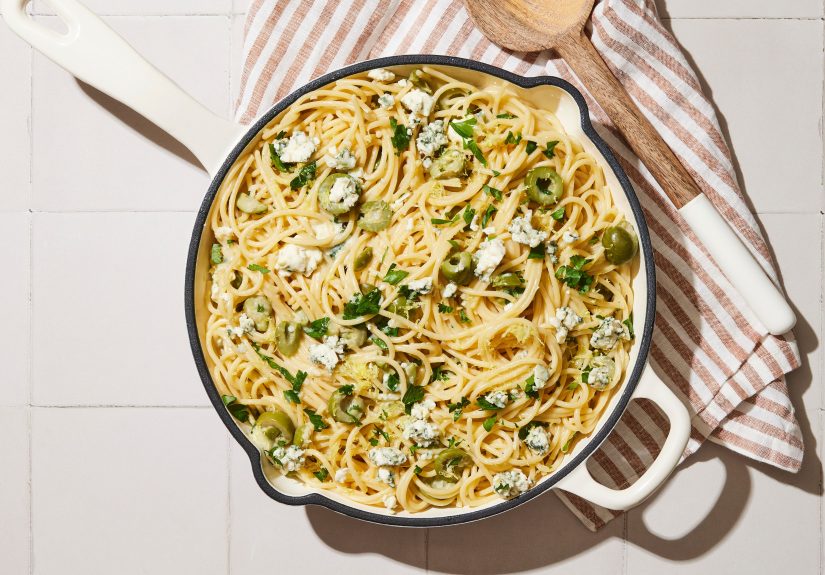
1) Dirty Martini Pasta with Blue Cheese
If you like the idea of olives plus something funky (in a good way), stir in 2–3 tbsp crumbled blue cheese
at the end. Keep the Parmesan too. The result is savory, bold, and very “I order appetizers as a personality trait.”
2) Spicy Dirty Martini Pasta
Add 1/2 tsp red pepper flakes with the garlic, or finish with chili crisp.
Spicy + briny + creamy is a top-tier combo.
3) Lemon-Garlic “Light” Version
Swap heavy cream for half-and-half or even a mix of Greek yogurt + pasta water
(temper it gently and keep the heat low to avoid curdling). It’s still creamy, just less “I own a velvet robe” rich.
4) Vegan Dirty Martini Pasta
Use plant butter, a splash of oat cream or cashew cream, and a vegan Parmesan-style topping.
Add a tiny pinch of nutritional yeast if you want more cheesy vibes.
What to Serve With Dirty Martini Pasta
- Crunchy salad: arugula + lemon vinaigrette = perfect contrast.
- Roasted veggies: asparagus, broccolini, or Brussels sprouts.
- Simple protein: grilled chicken, shrimp, or crispy chickpeas.
- Non-alcoholic pairing: sparkling water with lemon and a few olive slices (yes, really), or a citrus spritz.
Troubleshooting (So the Sauce Doesn’t Get Weird)
My sauce looks separated.
Turn the heat down and toss vigorously with pasta watera tablespoon at a time.
The starch helps the sauce come back together.
It’s too salty.
Add more pasta water and a splash more cream. Next time, salt the pasta water less and build brine slowly.
It tastes flat.
Add lemon juice, black pepper, and a little extra Parmesan. Acid + pepper are the flavor “volume knobs.”
FAQs
Does dirty martini pasta taste like a cocktail?
It tastes inspired by a dirty martinibriny, savory, brightnot like you poured a drink into your spaghetti.
If you include the optional adult add-ins, it leans more “martini-adjacent.” If you skip them, it’s a killer olive-brine cream sauce.
Can I make it ahead?
It’s best fresh (the sauce is glossiest right away), but leftovers keep well.
Reheat gently with a splash of water or milk/cream to loosen the sauce.
Can I use the brine from pickles?
You can, but then you’re making “Pickle Martini Pasta,” which is a different personality.
Olive brine is rounder and more savory; pickle brine is sharper and more vinegary.
Kitchen Notes & Real-Life Experiences (The “I Actually Made This” Section)
The first time I made dirty martini pasta, I did what many of us do when faced with a new recipe: I got cocky.
I looked at the olive brine and thought, “I love salty things. I can handle this.” And then I poured in a heroic amount,
like I was auditioning for a role as “the ocean” in a school play. The result wasn’t inedible, but it did taste like a very
glamorous tide pool.
The second attempt was the sweet spot. I started with a smaller pour of brine, then finished the sauce in stages:
brine first, then cream and butter, then cheese, then pasta water. That order mattered more than I expected.
When I dumped the cheese in too fast on attempt one, the sauce got a little clumpy. When I sprinkled the Parmesan gradually
while tossing hard (like the pasta owed me money), it melted in smoothly and turned everything glossy.
The biggest “wow” moment came from the lemon zest. Lemon juice is great, but zest gives a perfume-y brightness that feels
almost fancy. It’s the difference between “nice pasta” and “I should light a candle and pretend my kitchen is a bistro.”
Now I always zest the lemon straight into the pan at the end, and it smells like you’re about to do something impressive.
I’ve also learned that olive choice is basically the steering wheel of this recipe. Castelvetrano olives make the sauce
feel buttery and mellowperfect if you want to serve it to a mixed crowd (including someone who claims they “don’t like olives”
but somehow always eats the olive garnish off everyone’s plate). Manzanilla olives, on the other hand, bring that classic bar
snack punch. If your goal is maximum martini energy, go Manzanilla. If your goal is “everyone cleans their bowl,” go Castelvetrano.
Sometimes I mix both, because I contain multitudes and also because it tastes great.
The recipe has also become my go-to “impress without stress” dinner. It’s fast, it’s different, and it makes people curious.
The moment you say “dirty martini pasta,” everyone leans in like you just revealed a secret menu item. I’ve served it with a simple
arugula salad and crunchy bread, and the combo works because the salad cuts the richness while the bread lets you swipe up the last
bits of sauce (which is a deeply satisfying hobby).
The funniest part is how the pasta teaches restraint. Olive brine is powerful. A little turns cream sauce into something bright and savory.
Too much and you’re basically simmering noodles in a nautical autobiography. So now I treat brine like hot sauce: start small, taste, adjust,
and remember you can always add morebut you can’t easily un-salt a pan that’s gone full sea captain.
Final real-life note: leftovers are secretly fantastic if you reheat them gently and add liquid. A splash of water plus a tiny pat of butter
brings the sauce back to life. The olives soften a bit overnight, and the whole dish tastes even more cohesive the next daylike the flavors
had a meeting and decided to cooperate.
Conclusion
Dirty martini pasta is the rare viral recipe that earns its hype: it’s quick, bold, and genuinely delicious.
With briny olives, silky cream, bright lemon, and a few smart technique moves (hello, pasta water), you get a sauce that feels special
without requiring a culinary degreeor a dramatic montage set to inspirational music.
Make it once and you’ll start looking at olive jars differently. Not as leftovers. As possibilities.