Table of Contents >> Show >> Hide
- First, a quick refresher: LPs and GPs are not playing the same position
- The biggest risks LPs face that GPs generally do not
- 1. Fee drag even when the fund underperforms
- 2. Blind-pool risk
- 3. Capital-call and default risk
- 4. Illiquidity and lock-up risk
- 5. J-curve and time-to-cash risk
- 6. Denominator effect and portfolio-construction risk
- 7. Information asymmetry and side-letter inequality
- 8. Key-person and succession risk
- 9. Valuation opacity and reporting risk
- 10. Vintage-year, pacing, and fund-size risk
- What thoughtful LPs do to reduce these risks
- Composite experiences from the LP side
- Final takeaway
Note: This article is an original, publication-ready synthesis of widely discussed U.S. industry guidance and market commentary. It is for educational purposes only and is not legal, tax, or investment advice.
Here is the clean, slightly uncomfortable truth: limited partners and general partners may sit at the same fund table, but they are not eating the same meal. The GP gets the title, the meetings, the authority, and the glory shots on conference stages. The LP gets something far more glamorous: wiring money into a blind pool, waiting years, reading quarterly letters like tea leaves, and hoping the story ends with distributions instead of just adjectives.
That is why this question matters. When people talk about venture capital risk, they often lump everyone together as if “the fund” is one happy economic family. It is not. A GP and an LP are exposed to different incentives, different downside paths, and very different forms of pain. One side controls decisions and earns management fees along the way. The other provides most of the capital, has limited operational control, and often discovers that patience is not just a virtue. In venture, patience is a contractual obligation wearing a suit.
So, what risks do limited partners in VC funds face that general partners do not? Quite a few. And several of them are structural, which is a fancy way of saying the risk is baked into the cake before anyone cuts the first slice.
First, a quick refresher: LPs and GPs are not playing the same position
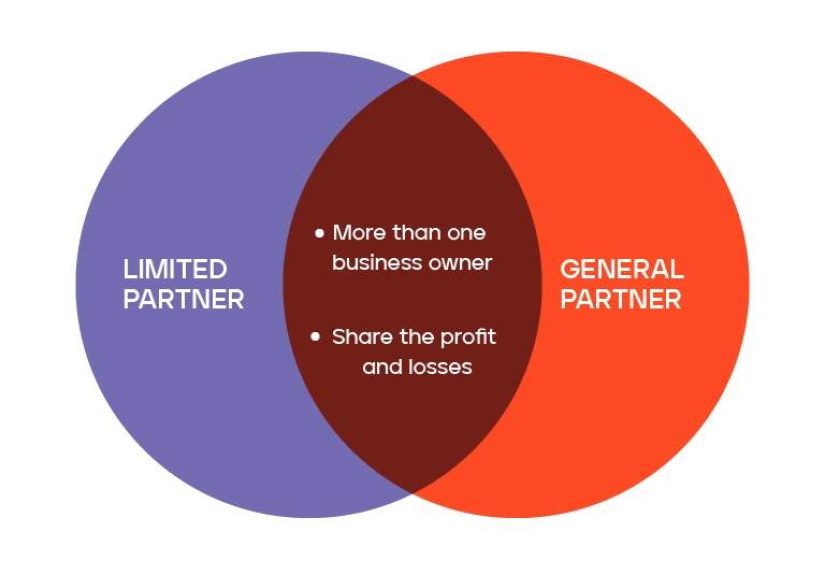
A general partner manages the fund. The GP sources deals, makes investment decisions, supports portfolio companies, and oversees exits. In exchange, the GP typically earns management fees plus carried interest if the fund performs well. A limited partner, by contrast, commits capital to the fund but does not run day-to-day decisions. The LP is the capital provider, not the driver.
That distinction sounds basic, but it explains almost everything that follows. Control, information access, liquidity, timing, and economics do not land evenly on both sides. If the GP is the chef, the LP is the diner who prepays for a ten-year tasting menu and cannot leave after course two.
The biggest risks LPs face that GPs generally do not
1. Fee drag even when the fund underperforms
The most famous LP complaint is also the most stubborn one: a GP can still make real money even when the LP does not. Management fees are designed to fund the firm’s operations, salaries, research, travel, legal costs, and all the machinery of investing. That means a fund can be merely okay, or even disappointing, and the GP may still have collected years of fees while the LP is left waiting for actual net returns.
This is not fraud. It is the model. But it is still a genuine LP risk. The LP’s return is fully exposed to fee drag, while the GP’s business can remain economically alive on fee income long before carried interest shows up. That creates an asymmetry: the LP needs strong realizations, while the GP may still survive on the management company economics. In plain English, the restaurant got paid even if dessert never arrived.
2. Blind-pool risk
Most venture funds are blind pools. LPs commit capital before they know every company the fund will back. They underwrite the GP, the strategy, the network, the judgment, and the discipline more than any specific future deal. That means LPs accept manager selection risk in its purest form.
The GP, meanwhile, is not exposed in the same way. The GP is the one making the choices. The LP is betting that those future choices will be good enough to overcome fees, time, competition, valuation inflation, and the occasional market mood swing that makes everyone suddenly rediscover “capital efficiency.”
This risk gets sharper when a manager drifts from the original playbook. A fund that started as disciplined early-stage investing can become more opportunistic, later-stage, more crowded, or simply larger than the strategy comfortably supports. The GP may call that evolution. The LP may call it, “Wait, this is not what I thought I bought.”
3. Capital-call and default risk
LPs do not usually wire their full commitment on day one. Instead, the GP draws capital over time through capital calls. That creates a unique risk for LPs: they must remain both willing and able to fund those calls over the life of the vehicle. If an LP loses confidence in the manager, suffers its own liquidity crunch, or gets hit by competing obligations elsewhere in the portfolio, it cannot simply shrug and say, “Actually, let’s not.”
Failure to honor a capital call can trigger severe consequences under fund documents. Default penalties can be brutal, including loss of economic rights, forced sale mechanics, or reputational damage that follows an institution into future fundraising cycles. The GP does not face that same kind of funding obligation to the partnership. The LP does.
That makes commitment pacing and liquidity planning central to being a good LP. In venture, writing the commitment letter is easy. Having the cash ready three years later, during a messy market, is the part that tests character.
4. Illiquidity and lock-up risk
LPs in VC funds give up liquidity for the possibility of higher long-term returns. That trade-off can make sense, but it is still a risk. Once committed, capital may be tied up for a decade or longer, and investors generally cannot redeem the way they might in a public-market vehicle.
Yes, secondaries exist. No, they are not magic. Selling fund interests in the secondary market can offer relief, but often at a discount, especially when exits are slow and everyone else is also trying to create liquidity at the same time. In calm markets, illiquidity feels sophisticated. In stressed markets, it feels like being locked in a room with excellent branding.
The GP is not immune to illiquidity at the portfolio level, but the LP faces it more directly as a capital-allocation constraint. The LP has to meet spending needs, portfolio targets, and board expectations while sitting on an asset that cannot easily be sold on command.
5. J-curve and time-to-cash risk
Venture funds rarely look pretty at the beginning. Early years often show negative net performance because fees are being paid, investments are just being made, and exits have not yet materialized. This is the classic J-curve: bad-looking early numbers followed, hopefully, by improving performance later as winners emerge and distributions begin.
That early trough is especially painful for LPs because their actual experience is cash-out first, cash-back later. The GP, however, is building the portfolio during that period and collecting fees to operate the platform. The LP is the one explaining to an investment committee why a fresh allocation looks sleepy, expensive, and deeply committed all at once.
This is why inexperienced LPs sometimes underestimate the emotional side of private markets. You are not just underwriting ultimate return. You are underwriting the calendar.
6. Denominator effect and portfolio-construction risk
One of the nastier private-markets headaches is the denominator effect. When public markets fall quickly, the overall value of an institution’s portfolio can drop faster than private valuations adjust. Suddenly, private assets occupy a larger share of the portfolio than intended, even if nothing has been sold and no new commitments were made.
That matters because an LP may become unintentionally overallocated to venture and private equity right when liquidity is most precious. A pension, endowment, family office, or insurer may then need to slow new commitments, sell interests on the secondary market, or rebalance under pressure. The GP does not live inside the LP’s full portfolio architecture. The LP does.
This is a classic example of a risk that exists outside the underlying fund’s company picks. Even a decent VC fund can become a source of pain if it collides with bad timing at the total-portfolio level.
7. Information asymmetry and side-letter inequality
Not all LPs are created equal. Larger or earlier LPs may negotiate side letters that improve information rights, reporting detail, governance access, or other favorable terms. Smaller LPs may receive the standard package and a cheerful thank-you. That does not always mean the smaller LP got a bad deal, but it does mean the playing field can tilt.
This is a real risk because preferential treatment can affect transparency, economics, and flexibility. One investor may see more, know more, or have negotiated protections that another investor lacks. The GP, obviously, is on the drafting side of that equation, not the receiving side.
For LPs, this means manager access alone is not enough. They have to understand where they sit in the fund’s power ranking. In private funds, being “an investor” is sometimes less informative than asking, “Which kind?”
8. Key-person and succession risk
In venture capital, brands matter, but people matter more. LPs often back a fund because of specific partners: the rainmaker with proprietary access, the operator with judgment, the deal lead with founder trust, or the one person whose absence would make the rest of the partnership feel like a cover band.
If those individuals leave, reduce involvement, or get distracted by newer funds, LPs bear the risk that the team they underwrote is no longer the team managing the money. Good LPAs contain key-person protections, but even when those provisions work as intended, they usually provide remedies that are procedural, not magical. A suspended investment period is helpful. It is not the same thing as getting the original franchise back.
The GP faces business risk in a departure, of course. But the LP faces manager-continuity risk on already-committed capital with limited ability to un-ring the bell.
9. Valuation opacity and reporting risk
Private-market valuations are periodic, estimation-based, and less transparent than public-market marks. That does not make them fake. It does make them less immediate. LPs therefore face a reporting challenge: they must evaluate performance, risk, and pacing using incomplete and sometimes lagged information.
That uncertainty spills into governance. Boards want clarity. Staff want comparability. Auditors want rigor. Portfolio managers want to know whether they are looking at genuine momentum or simply marks that have not fully caught up with reality yet. The GP has more company-level access and more context around each mark. The LP gets the packaged version.
In good times, this feels manageable. In rough times, everyone suddenly becomes an expert in valuation methodology and asks why the private book still looks so calm while the public world is on fire.
10. Vintage-year, pacing, and fund-size risk
Even if an LP chooses strong managers, the timing of commitments still matters. Vintage year can influence outcomes because entry prices, exit windows, competition levels, and financing conditions shift over time. An LP that bunches too many commitments into one hot market period can end up overexposed to inflated pricing and delayed distributions.
There is also fund-size risk. A manager that looked brilliant at $150 million may not look identical at $1 billion. Larger funds can change check sizes, ownership targets, reserve strategy, and return expectations. The GP may welcome scale. The LP must ask whether scale diluted the original edge.
This is another distinctly LP problem. GPs raise the next fund. LPs live with the consequences of how several fund vintages stack together across years.
What thoughtful LPs do to reduce these risks
The good news is that LP risk is not the same thing as LP helplessness. Strong LPs are painfully aware of these issues and build process around them.
They underwrite the management company, not just the pitch deck
They look at partner incentives, succession, decision-making, reserves discipline, and whether the fee model encourages behavior that is good for the franchise but not necessarily great for net returns.
They negotiate hard on terms that matter in bad weather
Key-person clauses, reporting standards, LP advisory committee mechanics, recycling limits, fee step-downs, and transparency rights all matter much more when the fund is stressed than when everyone is celebrating paper markups.
They manage commitments like a portfolio, not like a shopping spree
Pacing by vintage, stage, sector, geography, and liquidity profile helps prevent the classic error of overcommitting in euphoric periods and then discovering that capital calls arrive exactly when the rest of the world also needs cash.
They treat secondaries as a tool, not a rescue fantasy
Secondaries can be useful, but the best time to think about liquidity is before you need it, not during the institutional equivalent of a kitchen fire.
Composite experiences from the LP side
The following examples are composite, publication-style illustrations based on common patterns discussed across the private-funds market, not stories about any single named investor.
One university endowment committed to a well-known venture franchise because the brand seemed bulletproof. The quarterly letters were polished, the conference panels were excellent, and the partners were famous enough to make the investment committee feel as if it had secured a backstage pass to innovation. Then the reality of LP economics arrived. The first few years were mostly fees, follow-ons, and lofty commentary about “portfolio support.” Distributions lagged. The GP’s platform kept growing, new funds kept launching, and the management company looked healthy. The endowment, however, was living the classic LP problem: the manager’s business was doing better than the specific fund’s cash returns. Nothing illegal happened. Nothing dramatic happened. That was the point. The pain was structural, not cinematic.
A family office had a different lesson. It liked private markets, committed aggressively across several vintages, and felt smart doing it while public markets were strong. Then a rough market hit. Public holdings fell quickly, private marks moved more slowly, and suddenly the office was overallocated to alternatives. At the same time, several capital calls arrived from venture and growth funds. On paper, the family was wealthy. In practice, it needed liquidity at exactly the wrong moment. It considered selling one fund interest in the secondary market and discovered that “liquidity option” and “price you are happy with” are not synonyms. The experience was not just about venture performance. It was about portfolio construction, pacing, and the denominator effect showing up like an uninvited relative who knows where the snacks are.
A pension-style investor learned the hard way that key-person language matters more than everyone admits in upbeat fundraising meetings. The institution backed a manager because two senior partners were clearly the core of the strategy: one generated access, the other had judgment on follow-ons and board work. A few years in, one partner stepped back and another became heavily consumed by the next vehicle. The fund documents provided certain protections, and there were formal conversations, but no clause could fully recreate the original chemistry that had sold the fund in the first place. The LP still had capital locked in the vehicle, still had reporting to manage, and still had to explain to stakeholders why “the same firm” was not exactly the same team.
These experiences all point to the same conclusion. LPs in VC funds are not simply taking startup risk. They are taking structure risk, timing risk, governance risk, and liquidity risk layered on top of startup risk. The GP gets discretion. The LP gets exposure. When the relationship works, it can be enormously rewarding. When it does not, the mismatch between control and consequence becomes impossible to ignore.
Final takeaway
If you strip away the jargon, the answer to the SaaStr question is simple: LPs face the risks of committing capital without day-to-day control, without guaranteed liquidity, and without perfectly aligned economics. GPs face reputation risk, franchise risk, and the challenge of delivering returns, but LPs bear a set of structural disadvantages that are unique to being the capital source rather than the decision-maker.
That is why sophisticated LPs obsess over terms, pacing, governance, and manager selection. They know venture capital is not just a bet on great startups. It is also a bet on whether the fund structure itself will treat outside capital fairly over a very long time. And in private markets, “very long time” is often code for “long enough to forget why you were optimistic in the first place.”