Table of Contents >> Show >> Hide
- What This 3-in-1 Actually Is (and Why It’s Not Just a “Pizza Oven”)
- About That “51% Off” Deal: What It Usually Means in Real Dollars
- Who This Is Perfect For (and Who Should Probably Pass)
- Pizza Performance: How to Get “Pizzeria-ish” Results Without a Culinary Identity Crisis
- Grill + Griddle Mode: The Hidden Reason This Deal Is So Tempting
- How to Nail Your First Pizza on This Thing (Without Stress-Baking)
- Honest Pros & Cons (Because You’re Not Buying a Unicorn)
- So… Should You Jump on the Deal?
- Real-World Pizza-Night Stories & Tips (About of “Been There” Energy)
There are two kinds of people in this world: the ones who say “Let’s just order pizza,” and the ones who say,
“Give me eight minutes and a propane tank.” If you’ve ever looked at delivery fees and thought, “I could buy a small appliance out of spite,”
Cuisinart’s 3-in-1 Outdoor Pizza Oven (the grill + griddle + pizza oven combo) is basically your love language.
The headline deal floating around is a massive discount (as high as 51% off in past sale events)the kind of markdown that makes you
stop scrolling, blink twice, and suddenly remember you “always meant to get into outdoor cooking.” Deals move fast (and prices can change by the minute),
but if you’re seeing that big percentage-off badge right now, this is your sign: grab it before it disappears like the last slice at a backyard party.
What This 3-in-1 Actually Is (and Why It’s Not Just a “Pizza Oven”)
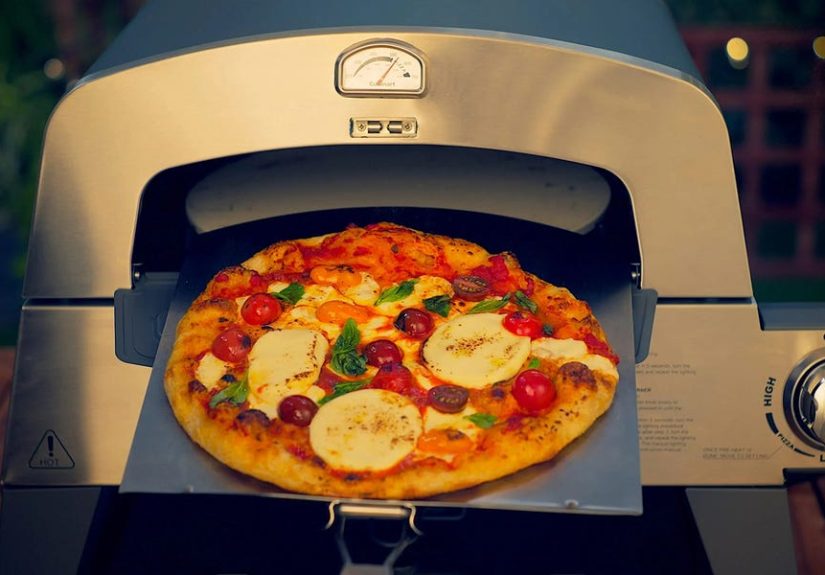
Cuisinart’s 3-in-1 Outdoor Pizza Oven is a propane-powered, tabletop-style outdoor cooker that swaps between three modes:
grill, griddle, and pizza oven. In other words, it’s a multitasker with a flame.
Instead of buying a dedicated pizza oven and a separate grill/griddle setup, this unit tries to cover the whole “feed everyone outside” job description.
Key features that matter (aka “the specs you’ll actually feel”)
- High heat capability: designed to reach temperatures over 700°F for searing and quick pizza bakes.
- Pizza stone: a 13-inch cordierite stone to help cook an evenly browned crust.
- Real cooking space: about 260 sq. in. on the grill side and roughly 230+ sq. in. on the griddle side.
- One-burner simplicity: a single burner rated around 15,000 BTU/hr (so it’s powerful, but you’ll learn temperature control).
- Built for outdoors: connects to a standard 20-pound propane tank via hose and must be used outside, in open air.
The “pizza oven” mode isn’t just a stone sitting on a grill grate. The lid design promotes convection-style heat around the stone,
and there’s a pizza-friendly temperature zone on the thermometer so you can target the range that tends to work best for pies.
Translation: it’s trying to get you closer to that pizzeria balancecrisp bottom, cooked toppingswithout needing to build a brick oven in your backyard.
About That “51% Off” Deal: What It Usually Means in Real Dollars
Let’s talk deal math without turning this into a sad spreadsheet. Cuisinart’s own list price can sit around the mid-$200 range,
and retailers often list it near $250–$300 depending on season and inventory. Big sale events have pushed it much lowersometimes in the $150–$200 zone.
A “51% off” headline typically points to a drop from roughly ~$300 down to the mid-$100s.
Here’s the practical takeaway: the exact percentage matters less than the final price. If you can land it in the
“cheaper than two months of takeout pizza” range, it’s a strong valueespecially because you’re also getting a grill and griddle in the same footprint.
Quick deal-spotting checklist
- Confirm the model: look for CGG-403 / CGG-403P naming in the listing.
- Scan what’s included: pizza stone + interchangeable surfaces + propane hose.
- Check return policy: because “I thought I’d make pizza weekly” is a common form of optimism.
- Watch shipping/weight: it’s not a featherweight appliancedelivery convenience is part of the deal value.
Who This Is Perfect For (and Who Should Probably Pass)
Buy it if you’re in one of these camps
- Space-savers: you want one outdoor cooker that can do multiple jobs.
- Weekend hosts: you like feeding people outside without living at the grill all night.
- Pizza-curious beginners: you want faster pizza than a kitchen oven can do, but don’t want a single-purpose unit.
- Tailgate/camping crowd: you want a party trick that also makes breakfast.
Skip it if…
- You’re a daily pizza obsessive: dedicated pizza ovens can be more focused, faster, and more consistent once you’re deep into the hobby.
- You need ultra-light portability: “portable” here means “transportable,” not “one-hand carry.”
- You can’t use propane safely outdoors: this is an outside-only appliance with real clearance requirements.
Safety note (not the fun part, but the important part): this unit is intended for outdoor use only, in a well-ventilated space,
and should be kept a safe distance from combustibles. You’ll also want to do basic propane leak checks and follow the standard “don’t use this in an enclosed area”
rules. In short: backyard? Great. Garage? Absolutely not.
Pizza Performance: How to Get “Pizzeria-ish” Results Without a Culinary Identity Crisis
The biggest advantage of an outdoor pizza oven is temperature. A typical indoor oven struggles to replicate the high-heat environment that sets a crust quickly.
With this Cuisinart, the goal is simple: get the stone hot enough to crisp the bottom while the top cooks before it dries out.
When you hit the sweet spot, pizzas can cook in about 6–8 minutesfast enough that your guests will keep hovering like seagulls.
Three pizza styles that work especially well
1) New York-ish thin crust: Use a medium-hydration dough, preheat thoroughly, and keep toppings reasonable. Too much sauce or wet mozzarella
can slow the top while the bottom races ahead.
2) “Neapolitan-inspired” at home: This isn’t a 900°F wood-fired dome, but you can still get a nice airy rim with a hotter stone,
lighter toppings, and quick rotations. Think: leopard-ish spots, not a full Naples passport.
3) Flatbread and “fancy toast” pizzas: If you’re feeding a crowd, flatbreads are the cheat codequick, forgiving, and perfect for making
multiple flavor options without dough drama.
The #1 trick: treat preheating like a non-negotiable
Many first-time outdoor-pizza disappointments are really just impatience in disguise. Give the stone time to heat through.
A hotter stone means better spring, faster crisping, and fewer “why is the center soggy?” moments.
If you have an infrared thermometer, you’ll feel like a wizard. If you don’t, you can still winjust preheat longer than you think you need.
Rotation = even cooking (and fewer burnt corners)
Like most compact outdoor pizza setups, there can be hot spots. The fix is simple: rotate your pizza regularly.
Open the door quickly, turn the pie, close it again. You’re not “checking on it”you’re doing tactical heat management.
Grill + Griddle Mode: The Hidden Reason This Deal Is So Tempting
Here’s the thing: you might buy this for pizza, but you’ll keep it because it also does weeknight grilling and weekend breakfast like a champ.
A dedicated pizza oven is greatuntil it’s Tuesday and you just want a burger.
Ideas that make the 3-in-1 concept click
- Breakfast outside: pancakes + bacon + eggs on the griddle while someone preps dough for later.
- Hibachi night: veggies, fried rice, and protein on the griddleminimal fuss, maximum applause.
- Steak-and-pizza party: sear steaks on the grill mode, then pivot to pizzas while people snack.
- Game-day lineup: smash burgers, quesadillas, and personal pizzas without turning your kitchen into a sauna.
The real value is flexibility: you’re not buying a single-purpose toy. You’re buying an outdoor cooking station that happens to do pizza
in a way your indoor oven probably can’t.
How to Nail Your First Pizza on This Thing (Without Stress-Baking)
Step 1: Set yourself up for success
- Use dough that’s at room temp (cold dough tears, sticks, and causes unnecessary feelings).
- Dust your peel with semolina or flour, then build quickly so the dough doesn’t glue itself down.
- Go lighter on toppings than you thinkespecially watery veggies and fresh mozzarella.
Step 2: Launch with confidence
The launch is where beginners lose years off their life. The trick: a gentle shake before you go in. If the pizza slides,
you’re good. If it doesn’t, lift an edge and add a little more dust. Then commit.
Step 3: Cook fast, rotate often, and adjust heat like a DJ
Start hot to set the crust, then adjust if the bottom darkens faster than the cheese melts.
Rotate every 20–60 seconds depending on how aggressive the heat feels. You’re aiming for: browned underside, bubbling cheese, cooked rim, no sadness.
Step 4: Rest before slicing
Give your pizza a minute. This isn’t fancy; it’s physics. The cheese and sauce settle, the crust holds, and you get cleaner slices.
Plus, it gives you time to brag casually, like you’re not already planning your next topping combo.
Honest Pros & Cons (Because You’re Not Buying a Unicorn)
Pros
- True multi-function value: pizza + grill + griddle in one unit.
- High-heat cooking: better crust potential than most indoor ovens.
- Entertaining factor: it turns “making dinner” into an event.
- Propane convenience: consistent fuel and straightforward setup for most households.
Cons
- Learning curve: you’ll need a few pies to learn your timing and hot spots.
- Not ultra-portable: it can travel, but it’s not “throw it in a tote bag” portable.
- Dedicated ovens can outperform it: if pizza is your main hobby, specialty models may deliver more consistency.
So… Should You Jump on the Deal?
If you want to level up outdoor cooking and get legitimately better pizza than a typical home ovenwithout buying separate appliancesthis is
exactly the kind of deal that makes sense. The 3-in-1 setup is especially smart for people who host, people who like variety, and people who want pizza nights
without dedicating precious storage to a one-trick gadget.
Bottom line: if you’re seeing the big markdown today, the “don’t miss this” energy is warranted. Worst case, you become the person who makes breakfast
outside. Best case, your backyard becomes the neighborhood’s unofficial pizzeria, and you’ll never pay $6 for delivery again out of pure principle.
Real-World Pizza-Night Stories & Tips (About of “Been There” Energy)
Imagine a Saturday where the group chat actually agrees on a time. People arrive “not that hungry,” which is code for
“I will eat anything within arm’s reach.” You fire up the Cuisinart, and suddenly everyone becomes a pizza consultant:
one friend insists pineapple is essential, another demands “authentic” pepperoni (as if pepperoni has a passport),
and someone’s kid asks if they can put gummy bears on theirs. Congratulationsyou’re now running a tiny outdoor restaurant.
Here’s what tends to happen in real life: the first pizza is the “calibration pie.” It’s not badmaybe a little darker on one side,
maybe the cheese is a touch enthusiastic. That’s normal. By pizza #2, you’re rotating like a pro. By pizza #3, you’re accepting compliments
with the calm confidence of a person who absolutely watched three videos earlier and is pretending it was instinct.
The most underrated move is making personal pizzas. Not only does it keep everyone entertained, it also prevents the
“someone picked olives and now half the party is negotiating like the United Nations” situation. Set out bowls of toppings and give each person
a mission: one builds, one launches, one rotates, one slices. You’ve turned dinner into an activityno board game required.
Tailgates and camping trips are where the 3-in-1 personality shines. Breakfast on the griddle is an instant win:
bacon, eggs, and pancakes outdoors feels like luxury even if you slept on something that technically qualifies as a “mat.”
Later, switch to grill mode for burgers or chicken, then finish with flatbread pizzas while people “just happen” to wander back for seconds.
The point isn’t perfectionit’s momentum: food keeps coming, nobody’s stuck inside, and the cook isn’t missing the fun.
A practical tip from the trenches: keep toppings prepped and dry. Slice mushrooms ahead of time and pat them down.
Use low-moisture mozzarella if you want fewer puddles. And if you’re doing fresh mozzarella, tear it and let it drain a bit.
Also, don’t overload sauce. Outdoor pizza cooking is fast; heavy toppings can slow the top while the crust keeps sprinting.
Finally, accept this truth: pizza night is a vibe. Someone will always ask, “How long does it take?” right as you’re launching.
Someone will always volunteer to “help” by standing directly in front of the door. Smile, rotate the pie, and remember:
you’re not just making dinneryou’re creating the kind of evening people bring up later, usually while asking, “When are we doing pizza again?”