Table of Contents >> Show >> Hide
- Before the Fallout: Billy Squier Was Already a Heavyweight
- One Hit Blunders: The 5 Big Ways the Video Hurt Squier’s Career
- 1) It shattered his hard-rock image in the most public place possible
- 2) MTV turned one awkward creative decision into a recurring national punchline
- 3) It alienated the exact demographic he depended on most
- 4) It distracted from the music and made every future release answer for one clip
- 5) It triggered a wider confidence problem across management, label support, and creative direction
- Was It Really “One Video Ended His Career”? Yes, No, and Sort Of
- Why This Story Still Matters in 2026
- Extended Experience Section: 500-Word Field Notes for Creators and Marketers
- Conclusion
In early-’80s rock, Billy Squier looked built for a long reign: arena-sized hooks, radio-ready riffs, and enough swagger to make denim jackets feel like formalwear. Then came 1984’s Rock Me Tonite video, a clip that became shorthand for “how to derail your own brand in four minutes.” In pop-culture lore, it’s often treated as the single moment his momentum cracked.
But the full story is more interesting than a simple punchline. Yes, the video mattered. A lot. But it landed in a specific ecosystem: MTV’s image-first era, hard-rock masculinity politics, label pressure, changing audience tastes, and a fan base that expected one thing and got another. This article unpacks the famous “one hit blunder” narrative with nuance, humor, and zero nostalgia goggles.
We’ll cover the five biggest ways the video damaged Squier’s trajectory, why “one video killed everything” is both true and incomplete, and what modern creators can learn about brand-image fit before they hit publish.
Before the Fallout: Billy Squier Was Already a Heavyweight
It’s important to start here: Billy Squier was not a novelty act waiting to collapse. He was a real commercial force. By the time Rock Me Tonite arrived, he had already stacked recognizable rock-radio staples like The Stroke, My Kinda Lover, and Everybody Wants You. He also had an album run that made labels very happy and tour promoters even happier.
In practical terms, this means the video didn’t knock over a fragile house of cards. It hit a strong brand at a vulnerable pressure point: audience trust. Hard-rock fans in that era treated visual authenticity like a blood oath. If your image looked “off,” they didn’t quietly disagreethey judged, joked, and moved on to the next guitar hero.
So yes, the song itself performed. But in the MTV age, the song and the image weren’t separate products anymore. They were one fused identity package. When that package looked mismatched, the backlash could travel faster than the chorus.
One Hit Blunders: The 5 Big Ways the Video Hurt Squier’s Career
1) It shattered his hard-rock image in the most public place possible
Squier’s core audience expected tough, guitar-forward confidence. What they got in Rock Me Tonite felt theatrical in a way many fans read as unserious for his brand. The styling, movement, and bedroom set pieces created visual dissonance with the persona that sold the records in the first place.
In brand terms, this wasn’t “creative risk.” It was perceived identity drift. The fans who wanted fists-in-the-air rock felt like they got interpretive late-night cable dance theater instead. Once that disconnect became a joke, it spread quickly and stuck.
2) MTV turned one awkward creative decision into a recurring national punchline
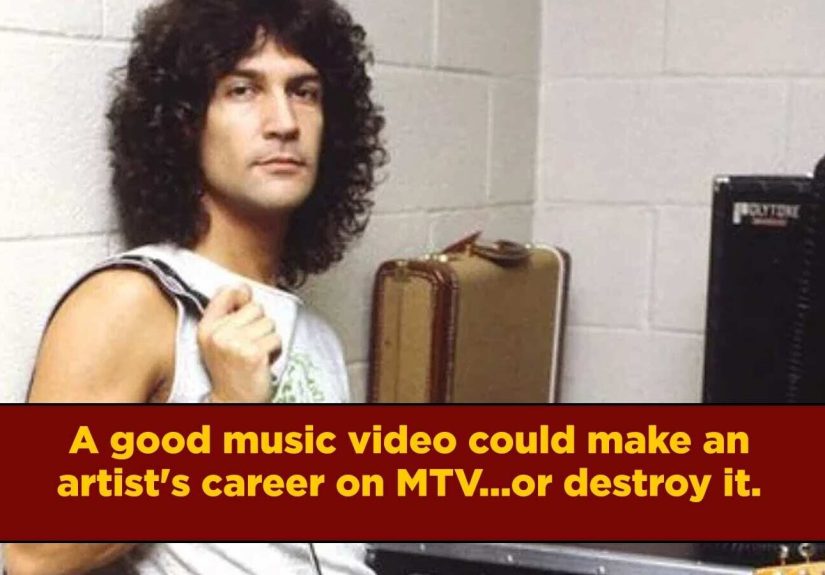
A bad live show can be a bad night. A bad interview can be forgotten. A bad MTV video in the 1980s? That became repeat exposure. Viewers saw the same uncomfortable images over and over, and repetition hardened first impressions into reputation.
This is where the era mattered. MTV was a gatekeeper and a megaphone. If radio sold the song, MTV sold the personaand sometimes sold a parody of the persona. In Squier’s case, the video’s reputation often outlived the music itself in mainstream memory.
3) It alienated the exact demographic he depended on most
Squier’s audience skewed young and male, and that crowd in 1984 enforced strict, often unforgiving rules about what counted as “credible” rock behavior. Once fans interpreted the video as a betrayal of that code, they didn’t treat it as an experiment. They treated it as disqualification.
Whether that reaction was fair is a separate conversation. But commercially, fairness doesn’t matter as much as behavior. Fans vote with attention, ticket purchases, and repeat listens. Reports from the period show he still sold, but the “can’t miss” aura was gone.
4) It distracted from the music and made every future release answer for one clip
After the backlash, discussion around Squier often started with the video and only later (if ever) got to songwriting, vocals, or guitar work. That’s the real tax of a brand rupture: your past catalog no longer frames your futureyour controversy does.
In practical terms, each new single had to fight through a preloaded narrative. Instead of “What’s the new sound?” the public conversation became “Is this the guy from that video?” That shift can kneecap momentum even when the underlying music is still strong.
5) It triggered a wider confidence problem across management, label support, and creative direction
Once the video became infamous, blame bounced around: artist, management, label, director, concept, timingyou name it. Public finger-pointing and retrospective defensiveness usually signal a deeper issue: strategic alignment had already broken.
Careers rarely collapse from one artifact alone. More often, one artifact exposes weak coordination behind the scenes. In Squier’s case, the video became the symbol of larger instability around positioning, production decisions, and post-release narrative control.
Was It Really “One Video Ended His Career”? Yes, No, and Sort Of
The clean myth says: one clip aired, career over. Reality is messier.
Yes, because the video damaged trust at exactly the moment visual credibility became central to rock stardom. It changed how audiences framed him, and that framing proved sticky.
No, because he did not vanish overnight. The song charted, he kept recording, and he continued performing. This was more of a momentum collapse than an immediate disappearance.
Sort of, because while the phrase “ended his career” is dramatic, it captures a real truth about trajectory. He went from “possible superstar tier” to “respected but permanently recontextualized.” In entertainment economics, that gap is enormous.
So the fairest verdict is this: the video probably didn’t erase Billy Squier’s talent, but it did reset his ceiling.
Why This Story Still Matters in 2026
You might think this is an ’80s relic, but it’s actually a modern creator playbook in reverse. Replace MTV with TikTok, YouTube Shorts, Instagram Reels, or algorithmic autoplay, and the mechanics are nearly identical:
- Image and product are fused. Audiences don’t separate the content from the persona.
- Mismatch gets amplified. A single off-brand moment can outrank years of good work.
- Humor accelerates reputational damage. Memes travel faster than clarifications.
- Recovery needs narrative strategy. “Ignore it and move on” rarely works in an archive-first internet.
- Core audience fit beats broad experimentation. Expansion works best when identity remains legible.
If you’re an artist, marketer, founder, or content operator, this case study has one central lesson: creative freedom and audience expectation are not enemies, but they do need a translator. Without that bridge, even great work can get misread.
Extended Experience Section: 500-Word Field Notes for Creators and Marketers
Let’s get practical. Imagine you’re launching a campaign you secretly love but your audience has never seen from you. You think, “This is bold, fresh, unexpected.” Your team says, “Yes, do it.” Then launch day comes, and comments are less “wow” and more “what is this?” That emotional dropthe instant where confidence turns into damage controlis exactly why the Billy Squier story still stings.
The first experience most creators report in that moment is identity vertigo. You know who you are. Your audience knew who you were. Then one piece of content breaks the shared understanding. Suddenly, every post-release choice feels like a referendum on your legitimacy. Do you apologize? Double down? Joke about it? Pretend it never happened?
Second comes feedback asymmetry. Supporters might leave thoughtful comments, but critics often produce the most viral lines. That creates a distorted view where negativity looks unanimous even when it isn’t. In Squier’s era, this spread through TV repetition and word of mouth; now it happens through quote-posts, edits, and clips detached from context.
Third is the archive problem. Once an embarrassing artifact becomes searchable shorthand, it can outrank your best work forever. People don’t always meet your catalog in chronological order; they meet your most memed moment first. That means recovery isn’t just about making better future content. It’s about building a counter-archive strong enough to rebalance first impressions.
Fourth is team strain. If roles were unclear before launch, controversy magnifies every crack: who approved the creative direction, who tested audience response, who handled PR framing, who owned the final call? Blame feels satisfying for five minutes and expensive for five years. The better move is postmortem discipline: what signals did we ignore, what assumptions were wrong, what guardrails do we add?
Fifth is the comeback paradox. Recovery works best when you neither erase the miss nor center your whole identity around it. A useful middle path looks like this: acknowledge the mismatch, reconnect with core strengths, release consistently excellent work, and let time shift the ratio of remembered mistakes to remembered value.
Here’s a simple operating framework many teams use now:
- Pre-test identity fit: ask if this content still reads as “us” to loyal fans.
- Stress-test perception: run worst-case interpretation scenarios before launch.
- Plan the first 72 hours: decide in advance how to respond if reception turns.
- Protect the catalog: rapidly publish adjacent, high-quality work to prevent one piece from defining the whole story.
- Track behavior, not noise: monitor retention, repeat engagement, and conversionnot just viral mockery.
The real experience takeaway is hopeful: reputational hits are painful, but rarely final if the underlying talent and output are real. Billy Squier’s saga is remembered as a cautionary tale, yet it also proves something important: one misfire can distort a career arc, but it doesn’t erase the craft that built the career in the first place.
Conclusion
Cracked’s “One Hit Blunders” framing is catchy for a reason: it captures the brutal speed of pop-cultural judgment. In Billy Squier’s case, one infamous video did more than spark jokesit exposed how fragile image alignment can be when visual media dominates music discovery.
The deeper lesson isn’t “never experiment.” It’s “experiment with strategic self-awareness.” Know your audience, understand your brand gravity, and design creative risks that still sound and look like you. Because in every eraMTV then, algorithmic feeds nowaudiences forgive a lot faster than the internet does.