Table of Contents >> Show >> Hide
- What Are Intra-Day Stock Market Patterns?
- The U-Shaped Volume and Volatility Pattern
- The Opening Range Pattern
- Gap-and-Go vs. Gap-Fill Patterns
- Trend Day Pattern
- Range-Bound Midday Pattern
- False Breakout Pattern
- Morning Reversal Pattern
- Late-Day Breakout or Breakdown
- News-Driven Intra-Day Patterns
- Sector Rotation During the Day
- How Liquidity and Bid-Ask Spreads Shape Intra-Day Patterns
- Practical Ways to Read Intra-Day Patterns
- Common Mistakes When Trading Intra-Day Patterns
- Experience Notes: What Traders Often Learn From Intra-Day Patterns
- Conclusion
Note: This article is for educational purposes only and is not financial advice. Intra-day trading can involve fast losses, high stress, wider spreads, and sudden volatility. Always research carefully, use risk controls, and consult a qualified professional before making trading decisions.
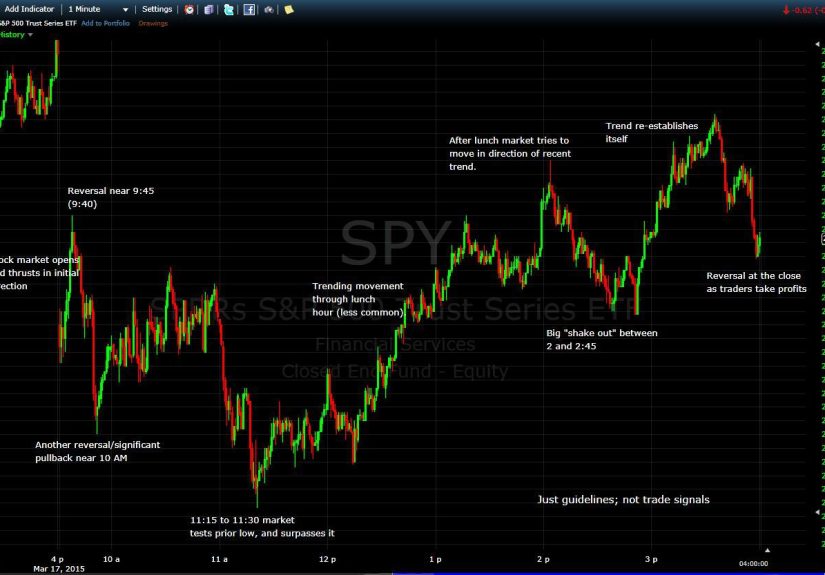
The stock market may look chaotic from minute to minute, like a caffeinated squirrel sprinting across a keyboard. Prices jump, dip, stall, reverse, and sometimes behave as if they just remembered an appointment at 3:59 p.m. But beneath the noise, many trading days follow recognizable rhythms. These are known as intra-day stock market patterns: recurring price, volume, volatility, and liquidity behaviors that happen within a single market session.
Understanding common intra-day stock market patterns does not mean you can predict every tick. If that were possible, Wall Street would be full of people calmly sipping smoothies on private islands. Instead, these patterns help traders and active investors interpret market behavior with more structure. They show when volume tends to be strongest, when volatility often cools, why the open and close matter so much, and how news can turn a sleepy chart into a roller coaster with no seatbelt.
For U.S. stocks, the regular market session typically runs from 9:30 a.m. to 4:00 p.m. Eastern Time. Many platforms also offer pre-market and after-hours trading, but those sessions often come with lower liquidity, wider bid-ask spreads, and more unpredictable execution. The most reliable intra-day patterns usually appear during regular hours because that is when participation is deepest and price discovery is most active.
What Are Intra-Day Stock Market Patterns?
Intra-day stock market patterns are recurring behaviors that appear during the trading day. They may involve price direction, volume, volatility, order flow, support and resistance, or trader psychology. Some patterns are visible on charts, such as opening range breakouts, pullbacks, reversals, and end-of-day rallies. Others are more structural, such as the tendency for volume and volatility to be higher near the open and close.
These patterns exist because market participants behave differently at different times. Institutional investors may execute large orders near the close to match benchmark prices. Retail traders may be more active near the open. News released before the bell can create gaps. Economic data can shake the market mid-morning. Portfolio managers may rebalance at month-end or quarter-end. In other words, the market clock matters because human behavior, algorithmic execution, and institutional routines are all tied to time.
The U-Shaped Volume and Volatility Pattern
One of the most widely observed intra-day stock market patterns is the U-shaped curve in trading volume and volatility. Activity is often heavy near the opening bell, slows during the middle of the day, and rises again into the closing bell. Picture a smiley face drawn by Wall Street, except the smile occasionally costs people money.
Why the Open Is So Active
The market open is where overnight information gets priced into stocks. Earnings reports, analyst upgrades, geopolitical headlines, economic data, and global market moves all collide at 9:30 a.m. Eastern Time. Traders react to what happened while the U.S. market was closed, and orders that accumulated overnight begin to execute. This creates strong volume, wider price swings, and sometimes dramatic gaps between the previous close and the new opening price.
For example, if a technology company reports stronger-than-expected earnings after the prior day’s close, its stock may open sharply higher the next morning. A trader watching intra-day patterns would not simply say, “Green candle equals good.” They would ask whether the stock can hold above its opening range, whether volume supports the move, and whether the broader market is confirming the strength.
Why Midday Often Slows Down
After the first wave of activity, the market often enters a quieter period. This is sometimes called the midday lull or lunch-hour slowdown. Volume may fade, spreads may normalize, and prices can drift in narrower ranges. It is not that everyone on Wall Street literally leaves for a three-hour sandwich, although sandwiches are powerful. Rather, much of the initial price discovery has already happened, and traders may wait for new information before committing more capital.
This quieter period can be tricky. A breakout during low-volume midday trading may look exciting but fail quickly because there is not enough participation behind it. On the other hand, a stock that calmly consolidates during midday after a strong morning move may be preparing for a continuation later in the session. Context matters more than the clock alone.
Why the Close Gets Busy Again
The final hour of trading often brings renewed activity. The close is important because mutual funds, ETFs, index funds, pension funds, and other institutions frequently care about closing prices. Closing auctions also concentrate liquidity at the end of the day. Traders may adjust risk before overnight news, cover short positions, rebalance portfolios, or complete orders tied to benchmark prices.
This is why the last 30 to 60 minutes can produce sharp moves. A stock that traded sideways for hours can suddenly break out, reverse, or accelerate into the close. The market’s final hour has earned nicknames like “power hour,” although on some days it feels more like “confusion hour with extra volume.”
The Opening Range Pattern
The opening range is one of the most popular intra-day trading concepts. It refers to the high and low established during the first few minutes of the session, often the first 5, 15, or 30 minutes. Traders use that range as a reference point for early momentum.
Opening Range Breakout
An opening range breakout happens when price moves above the high of the opening range with strong volume. This can suggest that buyers are in control and that the stock may continue higher. For bearish setups, price breaks below the opening range low, suggesting sellers are pressing the move.
For example, suppose a stock opens at $50 after positive earnings news, trades between $49.80 and $51.20 during the first 15 minutes, and then breaks above $51.20 on rising volume. Traders may view that as a bullish opening range breakout. However, a clean breakout requires confirmation. If price pops above the range and immediately sinks back inside it, that may signal a false breakout.
Opening Range Reversal
Not every strong open continues. Sometimes a stock gaps up, attracts excited buyers, then reverses lower after early demand is exhausted. This is called an opening range reversal. It often occurs when the news was already priced in, the broader market weakens, or early buyers take profits quickly.
The key clue is whether price fails to hold the opening range. If a stock opens strong but breaks below its early low on expanding volume, the first bullish story may be losing credibility. In trading, the first story is not always the final story. Markets are excellent at plot twists.
Gap-and-Go vs. Gap-Fill Patterns
Gaps are among the most watched intra-day stock market patterns. A gap occurs when a stock opens significantly above or below its previous closing price. Gaps often follow earnings, guidance updates, regulatory news, mergers, analyst actions, or broad market shocks.
The Gap-and-Go Pattern
A gap-and-go pattern occurs when a stock opens higher and continues moving in the same direction. This often happens when news changes investor expectations in a meaningful way. Strong volume, broad market support, and sector strength can increase the chance that the move continues.
Imagine a semiconductor stock opens 8% higher after reporting strong revenue growth and raising guidance. If it holds above the opening range, pulls back lightly, and then pushes to new intra-day highs, traders may see a gap-and-go pattern. The best versions usually show volume confirmation and limited selling pressure on pullbacks.
The Gap-Fill Pattern
A gap-fill pattern happens when price moves back toward the previous day’s closing level. If a stock gaps up from $40 to $44 but then fades toward $40, the gap is being filled. Gap fills may occur when traders sell the news, when the broader market turns against the move, or when the opening price was too aggressive.
Gap fills are common enough to watch, but not guaranteed. A dangerous habit is assuming every gap must fill immediately. Markets have no legal obligation to tidy up your chart. Some gaps fill the same day, some fill weeks later, and some become major breakout zones.
Trend Day Pattern
A trend day occurs when the market or a stock moves persistently in one direction for most of the session. These days often begin with strong momentum, shallow pullbacks, and consistent buying or selling pressure. Trend days can frustrate traders who keep expecting a reversal that never arrives.
On a bullish trend day, price may open strong, hold above key moving averages such as the VWAP, and make a series of higher highs and higher lows. On a bearish trend day, price may stay below VWAP, fail on rallies, and continue making lower lows. The trend day pattern is especially important because fighting it can be costly. Trying to short every new high on a strong trend day is like arguing with a bulldozer. Technically possible, emotionally educational, rarely pleasant.
How VWAP Fits Into Trend Days
VWAP, or volume-weighted average price, is a popular intra-day benchmark. It shows the average price of a security weighted by volume. Many traders use VWAP as a rough line between bullish and bearish intra-day control. If price stays above VWAP and pullbacks find support near it, buyers may be defending the trend. If price remains below VWAP and rallies fail near it, sellers may be in control.
VWAP is not magic. It is a tool, not a crystal ball with a brokerage account. But because many institutional and active traders monitor it, VWAP can become an important reference level during the trading day.
Range-Bound Midday Pattern
Not every day trends. Many stocks spend much of the day moving sideways between support and resistance. This range-bound pattern is common during low-volume periods, especially after the opening move has already played out.
In a range-bound session, traders often watch the top and bottom of the range for failed breakouts or breakdowns. If price repeatedly rejects the same resistance level, sellers may be defending that area. If price keeps bouncing from the same support zone, buyers may be stepping in. The challenge is that range trading can become choppy. A stock may briefly break above resistance, lure in buyers, then slide back into the range. That is the market’s way of saying, “Nice breakout you had there. Shame if something happened to it.”
False Breakout Pattern
A false breakout occurs when price moves beyond a key level but fails to continue. It may break above resistance, attract buyers, and then reverse sharply lower. Or it may break below support, trigger selling, and then snap back higher.
False breakouts are common during intra-day trading because short-term participants react quickly to visible levels. Stop orders may cluster above highs or below lows. Algorithms may test liquidity around those levels. If there is no follow-through, price can reverse fast.
Volume is one way to evaluate the quality of a breakout. A breakout with strong, sustained volume usually carries more weight than one that occurs on thin activity. Still, even high-volume breakouts can fail when news changes or broader market conditions shift.
Morning Reversal Pattern
The morning reversal pattern often appears after an emotional open. A stock may gap sharply in one direction, extend for the first few minutes, then reverse as early momentum fades. This pattern is especially common after major news events, earnings surprises, or market-wide fear and greed.
A bullish morning reversal may happen when a stock gaps down, sells off early, then finds buyers and reclaims the opening range. A bearish morning reversal may happen when a stock gaps up, fails to hold gains, and breaks below early support. The strongest reversals usually include a clear change in volume and price structure.
Late-Day Breakout or Breakdown
Late-day breakouts and breakdowns happen when price leaves a range near the end of the session. They often matter because the close carries institutional significance. If a stock consolidates for hours and then breaks higher during the final hour on rising volume, traders may interpret that as meaningful demand. If it breaks lower into the close, sellers may be reducing risk before the next session.
Late-day moves can be powerful, but they also come with overnight risk. A trader who enters near the close may have limited time to manage the position before the market shuts. After-hours news, earnings releases, and global events can create gaps the next morning. That is why many active traders decide in advance whether a trade is strictly intra-day or whether it can be held overnight.
News-Driven Intra-Day Patterns
News can override ordinary intra-day market patterns. A stock may follow a calm midday range until an unexpected headline appears. Then volume explodes, spreads widen, and price moves sharply. Earnings calls, Federal Reserve announcements, inflation data, legal rulings, product approvals, mergers, and geopolitical headlines can all reshape the trading day.
Economic releases are especially important for index ETFs, large-cap stocks, banks, technology shares, and interest-rate-sensitive sectors. A stronger-than-expected inflation report, for example, may push yields higher and pressure growth stocks. A dovish Federal Reserve statement may fuel a broad rally. In these moments, the best pattern is often not a chart shape but a question: “Has the information environment changed?”
Sector Rotation During the Day
Another common intra-day pattern is sector rotation. Money may flow from one group of stocks to another as traders interpret news, earnings, rates, or commodity prices. Technology may lead in the morning, energy may strengthen after oil news, banks may move with interest rates, and defensive sectors may catch bids when the broader market weakens.
Watching sector ETFs can help traders understand whether a stock’s move is company-specific or part of a broader theme. If one software stock is rising while the entire software group is strong, the move has sector support. If it is rising alone while peers are weak, traders may look for stock-specific news or unusual order flow.
How Liquidity and Bid-Ask Spreads Shape Intra-Day Patterns
Liquidity is the ability to buy or sell without causing a large price move. In liquid stocks, bid-ask spreads are usually tighter, orders fill more efficiently, and patterns may be cleaner. In thinly traded stocks, spreads can widen, slippage can increase, and charts may produce messy signals.
This matters even more outside regular market hours. Pre-market and after-hours trading can look tempting because dramatic moves happen there, but lower participation can make prices less stable. A stock that appears to be up 5% before the open may trade only a small number of shares at that price. Once regular trading begins, deeper liquidity can completely change the picture.
Practical Ways to Read Intra-Day Patterns
Start With the Market Context
Before analyzing a stock, look at the broader market. Is the S&P 500 strong or weak? Are Nasdaq stocks leading or lagging? Are Treasury yields moving sharply? Is there major economic news? A bullish stock setup has better odds when the broader market supports it. A bearish pattern may work better when indexes are under pressure.
Compare Price With Volume
Price tells you what happened. Volume helps show how much participation was behind it. A breakout on rising volume usually deserves more attention than a breakout on fading activity. A pullback on light volume may be healthy consolidation, while a pullback on heavy selling volume may signal distribution.
Watch Key Reference Levels
Common intra-day reference levels include the opening price, opening range high and low, previous day high and low, previous close, VWAP, pre-market high and low, and major support or resistance from the daily chart. These levels attract attention because many traders are watching them. When price reacts strongly near one of these areas, it can reveal useful information about supply and demand.
Separate Patterns From Predictions
A pattern is not a promise. It is a framework for observation. The same setup can work beautifully one day and fail the next. Successful market analysis depends on probability, risk management, flexibility, and humility. The market does not care how confident your chart annotation looks.
Common Mistakes When Trading Intra-Day Patterns
One common mistake is entering too early before a pattern confirms. A trader sees a stock approaching resistance and buys in anticipation of a breakout, only to watch it reject the level. Another mistake is ignoring volume. A price move without participation may not have staying power. Traders also get into trouble when they overtrade during the midday lull, chasing tiny moves in low-quality setups.
Risk management is another major issue. Intra-day patterns can fail quickly, so traders need clear exit plans. A small loss can become a large one when a trader decides to “give it more room” without a reason. Translation: the trade moved into the garage, took the car keys, and is now driving your account balance somewhere unpleasant.
Finally, many traders forget that the best trade may be no trade. Not every day offers clean setups. Sometimes the market is choppy, news is confusing, volume is thin, and charts look like spaghetti. Sitting out is not laziness. It is a strategy with excellent capital preservation features.
Experience Notes: What Traders Often Learn From Intra-Day Patterns
One of the first practical lessons traders learn is that the open is both exciting and dangerous. The first 15 to 30 minutes can offer major opportunity, but it also contains emotional trading, wider spreads, and rapid reversals. Many beginners see a fast-moving stock and feel pressure to jump in immediately. More experienced traders often wait for the first range to form, because the earliest move can be a trap. The market open is like a crowded doorway: everyone rushes through at once, and someone usually drops a shoe.
Another experience-based lesson is that midday patience matters. The quiet middle of the session can tempt traders into forcing trades. A stock may move just enough to look active but not enough to produce a high-quality setup. Traders often discover that their worst entries happen when they are bored rather than when they are informed. The better habit is to use midday to review watchlists, identify clean consolidation zones, mark VWAP behavior, and prepare for the afternoon instead of clicking buttons for entertainment.
Traders also learn that the strongest patterns usually align across timeframes. An intra-day breakout is more convincing when the daily chart also shows strength. For example, a stock breaking above its 15-minute opening range may be more attractive if it is also clearing a multi-day resistance level on the daily chart. When the one-minute chart looks bullish but the daily chart is pressing into major resistance, the setup may require more caution. Small charts are useful, but they can become dramatic little soap operas without the bigger picture.
Another common experience is the surprise of late-day volume. A stock can look lifeless for hours and then suddenly move with force near the close. This often teaches traders to respect the final hour. However, it also teaches caution. Entering late in the day can reduce decision time and increase overnight risk. Many traders decide before entering whether they will exit before the closing bell or hold the position with a clearly defined plan. Without that decision, the close can turn into a stressful guessing game.
Experience also shows that news beats patterns. A perfect technical setup can fail instantly when unexpected news hits. A stock holding VWAP beautifully can break down after a regulatory headline. An index ETF drifting lower can rip higher after a Federal Reserve comment. This is why traders often keep an economic calendar nearby and avoid pretending that charts exist in a vacuum. Patterns are useful, but headlines can walk in wearing muddy boots.
Finally, many traders learn that consistency comes less from finding the “secret pattern” and more from repeating a simple process. They define the market context, identify important levels, wait for confirmation, manage position size, and accept that losses are part of the business. Intra-day stock market patterns can improve decision-making, but discipline determines whether that knowledge becomes useful. The goal is not to win every trade. The goal is to avoid letting one bad trade behave like it owns the place.
Conclusion
Common intra-day stock market patterns help traders make sense of the market’s daily rhythm. The open often brings high volume and volatility as overnight information is priced in. Midday frequently slows into consolidation or range-bound action. The close can attract renewed activity as institutions rebalance, traders manage risk, and closing auctions concentrate liquidity.
Patterns such as opening range breakouts, gap-and-go moves, gap fills, trend days, false breakouts, VWAP tests, morning reversals, and late-day breakouts can all provide useful clues. But no pattern works every time. The most practical approach is to combine pattern recognition with volume analysis, market context, liquidity awareness, and disciplined risk management.
The market does not hand out easy money simply because a chart looks familiar. But when you understand intra-day stock market patterns, you stop staring at the screen like it is speaking ancient whale language. You begin to see structure, timing, participation, and probability. That is a much better starting point than guessing, chasing, or trusting a hot tip from someone whose profile picture is a rented sports car.