Table of Contents >> Show >> Hide
- What Caused China’s Economic Growth?
- 1. Reform and Opening Up Changed the Rules of the Game
- 2. Urbanization and Labor Reallocation Supercharged Output
- 3. Manufacturing Scale and Export Power Did the Heavy Lifting
- 4. High Savings and High Investment Kept the Machine Running
- 5. State Guidance and Industrial Policy Were Never Small Side Notes
- The Pros of China Economic Growth
- The Cons of China’s Growth Model
- Why China Economic Growth Is Slowing Now
- The Future of China Economic Growth
- Experiences That Make the China Growth Story Feel Real
- Conclusion
China’s economic growth story is one of the biggest plot twists in modern history. In just a few decades, the country went from a largely poor, agrarian economy to a manufacturing superpower, export titan, infrastructure machine, and increasingly serious technology competitor. That kind of transformation does not happen because a country simply “worked hard” and drank more green tea. It happened because China combined market reforms, state direction, urbanization, trade integration, labor scale, and relentless investment.
But here’s the part that makes the story more interesting: the same model that helped China grow fast is also creating some of its biggest headaches. The property sector has become a drag, local governments are burdened with debt, households remain cautious about spending, and demographics are no longer the growth-friendly tailwind they once were. In other words, the old growth engine still starts, but it coughs a little now.
So where does that leave the Chinese economy? Somewhere between remarkable resilience and structural slowdown. China is still a giant force in the global economy, but future growth will likely be slower, more uneven, and more dependent on whether policymakers can shift the country from investment-and-export-led expansion toward a more consumption-driven, productivity-led model.
What Caused China’s Economic Growth?
1. Reform and Opening Up Changed the Rules of the Game
The first major cause of China economic growth was reform. Beginning in the late 1970s, China loosened central planning, allowed more market activity, encouraged private enterprise, opened special economic zones, and invited foreign capital and manufacturing know-how. That did not turn China into a pure free-market economy, but it did create enough room for competition, investment, and productivity gains to take off.
These reforms mattered because they changed incentives. Farmers could produce more efficiently, businesses could scale, and local governments had strong reasons to chase development. China did not abandon state power; it repurposed it. The result was a hybrid model in which markets generated energy and the state shaped direction.
2. Urbanization and Labor Reallocation Supercharged Output
Another powerful cause of Chinese economic growth was the movement of labor from low-productivity rural work into higher-productivity factory and city jobs. This shift is one of the least glamorous but most important parts of the growth story. When millions of workers move from subsistence agriculture into industry, logistics, construction, and services, national output rises quickly.
Urbanization also created a feedback loop. More city workers meant more demand for roads, rail, ports, housing, utilities, and public infrastructure. That in turn created more jobs, more investment, and more economic activity. China did not just build factories; it built entire economic ecosystems around them.
3. Manufacturing Scale and Export Power Did the Heavy Lifting
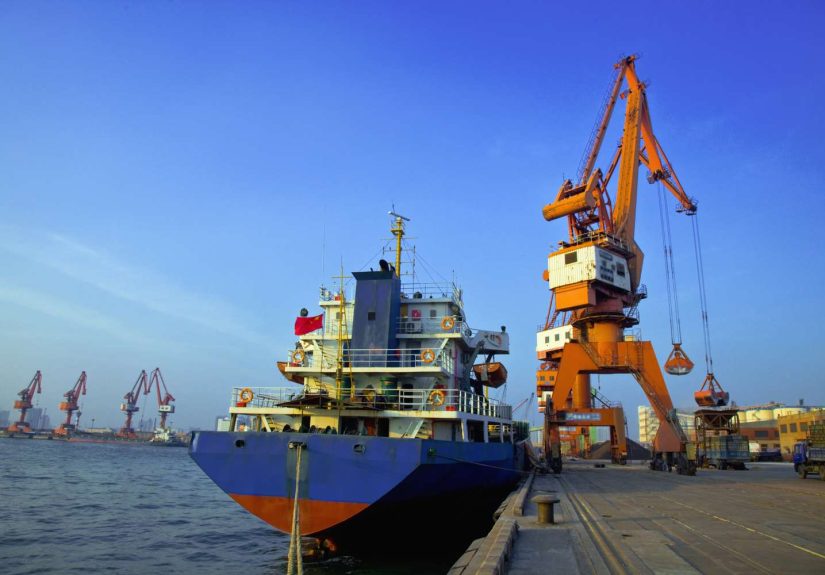
China became the world’s factory floor by combining low labor costs, improving infrastructure, huge production clusters, and global trade integration. After joining the World Trade Organization in 2001, China gained even deeper access to overseas markets. Exports surged. So did foreign direct investment. Supply chains thickened. Coastal provinces boomed.
This export-led growth model helped China accumulate capital, learn advanced production methods, and dominate in a wide range of industries, from electronics and machinery to solar panels, batteries, and electric vehicles. Economies of scale became a major advantage. When China builds something at scale, it does not build a little. It builds an industrial universe.
4. High Savings and High Investment Kept the Machine Running
China’s growth model also relied on very high savings and very high investment. Households saved heavily, businesses reinvested, banks funneled capital into infrastructure and industrial expansion, and local governments pushed development projects aggressively. For years, this created a powerful cycle: more investment led to more output, more employment, and more urban growth.
That strategy worked especially well when China still had obvious opportunities to build what it lacked: highways, ports, airports, power systems, apartment blocks, factories, industrial parks, and transit networks. In the early stages of development, building a lot can be smart. In later stages, building for the sake of building starts to look like an expensive hobby.
5. State Guidance and Industrial Policy Were Never Small Side Notes
China’s government has played a central role in directing growth through five-year plans, credit guidance, land policy, subsidies, and support for priority sectors. Unlike economies that rely more heavily on market allocation alone, China has used state tools to accelerate development in manufacturing, infrastructure, advanced technology, and strategic industries.
This approach has clear benefits. It can mobilize resources quickly, coordinate major projects, and protect long-term policy goals from short-term market panic. It can also create serious distortions, which brings us to the next chapter of the saga.
The Pros of China Economic Growth
The biggest advantage of China economic growth is obvious: it transformed living standards. Hundreds of millions of people moved out of poverty, incomes rose, cities expanded, and China became one of the most important engines of global growth. Even now, China remains too large to ignore. When it speeds up, commodity exporters cheer. When it slows down, markets everywhere reach for aspirin.
Another major benefit is infrastructure. China has built world-class transportation systems, modern ports, deep manufacturing networks, and advanced digital and industrial capacity. That has strengthened productivity and lowered logistics costs across large parts of the economy.
China’s growth also helped it climb the value chain. The country is no longer just associated with low-cost assembly. It is now a serious player in electric vehicles, batteries, renewable energy equipment, telecom gear, industrial machinery, and parts of artificial intelligence and robotics. That evolution matters because middle-income countries often struggle to move from “cheap producer” to “serious innovator.” China, despite many obstacles, has moved further than most.
There is also a strategic benefit in the government’s ability to act fast. During downturns or stress periods, Beijing can mobilize banks, state firms, and local authorities in ways that more decentralized economies often cannot. That does not make every intervention wise, but it does make the system unusually responsive in a crisis.
The Cons of China’s Growth Model
The weaknesses are just as real as the strengths. First, the model became too dependent on investment. When investment works, it looks brilliant. When it overshoots, it leaves empty apartments, marginal projects, underused industrial capacity, and debts that do not magically pay themselves back.
Second, the property sector became too important. Real estate was not just a place to live; it became a store of wealth, a source of local government revenue, and a major growth channel. Once housing demand cooled and developers ran into financing trouble, the damage spread widely. Consumer confidence weakened, local finances tightened, and construction-related activity lost momentum.
Third, domestic consumption has stayed weaker than many economists would like. Chinese households have often saved heavily because of uncertainty around healthcare, pensions, education, housing, and income security. If families do not feel financially safe, they do not spend like carefree tourists in a duty-free shop. They save. That caution is rational for households but limiting for a country trying to rebalance growth.
Fourth, debt has piled up. Local governments, property developers, and firms tied to infrastructure or real estate have all contributed to rising leverage. China still has policy tools and state control that can reduce the risk of a sudden financial collapse, but slower growth plus high debt is not a charming combination.
Fifth, the growth model has created external tensions. China’s enormous manufacturing strength and export surpluses help support activity at home, but they also fuel trade frictions abroad. When other countries see Chinese exports rising while China’s domestic demand remains weak, they tend not to send a thank-you card.
Why China Economic Growth Is Slowing Now
China is still growing, but it is no longer in the stage where old formulas deliver old results. The country has matured. The easiest productivity gains from moving workers out of agriculture have already happened. The returns on more construction and more property development have declined. Demographics are turning from tailwind to headwind. And the private sector has become more cautious amid regulatory uncertainty and weaker demand.
The property slump is a major reason for the slowdown. Housing weakness affects construction, raw materials, household wealth, land sales, and local government revenue all at once. That is a lot of economic pain packed into one sector.
China also faces a demand problem. Officially, consumption has improved and policymakers are trying to stimulate it, but household confidence remains fragile. Consumers tend to spend more when they believe their income, job prospects, retirement support, and home values are reasonably secure. In China, each of those areas has been under pressure at different times.
Then there is demographics. China’s population has begun to decline, and the old-age dependency ratio is rising. An aging society can still be wealthy and productive, but it usually grows more slowly unless productivity improves significantly. That makes future innovation, education, services expansion, and labor-market reform far more important.
There is also a measurement issue worth mentioning. Many mainstream analysts use official Chinese GDP data, but some remain cautious about how precisely the headline numbers capture underlying activity. That does not mean the economy is fake. It means the exact speed of growth is often debated, especially during turning points.
The Future of China Economic Growth
The future of China economic growth will likely be slower than its past, but slower does not automatically mean weak. A giant economy can grow at a lower rate and still add an enormous amount of output. The bigger question is not whether China can grow. It is how China grows, and whether that growth becomes more balanced, durable, and politically manageable.
The best-case future is a successful rebalancing. In that scenario, Beijing gradually reduces dependence on property and excessive infrastructure, expands the social safety net, strengthens household income, improves public services, reforms local government finance, and gives consumers more confidence to spend. Growth would be less spectacular, but healthier.
Technology will remain central to the next phase. China is investing heavily in advanced manufacturing, semiconductors, clean energy, electric vehicles, digital infrastructure, and AI-related sectors. If those investments raise productivity rather than just expand capacity, they could support a more sustainable growth model.
Services will matter too. A richer, older economy naturally leans more toward healthcare, education, finance, logistics, travel, leisure, and other services. China has room to expand in many of these areas, especially if reforms lower barriers and make domestic demand stronger.
The downside scenario is less pretty. If household demand stays soft, if property remains a long-running drag, if local debt keeps limiting policy flexibility, and if trade tensions intensify, China could settle into a much weaker growth path. Not collapse. Not dramatic movie-trailer doom. Just a longer era of underwhelming expansion and recurring policy rescue attempts.
My view is that China’s future growth will be real but more constrained. The era of easy double-digit miracles is over. The era of strategic, state-guided, slower, more contested growth is here. China still has enormous advantages: scale, industrial depth, state capacity, a large domestic market, and rising technological ambition. But it also has structural bills coming due, and those bills have excellent memory.
Experiences That Make the China Growth Story Feel Real
To understand China economic growth, it helps to think less like a spreadsheet and more like a person walking through the economy. Imagine a factory manager in Guangdong in the early 2000s. Orders are flooding in from the United States and Europe. New roads shave hours off shipping times. Ports run like giant conveyor belts for global commerce. Every month feels bigger than the last. For that manager, growth is not an abstract macroeconomic term. It is another production line, another shift, another container leaving for overseas customers before sunrise.
Now picture a young migrant worker arriving in Shenzhen or Suzhou from a rural area. Back home, income growth is limited and work is seasonal. In the city, the job is hard, the hours are long, and the apartment is tiny enough to make a shoebox feel spacious. But wages are better, opportunities are wider, and the entire family’s prospects change. This is one of the most important lived experiences behind China’s rise: growth often looked like mobility, sacrifice, and relentless upward movement.
Fast-forward to a middle-class family in a large Chinese city a decade later. They own an apartment, maybe even two. Their confidence is tied to property values, school costs, healthcare expenses, and whether their savings will be enough for retirement. When housing feels strong, they spend more freely. When developers wobble and apartment prices soften, they become cautious. That is the consumption puzzle in human form. The issue is not that people do not want to spend; it is that they do not always feel safe enough to do so.
Then consider a recent college graduate. China still offers enormous opportunity, especially in technology, logistics, finance, advanced manufacturing, and digital services. But the old growth model no longer guarantees smooth entry into the labor market. A booming export sector may coexist with a weak job market for white-collar graduates. A country can build world-class battery supply chains and still leave many young people wondering why landing a stable job feels harder than the GDP headlines suggest.
There is also the experience of local officials and business owners in places that leaned heavily on construction and land sales. For years, growth targets encouraged constant expansion. New districts, new roads, new industrial parks, new financing vehicles. When growth was rising, this looked like ambition. When property slowed, some of it started to look like tomorrow’s problem arriving early.
And finally, there is the global experience of China’s growth. A buyer in Brazil, a port operator in Southeast Asia, a German machinery exporter, a U.S. retailer, and an African mining company may all feel China’s economic rhythm in different ways. When China invests, imports, exports, or slows, the effects travel. That is why the story matters so much. China economic growth is not just China’s story anymore. It is part of everyone else’s business plan too.
Conclusion
China economic growth was built on reform, labor shifts, exports, urbanization, investment, and state-guided development. Those forces turned the country into a global economic giant. The advantages were enormous: poverty reduction, industrial strength, infrastructure, and rising technological capability. But the costs are now harder to ignore: property dependence, heavy debt, weak household demand, external friction, and demographic pressure.
The future will depend on whether China can rebalance toward consumption, services, and productivity rather than relying so heavily on construction, credit, and exports. That transition is difficult, but it is also the central economic challenge of the next decade. China is not running out of economic importance. It is running out of easy growth. And that difference matters.