Table of Contents >> Show >> Hide
- Why Scientists Are So Interested in the Dogs of Chernobyl
- What the DNA Research Actually Found
- What Scientists Think Might Be Driving the Changes
- Why the Chernobyl Dogs Matter Beyond Chernobyl
- The Bigger Wildlife Puzzle Inside the Exclusion Zone
- So, Are the Dogs of Chernobyl Rapidly Evolving?
- The Human Experience of Encountering Chernobyl’s Dogs
If there were ever a place where evolution might put on a very strange pair of sunglasses and say, “Watch this,” it would be Chernobyl. Nearly four decades after the 1986 nuclear disaster, the abandoned zone around the reactor is still one of the most unusual natural laboratories on Earth. Humans largely left. Radiation did not. And somehow, against all common-sense expectations, dogs stayed.
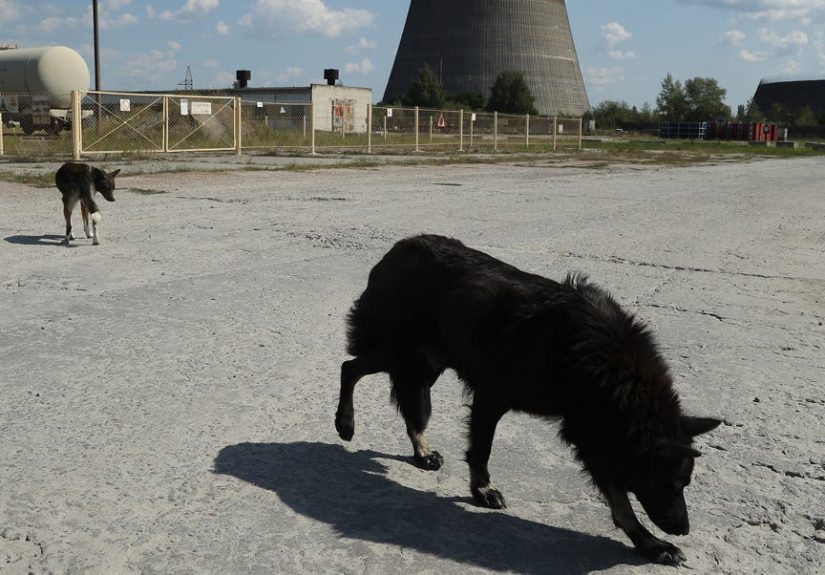
Not pampered lapdogs, of course. These are free-roaming descendants of pets left behind during the evacuation, plus later arrivals and their offspring. They live among cracked pavement, rusted infrastructure, contaminated soil, cold winters, patchy food, and the lingering chemical legacy of one of history’s worst nuclear accidents. In other words, this is not exactly the kind of neighborhood where a golden retriever would want to rate local brunch spots.
So when biologists say the dogs of Chernobyl appear to be experiencing rapid evolution, they are not talking about comic-book mutations or neon fur. They mean something more interesting and more scientific: measurable genetic divergence, signs of adaptation, and the possibility that intense environmental pressure is shaping a dog population far faster than we usually imagine. At the same time, the smartest scientists involved in this work are also waving a giant caution flag. The dogs are genetically distinct. That part is real. But whether radiation itself is the main engine behind those differences is still an open question.
This is exactly what makes the story so fascinating. The Chernobyl dogs are not just survivors. They are a living mystery about genetics, resilience, and how life responds when the world suddenly becomes very hostile and very weird.
Why Scientists Are So Interested in the Dogs of Chernobyl
For years, researchers have studied wildlife in the Chernobyl Exclusion Zone, looking for clues about what long-term exposure to low-dose ionizing radiation does to living things. Birds, frogs, rodents, insects, wolves, microbes, and plants have all drawn attention. But dogs offer something special. They live close to human-built environments, share many biological features with humans, and can be studied in ways that make their genetics especially informative.
That makes them a rare bridge between wildlife biology and human health research. Scientists are not just curious about whether these dogs look different or behave differently. They want to know whether generations of exposure to radiation, toxic metals, industrial contamination, harsh winters, disease pressure, poor nutrition, and geographic isolation have left marks on the canine genome. If they have, those patterns could help explain how mammals respond to extreme environmental stress over time.
In plain English, the dogs may help answer a huge question: when life gets trapped in a damaged ecosystem for generation after generation, what changes first?
A Disaster That Never Fully Ended
The original accident happened in April 1986, when Reactor No. 4 at the Chernobyl nuclear power plant exploded and released radioactive material across the region. Thousands of people were evacuated. Many pets were left behind. Cleanup crews later tried to remove or kill stray animals to limit contamination, but some dogs survived. Over time, dog populations reappeared around the plant, in Chernobyl City, and in nearby settlements.
That history matters because today’s dogs are not random visitors. They are part of a long, messy, multi-generational story shaped by abandonment, survival, reproduction, and selection. Some were likely descended from the original pets. Others may have entered later. Either way, the zone became an accidental evolutionary pressure cooker.
What the DNA Research Actually Found
The first major genetic snapshot of these dogs made headlines because it showed something striking: free-roaming dogs living close to the power plant are genetically distinct from dogs living only a short distance away in Chernobyl City and nearby areas. Researchers studied more than 300 dogs and found that these populations were not blending together nearly as much as you might expect.
That was the scientific equivalent of opening a pantry and discovering the cookies had quietly organized themselves into separate political factions.
The research identified complex family structures and multiple canine lineages, including strong shepherd-type ancestry in some of the exclusion-zone dogs. In other words, the dogs near the plant were not just a random mash-up of strays. They appeared to form recognizable populations with their own genetic signatures.
This matters because population divergence can be a first sign that evolution is happening in real time. Evolution, after all, is not always dramatic. Sometimes it is simply a population becoming genetically different from another population because different pressures are acting on it. If two groups live in different conditions, breed mostly within their own group, and face different survival challenges, their DNA can begin to drift apart surprisingly quickly.
Rapid Evolution Does Not Mean “Radiation Turned Dogs Into Mutants”
Here is where things get more nuanced. The phrase “rapid evolution” is catchy, but it can mislead people into imagining instant superpowers, dramatic body changes, or a canine version of science fiction. The real picture is both more subtle and more compelling.
What biologists have found so far is evidence of genetic differentiation and possible adaptation, not proof that radiation alone caused it. The dogs near the plant are measurably different at the genomic level from dogs living farther away. That supports the idea that unusual conditions have shaped the population. But identifying the exact cause of those changes is much harder.
Why? Because Chernobyl is not a one-variable experiment. Radiation is only part of the story. The dogs also deal with fragmented habitats, breeding isolation, cold, disease, limited food, scavenging behavior, human contact near work sites, and contamination from non-radioactive industrial pollutants. If a dog population changes under those conditions, scientists have to untangle which factor did what.
What Scientists Think Might Be Driving the Changes
Isolation Can Work Fast
One of the simplest explanations is population isolation. Dogs close to the plant may not mix very much with dogs in Chernobyl City or beyond. When populations become semi-separated, genetic differences can build across generations even without radiation acting as a direct mutagenic hammer. Founder effects, inbreeding, and reproductive boundaries can all make one group start looking genetically unusual compared with its neighbors.
This does not make the story less important. In fact, it may make it more scientifically useful. Evolution is not only about mutation. It is also about which individuals survive, who mates with whom, and which traits persist in a place where resources are scarce and hazards are constant.
Selection May Be Quiet, Not Flashy
Another possibility is that natural selection is favoring dogs with traits that help them handle the zone’s conditions. Those traits might involve metabolism, stress responses, immune function, DNA repair, reproduction, or tolerance for contaminated environments. If even small advantages improve survival or fertility over many generations, those genetic patterns can spread through a local population.
That kind of evolutionary change is not glamorous. It is more “biochemistry with consequences” than “radioactive wolf howls at the moon.” But in real biology, quiet changes are often the ones that matter most.
Radiation Is Still on the Suspect List, But Not Convicted
Researchers absolutely have reason to consider radiation as part of the puzzle. Ionizing radiation can damage DNA. It can raise the chance of mutation, disrupt cells, affect fertility, and increase disease risk. Scientists studying Chernobyl wildlife have long reported mixed outcomes, with some species showing signs consistent with stress or adaptation and others showing surprisingly little genetic damage.
But recent follow-up work on the dogs adds an important twist: researchers did not find evidence that increased mutation rates are driving the genetic differences between the dog populations near the plant and those in the nearby city. That does not prove radiation has played no role. It simply means the easy headline “radiation caused lots of mutations, therefore mystery solved” is not supported by the current evidence.
Science can be rude like that. It keeps interrupting simple stories with data.
Why the Chernobyl Dogs Matter Beyond Chernobyl
This research is not just about one unusual population of strays. It has broader implications for ecology, genetics, toxicology, and even medicine. Dogs share disease pathways with humans, and they are often considered valuable models for studying cancer, aging, and environmental exposure. A population that has lived for generations in a contaminated region may offer clues about long-term mammalian resilience.
Scientists are especially interested in questions such as these: Can chronic low-dose radiation leave identifiable genomic fingerprints? Do mammals in contaminated regions develop better repair mechanisms over time? Are certain immune or stress-response pathways more likely to be favored? And how do radiation effects interact with diet, infection, industrial chemicals, heavy metals, and habitat disruption?
Those questions extend far beyond Ukraine. They matter for nuclear cleanup zones, disaster planning, occupational exposure, environmental health policy, and perhaps even future human exploration of extreme environments. If mammals can persist across generations in damaged ecosystems, researchers want to know how and what that persistence costs.
The Bigger Wildlife Puzzle Inside the Exclusion Zone
The dogs are not the only Chernobyl animals to attract scientific curiosity. Other species in the region have shown intriguing patterns as well. Some studies have highlighted darker tree frogs, unusual stress responses, altered disease dynamics, and possible selection for traits linked to survival in radioactive or otherwise contaminated landscapes. Wolves in the zone have also become part of the conversation, especially in discussions about cancer resistance and adaptation.
Still, Chernobyl remains a place where scientists must resist easy myths. Not every strange trait is an adaptation. Not every genetic difference comes from radiation. And not every thriving animal population proves the environment is safe. Sometimes species do well because humans left, even while contamination still harms individuals in ways that are hard to measure at a glance.
That is one reason the dogs are so useful. They live close enough to human spaces, and are familiar enough as a species, that researchers can study them with more precision than many wild animals. They help move the conversation away from spooky folklore and toward testable biology.
So, Are the Dogs of Chernobyl Rapidly Evolving?
The best answer is yes, but with a scientist’s foot firmly on the brake pedal. If “rapid evolution” means that a population has become genetically distinct within a relatively short evolutionary timespan under intense environmental pressure, then the Chernobyl dogs fit the description. Their DNA shows divergence. Their populations appear structured. Their survival in the zone suggests that strong selection pressures are at work.
But if “rapid evolution” is meant as a claim that radiation has definitely produced dramatic beneficial mutations that explain everything, then no the evidence is not there yet. Scientists have found difference, not final proof of cause. They have found clues, not the last chapter.
That is not a weakness in the story. It is what makes the science worth following. The real lesson of the Chernobyl dogs is not that life magically conquers catastrophe with cinematic flair. It is that life responds in layered, complicated, often surprising ways. Evolution is not a fireworks show. Sometimes it is a long negotiation between danger and survival, written in DNA one generation at a time.
The Human Experience of Encountering Chernobyl’s Dogs
To understand why this topic grabs people so strongly, it helps to think beyond charts, genomes, and radiation maps for a moment. Imagine walking through the Chernobyl Exclusion Zone as a researcher, veterinarian, or cleanup worker. The setting is eerie before you ever see an animal. There are abandoned buildings, roads that seem to lead into silence, industrial structures that look frozen in the middle of a sentence, and a landscape that feels like history forgot to close the door behind it.
Then a dog appears.
Not a mythical beast. Not a movie monster. Just a dog. Tail up, ears alert, a little scruffy, maybe hopeful, maybe cautious. That simple moment changes the emotional logic of the place. Suddenly the zone is not only a disaster site. It is also a lived environment. Something calls it home.
That is one reason scientists and aid groups have been so drawn to these animals. The dogs make the catastrophe personal. They are descendants of ordinary pets, which means their presence creates a direct line from the evacuation of families in 1986 to the ecology of the present day. A dog standing near the remains of a reactor is more than an animal in an odd place. It is a reminder that human history and biological history are tangled together.
Veterinary teams and support organizations have described the practical reality of helping these dogs as both moving and complicated. The animals need vaccines, sterilization, food, and medical care. Some live close to workers and tourist routes. Others roam farther out. Puppies have been documented in stark places that sound almost fictional, including industrial structures and abandoned zones where you would least expect a nursery. And yet there they are, doing what dogs do: surviving, breeding, begging, scavenging, adapting.
For researchers, the experience can be scientifically thrilling and emotionally strange at the same time. You are collecting blood samples and ancestry data, but you are also kneeling near an animal whose grandparents may have been born in one of the most contaminated landscapes on Earth. You are looking at a familiar species in an unfamiliar evolutionary setting. It is like seeing a household word written in a completely different alphabet.
That tension is part of the story’s power. The Chernobyl dogs are easy to recognize, which makes their environment harder to ignore. They do not let us keep the disaster at a comfortable distance. They force a more uncomfortable question: if dogs can build a lineage in a place like this, what else can life endure, and what invisible biological costs might be hiding beneath the surface?
Maybe that is why people keep returning to this topic. The dogs do not symbolize doom alone. They symbolize persistence. Not perfect health. Not miracle immunity. Not proof that radiation is harmless. Just persistence. They are a living example of how nature rarely follows the script humans write for it. Even in a landscape marked by contamination, abandonment, and danger, life keeps improvising.
And honestly, that may be the most unforgettable part. In a place built into the public imagination as a dead zone, the dogs keep rewriting the mood. They trot through the ruins like biology’s stubborn little editors, crossing out the word “empty” and replacing it with something far more unsettling and far more hopeful: “still changing.”