Table of Contents >> Show >> Hide
- How Much Does a Retaining Wall Cost?
- Main Factors That Affect Retaining Wall Cost
- Retaining Wall Materials: Costs, Pros, and Cons
- Hidden Costs Homeowners Often Forget
- DIY vs. Hiring a Professional
- Key Design Considerations Before Building
- How to Save Money Without Cutting Corners
- Common Retaining Wall Mistakes to Avoid
- Real-World Experience: What Homeowners Learn After Building a Retaining Wall
- Conclusion
Building a retaining wall sounds simple until the soil starts acting like it has a law degree. One day your yard is just “a little sloped,” and the next you are pricing concrete blocks, gravel, drainage pipe, permits, and possibly an engineer who speaks fluent dirt. Still, a well-built retaining wall can be one of the smartest outdoor upgrades a homeowner makes. It can control erosion, create usable space, protect landscaping, improve curb appeal, and keep your backyard from slowly auditioning for a landslide documentary.
The key word, however, is well-built. A retaining wall is not just a decorative border. It is a structure designed to hold back soil, water, and pressure. That means cost depends on more than the wall’s length and height. Soil conditions, drainage, access, materials, engineering, permits, labor, and the slope behind the wall all play a role. A small garden wall may be a manageable DIY weekend project. A tall wall supporting a driveway, patio, or steep slope is a different creature entirelymore “hire a pro” than “grab a shovel and optimism.”
This guide breaks down retaining wall costs, material options, hidden expenses, design decisions, and real-world planning tips so you can budget wisely and avoid expensive surprises.
How Much Does a Retaining Wall Cost?
In the United States, the average cost to build a retaining wall commonly falls between $20 and $65 per square foot, with many professionally installed residential projects landing somewhere around $3,000 to $10,000. Larger, taller, engineered, or premium-material walls can climb well beyond that range. Some complex projects can exceed $15,000 to $25,000, especially when excavation, drainage, difficult access, or structural engineering is involved.
For planning purposes, homeowners often estimate retaining wall cost by square foot of wall face. To calculate that, multiply the wall length by the exposed height. For example, a 40-foot-long wall that is 3 feet tall has 120 square feet of visible wall face. At $35 to $65 per square foot installed, that wall might cost roughly $4,200 to $7,800. That is not a contractor quote, but it gives you a realistic starting point before your wallet gets emotionally attached to a Pinterest photo.
Quick Retaining Wall Cost Examples
- Small DIY garden wall: $500 to $2,500, depending on blocks, base material, and tools.
- Basic professionally installed wall: $3,000 to $8,000 for many modest residential projects.
- Mid-size structural wall: $8,000 to $15,000 when drainage, excavation, and higher-grade materials are needed.
- Large engineered wall: $15,000+ for tall walls, poor soil, geogrid reinforcement, tight access, or surcharge loads.
The wall height matters enormously. A 2-foot garden wall and a 6-foot structural retaining wall are not just different sizes; they are different engineering conversations. As height increases, soil pressure rises, drainage becomes more critical, and permits or engineered plans may be required.
Main Factors That Affect Retaining Wall Cost
No two retaining wall projects are exactly alike. One homeowner may need a simple block wall along a flower bed. Another may need a reinforced wall to support a driveway on a sloped lot. The price difference can be dramatic because the wall is only one part of the job.
1. Wall Height and Length
The bigger the wall, the more materials, labor, excavation, base preparation, and backfill are required. Height is especially important because a taller wall must resist greater lateral pressure from the soil behind it. Many small landscape walls under 3 feet can be built with interlocking blocks and proper drainage. Once a wall approaches or exceeds 4 feet, most homeowners should expect additional planning, local code review, and possibly professional engineering.
2. Soil Type and Slope
Soil is not just “dirt.” Clay holds water and expands. Sandy soil drains faster but may shift. Rocky soil can make excavation slow and expensive. A steep slope behind the wall adds pressure. Weak or poorly compacted soil may require deeper excavation, better backfill, geogrid reinforcement, or a different wall system altogether.
If your yard has heavy clay, standing water, erosion channels, or a slope that looks like it was designed by a roller coaster enthusiast, budget extra for professional evaluation.
3. Drainage Requirements
Drainage is not optional. Water trapped behind a retaining wall increases pressure and can cause bulging, leaning, cracking, or failure. A proper wall often includes crushed stone backfill, filter fabric, weep holes or drainage outlets, and perforated drain pipe to move water away from the wall.
Skipping drainage is one of the most expensive ways to save money. It is like buying a roof and deciding shingles are “a nice-to-have.”
4. Material Choice
Retaining wall materials range from budget-friendly timber to premium natural stone and poured concrete. Each option has different costs, durability, maintenance needs, and design limitations. The cheapest material upfront is not always the cheapest over the life of the wall.
5. Site Access
If contractors can easily bring in equipment, pallets of block, gravel, and soil, labor costs may stay reasonable. If materials must be hauled by hand through a narrow side yard, up stairs, or around a pool, the labor bill can grow quickly. Retaining wall blocks are not exactly feather pillows. Nobody wants to carry 400 of them one by one unless the invoice reflects the workout.
6. Permits and Engineering
Many U.S. jurisdictions use a common rule: retaining walls over 4 feet tall, measured from the bottom of the footing to the top of the wall, may require a permit. Walls supporting a surchargesuch as a driveway, building, patio, fence, or steep slopemay require engineering even if they are shorter. Local rules vary, so always check with your city or county building department before construction begins.
Retaining Wall Materials: Costs, Pros, and Cons
The best retaining wall material depends on your budget, design goals, site conditions, and how long you want the wall to last. Here are the most common choices.
Concrete Block Retaining Walls
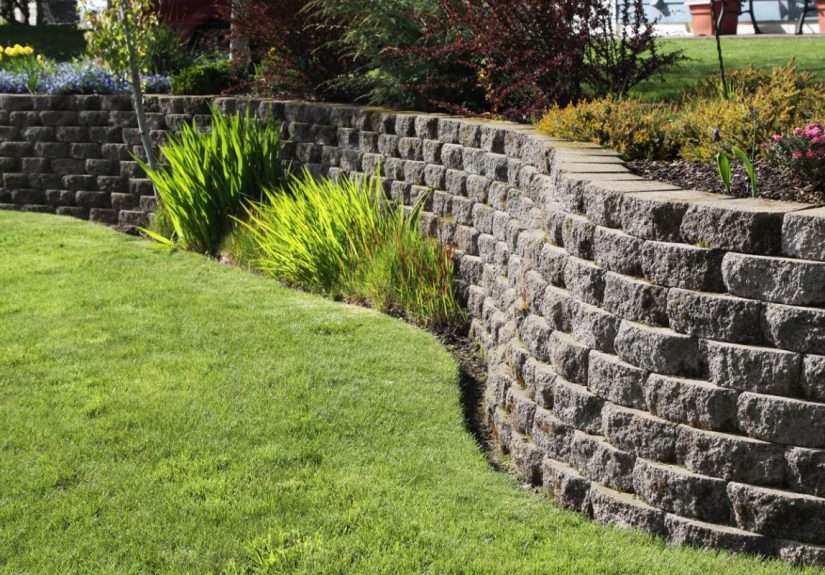
Interlocking concrete blocks are one of the most popular options for residential retaining walls. They are durable, widely available, attractive, and suitable for many landscape applications. Segmental retaining wall blocks are designed to stack securely and often include a built-in setback, which helps the wall lean slightly into the soil for stability.
Best for: Garden walls, terraces, driveways, patios, and medium-height residential walls.
Typical cost: Often around $25 to $65 per square foot installed, depending on block style, height, drainage, and reinforcement.
Pros: Durable, flexible design, many colors and textures, good for curves.
Cons: Requires a well-compacted base, drainage, and careful leveling.
Timber Retaining Walls
Pressure-treated timber is usually one of the least expensive retaining wall materials. It can work well for low garden walls and rustic landscapes. However, wood eventually decays, especially in wet soil. Even treated lumber has a shorter lifespan than concrete, stone, or masonry.
Best for: Low walls, temporary solutions, rustic landscaping, budget-conscious projects.
Typical cost: Often lower than masonry or stone, but replacement costs should be considered.
Pros: Affordable, warm natural look, easier to cut and install.
Cons: Shorter lifespan, rot risk, not ideal for tall structural walls.
Natural Stone Retaining Walls
Natural stone offers a timeless, high-end look. It blends beautifully with gardens and traditional homes. Stone can be dry-stacked or mortared, depending on the design. The downside is cost: stone is heavy, labor-intensive, and often requires skilled installation.
Best for: Premium landscapes, historic homes, garden terraces, visible front-yard walls.
Typical cost: Commonly higher than concrete block, especially for custom stonework.
Pros: Beautiful, long-lasting, natural appearance.
Cons: Expensive materials and labor; requires skill to build correctly.
Poured Concrete Retaining Walls
Poured concrete walls are strong, clean-looking, and suitable for structural applications when properly engineered. They are often used where strength, space efficiency, or a modern appearance is important. Because forms, reinforcement, drainage, and concrete placement must be handled correctly, this is usually a professional job.
Best for: Structural walls, modern designs, tight spaces, taller walls.
Typical cost: Mid-to-high range, depending on engineering, formwork, and finish.
Pros: Strong, durable, clean appearance, customizable finishes.
Cons: Can crack if poorly designed; requires professional installation.
Gabion Retaining Walls
Gabion walls use wire baskets filled with rock. They have a rugged, industrial-natural look and excellent drainage because water can move through the stone. They can be cost-effective in some areas, especially where suitable rock is locally available.
Best for: Erosion control, rustic landscapes, modern industrial designs, drainage-heavy sites.
Pros: Good drainage, strong mass, distinctive look.
Cons: Wire baskets may not suit every home style; quality of fill stone matters.
Hidden Costs Homeowners Often Forget
The wall itself is only part of the budget. Many retaining wall projects include supporting work that can add hundreds or thousands of dollars.
Excavation and Soil Removal
Before the wall goes up, soil often has to come out. Excavation costs increase with rocky ground, poor access, steep slopes, tree roots, and disposal requirements. If the project produces more soil than can be reused on-site, hauling and dumping fees may apply.
Gravel Base and Backfill
A proper retaining wall needs a stable, compacted base. Crushed stone is commonly used below and behind the wall to improve stability and drainage. Cheap fill dirt behind the wall may save money today and create a leaning wall tomorrow.
Drain Pipe and Outlet Planning
Perforated drain pipe is often installed behind the wall and directed to a safe outlet. The outlet matters. Sending water toward your neighbor’s yard, basement, sidewalk, or driveway can create a fresh problem wearing a tiny drainage hat.
Geogrid Reinforcement
Geogrid is a synthetic reinforcement material placed between wall courses and extended back into the soil. It helps the soil and wall act together as a stronger system. Taller segmental retaining walls, walls on slopes, or walls supporting loads may require geogrid.
Permits, Inspections, and Engineering
Permit fees vary by location. Engineering costs also vary, but they are often money well spent when a wall is tall, supports a load, or protects property. A stamped design can prevent guesswork and may be required before approval.
Landscape Repair After Construction
Heavy equipment, trenching, piles of gravel, and soil movement can disturb lawns, planting beds, irrigation systems, and walkways. Include cleanup, grading, sod, mulch, and plant replacement in the budget.
DIY vs. Hiring a Professional
DIY retaining walls can save money, but only when the project is appropriate. A short decorative wall around a garden bed may be a reasonable weekend project for a careful homeowner. A tall wall holding back a driveway is not the place to discover that gravity has excellent legal representation.
When DIY May Make Sense
- The wall is under 3 feet tall.
- The site is fairly level and easy to access.
- The wall does not support a driveway, building, steep slope, or heavy load.
- You can install a compacted base, proper drainage, and correct backfill.
- Local codes do not require a permit or engineered plans for your project.
When to Hire a Professional
- The wall is near or over 4 feet tall.
- The wall supports a surcharge, such as a driveway, patio, deck, fence, or structure.
- The soil is unstable, wet, or heavily compacted clay.
- The yard has a steep slope above or below the wall.
- The wall is close to a property line, sidewalk, road, or foundation.
- You need permits, engineering, or inspections.
Professional installation costs more upfront, but it can save money if the alternative is rebuilding a failed wall. A retaining wall failure can damage landscaping, hardscaping, foundations, fences, driveways, and neighboring property. Suddenly, the “cheap wall” becomes the most expensive feature in the yard.
Key Design Considerations Before Building
A retaining wall should be planned as a system. The visible blocks or stone are only the front row of a bigger story happening underground and behind the wall.
Start With the Purpose
Ask what the wall needs to do. Is it decorative? Is it controlling erosion? Is it creating a level patio? Is it protecting a driveway? A wall that simply frames a flower bed has different requirements than a wall holding back six feet of hillside.
Plan for Water First
Water is the villain in many retaining wall failures. Good drainage reduces hydrostatic pressure and helps the wall last longer. Plan where water comes from, where it goes, and how it exits. Consider roof runoff, irrigation, natural slope, downspouts, and stormwater flow.
Choose the Right Wall Type
Common retaining wall types include gravity walls, segmental block walls, cantilevered concrete walls, anchored walls, and reinforced soil walls. The right choice depends on height, soil, load, appearance, and budget. For most residential landscaping, segmental concrete block walls are popular because they balance cost, durability, and design flexibility.
Respect Property Lines and Easements
Before digging, confirm property boundaries and check for utility, drainage, or access easements. Building a retaining wall in the wrong place can lead to removal orders, disputes, or expensive redesigns. Also call 811 before excavation so underground utilities can be marked.
Think About Long-Term Maintenance
Even durable retaining walls need occasional inspection. Look for leaning, bulging, cracking, blocked drains, soil washing through joints, or water pooling behind the wall. Catching problems early is much cheaper than waiting until the wall develops a dramatic personality.
How to Save Money Without Cutting Corners
There are smart ways to reduce retaining wall costs, and then there are shortcuts that create future headaches. Focus on value, not just the lowest bid.
Keep the Wall Lower When Possible
Two shorter terraced walls may sometimes be easier to build than one tall wall. Lower walls may reduce engineering requirements and soil pressure. However, terraces still need proper spacing, drainage, and design, so do not stack walls too close without professional guidance.
Use Standard Materials
Premium stone, custom caps, curves, stairs, lighting, and decorative finishes add cost. If budget is tight, choose a durable standard block and invest the savings in drainage and base preparation. The wall may be less glamorous, but it will not lean like it just heard bad news.
Improve Access Before Work Begins
Removing temporary obstacles, clearing brush, or planning delivery locations can reduce labor time. Ask contractors how site access affects your quote.
Get Multiple Detailed Quotes
Compare more than the final number. A good quote should clarify wall dimensions, material type, base depth, drainage system, backfill, geogrid if needed, permits, cleanup, and warranty. A vague cheap quote may leave out essential items.
Do Some Prep Work Carefully
With contractor approval, homeowners may save money by removing small plants, clearing the area, or handling final landscaping. Do not perform excavation, drainage changes, or structural preparation unless you know exactly what is required.
Common Retaining Wall Mistakes to Avoid
A retaining wall does not fail because it had a bad day. It usually fails because something important was missed during planning or construction.
Poor Drainage
This is the big one. Without drainage, water pressure builds behind the wall. Over time, that pressure can push the wall forward, crack concrete, wash out soil, or cause settlement.
Weak or Uneven Base
The first course of blocks must be level and supported by a compacted base. If the base shifts, the entire wall shifts with it. Retaining walls are not forgiving when the foundation is rushed.
Using the Wrong Backfill
Clay-heavy soil behind the wall holds water and increases pressure. Clean crushed stone or specified granular backfill is usually a better choice directly behind the wall.
Ignoring Surcharge Loads
A driveway, parked vehicle, shed, fence, patio, or slope above the wall adds pressure. Even a shorter wall may need engineering if it supports extra load.
Skipping Local Code Checks
Permit rules vary. Some areas require permits at 4 feet; others have stricter requirements. A wall built without required approval can cause problems when selling the home, filing insurance claims, or dealing with inspections.
Real-World Experience: What Homeowners Learn After Building a Retaining Wall
One of the biggest lessons homeowners learn is that retaining walls are less about stacking blocks and more about managing everything you cannot see. The finished wall may look like a clean row of stone, but the real work is often underground: excavation, compacted gravel, buried block courses, drainage pipe, filter fabric, and backfill. In many projects, the wall face is the pretty part; the hidden structure is the reason it stays pretty.
A common experience is underestimating material weight. A homeowner may look at a 40-foot wall and think, “That seems manageable.” Then the pallets arrive. Retaining wall blocks are heavy, gravel is heavy, wet soil is heavy, and moving all of it across a yard can turn a simple project into a fitness challenge sponsored by regret. Even DIYers who successfully build small walls often say the hardest part was not the designit was the digging, hauling, leveling, and compacting.
Another real-world lesson is that drainage deserves more attention than aesthetics. Many homeowners spend hours choosing block color but only minutes thinking about where water will go. After the first major rainstorm, priorities become clear. A well-drained wall quietly does its job. A poorly drained wall announces itself with puddles, soil stains, bulging, or erosion at the base. The best-looking wall in the neighborhood is not a win if it turns into a water balloon with blocks attached.
Homeowners also learn that “level” is not a casual suggestion. The first course determines everything. If the base course is crooked, the mistake becomes more obvious with every row. Experienced installers take time to dig the trench correctly, compact the base in layers, check level repeatedly, and adjust each block. It may feel slow at first, but it is faster than rebuilding half the wall after discovering it has developed a scenic wave pattern.
Permits are another surprise. Many people assume a retaining wall is just landscaping, but local building departments may see it as a structureespecially if it is tall or holding back a load. Homeowners who check requirements early avoid delays, fines, redesigns, and awkward conversations that begin with, “So, about that wall you already built…” If a wall is near a property line, sidewalk, drainage easement, or driveway, early research is especially important.
Budget surprises often come from site conditions rather than the wall material itself. Tree roots, buried concrete, old drainage lines, poor soil, or limited access can change the scope quickly. A contractor may discover that a simple wall needs more excavation, better backfill, or reinforcement. This is why a contingency budget is useful. For retaining walls, setting aside an extra 10% to 20% is not pessimism; it is adult supervision for your project finances.
Finally, homeowners often realize that a retaining wall changes how the whole yard functions. It can create a level seating area, define a garden, make mowing easier, protect a slope, or turn unusable space into something beautiful. When planned thoughtfully, the wall becomes more than a costit becomes an investment in the property’s layout, safety, and appearance. The best retaining walls do not just hold back soil. They make the yard feel intentional.
Conclusion
Building a retaining wall is one of those home improvement projects where planning pays for itself. Costs can vary widely, but the biggest budget drivers are usually wall size, height, materials, drainage, soil conditions, access, permits, and engineering. A small garden wall may be affordable and DIY-friendly. A tall wall supporting a slope, driveway, patio, or structure should be handled with professional design and installation.
The smartest approach is to think beyond the visible wall. A long-lasting retaining wall needs a stable base, proper drainage, suitable backfill, the right material, and code-compliant construction. Spend money where it matters: drainage, foundation preparation, reinforcement, and expertise. Decorative upgrades are nice, but structural reliability is what keeps your yard from making a dramatic downhill exit.
If you are planning a retaining wall, start with measurements, check local permit rules, evaluate drainage, and get detailed quotes from qualified contractors. With the right design, your retaining wall can solve erosion problems, add usable outdoor space, and make your landscape look polishedwithout giving gravity the final word.