Table of Contents >> Show >> Hide
- Why This Debate Matters More Than Most Buyers Realize
- The Case for the Big Lot
- The Case for Great Views
- So Which One Usually Holds More Financial Value?
- How Appraisers and Buyers Actually Think About It
- When a Big Lot Offers More Value
- When Great Views Offer More Value
- The Hidden Costs Buyers Forget to Consider
- A Simple Decision Framework for Buyers
- The Best Answer: Buy Both If You Can, But Be Picky
- Experience-Based Insights: What Owners Often Learn After Moving In
- Conclusion
- SEO Tags
Note: This article is based on synthesized guidance from current U.S. real-estate, appraisal, and housing-market sources, but it intentionally omits source links for web publication.
House hunting has a funny way of turning rational adults into poets. One minute you are comparing mortgage rates and drainage issues like a responsible citizen. The next, you are standing on a deck whispering, “Wow, look at that sunset,” as if the clouds personally wrote you a love letter.
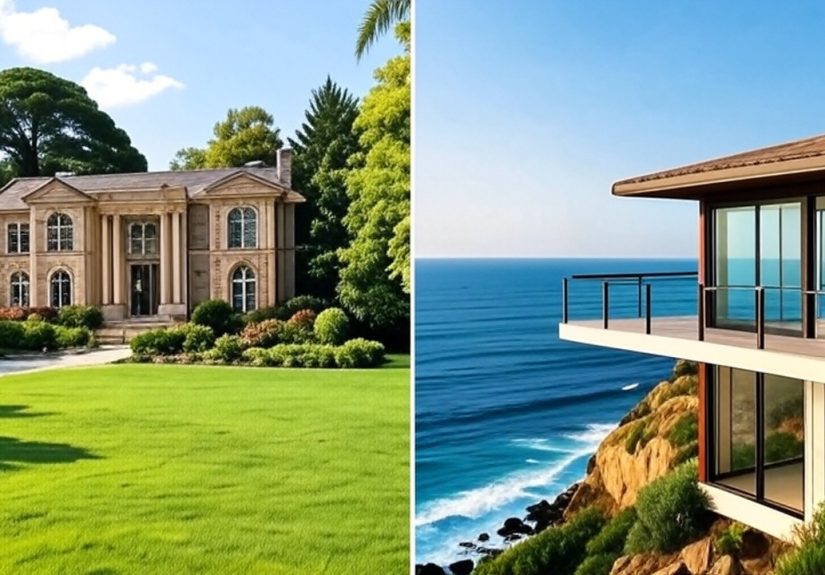
That is exactly why the big lot vs great views debate is so hard. A large lot feels practical, flexible, and quietly powerful. A spectacular view feels emotional, luxurious, and impossible to fake. One gives you room to live. The other gives you a daily reason to stare out the window instead of answering emails.
Inspired by the Financial Samurai angle on this dilemma, the real question is not simply which feature is better. It is which home offers more value for your life, your resale prospects, and your long-term financial goals. In many markets, both a usable lot and a compelling view can raise demand. But they do not create value in the same way, and they do not attract the same buyers.
If you are choosing between the two, do not settle for the lazy answer of “it depends.” Of course it depends. Everything in real estate depends. The better move is to understand what it depends on. That is how you avoid overpaying for drama and underestimating the boring house with backyard superpowers.
Why This Debate Matters More Than Most Buyers Realize
When buyers compare homes, they often focus on square footage, bedroom count, finishes, and whether the kitchen has the kind of island that makes people say, “We could totally host Thanksgiving here,” even though they have never hosted Thanksgiving once in their lives.
But the real value drivers tend to be harder to change. Location, lot size, layout, privacy, and view matter because they shape both everyday enjoyment and future marketability. Paint can change. Flooring can change. Countertops can be ripped out in one weekend and one regrettable credit-card swipe. But the hill, the sightline, the yard depth, and the overall setting are much more permanent.
That is why the decision between a larger lot and a better view deserves serious thought. You are not just buying a home. You are buying a package of land, positioning, lifestyle, and future buyer appeal.
The Case for the Big Lot
1. Land creates functional value
A big lot offers something buyers immediately understand: usable space. More room can mean a larger yard, more privacy, extra distance from neighbors, expansion potential, a pool, a guest house where zoning permits, better storage, more gardening, safer play space for kids, and enough room for the dog to stop judging you from a six-foot patch of grass.
That functional value matters because it can serve many stages of life. A young couple may want outdoor entertaining space. A family may want a place for children to run around without bouncing off the sofa like caffeinated pinballs. Empty nesters may value the privacy buffer even if they never plant a tomato. Investors may care about future flexibility, especially if the parcel supports additions or accessory structures.
2. A usable lot can widen your buyer pool
In resale terms, a large, usable lot often appeals to a broader group of buyers than a niche luxury view. The key word is usable. A giant but steep hillside is not the same as a flat backyard that can host a swing set, a fire pit, and a very competitive game of cornhole.
Homes that solve everyday lifestyle needs tend to attract consistent demand. Families, pet owners, multigenerational households, hobby gardeners, and buyers who want privacy all see value in outdoor space. In suburban and family-oriented markets, this can be a major advantage.
3. Big lots can offer hidden upside
Sometimes the best part of a large lot is the option value. You may never build an addition, detached office, or outdoor kitchen. But the fact that you could matters. Buyers often pay more for flexibility, even when they do not use every option on day one.
That future upside is especially meaningful in land-constrained neighborhoods where larger parcels are rare. If most homes sit on modest lots, the one with meaningful outdoor space can stand out for decades.
4. Privacy is a value driver, too
Large lots often create separation from adjacent homes, streets, and noise. That can improve not only enjoyment but also perceived prestige. Privacy is one of those features buyers may not mention first, but they definitely feel it. Walk onto a property where you are not staring directly into your neighbor’s breakfast routine, and suddenly life seems more civilized.
The Case for Great Views
1. Views create emotional value fast
A great view has immediate impact. Buyers do not need a spreadsheet to understand it. They step into the living room, see the water, mountains, skyline, golf course, or open horizon, and the house starts selling itself.
This emotional reaction matters. Real estate is partly math and partly theater. A memorable view gives a home a “wow” factor that is hard to replicate with finishes or staging. Plenty of buyers will forget the exact cabinet hardware ten minutes after a showing. They will not forget the sunset over the bay.
2. Scarcity can support premium pricing
Not all views are equal. Some are partial. Some are seasonal. Some are “peekaboo” views, which is real-estate language for “technically visible if you lean left and ignore the power line.” But truly strong views are often scarce, and scarcity supports value.
Ocean views, unobstructed city views, lakefront perspectives, and sweeping mountain vistas can command premiums because buyers know they are rare and difficult to duplicate. In higher-end neighborhoods, the view can become one of the biggest reasons a property commands top-dollar attention.
3. Views can outperform in luxury and urban markets
In dense or high-cost markets, buyers may be willing to sacrifice lot size in exchange for visual drama. A penthouse terrace overlooking a skyline, a hillside home with panoramic water views, or a compact house with a canyon backdrop can carry more pricing power than a larger but visually ordinary property.
That is because buyer priorities shift with context. In cities where land is limited and outdoor space is already a compromise, the premium may flow more strongly to the property that delivers something special every single day from the inside.
4. Some views improve daily quality of life more than expected
People often underestimate how much a good view changes the feeling of a house. Natural light feels better. Rooms seem larger. Morning coffee becomes an event. Even doing dishes becomes slightly less offensive when your sink faces trees or water instead of a fence and your neighbor’s inflatable holiday decorations in March.
That intangible daily pleasure has real value. It may not fit neatly into a budgeting app, but it absolutely affects how owners experience the home and how future buyers respond to it.
So Which One Usually Holds More Financial Value?
The honest answer is this: the better investment depends on the neighborhood, the rarity of the feature, and the type of buyer most active in that market.
If you are in a family-oriented suburb where buyers prioritize yard space, privacy, expansion potential, and practical outdoor living, a big lot often wins. If you are in a premium coastal, hillside, or urban market where buyers are chasing prestige, uniqueness, and emotional appeal, great views may command a stronger premium.
But here is the more useful rule: buy the property with the feature that is rarer for that specific location. If every house has a decent-sized lot but very few have a panoramic view, the view may matter more. If many homes have nice outlooks but almost none have truly usable land, the lot may be the more valuable differentiator.
How Appraisers and Buyers Actually Think About It
Many buyers assume value is just about price per square foot. That metric can be helpful, but it is not the gospel according to granite countertops. Price per square foot often misses the features that make buyers stretch their budgets: privacy, lot usability, layout, upgrades, curb appeal, and views.
In practice, value is usually supported by comparing similar recent sales and making adjustments for differences. That means the “worth” of a big lot or scenic view is not theoretical. It is tested against what actual buyers paid for similar homes in that market.
This is where the conversation gets smarter. A view does not automatically justify any number you want. A large lot does not automatically mean maximum appreciation. The premium must make sense based on relevant comparable properties. In other words, the market decides whether your “dream feature” is a jackpot or just an expensive personality trait.
When a Big Lot Offers More Value
- The lot is flat, private, and highly usable.
- Zoning or parcel shape allows future improvements.
- The market includes many families and long-term owner-occupants.
- Outdoor living is important because of climate or lifestyle.
- Comparable homes with larger lots consistently sell faster or for more.
- The view option is only modest, partial, or vulnerable to future obstruction.
Example: In a suburban neighborhood with good schools, a quarter-acre lot with space for kids, pets, gardening, and a future detached office may create more durable demand than a smaller parcel with a nice-but-not-extraordinary ridge view.
When Great Views Offer More Value
- The view is truly special, protected, or difficult to replicate.
- The home is in a luxury, coastal, hillside, or urban skyline market.
- Buyers in the area value prestige and emotional appeal over yard size.
- The lot difference between the two homes is not highly functional.
- The view materially improves light, openness, and perceived quality.
- The house is designed to capture the view from main living spaces.
Example: In a high-end neighborhood overlooking the ocean, a smaller lot with unobstructed panoramic water views may outperform a larger inland parcel because buyers are paying for the experience, the status, and the visual rarity.
The Hidden Costs Buyers Forget to Consider
Big lot drawbacks
Large lots are wonderful until it is time to maintain them. More land can mean higher landscaping costs, irrigation, fencing, tree work, drainage issues, pest management, and general weekend labor. Some owners dream of an expansive yard and then discover they have basically adopted a small park.
View property drawbacks
View homes can come with tradeoffs, too. Steeper sites may reduce usable yard space. Hillside locations may bring access issues, wind exposure, or higher maintenance. Premium views can also tempt buyers to overpay because emotions arrive at the showing before common sense does.
And remember: not every view stays pristine forever. Trees grow. Neighbors remodel. New construction happens. The best view homes are the ones where the outlook is either naturally protected or much harder to block.
A Simple Decision Framework for Buyers
If you are stuck between two homes, ask these questions:
1. Which feature is rarer in this neighborhood?
Scarcity usually creates stronger long-term pricing power.
2. Is the lot actually usable?
A big lot only deserves a premium if buyers can enjoy it.
3. Is the view truly special?
A dramatic, protected view is not the same as “you can kind of see the lake if the leaves cooperate.”
4. Who is the likely future buyer?
Think about resale from day one. Families may prioritize land. Luxury buyers may prioritize views. Downsizers may value lower maintenance. Your exit buyer matters.
5. Which home improves your life more often?
If one home makes daily living easier and more enjoyable, that is real value. You are not buying a stock ticker. You are buying a place where your life happens.
The Best Answer: Buy Both If You Can, But Be Picky
The dream scenario is obvious: a home with a large, usable lot and a great view. That combination is rare for a reason. It tends to attract premium pricing because it delivers both functional and emotional value. Space to live, plus scenery to love, is the real-estate equivalent of finding fries at the bottom of the takeout bag when you thought they were gone.
But most buyers have to choose. When that happens, resist the urge to make a generic rule. Instead, study the market, think about livability, and choose the feature that creates the strongest blend of daily utility, scarcity, and future demand.
For many buyers, especially families in suburban neighborhoods, the big lot will quietly deliver more long-term value. For others, especially in premium view-driven markets, the right panorama can be worth every penny. The winner is not the house that photographs better for social media. It is the house whose defining feature is hardest to replace and easiest for future buyers to appreciate.
Experience-Based Insights: What Owners Often Learn After Moving In
Talk to enough homeowners and a pattern appears. People who buy for pure logic sometimes wish they had chosen the house with more soul. People who buy for pure emotion sometimes wish they had chosen the house that worked better on a Tuesday afternoon. Real value usually lives somewhere in the middle.
Owners of homes on big lots often say they did not fully appreciate the space at first. Then life happened. Children started playing outside more. Friends gathered in the yard. A shed became a studio. A side area turned into raised garden beds. A quiet corner became the best place to drink coffee after a rough day. What looked like “extra land” on paper turned into a series of useful moments.
At the same time, some owners admit the lot only paid off because it was genuinely usable. If the ground was too steep, too exposed, or too expensive to maintain, the romance faded quickly. Nobody wants to spend a fortune maintaining a backyard that functions mainly as a scenic obstacle course.
Owners of view homes tell a different story. Many say the view never got old. They noticed it in the morning, during dinner, while taking work calls, and especially on stressful days when the outside world felt better than the inside of their inbox. A special view can make an ordinary home feel elevated, even when the finishes are not magazine-worthy.
But view owners also learn to ask practical questions. Does the house actually frame the view from the rooms you use most? A million-dollar horizon does not help much if you only see it from the upstairs guest bath. Is the view protected? If not, that premium may be more fragile than buyers assume. And how much of your budget did you burn to get that visual magic? Beauty is wonderful, but beauty plus payment shock is a rough combination.
Another common lesson is that buyers tend to regret compromising on the feature they care about most every day. If you love outdoor living, a cramped lot will bug you more over time than you think. If you crave openness, light, and scenery, a boxed-in house can start to feel smaller than its square footage suggests.
That is why the best buyers are honest with themselves. They do not buy a big lot because an article told them land is practical if they personally hate yard work and spend every weekend traveling. They do not buy a premium view because it looks glamorous if their budget becomes tight and they secretly wanted more functional family space. The smarter move is matching the home’s strongest feature with the way you actually live.
In the end, the most satisfied homeowners are usually the ones who bought a property that solved real needs while still giving them a little emotional lift. A house should make financial sense, yes. But it should also make you happy to come home. That balance is where the best value usually lives.
Conclusion
Choosing between a big lot and great views is not a beauty contest. It is a value test. Big lots usually win on function, flexibility, privacy, and broad resale appeal. Great views usually win on emotion, rarity, prestige, and immediate buyer attraction. Neither feature is automatically superior. The more valuable one is the feature that is rarer in the area, more meaningful to likely future buyers, and more aligned with your daily life.
If you can buy both, congratulations, you may have found the unicorn. If not, buy the home whose standout trait is hardest to reproduce and easiest to enjoy consistently. That is the kind of value that tends to age well.