Table of Contents >> Show >> Hide
- At a Glance: Betty White’s Signature TV Series
- Early Television Pioneer (1940s–1950s)
- Game Shows, Guest Spots, and ’60s Variety
- The 1970s: Sitcom Stardom Arrives
- The Golden Era: 1980s and 1990s Sitcom Royalty
- 2000s Guest-Star Renaissance
- 2010s Hits: Hot in Cleveland & Off Their Rockers
- Quick Reference: Major Betty White TV Series Credits
- How to Watch Betty White’s TV Shows Today
- Experiences: What Betty White’s TV Shows Teach Us About Comedy and Connection
- Conclusion
For most actors, having one classic sitcom on their résumé would be a dream. Betty White had
several, plus decades of game shows, sketch comedy, variety hours, and hidden-camera hijinks.
Dubbed the “first lady of television,” she worked steadily from the dawn of TV in the 1940s
all the way into the streaming era.
This guide walks through Betty White’s television series credits era by era, highlighting both
the obvious classics (hello, The Golden Girls) and the deep-cut shows that hardcore fans
love to track down. It’s not just a dry filmography; we’ll also look at how each show shaped
her career, what made her characters so memorable, and how you can still watch many of these
series today.
At a Glance: Betty White’s Signature TV Series
- Hollywood on Television (1949–1953) – Live daytime talk/variety show
- Life with Elizabeth (1953–1955) – Early sitcom she co-created and produced
- The Betty White Show (1954; 1977–1978) – Two different series, variety and sitcom
- Date with the Angels (1957–1958) – Newlywed sitcom
- The Mary Tyler Moore Show (1973–1977) – Sue Ann Nivens, the “Happy Homemaker”
- The Golden Girls (1985–1992) & The Golden Palace (1992–1993) – Rose Nylund years
- Hot in Cleveland (2010–2015) – Elka Ostrovsky, scene-stealing caretaker
- Betty White’s Off Their Rockers (2012–2017) – Hidden-camera prank series
Early Television Pioneer (1940s–1950s)
Hollywood on Television (1949–1953)
Betty White’s TV journey began in the wildest possible way: hosting a live, five-hours-a-day,
six-days-a-week talk and variety show called Hollywood on Television. Initially
a co-host, she eventually took over the series solo, chatting with viewers, improvising sketches,
and interviewing guests in an era when no one was quite sure what television should look like.
Those long, unscripted hours sharpened her timing and warmth, and they laid the foundation for
one of TV’s longest careers. The popularity of recurring comedy bits on this showespecially a
housewife character named Elizabethdirectly led to her first sitcom.
Life with Elizabeth (1953–1955)
Life with Elizabeth was revolutionary in quiet ways. White wasn’t just the star;
she also co-created and produced the series, making her one of the first women to exert real
creative control over a television sitcom.
The show followed young couple Elizabeth and Alvin as they navigated everyday mishaps, told in
short vignettes. The humor was gentle, the budget modest, but White’s expressive face and crisp
delivery made Elizabeth feel real and modern. For fans tracing the roots of TV comedy, this is
the prequel to everything Betty did later.
The Betty White Show (1954 Variety Series)
In 1954, NBC gave her The Betty White Show, a daytime variety and talk program
where she sang, joked, and chatted with guestsessentially an early template for the personality-driven
daytime shows that would later make stars out of hosts like Oprah and Ellen.
Variety shows come and go, but this one cemented her image as a capable host who could glide
between sketch comedy, music, and conversation without missing a beat.
Date with the Angels (1957–1958)
In the late 1950s, White headlined ABC’s sitcom Date with the Angels as
newlywed Vicki Angel, opposite Bill Williams as her husband Gus. The show revolved around their
domestic misadventures and originally leaned on fantasy sequences based on Vicki’s daydreams.
When sponsors demanded fewer fantasy scenes, the show shifted toward more conventional plots
and lost some of its spark. Betty herself later admitted it was one of the few projects she
genuinely wanted to leavea reminder that even legends have off-brand series along the way.
Game Shows, Guest Spots, and ’60s Variety
During the 1960s, Betty White became a professional scene-stealer on game shows. She was a
beloved panelist on Password, Match Game, What’s My Line?,
The Hollywood Squares, and more, eventually winning a Daytime Emmy for hosting
the short-lived game show Just Men! in 1983.
These weren’t “series credits” in the narrative sense, but they’re central to her TV legacy.
Her quick wit, competitive streak, and shamelessly flirty on-air chemistry with husband and
Password host Allen Ludden turned casual daytime shows into must-watch comfort viewing.
The 1970s: Sitcom Stardom Arrives
The Mary Tyler Moore Show (1973–1977)
For many viewers, Betty White truly became a legend as Sue Ann Nivens on
The Mary Tyler Moore Show. Sue Ann was the host of a fictional homemaking show,
“The Happy Homemaker,” projecting sugar-sweet perfection on camera while being razor-sharp,
vain, and deliciously cutting off camera.
White joined the series in its fourth season and instantly clicked. The role won her two Primetime
Emmys and showed that she could play mean and mischievous just as easily as the sweet girls-next-door
she had built her early career on.
The Betty White Show (1977–1978 Sitcom)
In 1977, CBS tried to spin her popularity into another self-titled sitcom, again called
The Betty White Show. This time, she played Joyce Whitman, a TV actress starring
in a fictional police series called Undercover Woman. The show paired her with former
Mary Tyler Moore co-star Georgia Engel and leaned into backstage satire.
Critics were mild, ratings were softer than hoped, and the series lasted just one season. Still,
it’s a fascinating meta-project: Betty White, playing a working TV actress, joking about the TV
machine she’d already helped define.
The Golden Era: 1980s and 1990s Sitcom Royalty
The Golden Girls (1985–1992)
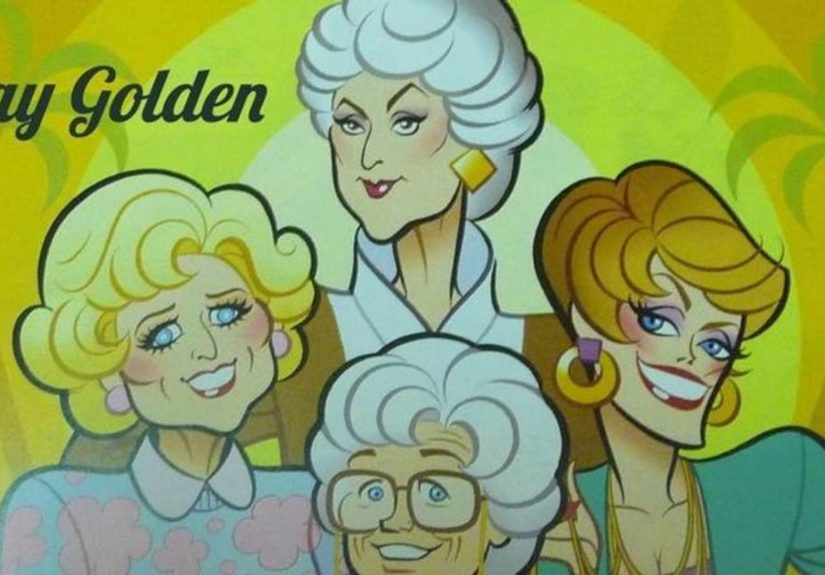
When you say “Betty White TV shows,” most people instantly picture Rose Nylund, the sweet,
slightly scattered Minnesotan transplanted to Miami in The Golden Girls. The
series followed four older womenRose, Dorothy, Blanche, and Sophiasharing a house, cheesecake,
and brutally honest conversations about love, aging, and everything in between.
Rose could have been a one-note “dumb blonde,” but White gave her layers: vulnerable, earnest,
and occasionally razor-sharp without ever losing that wide-eyed innocence. The show ran for seven
seasons, earned dozens of Emmy nominations, and turned its cast into enduring LGBTQ+ and pop-culture
icons.
The Golden Palace (1992–1993)
After The Golden Girls wrapped, three of the four leadsBetty White, Rue McClanahan,
and Estelle Gettycontinued the story in The Golden Palace, a spin-off that
moved the trio to a Miami hotel they had purchased. Though it lasted only one season, it kept
Rose on television, exploring how her sunny optimism functioned when she was, technically,
running a business.
Mama’s Family and Other 1980s/1990s Series Credits
During this era, Betty White also appeared as Ellen Harper Jackson in the sitcom
Mama’s Family, spun off from recurring sketches on The Carol Burnett Show.
Her guest and recurring roles added up fast: The Love Boat, Hotel,
Empty Nest, Ally McBeal, The Practice,
Boston Legal, The John Larroquette Show, and many more.
If you watched network TV in the ’80s and ’90s, there was a decent chance Betty White walked into
your favorite show at some point, stole an episode, and walked out with everyone’s hearts.
2000s Guest-Star Renaissance
The 2000s treated Betty White as the ultimate secret weapon. Need an episode to pop? Cast Betty.
She popped up on series like That ’70s Show, Malcolm in the Middle,
Everwood, My Name Is Earl, The Middle, and
voice roles on The Simpsons and Family Guy.
A Facebook fan campaign convinced Saturday Night Live to invite her to host in 2010,
and the episode drew over 12 million viewershuge for modern SNLand won her yet another Emmy.
It was proof that, even at 88, she could still own live television.
2010s Hits: Hot in Cleveland & Off Their Rockers
Hot in Cleveland (2010–2015)
In 2010, TV Land built its first original multicam sitcom around the concept of three middle-aged
LA women relocating to Clevelandand then put Betty White in as the landlord. In
Hot in Cleveland, she plays Elka Ostrovsky, a no-nonsense caretaker with a
mysterious past, illegal vodka, and a one-liner for every occasion.
The series ran for six seasons and became a late-career highlight for White, winning new fans
who had never seen The Golden Girls and giving longtime admirers a weekly dose of her
energy. The ensemble chemistryValerie Bertinelli, Jane Leeves, Wendie Malick, and Whitefelt
like lightning in a bottle, and cast reunions still make headlines years later.
Betty White’s Off Their Rockers (2012–2017)
Just in case you worried she might start acting her age, White returned as host and producer of
Betty White’s Off Their Rockers, a hidden-camera show where senior citizens
pulled outrageous pranks on unsuspecting younger people.
The premise flipped the usual age dynamic on its head: it wasn’t teenagers punking grandmas;
it was grandmas and grandpas causing chaos at coffee shops and crosswalks. The series ran on NBC
before moving to Lifetime, earned multiple Emmy nominations for White, and proved that she could
still anchor a weekly series in her nineties.
Quick Reference: Major Betty White TV Series Credits
A truly exhaustive filmography would fill pages, but this quick reference captures the core TV
series most fans and researchers look for when exploring Betty White’s body of work.
Lead or Co-Lead Roles
- Hollywood on Television (1949–1953) – Co-host/host
- Life with Elizabeth (1953–1955) – Elizabeth; star and co-producer
- The Betty White Show (1954) – Variety/talk host
- Date with the Angels (1957–1958) – Vicki Angel
- The Betty White Show (1977–1978) – Joyce Whitman
- The Golden Girls (1985–1992) – Rose Nylund
- The Golden Palace (1992–1993) – Rose Nylund
- Betty White’s Off Their Rockers (2012–2017) – Host
- Hot in Cleveland (2010–2015) – Elka Ostrovsky (series regular after pilot)
Key Recurring & Guest Roles
- The Mary Tyler Moore Show – Sue Ann Nivens (recurring, later series regular)
- Mama’s Family – Ellen Harper Jackson
- The Love Boat, Empty Nest, Hotel – Various guest characters
- Ally McBeal, The Practice, Boston Legal – Memorable comedic turns
- That ’70s Show, Malcolm in the Middle, Everwood, The Middle – Guest roles
- The Simpsons, Family Guy – Voice appearances as herself and original characters
- Dozens of game shows, specials, and TV movies that kept her constantly in front of audiences
How to Watch Betty White’s TV Shows Today
Because Betty White’s career stretches across so many decades, her shows are scattered across
platforms. Classic sitcoms like The Golden Girls and
The Mary Tyler Moore Show appear regularly on cable rerun blocks and on major
streaming services in North America.
Early series like Life with Elizabeth and Date with the Angels
survive in public-domain or specialty releases, and episodes frequently surface on classic TV
channels and niche streaming libraries.
More recent hits, including Hot in Cleveland and
Betty White’s Off Their Rockers, are available through digital storefronts and
streaming deals that vary by region. Before a marathon, it’s worth searching across several
servicesBetty White has a habit of popping up in more places than you expect.
Experiences: What Betty White’s TV Shows Teach Us About Comedy and Connection
Watching Betty White’s TV shows in order is like taking a guided tour through the history of
television itself. You start in the jittery early days of live broadcasts, when performers were
essentially doing extended stage shows for cameras, and end up in an age of high-definition
sitcoms and streaming-friendly reruns. At every stop, Betty is there, adapting, adjusting, and
somehow looking like she’s having the time of her life.
If you begin with Hollywood on Television and Life with Elizabeth,
you see a performer building trust with the audience. There’s no big writers’ room or slick
production; it’s just Betty, a few props, and situations that could easily happen in your own
kitchen. Those early episodes feel like watching a neighbor with perfect timing tell stories
over coffee. For anyone interested in comedy writing, it’s a lesson in how far simple premises
can go when the performer understands rhythm and reaction.
By the time you reach The Mary Tyler Moore Show, the experience changes. Now
Betty White is one piece of a finely tuned ensemble. Sue Ann Nivens is not the “relatable
everywoman” of those early sitcoms; she’s sharp, vain, and occasionally ruthless. When you watch
her scenes today, you can see how precisely she calibrates each linehow she uses that famously
sweet voice to deliver some truly savage commentary. It’s a reminder that casting against type
can bring out new shades in an actor and unlock fresh comedy in a script.
Then you hit The Golden Girls, and the experience becomes communal. Very few
sitcoms invite viewers of all ages to show up, decade after decade, like that one does. Whether
you’re a teenager discovering reruns at 2 a.m. or an older viewer who watched new episodes in
the ’80s, it’s hard not to see parts of your own friendships in those kitchen-table scenes. Rose
Nylund’s stories about St. Olaf might be surreal, but her loneliness, her loyalty, and her
longing for connection are instantly recognizable. Watching with others turns the show into a
shared languageyou quote a line, and someone else finishes it.
In Hot in Cleveland and Off Their Rockers, the experience
becomes almost aspirational. Betty White is no longer just the ingenue or the sharp supporting
player; she’s proof that creativity and mischief don’t have an expiration date. Seeing her trade
barbs with younger co-stars or lead a squad of prank-loving seniors is deeply satisfying. It
quietly pushes back against the idea that aging automatically means fading into the background.
Instead, Betty shows up, steals the scene, and makes you think, “If I’m half that lively at her
age, I’ll be thrilled.”
Binge-watching her shows also gives you a feeling for how television has always been, at its
core, about building relationships between screens and living rooms. Betty White understood
that. Whether she was explaining a game-show clue, teasing another character, or confiding in
the camera, she made you feel like she knew you. That’s why her TV series credits aren’t just
a long list for trivia nightthey’re a decades-long record of someone showing up, over and over,
to make people laugh and feel less alone.
Conclusion
From black-and-white live broadcasts to contemporary multicam sitcoms, Betty White’s TV shows
map out an extraordinary career. She didn’t just appear in television; she helped invent what it
could be, then kept updating her style as the medium changed around her. Whether you’re analyzing
sitcom structure, planning a nostalgic binge, or simply curious why generations of viewers loved
her so fiercely, her series credits tell the story.
In the end, the magic of Betty White on television isn’t only about how many shows she did. It’s
about how she made each appearance feel personallike she had dropped by your living room just
to deliver one more perfect joke.