Table of Contents >> Show >> Hide
- Quick Context: What Before Midnight Is (and Isn’t)
- My Overall Ranking: Where Before Midnight Sits in the Before Trilogy
- Ranked: The 7 Best Sequences (and Why They Work)
- Ranked: Performances, Writing, and Direction
- Opinionated Scorecard: How Before Midnight Ranks Across Key “Watch Factors”
- Big Themes That Make the Film Stick
- Hot Takes (Respectfully Delivered)
- Who This Movie Is For (and Who Might Want a Warning Label)
- What to Watch After Before Midnight
- of Viewer Experiences (to Make This Hit Even Harder)
- Conclusion: The Final Verdict (Ranked and Lived-In)
Some movies are “a fun way to kill two hours.” Before Midnight is more like a fun way to accidentally
take a mirror to the face. It’s the third film in Richard Linklater’s Before trilogy, where the big action
set piece is… talking. Walking-and-talking, sitting-and-talking, lying-down-and-talkingbasically the full menu
of human communication, served with a side of Mediterranean sunlight and emotional hand grenades.
If Before Sunrise is the spark (romantic possibility) and Before Sunset is the flame (romantic urgency),
Before Midnight is the fireplace you actually have to maintain so your whole house doesn’t smell like regret.
It’s funny, sharp, and achingly familiarespecially if you’ve ever had an argument that started with a “small thing”
and ended with an archaeology dig through the last ten years of your relationship.
Quick Context: What Before Midnight Is (and Isn’t)
The film drops in on Jesse and Céline nine years after Before Sunset. They’re older, they’re together,
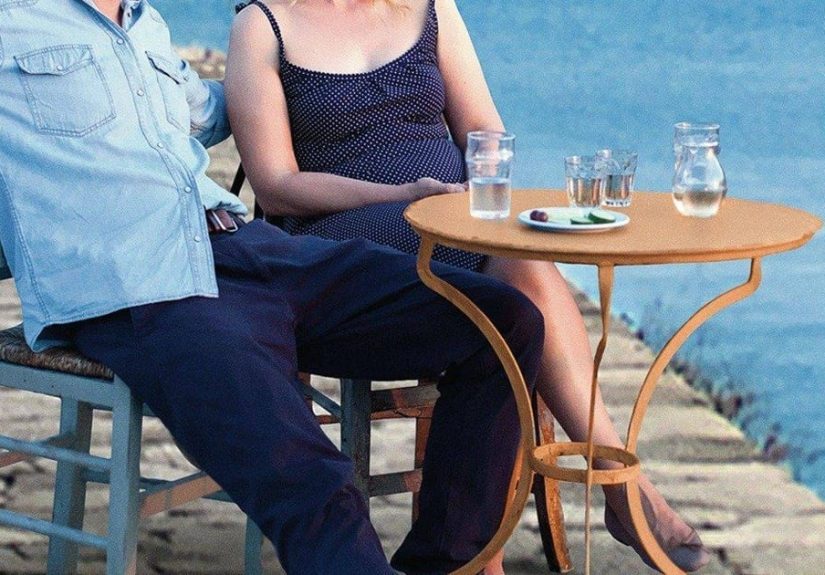
they’re parents, and they’re spending time in Greecebeautiful enough to make you want to write poetry, calm enough
to make your unresolved issues feel loud. The plot is intentionally minimal: the story is the conversation, and the
conversation is the story.
This isn’t a rom-com with meet-cute physics. It’s not interested in “Will they?” because they already did.
It’s interested in “How do they?”how do you keep love alive when life gets heavy, time gets fast, and your private
dreams have to share a calendar with school schedules and work obligations?
My Overall Ranking: Where Before Midnight Sits in the Before Trilogy
Let’s do the thing everyone does with beloved trilogies: rank them, argue about them, then secretly admit they’re all
excellent for different moods. Here’s a ranking that doesn’t pretend one movie can win every category.
1) Before Sunset Best for romantic tension
It’s the tightest, most urgent film of the three. The clock is loud, the chemistry is nuclear, and the entire movie
feels like someone holding their breath for 80 minutes straight.
2) Before Midnight Best for emotional realism
This is the one that understands long-term love isn’t just butterfliesit’s negotiations, compromises, and the occasional
“Are we okay?” asked in a tone that means “I am not okay.”
3) Before Sunrise Best for romantic possibility
The purest “what if” of the trilogyyouthful, philosophical, and floaty in the way only early love (and early adulthood)
can be. It’s not “less,” it’s just a different flavor of magic.
Translation: Before Midnight is the one you rewatch when you want something honestnot soothing. It won’t tuck you
in. It will hand you a flashlight and say, “Go look under the bed. Yep. That’s where you’ve been putting stuff.”
Ranked: The 7 Best Sequences (and Why They Work)
Before Midnight doesn’t rely on plot twists; it relies on truth. The “big moments” are emotional turnswhen a joke
becomes a jab, when a memory becomes a weapon, when affection becomes a negotiation. Here are the sequences that hit hardest.
7) The “vacation glow” opening
The film starts with warmthsun, travel, friends, that end-of-summer feeling where everything looks cinematic. It’s not
just pretty scenery; it’s contrast. Because the movie’s not about whether the relationship looks good. It’s about whether
it feels good on the inside.
6) The conversations with friends
The supporting characters aren’t filler; they’re pressure points. Their talk circles around love, aging, desire, and
partnership like adults who’ve lived enough to stop pretending. Jesse and Céline aren’t the only couple herejust the
couple we know best. Watching them in a group makes their private tensions more visible.
5) The walk-and-talk into the night
This is classic trilogy DNA: movement plus intimacy. But the tone is different nowless flirtation, more evaluation.
They still have rhythm. They also have history. And history has weight.
4) The small arguments that aren’t small
There’s a special kind of relationship fight where the words are about one topic, but the feelings are about twenty.
Before Midnight nails that slow build: tiny criticisms, defensive jokes, “I’m just saying,” and thenboomthe
emotional basement door swings open.
3) The “life math” discussion
One of the film’s most adult themes is logistics: where to live, whose career bends, how parenting responsibilities
get distributed, what gets sacrificed quietly. It’s not sexy. It’s also the difference between love as a feeling and
love as a shared life.
2) The hotel-room argument
This is the sequence that made a lot of viewers pause the movie and stare at the wall like it just personally called them
out. It’s intense without being melodramatic, because it’s built from recognizable patterns: old wounds resurfacing,
misinterpretations multiplying, apologies getting tangled in pride.
1) The ending: imperfect tenderness
The conclusion doesn’t give you a perfect bow. It gives you something better: two people trying. The film understands that
“happily ever after” is rarely a destination. It’s maintenance. It’s repair. It’s choosing each other againsometimes
awkwardly, sometimes beautifully, often both.
Ranked: Performances, Writing, and Direction
1) Screenplay A masterclass in “natural” that’s clearly crafted
The dialogue feels spontaneous, but it’s structured like musicsetups, callbacks, tempo changes, and emotional crescendos.
Humor isn’t decoration; it’s a coping mechanism. And when the jokes stop landing, you feel the shift immediately.
2) Julie Delpy as Céline precision, fire, vulnerability
Céline isn’t written as “the girlfriend/wife.” She’s a full human: political, funny, sharp, exhausted, loving, resentful,
ambitious, scared. Delpy plays her with an honesty that resists easy likabilitybecause the film isn’t trying to make you
approve of her. It’s trying to make you understand her.
3) Ethan Hawke as Jesse charm with consequences
Jesse has always been charismatic, but here the charm comes with receipts. Hawke leans into Jesse’s contradictions:
affectionate but self-centered, thoughtful but defensive, romantic but sometimes careless. It’s an unusually brave performance
because it doesn’t protect the character from your judgment.
4) Richard Linklater’s direction quiet confidence
Linklater trusts the material enough not to “help” it with flashy filmmaking. Long takes and patient staging let the actors
carry the tension. The camera becomes a witness, not a referee. It’s the cinematic equivalent of sitting at the next table
and realizing the couple beside you is having that conversation.
Opinionated Scorecard: How Before Midnight Ranks Across Key “Watch Factors”
- Emotional impact: 10/10 (the movie remembers your past arguments for you)
- Rewatch value: 9/10 (changes depending on your age and relationship history)
- Humor-to-heartbreak balance: 9/10 (laughing is often the pre-cry warmup)
- Accessibility for new viewers: 7/10 (you can start here, but the history deepens everything)
- “Date night” suitability: 6/10 (unless you both enjoy emotional cardio)
- Craft and acting: 10/10 (two people, one relationship, infinite nuance)
Big Themes That Make the Film Stick
Love as a verb, not a vibe
The movie isn’t anti-romance. It’s anti-fantasy. It suggests love is something you dohow you listen, how you argue,
how you repair, how you make room for someone else’s life without erasing your own.
Time as the third character
The trilogy’s signature is time passing in real life between films. That gap isn’t a gimmick; it’s the point.
Before Midnight feels like the moment you realize the “someday” you planned for is now… and it came with laundry.
Parenthood and the pressure of “being enough”
Parenting doesn’t just add responsibilitiesit exposes fault lines. The film explores how guilt, compromise, and exhaustion
can morph into resentment if they aren’t named out loud.
Power in relationships
The arguments aren’t just about feelingsthey’re about whose needs get prioritized, whose dreams get delayed, and who’s
expected to adapt. The movie is refreshingly unafraid to show how love can coexist with inequalityand how that imbalance
can poison intimacy if it goes unaddressed.
Hot Takes (Respectfully Delivered)
Hot take #1: This might be the “best” film, even if it’s not the “favorite”
Plenty of people prefer the romance of the earlier films. Fair. But in terms of emotional complexity and dramatic truth,
Before Midnight might be the trilogy’s strongest piece of storytelling. It’s harder to love because it’s harder to
escape.
Hot take #2: The hotel argument is not “too much”it’s the point
Some viewers call the big fight exhausting. Yes. That’s what happens when the movie refuses to give you a neat version of
adulthood. The scene isn’t there to punish you; it’s there to earn the ending.
Hot take #3: The ending is hopeful, not tidy
This isn’t a fairy tale reset button. It’s a glimpse of two people choosing to stay in the conversation. And honestly?
In a world full of easy exits, that’s romantic in its own grown-up way.
Who This Movie Is For (and Who Might Want a Warning Label)
Watch it if you…
- love dialogue-driven films that treat conversation like action
- enjoy romance that evolves into partnership, conflict, and compromise
- want a movie that respects your intelligence (and your emotional complexity)
Proceed carefully if you…
- are currently in a fragile relationship and think “a romantic movie will fix the vibe”
- prefer romance that stays dreamy instead of getting real
- don’t like stories where people say messy things before they say the true things
What to Watch After Before Midnight
If you want more relationship realism with sharp writing, look for films that treat love as an evolving negotiation rather
than a finish line. Or, if you want to stay in Linklater-land, explore his work that celebrates time, talk, and the quiet
drama of everyday life. The common thread: people revealing who they are, one sentence at a time.
of Viewer Experiences (to Make This Hit Even Harder)
Here’s the strange magic of Before Midnight: different viewers walk away convinced it was “about” different things.
Not because the film is unclear, but because it’s a Rorschach test for your life stage.
If you watch it in your late teens or early twenties, you might feel like you’re spying on adulthood. You’ll notice the
intensity, the impatience, the way small comments turn sharp. You may even think, “Why don’t they just calm down?”
which is adorable in the way only early optimism can be. At that age, love still feels like a story you step into.
You imagine that if two people are compatible and honest, the rest will sort itself out.
Watch it again in your late twenties or thirties, and suddenly you’re tracking the invisible workload: who’s carrying the
mental list, who’s compromising, who’s making space. You recognize the fatigue under the jokes. You start noticing how
interruptionsphones, schedules, obligationsdon’t just break the mood; they shape the relationship. You may laugh at
lines that felt harsh before, because you understand humor is sometimes how people keep from crying.
Then there’s the “midlife watch,” when the movie stops feeling like entertainment and starts feeling like an unauthorized
biography. You recognize the way couples speak in shorthandhow a single phrase can carry years of meaning. You recognize
the argument pattern: the attempt to stay calm, the slip into sarcasm, the sudden switch from “this topic” to “our entire
history.” You might even catch yourself picking a side, then realizing the film keeps pulling you back into empathy.
Today you’re Team Céline. Tomorrow you’re Team Jesse. In truth, the movie’s quiet thesis is that sides are for sports,
and relationships are for repair.
A lot of viewers report a very specific post-movie experience: you finish it, and you want to talk. Not about film trivia,
not about “what did it mean,” but about your own lifeyour compromises, your fears, the conversations you’ve been avoiding
because they’re inconvenient or because you’re scared of what they’ll reveal. Some people call that “too intense for a
movie night.” Others call it the highest compliment possible: the film didn’t just show a relationship; it triggered a
better relationship with reality.
And yes, sometimes the experience is simpler: you watch it on a quiet night, the Greece setting makes you crave a vacation,
the dialogue makes you crave honesty, and you end up texting a friend you haven’t talked to in a while because time is rude
and the film gently reminds you to stop letting it win.
Conclusion: The Final Verdict (Ranked and Lived-In)
Before Midnight is a rare sequel that doesn’t just continue a storyit deepens it. It ranks high not because it’s
“prettier” than the earlier films, but because it’s braver. It looks at long-term love and refuses to reduce it to either
tragedy or triumph. Instead, it gives you the middle space where most of life happens: the space where two people are still
choosing each other, even while struggling with what that choice costs.
If your idea of romance includes truth, growth, and the occasional uncomfortable mirror, this film isn’t just worth watching.
It’s worth revisitingbecause every time you do, you’ll be a different person… and the movie will meet you there.