Table of Contents >> Show >> Hide
- Why the Army Suddenly Cares So Much About Snow
- The Real Problem: The Old Snow Carrier Is Old
- What the Army Actually Needs in a New Snow Carrier
- Why Replacing the Snow Carrier Matters for Combat Power
- The Catch: A New Carrier Helps, But It Does Not Solve Everything
- What Success Looks Like
- Conclusion: The Army Does Need a New Snow Carrier
- Experiences from the Field: What a New Snow Carrier Really Means
- SEO Tags
For years, the U.S. Army’s cold-weather mobility problem has had the same energy as a homeowner insisting that a 1980s pickup truck is “still running great” while the muffler drags behind it like a defeated tuba. Yes, the old vehicle still moves. No, that does not mean it is ready for the future. And in the Arctic, “good enough” becomes “good luck” very quickly.
The Army’s need for a new snow carrier is not a niche procurement story for gearheads and military acronym collectors. It is a real readiness issue. As the Arctic grows more strategically important, the Army needs vehicles that can move troops, supplies, and command teams across snow, ice, muskeg, slush, and terrain that laughs at ordinary trucks. An old platform that once served well is no longer enough. The mission has changed, the environment is harsher than most people imagine, and the Army is trying to prepare for a region where machines freeze, batteries fail, roads disappear, and logistics become their own form of combat.
Why the Army Suddenly Cares So Much About Snow
The short answer is geography, strategy, and a very impolite security environment. Alaska is not just scenic wallpaper for wildlife documentaries. It is sovereign U.S. territory, a critical part of homeland defense, and a gateway to both the Indo-Pacific and Europe. The Arctic also includes key maritime chokepoints and northern approaches that matter to missile warning, force projection, and allied defense planning. In plain English: what happens in the Arctic does not stay in the Arctic.
That matters even more now because the region is changing. Russia remains the biggest military power physically rooted in the Arctic, and the Department of Defense has also flagged growing Russia-China cooperation, NATO expansion in the north, and climate-driven changes that are opening routes and changing operating conditions. In other words, the far north is no longer the world’s forgotten freezer drawer. It is becoming a more active, more contested strategic space.
The Army recognized this shift in its Arctic strategy and followed it with changes in Alaska, including the reactivation of the 11th Airborne Division as an Arctic-focused formation. That move was not just a branding exercise with a cool patch. It reflected a broader push to train, equip, and organize forces to operate in extreme cold, high latitudes, mountainous terrain, and the kind of isolated environments where a wrong equipment decision can ruin an operation before the enemy even shows up.
The Real Problem: The Old Snow Carrier Is Old
The Army’s legacy Small Unit Support Vehicle, or SUSV, has been useful for decades. It was amphibious, tracked, and surprisingly capable in deep snow and swampy terrain. It earned its reputation the honest way: by doing a hard job in miserable places. But a good service record does not stop the calendar.
The core problem is age. The Army’s own acquisition and defense reporting have described the SUSV as based on 1960s and 1970s technology and last procured in the early 1980s. That is not “mature.” That is museum-adjacent. Over time, sustainment costs rose, parts became obsolete, and units increasingly had to keep these vehicles alive with increasingly painful workarounds. At some point, maintaining an old fleet stops being thrift and starts becoming a hobby.
That point has clearly arrived. Army officials have been blunt that the legacy system became unsustainable. Refurbishment costs increased, spare parts dried up, and support strategies that once bought time stopped making financial and operational sense. When the Army says a vehicle is no longer sustainable in the Arctic, that is not a dramatic flourish. It is a warning that the vehicle cannot be trusted to underpin serious combat readiness in one of the world’s harshest environments.
What the Army Actually Needs in a New Snow Carrier
A modern Arctic carrier must do much more than drive through snow and look tough in a press photo. It needs to haul soldiers and cargo, support command-and-control tasks, help evacuate casualties, and move through conditions that would make most commercial vehicles file a formal complaint.
That means reliable mobility on frozen ground, soft snow, swampy muskeg, steep grades, and water obstacles. It also means a vehicle light enough to avoid sinking, rugged enough to survive harsh use, modular enough for multiple missions, and practical enough to sustain in the field. In Arctic operations, utility is everything. Fancy is optional. Starting when it is brutally cold is not optional.
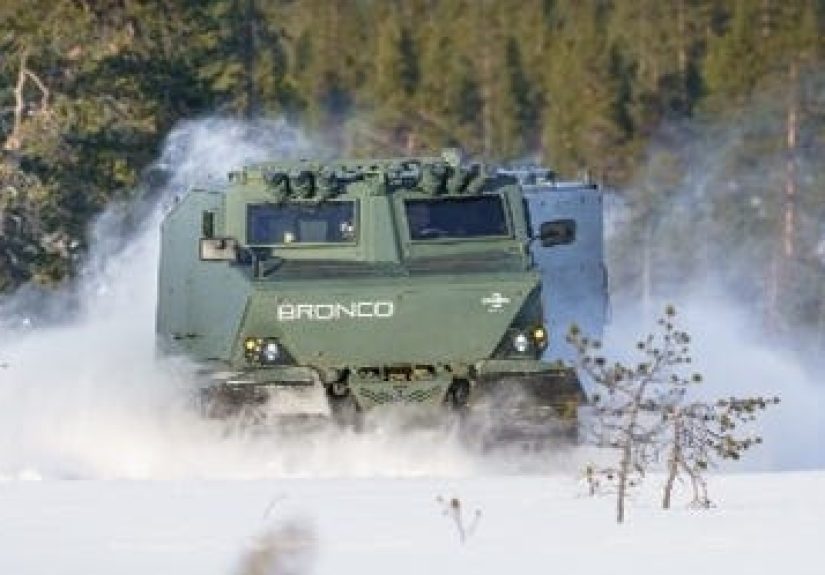
The Army’s Cold Weather All-Terrain Vehicle, or CATV, is meant to answer that need. BAE Systems’ Beowulf was selected for the program, and the Army has described the vehicle as an unarmored, tracked, amphibious platform capable of moving up to nine soldiers through extreme cold-weather terrain, including snow, tundra, water, and muskeg. Army descriptions also highlight its speed, long range, helicopter sling-load capability, and modular mission potential.
That is the practical appeal. A new Arctic carrier is not just a truck with tracks. It is a mobility system designed around terrain that breaks assumptions. In Alaska and similar environments, the ground itself is often the enemy. Frozen surfaces can shift. Thawed surfaces can swallow tires. Mountain roads can narrow. Weather can erase routes. A vehicle that can “float” on snow and keep working in places where conventional platforms struggle gives commanders more than transportation. It gives them choices.
Why Replacing the Snow Carrier Matters for Combat Power
Mobility is one of those military words that sounds boring until you do not have it. Then it becomes the whole story.
If infantry cannot move, they cannot reach key terrain fast enough. If supplies cannot follow, units become fragile. If command posts cannot reposition, they become targets. If casualty evacuation is too slow, every risk gets worse. In Arctic operations, all of that is magnified because the distances are long, infrastructure is limited, and the environment taxes both humans and machines.
That is why the Army’s new snow carrier matters beyond the vehicle program itself. It supports homeland defense missions, search and rescue, civil support, training, and combat operations. It also fits the Army’s broader attempt to make the 11th Airborne Division and other cold-weather forces more credible in real Arctic scenarios.
The logic is straightforward: if you want an Arctic-capable force, you need Arctic-capable mobility. You cannot declare dominance over the north while riding around in platforms that belong in a Reagan-era maintenance log.
The Catch: A New Carrier Helps, But It Does Not Solve Everything
This is where the story gets more interesting. Replacing the old snow carrier is necessary, but it is not sufficient. The Arctic is a system problem, not just a vehicle problem.
Army leaders and defense reporters covering recent training rotations have pointed to a broader pattern: everything in the Arctic takes longer, digital systems are fragile, batteries suffer, communications are difficult, and sustainment is brutally hard. Tablets can crack or fail in exposure. Touchscreens become temperamental. Satellite communications are more complicated at high latitudes. Drones, vehicles, aviation, and artillery all face unique performance challenges. Even camouflage is not simple, because the terrain is not just “all white all the time.”
In recent training, Army leaders described a battlefield where units had to be ready to move information the old-fashioned way when digital systems struggled. Soldiers used snow machines and CATVs to physically move orders when conditions interfered with modern tools. That is a useful reminder that an Arctic fight is not a science-fiction battlefield powered by perfect data. It is a place where the environment bullies technology, and the side that adapts faster wins.
Logistics is an especially stubborn problem. Even as the CATV improves mobility for infantry units, Army writing on Arctic sustainment has argued that support formations still need better adapted solutions. Many existing support vehicles are too large, too heavy, or too constrained by limited routes. That means the Army may eventually need not just a new snow carrier, but a family of Arctic mobility tools and trailer systems that move fuel, water, ammunition, and repair capacity without forcing everything onto predictable roads.
The Snow Carrier Is Part of a Bigger Arctic Toolkit
The Army’s push into Arctic readiness has not stopped at vehicles. It has also involved better skis, cold-weather gear, improved training, updated tactics, multinational exercises, and more experimentation with communications and sustainment. Army officials have openly described Arctic operations as “bespoke,” which is a polite way of saying standard equipment often does not cut it.
That phrase matters. Arctic readiness is not achieved by painting normal gear white and hoping for the best. It requires specialized equipment, tailored doctrine, and soldiers who know how to survive and fight in environments where exposure, fatigue, and maintenance are constant threats.
In that sense, the new snow carrier is a symbol as much as a platform. It shows the Army is finally treating Arctic mobility as a serious operational requirement rather than a seasonal inconvenience.
What Success Looks Like
Success is not simply buying new tracked vehicles and parking them in Alaska for victory photos. Success means these carriers become part of a reliable Arctic ecosystem. Units need enough of them, mechanics need parts, logisticians need compatible support equipment, commanders need workable concepts, and training has to keep exposing the weak spots before war does.
There are promising signs. The Army has fielded initial vehicles, used them in Arctic exercises, tested them as command-and-control and sustainment nodes, and pushed them into tough conditions including tundra and even Arctic waters north of the circle. Army leaders have also signaled they want more of them. That suggests the vehicle is not being treated as a novelty item. It is being pulled into real operational thinking.
Still, the Army should resist the temptation to declare the problem solved too early. Arctic capability has a habit of exposing optimism. A platform can perform well in demonstrations and still reveal limits under sustained field use. The right mindset is not “mission accomplished.” It is “good, now keep stress-testing it until the Arctic stops finding new ways to embarrass us.”
Conclusion: The Army Does Need a New Snow Carrier
Yes, the Army needs a new snow carrier. Not because tracked vehicles are cool, though they absolutely are. Not because modernization is fashionable, though defense procurement certainly loves a fresh acronym. The Army needs a new snow carrier because its old one aged out of the job, the Arctic matters more than it did a decade ago, and mobility in extreme cold is foundational to everything else the Army wants to do in the north.
The CATV is a serious step in the right direction. It addresses a long-recognized gap, gives Arctic forces better mobility, and aligns with the Army’s larger effort to rebuild cold-weather competence. But the real lesson is bigger than one vehicle program. The Arctic punishes wishful thinking. It punishes the wrong vehicle, the wrong battery, the wrong communications plan, and the wrong sustainment model.
That is why this replacement matters. A new snow carrier is not a luxury for a specialty force. It is a practical requirement for a military that wants to move, survive, and fight in the coldest, messiest, and least forgiving places on the map. The Army is finally acting like it understands that. Better late than frozen.
Experiences from the Field: What a New Snow Carrier Really Means
To understand why the Army needs a new snow carrier, it helps to picture the experience of the people who actually work in Arctic conditions. For a soldier, the day does not begin with grand strategy. It begins with cold air that stings instantly, gear that feels heavier than it should, and the simple question of whether the machine assigned to the mission will start, move, and keep moving.
In snow country, small problems become giant problems with astonishing speed. A normal road may not exist. A trail that looked solid in the morning can soften, crack, or disappear. A truck that works well in a temperate training area can feel clumsy and out of place on deep snow or wet tundra. When that happens, movement slows, plans change, and frustration spreads fast. Nobody needs a lecture on doctrine when they are stuck in a white landscape that seems to stretch forever and absorb every bad decision.
A better snow carrier changes that experience in practical ways. It gives troops confidence that they can move a squad, haul gear, and reach places that would otherwise demand exhausting foot movement. It helps reduce fatigue, which matters more than many civilians realize. In severe cold, fatigue is not just uncomfortable. It chips away at awareness, judgment, and morale. A vehicle with heat, usable space, and dependable mobility can preserve combat effectiveness long before the first shot is fired.
Mechanics feel the difference too. Working on old vehicles in bitter weather is a special kind of misery. Parts shortages turn routine maintenance into scavenger hunts. Temporary fixes become permanent traditions. Every repair carries the underlying question: are we preserving capability, or just delaying failure? A modern carrier with available parts and a real sustainment pipeline replaces that anxiety with something the Army desperately needs in Arctic operations: predictability.
Logisticians have their own version of the story. In the Arctic, supply is never as simple as loading trucks and driving. Routes are constrained, weather changes suddenly, and heavy vehicles can be too large, too obvious, or too limited by terrain. A capable snow carrier creates flexibility. It can move smaller loads more intelligently, support remote teams, and help avoid the sort of bottlenecks that make a force brittle. For the people responsible for fuel, water, ammunition, and food, that flexibility is not glamorous. It is survival.
Then there is the psychological effect. A force that feels equipped for the environment behaves differently from a force that feels like it borrowed the wrong tools. Confidence in the right equipment encourages initiative. It helps troops focus on the mission rather than constantly negotiating with their gear. In a place where everything from gloves to batteries to navigation can become a problem, a reliable mobility platform sends a simple message: the Army expects you to operate here, and it has finally started giving you equipment that agrees.
That is why the Army’s new snow carrier matters so much. It is not just steel, tracks, and procurement language. It is the difference between wrestling the Arctic and working with it. And while nobody in uniform will ever describe Arctic operations as easy, the right vehicle can make them a lot less ridiculous.