Table of Contents >> Show >> Hide
- Why Forsberg Form Clocks Feel Like “Accessories” (Not Just Timepieces)
- Meet the Lineup: Iconic Forsberg Form Clock Styles
- 1) The Concrete Floor Clock as Sculpture: Urbild and Its Descendants
- 2) Rektangel: The Floor Clock That Leans In (Literally)
- 3) Tidlös: The Classic Longcase Shape, Stripped to Essentials
- 4) Tidvis: Concrete With a Collaborative, Architectural Feel
- 5) Urbild Table Clock: The Big Idea in a Smaller Body
- 6) Instrument Wall Clock: A Concrete Wall Accent That Doesn’t Try Too Hard
- How to Choose the Right Forsberg Form Clock for Your Space
- Styling Ideas: Making Concrete Feel Warm, Not Warehouse
- Practical Considerations: What It’s Like Living With a Concrete Clock
- Buying Smarter: Limited Editions, Collectibility, and Resale Signals
- Where Forsberg Form Clocks Shine Most in the Home
- of Real-Life-Style Experience: What These Clocks Feel Like Day-to-Day
- Conclusion: The Accessory That Keeps Your Home on Time (and on Taste)
There are clocks that quietly tell time, and then there are clocks that show up in your living room like, “Hi. I’m an object now.” Forsberg Form clocks live firmly in the second category. These Swedish-made concrete timekeepers are part sculpture, part furniture, part “yes, it’s supposed to look like that,” andsomehowstill completely practical. If you’ve ever wished your accessories had the confidence of a modern art museum gift shop, welcome home.
In this guide, we’ll break down what makes Forsberg Form clocks such a design-world magnet, how the major models differ, where they fit best, how to style them without turning your home into a minimalist hostage situation, and what to consider before investing in a limited-edition concrete clock (because “it’s heavy” is not a full plan).
Why Forsberg Form Clocks Feel Like “Accessories” (Not Just Timepieces)
Calling a Forsberg Form clock an “accessory” is like calling a grand piano a “conversation starter.” Technically correct, emotionally underpowered. But the label fits in a modern interiors sense: these clocks behave like accessories because they finish a space. They don’t just fill a corner; they define a corner. They don’t just go on a wall; they give the wall a job.
The visual signature is straightforward: bold silhouettes, muted tones, and material honestyespecially concrete. Concrete brings mass, texture, and a kind of calm seriousness that can make even a chaotic room feel more composed. It also adds a bit of delicious contradiction: something traditionally cold and structural becomes domestic and intimate. Time, but make it architecture.
The “Timeless Design” Idea (Ironically Perfect for a Clock)
Forsberg Form’s design language leans into longevity: simple forms, careful surfaces, and an emphasis on objects you keep rather than replace. That’s a great match for clocks, which are literally about continuity. If your décor changes every season, these clocks will wait you out. Patiently. Like a cat.
Meet the Lineup: Iconic Forsberg Form Clock Styles
Forsberg Form clocks tend to be grouped into two worlds: floor clocks that act like sculptural furniture, and smaller clocks that deliver the same DNA in more apartment-friendly proportions. Here are the best-known styles and what they communicate in a room.
1) The Concrete Floor Clock as Sculpture: Urbild and Its Descendants
The Urbild concept is foundational to the brand’s clock identity. Think of it as a longcase clock reimagined through modern minimalism: a tall, monolithic body, pared-down geometry, and a material that refuses to pretend it’s anything other than what it is.
Concrete changes the whole emotional read. A traditional grandfather clock can feel ornate, sentimental, even fussy. A concrete longcase clock feels architecturallike a standing slab that just happens to keep time. It’s less “inheritance” and more “gallery installation,” which makes it surprisingly easy to mix with contemporary interiors.
2) Rektangel: The Floor Clock That Leans In (Literally)
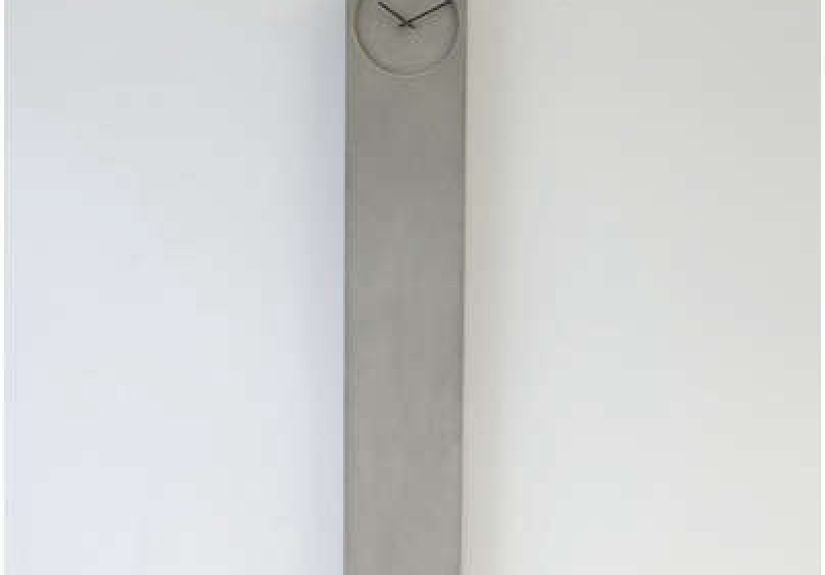
Rektangel is the model name that tells you exactly what you’re getting: a rectangle, confidently doing rectangle things. It’s a concrete “grandfather clock” designed to lean against a wall or be fixed vertically with a mount. Its thin profile and tall presence read like a minimalist monolithespecially in neutral rooms with strong lines.
Design-wise, this is the clock you choose when you want the room to feel taller and more deliberate. It’s a particularly sharp fit for spaces with higher ceilings, long corridors, or open-plan living areas where small accessories get swallowed up.
3) Tidlös: The Classic Longcase Shape, Stripped to Essentials
Tidlös (a name that nods to “timeless”) takes the longcase idea and reduces it into a clean, modern tower. The proportions feel deliberate: tall and slender, with a clear clock face presence at the top. It has the visual discipline of Scandinavian designquiet, but not shy.
If your interior style leans toward warm minimalism (woods, linen, off-white walls), Tidlös adds contrast and gravity without making the room feel colder. It’s the equivalent of a black turtleneck for your space: it goes with everything, and it makes everything else look more expensive.
4) Tidvis: Concrete With a Collaborative, Architectural Feel
Tidvis clocks are often described as tower-likeblocky, solid, and intentionally modern. This design tends to appeal to people who like furniture that looks like it was drafted, not decorated. The silhouette is uncomplicated, but the effect is strong: it anchors a room the way a fireplace might, just without the soot and the emotional commitment.
Tidvis is especially compelling if your home already has architectural featuresexposed concrete, steel accents, large windows, or crisp built-ins. In a softer, more traditional room, it can work too, but it becomes a louder statement. That’s not a problem; it’s a personality.
5) Urbild Table Clock: The Big Idea in a Smaller Body
Not everyone has floor-clock real estate. The Urbild table clock brings the same design DNA into a scaled, tabletop form. It’s described as a scaled replica of the original floor clock concept and is tall enough to feel like an object, not a trinket. The result: you can get the sculptural presence without rearranging your entire living room around it.
This is the one that plays well on sideboards, credenzas, shelves, and wide windowsills. It’s also the easiest entry point if you want the Forsberg Form look but need a footprint that won’t pick a fight with your sofa.
6) Instrument Wall Clock: A Concrete Wall Accent That Doesn’t Try Too Hard
The Instrument Wall Clock is a simpler, more classic category: a wall clock in pigmented concrete. That sounds minimal, and it isbut it also reads as a material moment. Put it on a plain wall and suddenly the wall has texture, weight, and a point of interest that doesn’t rely on color or pattern.
It’s especially good in kitchens, offices, mudrooms, and hallwaysplaces where you want utility, but you still want the room to look intentional. Think of it as the grown-up version of the “cool clock” you had in college, only now it doesn’t feature a cartoon character holding a surfboard.
How to Choose the Right Forsberg Form Clock for Your Space
Choosing a Forsberg Form clock is less about “Which one is prettiest?” and more about “What role should this object play?” Because these clocks are visually assertive, the best choice is the one that matches the job you need done.
If You Want a Statement Piece
- Pick a floor clock (Rektangel, Tidlös, Tidvis-style silhouettes). These function like sculptural furniture.
- Use negative space: give it breathing room so it looks deliberate rather than crowded.
- Balance the weight with softer materials nearbywool rug, linen curtains, warm wood tones.
If You Want a Subtle Upgrade
- Pick the Instrument Wall Clock or a smaller-format piece like the Urbild table clock.
- Place it where it’s useful: entryway, kitchen, workspace. Utility makes bold design feel natural.
- Let texture do the talking: keep surrounding décor simple so the concrete reads as “elevated,” not “industrial overload.”
If You’re Short on Space (or Commitment)
- Start with a table clock to test the vibe without rearranging your home.
- Choose one focal surface (a sideboard, console, shelf) and style around it with restraint.
- Avoid clutter nearby; concrete + clutter = “basement workshop,” even when it’s expensive.
Styling Ideas: Making Concrete Feel Warm, Not Warehouse
Concrete can read cold if you pair it with other cold signals (stainless steel, glossy black, harsh lighting, empty rooms). The trick is contrastvisual and tactile. Think “cozy minimalism,” not “interrogation room chic.”
Pair Concrete With Wood (The Scandinavian Cheat Code)
Light oak, ash, walnutwood warms concrete instantly. A concrete clock against wood floors or next to a wooden sideboard becomes balanced, not severe. If your space already leans white and bright, wood is the easiest way to keep the room human.
Add Soft Textiles Within the Same Sightline
Place a floor clock near a rug with texture (wool, jute, boucle), or near curtains that soften hard edges. You’re not hiding the concreteyou’re giving it a supportive cast. Like a stern professor next to a friendly TA.
Use Plants to Break Up Geometry
A tall floor clock beside a plant with organic shape (olive tree, fiddle leaf fig, even a dramatic pothos) prevents the space from becoming too angular. The plant is the “alive” to the clock’s “eternal.” Philosophical? Yes. Effective? Also yes.
Try a “Single Accent” Rule
If the clock is concrete, avoid adding three other concrete objects within the same area. Concrete wants to be special. Let it be special. If you want more depth, add ceramics, stone, or matte metalmaterials that complement without competing.
Practical Considerations: What It’s Like Living With a Concrete Clock
Let’s talk reality. Concrete is gorgeous, but it’s also a real material with real habits. It has weight. It has surface variation. It can chip if mistreated. None of this is a dealbreakerit’s just the “read the label before you put it in the washing machine” part of owning design objects.
Weight and Placement
Concrete clocks have presence. That presence includes mass. For floor clocks, plan placement like you would for a tall mirror or a slim bookcase: stable surface, safe traffic flow, and enough space that no one clips it with a laundry basket at 7 a.m. (Ask your future self how they feel about that.)
Surface Character (a.k.a. “It’s Not a Scratch, It’s a Story”)
Concrete often shows subtle texture, tonal variation, and tiny imperfections. That’s not sloppy; it’s part of the appeal. If you need perfectly uniform, glass-smooth, factory-identical finishes, concrete will test your patience. But if you like objects that feel made rather than manufactured, you’ll probably enjoy the nuance.
Maintenance Basics
- Dust gently with a soft cloth or duster.
- Avoid harsh cleaners that could dull or stain the surface.
- Protect from repeated impacts (concrete is tough, but corners and edges don’t love surprises).
Buying Smarter: Limited Editions, Collectibility, and Resale Signals
Some Forsberg Form clocks are produced in limited editions. That changes the buying experience. You’re not just buying a clock; you’re buying a design object with a supply story. Limited runs often increase collectibility, and they also mean you should treat purchasing like you would with art or vintage furniture: document details, confirm condition, and think long-term.
What to Look For When Buying Secondhand
- Edition markings and any documentation that comes with the piece.
- Condition notes: chips, repairs, and whether the movement has been tested recently.
- Transport plan: heavy objects require careful packing, especially for corners and faces.
A practical mindset helps: if you’re buying a concrete floor clock as a forever piece, minor wear may not matter. If you’re buying as an investment or collector object, condition and provenance matter more. Decide which buyer you are before you hand over your card.
Where Forsberg Form Clocks Shine Most in the Home
Living Room
A floor clock can replace what many people try to do with oversized art: create a vertical anchor. Put it near a reading nook, at the end of a sectional, or in a corner that currently collects “temporary” items that have lived there for 11 months.
Dining Room
Dining rooms love strong silhouettes because the furniture is already geometric. A tall clock near a sideboard feels intentional, especially if you echo the tone with matte black candlesticks, neutral ceramics, or a simple framed print.
Entryway
The entryway is where you want impact without clutter. A wall clock or table clock gives function (catch the time on your way out) and style (your home says “hello” with good taste instead of a pile of mail).
Home Office
Concrete in an office setting reads focused and grounded. A wall clock keeps you aware of time without feeling like a corporate conference roomespecially if you balance it with warm lighting and a comfortable chair.
of Real-Life-Style Experience: What These Clocks Feel Like Day-to-Day
Here’s the funny thing about owning a “statement” clock: the statement changes over time. On day one, you notice it constantly. You walk by and think, “Wow, that is definitely a clock made of concrete.” You take photos. You send them to a friend who replies with a message that is 80% question marks. You feel proud and mildly suspicious of your own tastelike any good design purchase.
Then the clock settles in, and the experience becomes less about the object and more about the rhythm it creates. A sculptural floor clock has a calming presence. It’s tall, still, and visually steady. In rooms where life tends to scatter shoes by the door, backpacks on chairs, that one throw blanket that never quite foldsthis kind of object acts like a visual “reset.” It doesn’t nag you. It just stands there, looking composed, quietly encouraging your home to match its energy.
The tactile experience is unexpectedly satisfying, too. Concrete has this matte, grounded look that makes glossy trends feel a little loud. You don’t get a flashy shine; you get a surface that absorbs light and softens reflections. In the morning, it looks cool and crisp. In the evening, under warm lamps, it looks almost velvety. If you’ve ever watched the same room change mood as the sun moves, you’ll appreciate how concrete participates in that shift without demanding attention.
There’s also a subtle social effect. Guests notice it, but not in a “why is that there?” waymore like “I didn’t know clocks could do that.” It becomes a conversation piece that doesn’t require you to perform. You can keep it simple: “It’s a concrete clock.” That’s enough. If someone wants the deeper story, you can talk about material, form, and why you like objects that feel built rather than decorated. If they don’t, they still walk away thinking your home is intentional, which is basically the entire goal of accessories.
Practical life happens, of course. You learn quickly not to place it where it can get bumped. You become the kind of person who says, “Careful around the clock,” which sounds dramatic until you remember it’s literally a heavy design object. You also learn that the best styling move is restraint. If the clock is strong, everything near it should calm down. A single ceramic vase. A small stack of books. Maybe a plant. Not the entire contents of your personality arranged on one shelf.
Over time, the clock becomes less of a novelty and more of an anchorsomething you rely on without thinking. It’s the object you glance at while making coffee, while tying shoes, while deciding whether you have time to do one more thing before leaving. The best part? It doesn’t age like trendy décor. It just… stays good. Which, for a clock, is the most on-brand success story possible.
Conclusion: The Accessory That Keeps Your Home on Time (and on Taste)
Forsberg Form clocks sit at the sweet spot between functional object and sculptural design. They can be bold without being busy, minimal without being sterile, and practical without looking ordinary. If you want an “accessory” that actually changes how a room feelsand you’re willing to treat it like the design object it isthis is a category worth exploring.
Whether you go all-in with a floor clock that anchors the entire space or start with a table or wall clock that adds texture and quiet confidence, the takeaway is the same: time can be beautiful, and it can also be made of concrete. Because design is allowed to be serious. It’s also allowed to be fun. These clocks manage both.