Table of Contents >> Show >> Hide
- What Makes a Spatula “Star-Spangled”?
- Spatula 101: The Tool With a Secret Identity
- The Materials Matter: Picking the Right Spatula for the Job (and the Pan)
- Grilling Like It’s Independence Day: Spatula Skills That Actually Help
- A Star-Spangled Menu That Puts Your Spatula to Work
- Care and Keeping: How to Make Your Spatula Last Past Labor Day
- How to Choose a Star-Spangled Spatula (Without Overthinking It)
- Conclusion: One Small Flip for Food, One Giant Leap for Cookout Confidence
- of Star-Spangled Spatula Experiences
- SEO Tags
Every holiday has its mascot. Halloween gets pumpkins. Thanksgiving gets turkey.
And the Fourth of July? The Fourth of July gets a backyard full of people insisting they “don’t need a plate,”
plus one humble hero doing the heavy lifting: the spatula.
Call it a flipper, a turner, a scraper, or “the thing I swear was right here a second ago.”
A spatula is the hand tool that turns raw into ready, sticky into smooth, and “uh-oh” into “nailed it.”
When you dress it up in red, white, and blue (or just put it to work on America’s most patriotic menu),
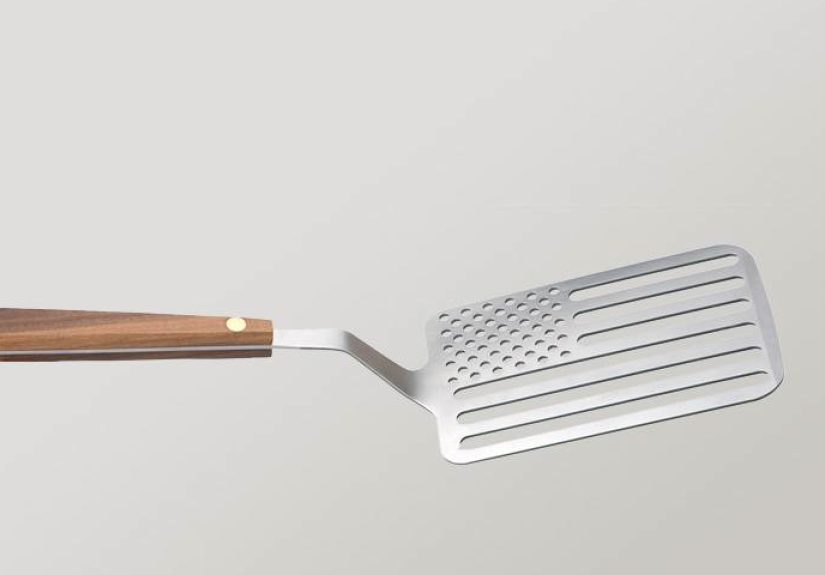
you’ve got what we’ll call a star-spangled spatula: a tool that feels festive, performs like a pro,
and survives the cookout with its dignity intact.
What Makes a Spatula “Star-Spangled”?
It’s not just the pattern (though a stars-and-stripes handle does add instant parade energy).
A star-spangled spatula is really about versatility and confidence:
the right tool for high-heat grilling, delicate flipping, frosting duty, and the inevitable
“can you just stir this for a second?” moment.
- It’s pan-friendly: safe on nonstick when needed, tough on stainless when the grill is roaring.
- It’s heat-smart: built for hot zones without turning into a sad, melty modern art piece.
- It’s multi-mission: burgers at 6, brownies at 8, and “who wants the last pancake?” at 9.
Spatula 101: The Tool With a Secret Identity
In American kitchens, “spatula” is a catch-all term. That’s convenientuntil you realize it covers
several tools that look related but behave very differently. Think of them as cousins at a family reunion:
similar last names, wildly different personalities.
The Turner (a.k.a. the Flipper)
This is the classic cookout spatula: flat, sturdy, built to slide under burgers, flip pancakes,
and rescue grilled vegetables before they roll into the coals to start a new life as charcoal.
A good turner has a thin leading edge, enough surface area to support food, and a handle that won’t
make you feel like you’re steering a shopping cart with one wobbly wheel.
The Scraper Spatula
This is the flexible, bowl-hugging, batter-sweeping champ. It’s the tool that proves your mixing bowl
still has snacks in it even after you think you’re done. If you bake at allcakes, brownies, patriotic
cupcakes, “just one more batch” cookiesthis is non-negotiable.
The Offset Spatula
Picture a skinny blade with a little bend in the handle. That “offset” is what gives you control
when spreading frosting, smoothing whipped cream, or leveling cake layers without dragging your knuckles
through your masterpiece like a clumsy parade float.
The Fish Spatula (a.k.a. the “Why Is This So Good at Everything?” Spatula)
Thin, slightly angled, often slotted, and surprisingly nimble. The fish spatula is famous for delicate
flipsfish, yesbut also eggs, pancakes, smash burgers, cookies, and anything else that likes to tear
right when guests are watching.
The Materials Matter: Picking the Right Spatula for the Job (and the Pan)
A star-spangled spatula isn’t one single material. It’s the right material in the right moment.
The cookout sweet spot is usually a small lineup: one high-heat tool, one nonstick-safe tool,
and one flexible scraper for mixing and cleanup.
Silicone: The Nonstick’s Best Friend
Silicone spatulas and turners are popular because they’re gentle on nonstick surfaces and great at scraping,
folding, and spreading. The best silicone tools feel firm enough to lift food without flopping over like a
tired flag in humid weather, but flexible enough to glide along a bowl.
Practical tip: if you cook hot and fast (searing burgers, working a griddle, tackling a crowded skillet),
look for silicone tools designed with reinforced cores and clear heat ratings.
“Food-grade” is a starting point, not a magic spellquality and construction still matter.
Stainless Steel: Built for the Grill (and for Confidence)
When you’re working over open flame, stainless steel is the no-drama choice. It’s sturdy, handles high heat,
and gives you that satisfying, precise edge for getting under foodespecially on grates, griddles, and cast iron.
If your cookout menu includes burgers, hot dogs, chicken, corn, and “one experimental thing,” stainless steel
is your backbone tool.
One caution: stainless steel can scratch nonstick coatings. If your July 4 plan includes nonstick skillets
or ceramic-coated pans, keep the metal turner on grill duty and grab silicone or wood for the coated cookware.
Wood: Gentle, Classic, and Weirdly Charming
Wooden spatulas are quiet overachievers. They’re kind to cookware, comfortable to hold,
and excellent for stirring, scraping, and sauteing. They’re not ideal for super-thin flipping tasks
(wood can be a bit thick), but for general cooking they feel timelesslike the utensil equivalent
of an old family recipe card.
Wood does require a little care: don’t soak it forever, dry it well, and consider occasional oiling
if it starts looking thirsty. Treat it right, and it’ll stick around longer than your “quick cleanup” promise.
Nylon: Useful, But Know Its Limits
Nylon tools can be gentle on nonstick cookware, but they’re not the best choice for very high heat.
If you’ve ever watched a utensil edge soften at the exact moment you needed it most, you already know:
a cookout is not the time to gamble on a tool that might tap out early.
Grilling Like It’s Independence Day: Spatula Skills That Actually Help
A patriotic spatula isn’t just for waving around like you’re leading a kitchen marching band.
It’s for doing a few key things wellespecially when the grill is crowded and everybody suddenly has
opinions about “the perfect doneness.”
1) Flip with intention (not anxiety)
The best flips are calm, confident, and quick. Slide under the food with the thinnest edge,
support the center, and turn in one smooth motion. If you’re using a fish spatula, let the thin,
angled blade do the work. If you’re using a wide grill turner, use its surface area to keep burgers steady.
2) Don’t press the burgers (your spatula isn’t a steamroller)
Pressing burgers can squeeze out juices and make the texture less enjoyable.
The spatula’s job is to lift and turn, not to squash your dinner into a drier version of itself.
If you’re doing smash burgers, that’s differentyou press early and intentionally on a hot surface.
But for standard patties? Flip, don’t flatten.
3) Keep food safety in the plan, not as an afterthought
Cookouts move fast, and cross-contamination loves chaos. Use a clean platter for cooked food,
and don’t put finished burgers back where the raw ones were lounging. For ground beef,
the safest move is to use a thermometer and cook to the recommended internal temperature.
Bonus safety habit: keep two spatulas in playone for raw-to-grill handling and one for finished food
or wash/swap in between. It sounds fussy until you realize it’s easier than explaining food poisoning
to your friends on Monday.
A Star-Spangled Menu That Puts Your Spatula to Work
If your July 4 spread is a greatest-hits album, your spatula is the tour manager.
Here’s how different spatula types shine across classic cookout territory.
Burgers and hot dogs
Use a sturdy grill spatula for burgersespecially if you’re flipping multiple patties at once.
For hot dogs, a spatula can help roll and reposition them, but tongs are often more natural.
Still, a wide turner is great for scooping a whole lineup off the grill in one trip.
Fish, veggies, and anything delicate
This is fish-spatula country. Its thin edge slides under tender fillets and grilled vegetables
without shredding them. Even if you “don’t cook fish,” you’ll probably use it constantly once you have it.
Pancakes, griddle cakes, and morning-after breakfast
A medium turner (metal for a griddle, silicone for nonstick) makes pancakes feel effortless.
The key is a thin edge and enough width to support the whole pancake so it doesn’t fold itself
into a regret burrito mid-flip.
Patriotic desserts: cupcakes, brownies, and fruit pies
This is where the scraper spatula and offset spatula take the stage.
Use a scraper to fold batter and clean the bowl like you’re getting paid per crumb.
Use an offset spatula to smooth frosting, spread ganache, or level whipped cream
without turning your dessert into a finger-painted situation.
Care and Keeping: How to Make Your Spatula Last Past Labor Day
Utensils don’t need much, but they do appreciate basic respect.
(That includes not leaving them on the grill like they’re sunbathing.)
- Match the tool to the heat: Keep high-heat grilling to stainless steel or properly rated silicone.
- Clean promptly: Sugary sauces and sticky marinades are easier to remove before they dry into varnish.
- Mind the dishwasher: Many silicone and stainless tools are dishwasher-friendly; wood often prefers hand washing.
- Check seams and joints: One-piece silicone tools are easier to keep clean than tools with removable heads.
How to Choose a Star-Spangled Spatula (Without Overthinking It)
You don’t need a 27-point checklist. You need a tool you’ll actually reach for.
Here’s the simple approach:
For grill-first households
Choose a long-handled stainless steel turner with a thin edge, comfortable grip, and enough surface area
to lift a burger confidently. If you grill a lot, this is your “buy once, cry never” piece.
For nonstick and everyday cooking
Choose a quality silicone turner and a flexible silicone scraper. Look for reinforced cores,
smooth edges, and a shape that fits your pans and bowls.
For bakers and frosting artists
Add an offset spatula. It’s the difference between “pretty nice” and “how did you do that?”
even if your decorating style is best described as “enthusiastic.”
Conclusion: One Small Flip for Food, One Giant Leap for Cookout Confidence
A star-spangled spatula isn’t about buying something flashy (though a festive handle doesn’t hurt).
It’s about having the right tool that matches your cooking stylesomething that can handle burgers,
protect your pans, smooth frosting, and keep up with the pace of a holiday kitchen.
Build a small, smart lineupstainless for the grill, silicone for nonstick, a scraper for bowls,
and maybe a fish spatula if you like living on the culinary edge (a thin, effective edge).
Do that, and your cookout becomes less about scrambling and more about enjoying the fireworks
including the ones that happen when someone tastes your food and says, “Okay, you did that.”
of Star-Spangled Spatula Experiences
The first time you host a Fourth of July cookout, you learn a very specific truth:
your spatula becomes your schedule. At 4:00 p.m., it’s optimisticfreshly washed, sitting neatly by the grill,
ready to perform. By 4:30, it’s already been asked to do three jobs at once: flip burgers, rescue onions
from the hot spot, and scrape melted cheese off a tray that was “definitely not ready yet.” At 5:00,
someone hands it back to you like it’s a microphone and says, “Can you just…?” and you realize the spatula
is now the official symbol of leadership.
There’s a special satisfaction in a clean flip. You slide the blade under a burger, feel the little release
when it’s ready, and turn it like you’ve done this your whole life. That moment feels even better when the
burger doesn’t tear, the cheese stays put, and you didn’t have to chase anything across the grates.
A sturdy stainless turner makes you feel confident, like your cookout has a game plan. A thin, angled fish
spatula makes you feel clever, like you discovered a cheat code. And a silicone turner makes you feel
responsible, because your nonstick pan is still spotless and not screaming quietly in scratched Teflon.
The spatula also becomes a backstage tool. Between grilling rounds, you’re suddenly using it to tidy the
prep area: scraping marinade off a cutting board, lifting a pile of chopped veggies into a bowl, nudging
corn into a better position, and “cleaning” a plate by scooping the last bits of slaw that everyone pretended
they didn’t want. If you have a flexible scraper spatula, you’ll catch yourself doing that last sweep in the
mixing bowl like it’s a competitive sport. You’ll glance at the bowl, see a streak of batter, and think,
“Not on my watch,” then scrape it clean with the kind of focus usually reserved for video games and
final exams.
Then there’s dessert duty, where the spatula becomes an artist’s brush. An offset spatula turns frosting from
“blob on top” into “soft waves,” and suddenly everybody wants a photo. It’s funny how a simple tool can make
you feel like you leveled up. You’re smoothing a layer of whipped topping, adding berries in a quick red-white-
and-blue pattern, and someone says, “This looks professional,” which is a bold claim considering you’re still
wearing sunscreen and holding a paper towel.
By the end of the night, the star-spangled spatula has stories: it survived the heat, the rush, and the
well-meaning helper who tried to set it on the edge of the grill like it was a lounge chair.
You rinse it off, dry it, and put it away, and it feels oddly satisfyinglike closing the book on a good day.
The fireworks fade, the plates get tossed, and the spatula goes back in the drawer, ready to be the hero again
the next time your kitchen needs a little celebration.