Table of Contents >> Show >> Hide
- How a Vacant Lot Became a Living Idea
- Why the Garden Was Built to Move
- More Than a Garden: A Social Space in the City
- What Berlin’s Community Garden Gets Right About Urban Agriculture
- A Garden That Refused to Stay Still
- Why This Story Resonates So Strongly
- Experiences That Capture the Spirit of Berlin’s Community Garden
- Conclusion
Some cities build monuments out of stone. Berlin, being Berlin, built one out of tomatoes, salvaged wood, recycled containers, and a healthy distrust of boring urban planning. That monument is Prinzessinnengarten, the community garden that helped turn a scruffy patch of city land into one of the most charming lessons in urban agriculture anywhere in Europe. It is part farm, part neighborhood classroom, part social club, part environmental statement, and proof that a city lot does not need to stay sad just because it used to be full of rubble.
The beauty of this Berlin community garden is not just that it grows food. Plenty of gardens do that. The beauty is that it grows possibilities. It shows what can happen when residents look at an empty lot and think, “You know what would really improve this view? Lettuce, conversation, and maybe a beehive.” From its mobile raised beds to its collective spirit, this urban gardening project became a symbol of how cities can reclaim neglected spaces and turn them into something useful, beautiful, and surprisingly delicious.
For readers interested in Berlin community gardens, urban agriculture, sustainable cities, and the practical magic of community gardening, this is the kind of story that sticks. It is also the kind of story that makes you side-eye every vacant lot in your own city and wonder whether it, too, could become a patchwork of herbs, flowers, and neighborhood optimism.
How a Vacant Lot Became a Living Idea
Prinzessinnengarten began in 2009 on a brownfield site at Moritzplatz in Berlin’s Kreuzberg district. That sentence sounds tidy and efficient, but the reality was much messier in the best possible way. The site had been neglected, like so many urban leftovers that end up collecting debris, weeds, and the general aura of “nobody has a plan for this.” Then came a nonprofit initiative known as Nomadisch Grün, or “Nomadic Green,” which stepped in with a different vision: what if this space could feed people, teach them, gather them, and make the city feel more human at the same time?
That idea mattered because Kreuzberg was never just any neighborhood. It has long been known for its cultural mix, its creative streak, and its tendency to attract people who prefer cities with character rather than polish. A conventional park would have been nice. A fenced-off development might have made someone money. But a community garden in Berlin, open and visibly handmade, felt more radical and more fitting. It invited residents not just to admire a green space but to participate in it.
And this is where the project earned its “movable feast” identity. Instead of planting directly into the ground and pretending the future of the lot was guaranteed forever, the garden used portable containers, sacks, crates, and raised beds. It was an ingenious response to the uncertainty of urban land use. If the city changed its mind, the garden could move. If the soil below had issues, the garden could grow above it. If anyone still believed sustainability had to look neat and expensive, the garden politely disagreed with a wheelbarrow full of mint.
Why the Garden Was Built to Move
Mobility was not a cute branding exercise. It was the whole point. Temporary urban spaces often exist under a cloud of uncertainty, especially in fast-changing neighborhoods where land values rise and development pressure never really takes a nap. By building the garden in movable containers, the organizers created a flexible model for urban farming. The garden could adapt to shifting circumstances without losing its identity.
This design choice also made the place visually unforgettable. Instead of symmetrical rows and precious landscaping, visitors encountered vegetables and flowers bursting out of repurposed vessels, recycled materials, and handmade structures. Shipping containers became part of the architecture. Reclaimed wood and scrap materials added a rough-edged charm. Nothing felt sterile. Everything felt used, useful, and alive.
That matters in conversations about sustainable urban design. Too often, sustainability gets marketed as a polished lifestyle product with a hefty price tag and suspiciously expensive patio furniture. Prinzessinnengarten offered a more democratic version. Reuse what you have. Grow where you can. Build systems that are light on waste and heavy on participation. Make beauty out of function. And maybe add a cafe so people can argue about compost over coffee.
Raised Beds, Recycled Materials, Real Community
The raised beds did more than hold soil. They helped define the culture of the garden. Because the system was modular and accessible, it made collective gardening easier. It lowered some of the barriers that make traditional plots feel intimidating to beginners. You did not need to inherit a family farming background or own a perfectly curated set of tools. You could show up, help, learn, ask questions, and leave with dirt on your shoes and ideas in your head.
This kind of openness is one reason community gardens have such staying power. Research and extension guidance in the United States often highlight the same pattern: when people work together to grow food, they also grow skills, habits, trust, and a sense of shared investment in place. A garden can strengthen local ties while improving access to fresh produce, expanding habitat, and making neighborhoods feel more livable. In other words, tomatoes are only part of the harvest.
More Than a Garden: A Social Space in the City
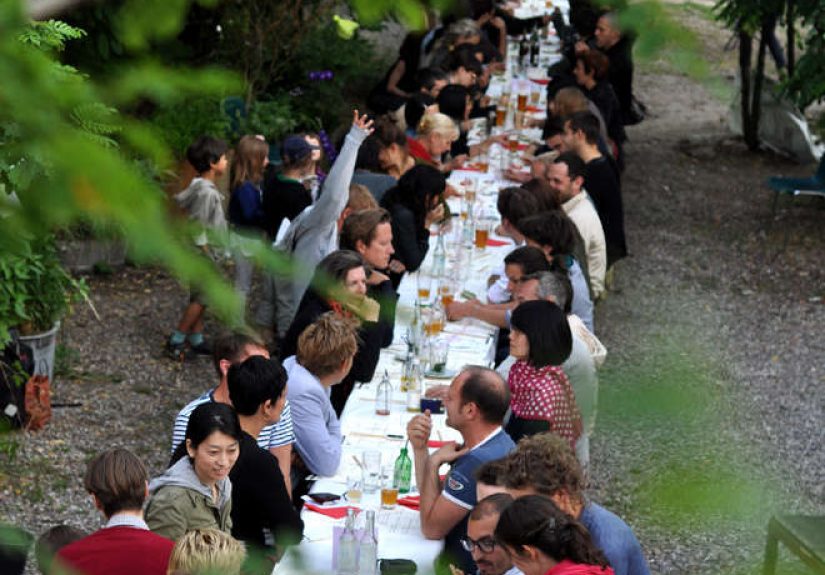
One of the smartest things about Prinzessinnengarten was that it never acted like food production and social life were separate categories. The garden included areas to sit, gather, eat, talk, and learn. It was a place where someone might come for a workshop and stay for lunch, or arrive for coffee and accidentally learn something about pollinators, composting, climate adaptation, or organic growing.
That blending of uses is a huge part of what makes the project memorable. A purely productive site can be efficient but intimidating. A purely decorative green space can be pleasant but passive. Prinzessinnengarten split the difference beautifully. It was productive enough to be meaningful and social enough to be welcoming. Families, students, neighbors, curious tourists, and urban-planning nerds could all find a reason to linger.
Even its atmosphere helped communicate a larger message. This was not a luxury eco-retreat for people who already had weekend houses in the countryside. It was a working, public, urban place. A little scrappy. A little improvised. Very alive. The visual language of the garden told visitors that cities do not need to choose between density and nature. They can weave them together, especially when communities are allowed to experiment.
What Berlin’s Community Garden Gets Right About Urban Agriculture
Urban agriculture is often discussed in practical terms: food access, local resilience, sustainability, stormwater management, pollinator support, neighborhood revitalization. All of those are important, and Prinzessinnengarten checks many of those boxes. But what it gets especially right is something harder to measure and easier to feel: it makes ecological awareness social.
That is a big deal. People are more likely to care about biodiversity, soil, food systems, and climate resilience when those ideas show up in daily life instead of floating around as abstract policy language. A garden lets people touch the process. They see what healthy soil looks like. They see insects, flowers, and vegetables interacting. They notice how much labor goes into a salad. Suddenly, “sustainable food systems” stops sounding like a conference panel and starts looking like something you can water on a Tuesday afternoon.
Community gardens also offer a low-stakes entry point into civic life. You do not need to run for office to participate in a neighborhood. Sometimes you just need to weed a bed, share tools, or attend an open gardening day. That kind of repeated, ordinary participation can be powerful. It turns public space from an abstract concept into a relationship.
The Politics of Green Space Without the Boring Speech
Let us be honest: urban green space is never just about petunias. In growing cities, land is contested, development pressures are real, and questions about who gets access to beauty, food, and breathing room are deeply political. Prinzessinnengarten became influential in part because it showed that a temporary, community-led project could have cultural weight. It reminded Berlin that the value of land is not only measured by rent rolls and square footage calculations. Sometimes the highest-value thing a space can do is help people meet, learn, and feel rooted in a city that changes too fast.
That lesson translates far beyond Germany. In the United States, universities, agencies, and community organizations increasingly frame urban agriculture as part of neighborhood resilience. Gardens can support healthy eating, create habitat, reduce runoff, foster environmental literacy, and offer residents a chance to shape their surroundings. The details vary by city, but the broader point remains the same: community gardening is not a hobby floating outside real life. It is one way real life gets repaired.
A Garden That Refused to Stay Still
The “movable” part of the story proved prophetic. After years at Moritzplatz, the project evolved and continued in a new form in Neukölln, where the Prinzessinnengarten Kollektiv Berlin carried the work forward. That continuity matters. Too many urban experiments are treated like charming temporary episodes, fun while they last and disposable once land values start flexing. Prinzessinnengarten showed that an idea can outlast an address.
In its newer chapter, the emphasis on communal learning, ecological cultivation, workshops, and collective stewardship remains central. There are no private little kingdoms with tiny signs that silently scream, “Do not touch my kale.” The model is collaborative. Everyone helps maintain the garden as a shared project. That is both practical and philosophical. It keeps the focus on participation instead of possession.
There is something refreshing about that in an age when so much of urban life feels individualized, monetized, and optimized within an inch of its life. Community gardens offer another script. Show up. Contribute. Share the space. Learn by doing. Accept that carrots are stubborn and compost is humbling. Repeat.
Why This Story Resonates So Strongly
The story of Berlin’s community garden resonates because it feels hopeful without feeling fake. It does not pretend a garden can solve every urban problem. Lettuce is wonderful, but it cannot single-handedly fix housing policy. Still, gardens can do something that many official plans struggle to accomplish: they make change visible. They turn neglected space into cared-for space. They turn strangers into collaborators. They turn ecological values into daily habits.
That visibility is powerful. Visitors do not need a report, a grant summary, or a strategic framework to understand what has happened. They can see it in the raised beds, the buzzing insects, the reused materials, the shared tables, the workshop boards, and the casual mix of people inhabiting the place. It is public, physical proof that a city can be greener, more communal, and more imaginative at the same time.
And perhaps that is why the phrase “movable feast” fits so well. The feast is not just the food. It is the collection of benefits that come from cultivating a place together: conversation, education, beauty, resilience, and belonging. The garden moves, the city changes, people come and go, but the feast continues because it was never tied to one patch of soil alone.
Experiences That Capture the Spirit of Berlin’s Community Garden
To understand why Prinzessinnengarten matters, it helps to picture the experience rather than just the concept. Imagine walking in from a Berlin street lined with traffic, apartments, and the usual urban hustle. One minute you are in the city’s fast lane, dodging bikes and pretending you definitely know where you are going. The next minute you step into a place filled with raised beds, herbs, flowers, pollinator-friendly planting, and the quiet murmur of people who are not in a hurry for once. That shift is part of the magic. The garden does not erase the city. It softens it.
Visitors often describe community gardens as spaces where multiple moods can exist at once. Someone is learning. Someone is resting. Someone is pulling weeds with suspicious intensity, clearly working through a personal issue. Someone else is chatting over coffee. That layered atmosphere is one of the best things about urban gardening. It allows participation at different speeds. You do not have to arrive as an expert. You can arrive curious, tired, hungry, skeptical, or just in need of a chair near some tomatoes.
The educational side of the experience also tends to sneak up on people. A person may come for the setting and leave with a new understanding of compost, biodiversity, seed saving, or how much effort goes into growing vegetables without treating the soil like an enemy. Children notice insects and flowers. Adults notice how disconnected they have become from food systems. Everyone notices that a carrot harvested from a community bed somehow tastes more dramatic than the one rolling around in a grocery drawer at home.
There is also the emotional experience of shared effort. Community gardens are rarely perfect. Things wilt. Weather misbehaves. Plans change. Somebody plants enthusiastically and labels nothing. Yet that imperfection is part of what makes the space feel human. A polished city plaza can be admired, but a garden asks for involvement. It rewards repetition. The more often people return, the more they recognize the rhythms of the place and the people who care for it.
For many urban residents, that may be the rarest experience of all: feeling useful in a shared public space. Not just entertained. Not just accommodated. Useful. In a garden, even small actions matter. Watering, sweeping, hauling, planting, harvesting, or simply showing up regularly can create a sense of belonging that cities often struggle to provide. That feeling is difficult to market and impossible to fake. It is built over time, one practical task at a time.
And then there is the sensory side. The smell of soil after watering. The surprise of bees in the middle of a dense neighborhood. The contrast between rough recycled materials and delicate green growth. The sight of raised beds proving, again and again, that life can thrive in containers, corners, and places no one expected. Berlin’s community garden offers an experience that is both ordinary and radical: people gathering around food, land, and learning in the middle of a modern city. That may sound simple, but simplicity is often where the deepest changes begin.
Conclusion
Prinzessinnengarten is more than a celebrated Berlin community garden. It is a working example of how urban agriculture can transform underused land into a public asset that feeds both body and neighborhood spirit. Its movable design solved practical problems, but it also became a metaphor for resilience: cities change, land use shifts, and communities still find ways to grow something meaningful.
In a world crowded with big promises and sterile development language, this garden offers a refreshingly grounded idea. Start with what you have. Reuse what others ignore. Invite people in. Grow food, but also grow trust, skill, beauty, and a sense of shared ownership over urban life. That is the real feast, and it travels well.