Table of Contents >> Show >> Hide
- Why this podcast-style story hits so hard
- Addiction 101: what it is (and what it isn’t)
- The mother-daughter dynamic: love, fear, guilt, and the boundary problem
- What actually helps: evidence-based treatment and real support
- Safety while change is happening: overdose prevention and naloxone
- How to talk to your daughter without turning it into a courtroom drama
- Support for the mother: because love needs backup
- Rebuilding trust after the storm
- How to listen to the podcastand actually use it
- Experiences families recognize (extra, extended section)
- Conclusion: love is powerfuland it works best with a plan
There are plenty of podcasts that make you laugh, learn a fun fact, and forget it by lunch. This isn’t one of those.
A mother-and-daughter addiction story tends to land like a brick wrapped in a baby blanket: heavy, but oddly full of love.
If you found this page because an episode title pulled you in (or because someone sent it to you with the world’s most loaded text message“listen to this”), you’re in the right place.
In this article, we’ll unpack what stories like “a daughter’s addiction, a mother’s love” usually reveal: what addiction is (and isn’t), why families get pulled into impossible roles,
and what evidence-based support can look like when your heart is screaming “SAVE HER” and your brain is whispering “but how?”
We’ll keep it real, practical, and humanwith just enough humor to help you breathe without minimizing anyone’s pain.
Gentle note: This is educational content, not medical or legal advice. If you believe someone is in immediate danger, call emergency services right now.
Why this podcast-style story hits so hard
Addiction stories told through a parent-child lens aren’t popular because people love tragedy. They’re popular because they mirror something many families live in private:
the whiplash of “She’s doing great!” followed by “Where is she?” followed by “Please just answer.”
When the person struggling is your childwhether she’s 15, 25, or 45your instincts don’t retire. They show up in full uniform.
A mother’s love says: I will not abandon you. Addiction says: I will isolate you both.
The tension between those two forces is the emotional engine of many recovery podcasts.
Stories are not treatmentbut they can be a bridge
A podcast won’t diagnose, detox, or deliver therapy. But it can do something powerful: reduce shame.
It can give language to what feels unspeakable (“I don’t recognize my own kid,” “I’m terrified of a phone call,” “I’m exhausted from hoping”).
And sometimes, hearing another family say it out loud makes it possible to take one brave step toward help.
Addiction 101: what it is (and what it isn’t)
Let’s start with the most important reframe: addiction isn’t a character flaw that can be grounded out of someone.
Major medical organizations describe addiction as a treatable, chronic medical disease shaped by brain circuitry, genetics, environment, and life experience.
Translation: it’s complicatedand it responds best to real treatment, not just willpower and lectures.
That doesn’t mean choices don’t matter. It means that once addiction takes hold, the brain’s “reward” and “survival” systems can get hijacked.
People may use even when they know it’s destroying relationships, jobs, health, and safety.
Families often interpret that as “She doesn’t love us.” More often, it’s “She can’t stopyet.”
Why “just stop” doesn’t work (and why shame makes it worse)
“Just stop” is the emotional equivalent of telling someone in a burning building to “just calm down.”
Shame tends to drive secrecy, secrecy fuels use, and use creates more shame. It’s a nasty little hamster wheel.
Stigma also keeps people from asking for help earlywhen early help might prevent bigger consequences later.
The mother-daughter dynamic: love, fear, guilt, and the boundary problem
In mother-daughter addiction stories, you’ll often hear a familiar sequence:
denial (“It’s just a phase”), confusion (“How did this happen?”), hypervigilance (“I’m monitoring everything”), then exhaustion (“I can’t do this anymore”),
followed by the hardest question of all: “What does helping look like now?”
Helping vs. enabling: the line nobody can see until they trip over it
“Enabling” is one of those words that gets thrown around like a dodgeballusually at someone who’s already bruised.
At its core, enabling is when our well-meaning actions protect a loved one from the natural consequences of their substance use,
which can unintentionally keep the cycle going.
Examples that often start with love:
calling an employer to explain an absence, paying rent “one last time,” replacing stolen items, giving cash with fingers crossed,
or rescuing someone from every crisis so they never feel the full impact of their behavior.
It’s not “bad parenting.” It’s an understandable attempt to reduce harmone that sometimes backfires.
Boundaries aren’t punishment. They’re oxygen.
A boundary is not “I don’t love you.” A boundary is “I love you, and I won’t participate in what’s killing youor me.”
Healthy boundaries protect your safety, your finances, your other children, your sanity, and your ability to stay connected long enough for recovery to have a chance.
Think of boundaries like guardrails on a mountain road. They don’t stop the storm. They stop the car from going over the edge.
What actually helps: evidence-based treatment and real support
Many families first encounter “treatment” through the doorway of crisis: an overdose scare, an arrest, a hospital visit, a school incident,
or the moment trust finally collapses. But effective treatment isn’t one-size-fits-all, and it’s rarely a single event.
It’s a processoften with setbacksand the best outcomes usually come from care that matches the person’s needs.
Medication can be life-savingespecially for opioid use disorder
For opioid use disorder, medications are widely recognized as a key part of treatment.
Common options include methadone, buprenorphine, and naltrexoneoften paired with counseling and recovery supports.
These medications reduce withdrawal and cravings, stabilize brain and body systems, and lower the risk of overdose.
If you’ve heard “that’s just replacing one drug with another,” you’re not alone. Families hear it all the time.
But in medical settings, these medications are considered treatment because they help restore functioning and reduce harm.
The goal is recovery and safetytoday, tomorrow, and next monthnot scoring points for suffering.
Behavioral therapies, mental health care, and the “whole-life” rebuild
Medication alone isn’t magic, and therapy alone isn’t always enough either.
Many people need a combination: counseling, skills-building, treatment for co-occurring anxiety/depression/trauma,
and practical supports like stable housing, job training, and healthier social circles.
Recovery also needs a plan for the boring hoursthe hours when cravings show up like an unsolicited pop-up ad.
Sleep, routine, movement, connection, and meaningful goals matter more than they sound like they should.
Yes, it’s unfair that someone fighting a brain disease also has to learn meal prep and coping skills.
But recovery is rude like that.
Safety while change is happening: overdose prevention and naloxone
If opioids are involved (including counterfeit pills that may contain fentanyl), families should talk with a healthcare professional
about overdose prevention strategies. One widely recommended tool is naloxone, a medication that can reverse an opioid overdose if given in time.
Keeping naloxone available is not “admitting defeat.” It’s the same logic as keeping a fire extinguisher:
you’re not planning a fireyou’re planning for survival.
If you’re unsure whether to keep naloxone at home, consider this: many overdoses happen with other people nearby.
Being prepared can buy time until emergency help arrives.
How to talk to your daughter without turning it into a courtroom drama
Conversations about addiction often fail for one simple reason: everyone shows up to the table with different goals.
The parent’s goal is safety. The daughter’s goal might be to avoid shame, protect access to substances, or simply escape an unbearable emotional state.
If you walk in with “confess your sins,” you’ll likely get “deny, dodge, disappear.”
A more productive script (still imperfect, but better)
- Start with care: “I love you. I’m scared. I’m here.”
- Use specific observations: “I noticed you missed work twice this week and you seemed unwell.”
- Avoid labels: Try “I’m worried about substance use,” instead of “You’re an addict.”
- Offer options, not ultimatums (at first): “Can we look at treatment choices together?”
- Pick the moment: Not during a blow-up, not during intoxication, not at Thanksgiving dinner.
If your daughter responds with anger, remember: anger can be armor. You don’t have to win the argument.
You’re trying to keep a relationship open enough for help to enter.
Support for the mother: because love needs backup
If you’re the mother in this story, you may be carrying a secret second life:
researching rehab at 2 a.m., watching bank accounts like a hawk, Googling slang terms you never wanted to know,
and smiling politely at people who complain about “being so busy” because their kid joined two soccer teams.
You deserve support that is for younot just advice on how to “fix” your daughter.
Many families benefit from a mix of professional help (therapy, family counseling, caregiver support) and peer support groups.
Practical places to start (especially if you’re overwhelmed)
- Confidential treatment referral: The SAMHSA National Helpline can provide free, confidential support and referrals for mental health and substance use issues.
- Peer support for families: Groups like Al-Anon (for families affected by someone’s drinking) and Nar-Anon (for families affected by someone else’s drug use) offer meetings and shared experience.
- Family education programs: Many treatment organizations offer family programs that teach boundaries, communication skills, and coping strategies.
“Detach with love” doesn’t mean “stop caring”
Detaching with love is one of the most misunderstood ideas in family recovery spaces.
It doesn’t mean shutting the door and tossing the key into the ocean.
It means stepping out of the chaos cycleno more covering, no more rescuing, no more orbiting around the addiction
while staying grounded in compassion and clear expectations.
It can feel unnatural at first because love has been confused with control:
“If I do everything right, she’ll be okay.”
But addiction doesn’t follow a parent’s spreadsheet. (If it did, moms would have solved it in one weekend.)
Rebuilding trust after the storm
A mother-daughter relationship after addiction can be rebuilt, but it often looks different than before.
Trust returns through patterns, not promises. Early recovery may require:
accountability, consistent routines, drug testing if clinically appropriate, medication adherence, therapy attendance,
and hard conversations that end with both people exhausted.
Relapse doesn’t erase progressbut it does require a response
Relapse can be part of the chronic nature of addiction, and it doesn’t mean the person “didn’t care” or “learned nothing.”
It does mean the plan needs adjustment: more support, different treatment intensity, new coping tools, and stronger safety measures.
Families can prepare by discussing “if-then” plans ahead of time:
If you use again, then we do X (contact provider, increase visits, revisit treatment level, etc.).
How to listen to the podcastand actually use it
If you’re listening to (or writing about) a podcast story like this, consider making it more than a one-time emotional ride.
Here are a few ways to turn listening into forward motion:
Listener prompts (a.k.a. “homework” that doesn’t require a grade)
- Write down three moments you recognized. Recognition reduces isolation.
- Name one boundary you’re avoiding. Then ask: what is that boundary protecting?
- List two supports for you. A friend, therapist, group, faith leadersomeone who won’t minimize this.
- Identify one next step you can do in 24 hours. One phone call counts. One meeting counts.
If the podcast includes a personal story (such as a mother and daughter sharing how addiction shaped their relationship),
remember: what you’re hearing is the edited highlight reel of a long, messy reality.
Don’t compare your day-to-day to someone else’s episode arc. Use it as a compass, not a scoreboard.
Experiences families recognize (extra, extended section)
The following “experiences” are composite scenariosblended from common themes caregivers reportshared here to help readers feel less alone and to spark practical ideas.
Details vary widely by person, substance, and circumstance.
1) The season of tiny alarms
Many mothers describe an early phase where nothing is obviously catastrophicjust off.
A changed sleep schedule. A new friend group with vague names (“She’s… just a friend.”).
Money disappearing in oddly specific amounts. Mood swings that feel bigger than “teen stuff.”
You start second-guessing yourself: Am I paranoid, or is my gut accurate?
In this phase, a helpful move is to document patterns calmly. Not like a detective in a trench coatmore like a person preparing to talk to a professional.
“Here’s what I noticed, here’s when it started, here’s what worries me.” It keeps you anchored in reality when emotions try to turn everything into a hurricane.
It also helps you have clearer conversations with doctors, counselors, or school staff.
2) The “help” that turns into a full-time job
The next experience is often the exhausting realization that love has become labor.
You’re managing appointments, replacing broken items, negotiating with landlords, smoothing conflicts with siblings,
and absorbing emotional outburstssometimes while working your own job and keeping a household running.
You start to wonder when you last ate a meal that wasn’t standing up.
A turning point for many families is learning to separate support from management.
Support says: “I will help you access treatment. I will go with you. I will cheer for your recovery.”
Management says: “I will handle your consequences so you don’t have to.”
The first can help recovery. The second can accidentally help addiction.
Mothers who begin attending a family support group often say it’s the first place they hear,
“You’re allowed to sleep. You’re allowed to have a life. You’re allowed to stop negotiating with chaos.”
3) The boundary that feels like betrayal
Setting a boundary can feel like turning your backespecially if your daughter cries, rages, or says, “You don’t care about me.”
But boundaries are often where healing begins.
A common boundary is financial: “I won’t give cash, but I will pay directly for treatment, medication, or a bus pass.”
Another is safety: “You can’t stay here if you’re using in the house, but I will help you find a safer alternative.”
The emotional trick is remembering that boundaries are not a speech; they’re a policy.
Policies only work when they’re consistent. If you set a boundary on Monday and undo it on Tuesday because you feel guilty,
your nervous system learns that guilt is the boss. (And guilt is a terrible manager.)
Families who practice boundaries with supporttherapy, groups, a trusted friendoften hold them more steadily, with less self-blame.
4) The first honest conversation
Sometimes, after months (or years) of lies, half-truths, and “I’m fine,” there’s a moment of honesty.
It might be small: “I relapsed.” “I’m scared.” “I don’t know how to stop.”
Mothers often describe feeling two things at once: heartbreak and relief.
Heartbreak because the reality is painful. Relief because reality is something you can actually work with.
If your daughter gives you an honest moment, try to meet it with steady calmeven if you’re screaming internally.
You can validate the truth (“Thank you for telling me”) without approving of the behavior (“I’m not okay with the using”).
From there, the next step is not usually a perfect planit’s the next right phone call, appointment, or meeting.
Recovery often grows from these imperfect steps, repeated until they become a path.
5) The long middle: rebuilding a relationship, one boring day at a time
Movies make recovery look like a montage. Real life makes it look like Tuesday.
A lot of healing happens in the “long middle”: consistent treatment, awkward apologies, learning to tolerate emotions,
rebuilding routines, and letting trust return slowly.
Mothers and daughters often have to relearn how to talk without the addiction in the room dominating every sentence.
One surprisingly powerful practice is creating “relationship time” that isn’t about the addiction:
a walk, cooking together, a low-stakes show, a shared hobby. Recovery is not just the absence of drugs or alcohol;
it’s the presence of a life worth protecting. And lovesteady, bounded, informed lovecan help make that life feel possible again.
Conclusion: love is powerfuland it works best with a plan
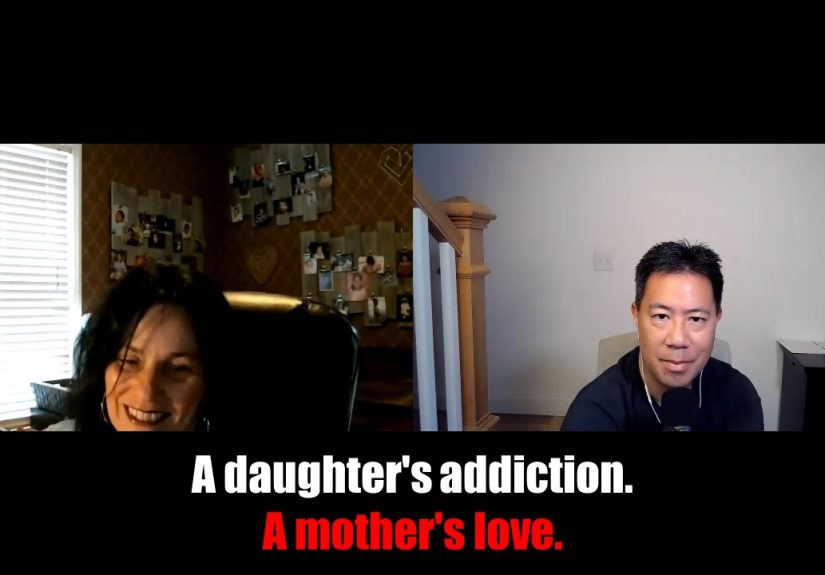
A story like “A daughter’s addiction. A mother’s love.” isn’t just a headline. It’s a reality for many families:
fierce love facing a disease that thrives on isolation, secrecy, and shame.
The most hopeful takeaway isn’t “love fixes everything.” It’s this:
love plus evidence-based treatment, safety planning, boundaries, and support can change the trajectory.
If you’re a mother living this, you are not failing because you can’t control it.
You’re human, facing something complex.
Get backup. Ask for help. Choose one next step.
You don’t have to carry the whole story alone.