Table of Contents >> Show >> Hide
- Why Natural Laughter Feels So Hard
- 1. Start With a Real Memory, Not a Generic “Ha Ha”
- 2. Loosen the Body Before You Ask for a Laugh
- 3. Use Breath Like a Launch Button
- 4. Let the Smile Reach Your Eyes
- 5. Borrow Social Energy From Another Person
- 6. Use Tiny Prompts Instead of Big Jokes
- 7. Move While You Laugh
- 8. Practice Short Laugh Drills Until They Feel Unforced
- Common Mistakes That Make Laughter Look Fake
- Experience Notes: What Practicing Natural Laughter Actually Feels Like
- Final Thoughts
- SEO Tags
Some people can laugh on cue like they were born with a tiny sitcom audience in their chest. The rest of us? We hear, “Okay, laugh naturally,” and suddenly forget how faces work. The jaw locks. The eyes go blank. The sound that comes out is somewhere between a cough and a haunted teapot.
The good news is that natural laughter is not just a magical personality trait handed out at birth. It is a mix of emotion, body language, breath, memory, timing, and social energy. That means you can practice it. Whether you need to laugh naturally for a photo, a video, a performance, a presentation, or just to stop looking like a nervous mannequin at parties, there are smart ways to make it happen without forcing a cartoon cackle.
Below are eight practical ways to laugh naturally on cue, plus common mistakes to avoid and experience-based insights that make the whole thing feel much more doable. The goal is not to fake joy like an over-caffeinated game show host. The goal is to create the conditions that make a real laugh more likely to show up.
Why Natural Laughter Feels So Hard
Laughter is social, physical, and emotional all at once. That is why it often shows up easily when you are relaxed with friends and disappears the moment someone says, “Be natural.” Pressure makes people self-conscious. Self-consciousness tightens the body. A tight body creates a stiff face, shallow breathing, and awkward timing. In other words, the harder you try to “look natural,” the less natural you look.
There is also a difference between a polite social smile and a more genuine expression of amusement. Real laughter usually involves more than the mouth. The cheeks lift, the eyes soften, the breath changes, and the body joins the party. That is why the best route is not to command your mouth to perform. It is to create a small chain reaction in your thoughts, breathing, posture, and attention.
1. Start With a Real Memory, Not a Generic “Ha Ha”
If you want a laugh that looks natural, begin with something that actually amuses you. Not what should be funny. Not what your cousin insists is funny. Something that reliably gets you every time. Maybe it is a friend’s terrible dance move, your dog’s offended face when you stop petting him, or that one family story that turns everyone into wheezing seals.
Specific memories work better than abstract instructions. The brain responds more honestly when you recall a real moment with emotional texture. Instead of telling yourself, “Laugh now,” tell yourself, “Remember the time I tried to look cool and walked into a glass door.” That is a different assignment. One is pressure. The other is a trigger.
Try this
Before you need to laugh on cue, make a short list of five reliable laugh memories. Keep them personal, vivid, and easy to recall. When the moment comes, choose one and replay it like a tiny highlight reel.
2. Loosen the Body Before You Ask for a Laugh
A stiff body rarely produces a convincing laugh. When people feel tense, they often raise their shoulders, clench the jaw, flatten the face, and breathe from the upper chest. That combination can make even a friendly smile look like it is being held hostage.
Loosening up first is not dramatic. It is practical. Drop your shoulders. Unclench your teeth. Shake out your hands. Roll your neck once or twice. Let your lips rest instead of pinning them into a frozen grin. This sounds basic because it is basic. It also works.
Think of natural laughter as easier to allow than to force. When the body is less rigid, your facial expression changes faster and your laugh sounds less mechanical. A relaxed body also helps your timing. You stop anticipating the moment like a terrified stage actor waiting for the trapdoor.
Quick reset
Exhale slowly, let your shoulders fall, and imagine the tension leaving your cheeks. Then smile lightly before you try to laugh. Half the battle is removing the physical brakes.
3. Use Breath Like a Launch Button
Natural laughter rides on breath. That is one reason fake laughter often sounds fake: people try to produce the sound from the throat while barely breathing. Real laughter usually begins with a fuller exhale, a change in rhythm, and a little loss of control. Not total chaos, just enough looseness to feel alive.
Before you laugh on cue, take one relaxed inhale through the nose and let out an easy exhale. Then let your first laugh sound ride the breath instead of squeezing it out. You are not trying to perform a perfect “ha ha ha.” You are letting the body begin the pattern that laughter already uses.
This is especially helpful if you freeze in photos, video shoots, or public speaking. Breathing more deeply settles the nervous system and keeps your face from looking strained. A calmer body gives your laugh somewhere to land.
Mini drill
Inhale gently for four counts, exhale for six, then let a soft laugh escape at the end of the breath. Repeat three times. It may begin as practiced laughter, but that often melts into something more real.
4. Let the Smile Reach Your Eyes
A laugh that only happens in the mouth tends to look pasted on. A more believable expression usually includes lifted cheeks, softer eyes, and less obsession with dental display. In plain English, stop trying to arrange your face like a showroom model and let your expression spread.
One trick is to think of greeting someone you genuinely like. That emotional cue often changes the eyes faster than any mirror-based coaching. Another trick is to smile lightly before the laugh rather than launching into a huge grin too early. When people jump straight to maximum smile, the result can look overcooked. The face needs somewhere to go.
Natural laughter often peaks for just a second and then settles into a warmer, smaller expression. That is part of why it looks real. It moves.
Better cue
Instead of saying, “Show teeth,” think, “I just saw someone I adore do something ridiculous.” Much better. Much less serial yearbook energy.
5. Borrow Social Energy From Another Person
Laughter is contagious for a reason. People are wired to respond to each other’s emotional signals, and shared laughter often feels easier than solo laughter. That means one of the fastest ways to laugh naturally on cue is to stop performing into empty space and connect with a real person.
If you are taking photos, look at the photographer for a second, not just the lens. If you are filming content, imagine one specific person who makes you feel relaxed. If you are onstage or in rehearsal, play off your scene partner instead of monitoring your own face like a suspicious security guard.
When your attention moves outward, self-consciousness usually drops. And when self-consciousness drops, laughter gets more natural. This is why people often laugh more honestly in conversation than when standing alone and saying “ha” into the void like a confused robot.
Use this in real life
Ask someone to give you a silly prompt, make an absurd face, or tell the shortest dumb joke they know. You are not cheating. You are using the social nature of laughter the way it was designed.
6. Use Tiny Prompts Instead of Big Jokes
Trying to laugh on cue with a full joke setup can be clunky. Timing gets weird. The pressure grows. Everyone waits. Suddenly the room feels like a hostage negotiation with a knock-knock joke in the middle.
Tiny prompts work better. A single funny word. An exaggerated image. A ridiculous comparison. A one-line memory. A playful question. Small sparks are often more useful than a full comedy routine because they leave room for your own reaction.
For example, instead of waiting for someone to say something hilarious, think: “What if my serious meeting face is exactly the same face I use to open snack bags?” It is silly, specific, and just strange enough to loosen the mood. Natural laughter often comes from surprise, contrast, or mild absurdity, not from trying to produce a perfect stand-up set in seven seconds.
Useful prompt ideas
- Remember a harmless embarrassing moment.
- Picture someone trying way too hard to look cool.
- Use a ridiculous comparison, like “I look like I’m applying for a bank loan in this photo.”
- Think of a pet, child, or friend doing something unintentionally funny.
7. Move While You Laugh
Natural laughter is rarely perfectly still. The shoulders shift. The head dips. The body leans forward. The hands get involved. Even small movement makes the expression feel less staged and more spontaneous.
This matters a lot in photos and video. When people try to freeze and laugh at the same time, the result often looks stiff because the body and face are sending different messages. The face says “joy.” The posture says “I have been turned into office furniture.”
You do not need wild gestures. A slight turn, a step, a head tilt, or looking away for a split second can help. Sometimes the most natural laugh happens right after a tiny movement, not at the exact moment you try to “perform” it. That is the sweet spot.
Simple practice
Walk two steps, stop, smile, look down briefly, then glance up and let yourself laugh. This creates a natural sequence instead of a forced facial event.
8. Practice Short Laugh Drills Until They Feel Unforced
Yes, practicing laughter can sound a little weird. So does practicing eye contact, smiling, or public speaking, and yet those things become easier with repetition. The secret is to keep the drills short enough that they do not turn into performance torture.
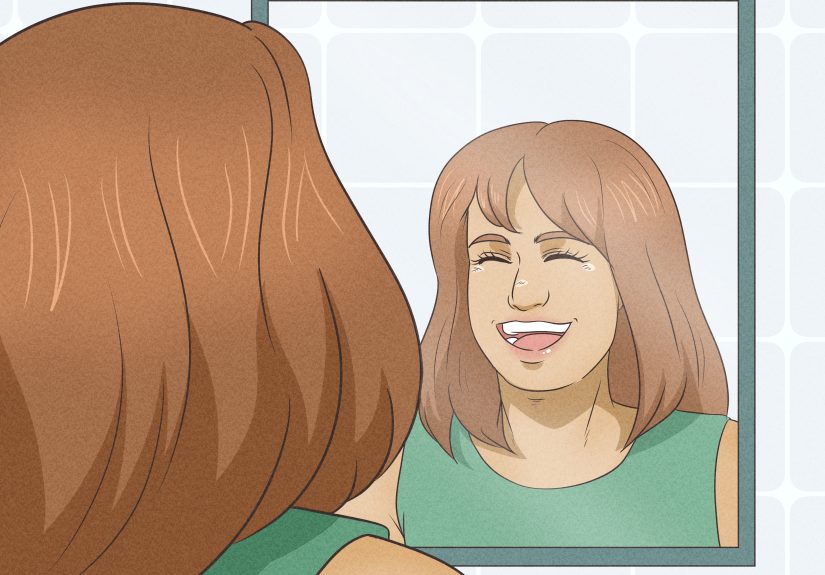
Try ten-second reps. Smile lightly, exhale, let out a few soft laughs, stop, reset, and repeat. Watch how your face changes when you are relaxed versus when you are trying too hard. Practice with a mirror sometimes, but not every time. Too much mirror work can make you judge yourself instead of learning what feels natural.
It also helps to practice in different contexts. Sitting, standing, walking, talking, being photographed, recording video. Natural laughter is not one fixed sound. It changes depending on the moment. That is a good thing. You are not building a signature villain laugh. You are building flexibility.
Common Mistakes That Make Laughter Look Fake
- Starting too big: A giant smile with no buildup often looks forced.
- Holding the expression too long: Real laughter moves. It is not a statue.
- Breathing too shallowly: Tight breath creates tight sound.
- Thinking about appearance instead of connection: The more you monitor your face, the less free it becomes.
- Only using the mouth: A natural laugh usually softens the whole face.
- Trying to be impressive: Funny enough, natural laughter looks best when you stop trying to look cool.
Experience Notes: What Practicing Natural Laughter Actually Feels Like
The first experience many people have when they start practicing natural laughter on cue is mild embarrassment. That is normal. You try a soft laugh in the mirror and immediately think, “Wow, I have somehow become both an actor and a malfunctioning blender.” The important part is not to quit at that stage. Early practice often feels awkward because you are noticing habits that were always there: jaw tension, frozen eyes, shallow breathing, and the urge to perform instead of respond.
After a few sessions, something interesting usually happens. You stop trying to manufacture a perfect laugh and start recognizing your actual patterns. Maybe your most natural laugh is quieter than you thought. Maybe your face looks best right after the first burst, not during the biggest laugh. Maybe you discover that when you look at a real person instead of a camera lens, the whole expression changes. These are useful experiences because they teach you that natural laughter is less about inventing something new and more about removing what blocks it.
In photo situations, people often report a breakthrough when they stop saying “cheese” and start thinking in scenes. Instead of freezing and smiling, they imagine a friend walking in, a pet doing something chaotic, or a private joke. The result is usually smaller, warmer, and more believable. It may not be the biggest grin in the world, but it looks alive. And alive almost always wins over perfect.
In work or performance settings, the experience can be different. Here, the challenge is often nerves rather than lack of humor. You may know exactly what is funny, but the pressure of being watched dries everything out. That is where breathing and body relaxation become game changers. People often notice that one slow exhale does more for their expression than five minutes of overthinking. The laugh does not appear because they “tried harder.” It appears because they got out of their own way.
Another common experience is that fake laughter can unexpectedly tip into real laughter, especially when practiced with someone else. At first, both people feel ridiculous. Then one person snorts, the other loses it, and suddenly the room has real laughter in it. That shift matters. It proves that laughter is not always a strict pass-or-fail test of authenticity. Sometimes the doorway to a real laugh is a playful, imperfect start.
Over time, the biggest change is confidence. Not the loud, flashy kind. The calm kind. You begin to trust that you do not need to force a giant reaction to look natural. A light smile, a warm exhale, a flicker in the eyes, a brief laugh, a tiny head dip, and you are there. That feels better than performing. It also looks better. And once you experience that difference a few times, you stop chasing a fake “camera laugh” and start using your real one.
Final Thoughts
If you want to laugh naturally on cue, forget the myth that you need to become instantly hilarious or endlessly carefree. You do not. What you need is a better setup: a real memory, a looser body, fuller breath, softer eyes, social connection, smaller prompts, a bit of movement, and short practice.
Natural laughter is not about pretending harder. It is about creating the right conditions for a genuine response. Once you do that, the laugh stops looking like a performance and starts feeling like you. Which, honestly, is much more charming than any polished fake grin the world has ever seen.